Myotonia Congenita and Stiffness in Bernese Mountain Dogs
Stiffness that improves as a dog warms up is a real and specific pattern. In a Bernese it is far more likely to be a joint telling you something than a muscle channel defect.

What you can try
- Time how long the stiffness lasts after rising, and note whether it is worse in cold weather. A pattern beats an impression at the appointment.
- Film the first thirty seconds of your dog getting up and walking away, since that window contains most of the diagnostic information.
- Provide a thick supportive bed away from draughts and off hard flooring, and put a non-slip mat where the dog stands up.
- Split exercise into several short sessions so the dog is never resting long enough to stiffen fully or working long enough to overdo it.
- Keep the dog lean. Weight is the largest modifiable contributor to stiffness in an arthritic large breed.
The specific picture of true myotonia
Myotonia has a presentation that is difficult to confuse with anything else once you have seen it described properly. It begins in very young dogs, usually within the first few months of life, not in middle age. The puppy has trouble rising, moves with a stiff, bunny-hopping or stilted gait for the first few strides, and then loosens noticeably as activity continues. This warm-up phenomenon is the hallmark.
It is also generalised rather than localised. A dog with a joint problem is stiff in a particular limb or region; a myotonic dog is stiff throughout, and the stiffness affects muscles that have nothing to do with weight bearing. Affected dogs often show an unusually developed, bunched muscular appearance, and some have difficulty with the muscles of the face, tongue and larynx, producing a changed bark or noisy breathing.
The breeds in which it has been documented are specific: chow chows, miniature schnauzers, Staffordshire terriers and a handful of others, generally through identified inherited mutations within those populations. The Bernese Mountain Dog is not among them, and the condition does not appear on this breed's documented list of health issues.
Diagnosis, when it is genuinely suspected, is not made on appearance. It requires electrodiagnostic testing that demonstrates the characteristic sustained electrical discharges in muscle, sometimes supported by muscle biopsy and by breed-specific genetic testing where a mutation is known.
In short: if a Bernese is stiff, the answer is very unlikely to be found in a muscle channel.
What stiffness in a Bernese usually means
Every entry on this list is more likely in a Bernese Mountain Dog than a channelopathy, and several of them are on the breed's documented health list. Work down this before looking further.
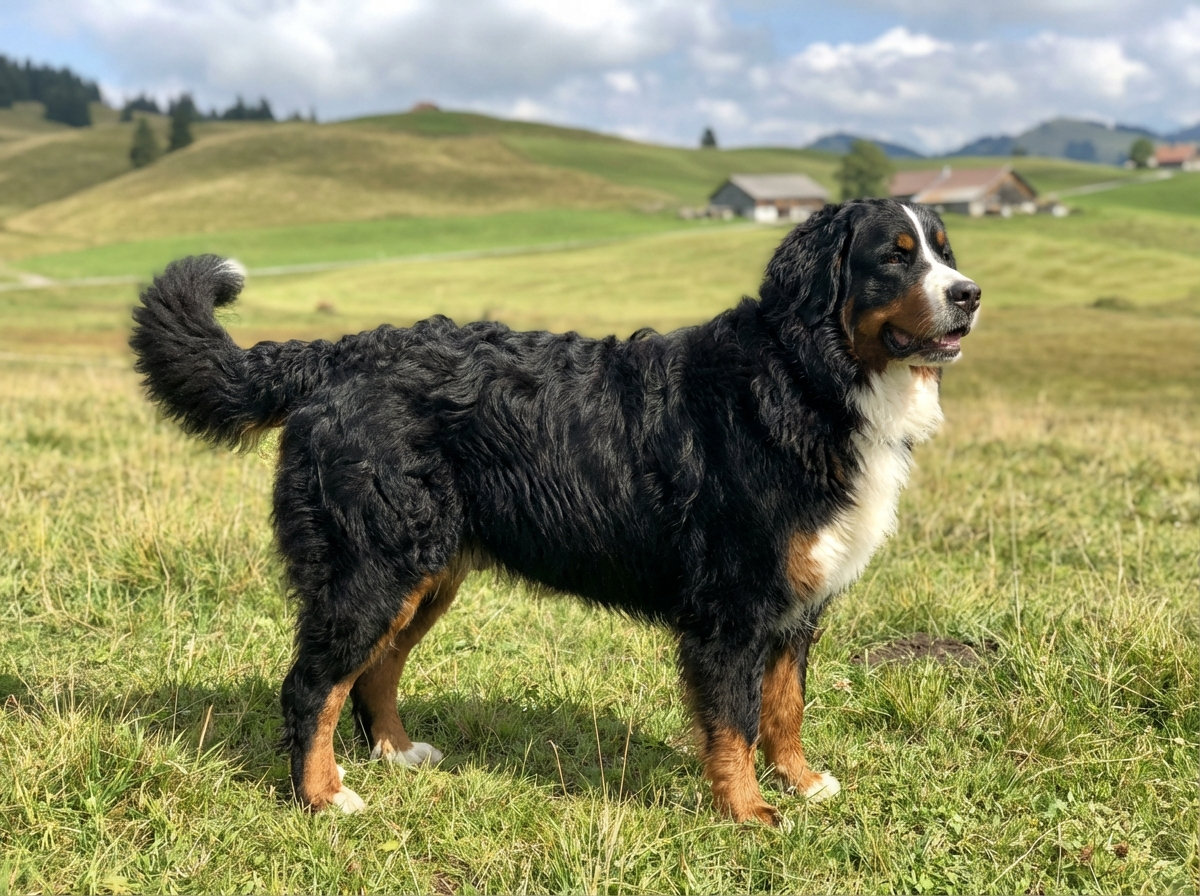
- Osteoarthritis. Documented in this breed and the overwhelming explanation for a dog who is stiff on rising and loosens after a few minutes of movement.
- Hip and elbow dysplasia. Both are on the breed's core health issue list and both produce exactly the stiff-then-better pattern that mimics warm-up.
- Degenerative myelopathy. Produces weakness and dragging rather than true stiffness, but is easily described as stiffness by owners.
- Hypothyroidism. Low thyroid can cause weakness, exercise intolerance and in some dogs muscle changes, and it is cheap to rule out with bloodwork.
- Cervical spinal disease. A neck problem in a large breed can produce a stilted, floating gait that reads as stiffness.
- Simple overexertion. A heavy dog who did too much yesterday is sore today, and this is common enough to be worth considering before anything exotic.
Frequently asked questions
Can Bernese Mountain Dogs inherit myotonia congenita?
There is no established myotonia congenita in this breed, no breed-specific genetic test offered for it, and it does not appear among the Bernese Mountain Dog's documented health issues. The condition is described in a small number of unrelated breeds through identified mutations in those populations.
My dog is stiff getting up but fine after a few minutes. Is that myotonia?
That pattern is far more consistent with osteoarthritis, which is explicitly listed among this breed's common health issues. Arthritic joints stiffen at rest as inflammatory fluid settles and loosen with movement. The similarity to myotonic warm-up is genuine but coincidental, and an examination distinguishes them easily.
At what age would a genuine muscle disorder appear?
Inherited myotonia shows in very young dogs, usually within the first few months. Stiffness appearing for the first time in a middle-aged or older Bernese is almost never a congenital muscle condition, because congenital means present from the beginning.
How would a vet test for a muscle disorder?
Electromyography, which records the electrical activity of muscle and can demonstrate the sustained discharges characteristic of myotonia, is the key test. Muscle biopsy and genetic testing may follow where a specific mutation is known in the breed. None of this is done on suspicion alone; the clinical picture has to fit first.
Could stiffness in my Bernese be something urgent?
Occasionally. Generalised muscle rigidity with fever, tremors or an inability to relax can indicate poisoning, tetanus or a neurological emergency, and these come on over hours rather than developing slowly. Sudden severe stiffness in a previously normal dog is an emergency; gradual morning stiffness in an older dog is not.
Is there anything that helps a stiff older Berner at home?
Yes, and it is mundane. Warmth, a thick supportive bed off cold hard floors, non-slip footing where he gets up, and short frequent walks rather than one long one all reduce the stiffness of arthritic joints. Weight control does more than any of them. Pain relief is a veterinary decision, never a home one.
Related guides