Behavior
What are Belgian Malinois esophageal disease quick tips?
Feed smaller meals more frequently and consider elevated feeding dishes to help your dog. Always consult your vet for personalized advice.

Quick answer
What are Belgian Malinois esophageal disease quick tips?
Feed smaller meals more frequently and consider elevated feeding dishes to help your dog. Always consult your vet for personalized advice.
Belgian Malinois esophageal disease can significantly affect your dog's health and quality of life.
Owners of Belgian Malinois who notice their dog struggling to eat or displaying unusual behaviors may face this issue. It's especially concerning for first-time owners who may not be familiar with this breed's specific health challenges.
This guide is not medical advice. If your dog shows pain, sudden behavior change, or worsening symptoms, consult a licensed veterinarian.
Some links may be affiliate links. We may earn a commission at no extra cost to you. We only suggest products we believe are helpful for dog owners.
We research and check what we publish, but we do not warrant that any figure, date, price, or statement is accurate, complete, or current, and we accept no liability for any loss, cost, injury, or other harm arising from the use of this site. Use it as one reference among several. You remain responsible for your own decisions and for your dog's care - confirm anything that matters with a licensed veterinarian or another qualified professional before you act on it. Full disclaimer.
Check this first
Understanding when Belgian Malinois esophageal disease becomes an emergency is crucial for your dog's health. There are clear signs that indicate immediate veterinary attention is necessary. Look for symptoms like persistent vomiting, difficulty swallowing, excessive drooling, or signs of pain when eating. If your dog shows any of these red flags, it's time to call your vet without delay.
On the other hand, there are milder symptoms that can be monitored at home. If your Belgian Malinois occasionally coughs, regurgitates food, or seems a bit less energetic than usual, you may not need to rush to the vet. Instead, create a watch-and-wait plan. Keep track of their eating habits and behavior, and consider adjusting their diet to softer foods or smaller portions. If these symptoms persist for more than a couple of days or worsen, reach out to your vet for guidance.
If any of these apply, call your vet or an emergency clinic now. The rest of this page is for the cases that are not an emergency.
Belgian Malinois esophageal disease is a serious condition affecting their ability to swallow. This often leads to regurgitation, difficulty eating, and discomfort. Owners may notice their dog struggling to keep food down, which can cause anxiety and frustration for both the dog and the owner.
Esophageal disease is particularly concerning for Belgian Malinois, with a risk that is 265% higher compared to other breeds. While not every Malinois will face this issue, it is prevalent enough that potential owners should be aware of the symptoms and seek prompt veterinary care.
The Belgian Malinois is known for its intense energy and intelligence. This breed can be prone to certain genetic health issues, including esophageal disease. Their high energy can sometimes lead to rapid eating, which may contribute to esophageal problems.
Environmental factors play a significant role in your dog's health. Stressful situations, such as a noisy home or lack of mental stimulation, can exacerbate esophageal disease. Additionally, improper feeding practices, like giving large kibble or feeding from an elevated bowl, can also affect their esophagus.
Consult your vet if you notice vomiting, regurgitation, or any signs of discomfort while eating. These may indicate a worsening of esophageal disease. Early intervention is crucial for managing health issues and ensuring your Malinois receives the appropriate care.
Avoiding common pitfalls can significantly improve your Belgian Malinois's condition. Here are some mistakes to watch out for and safer alternatives.
Start here: Belgian Malinois Most Common Genetic Disorders: Screening
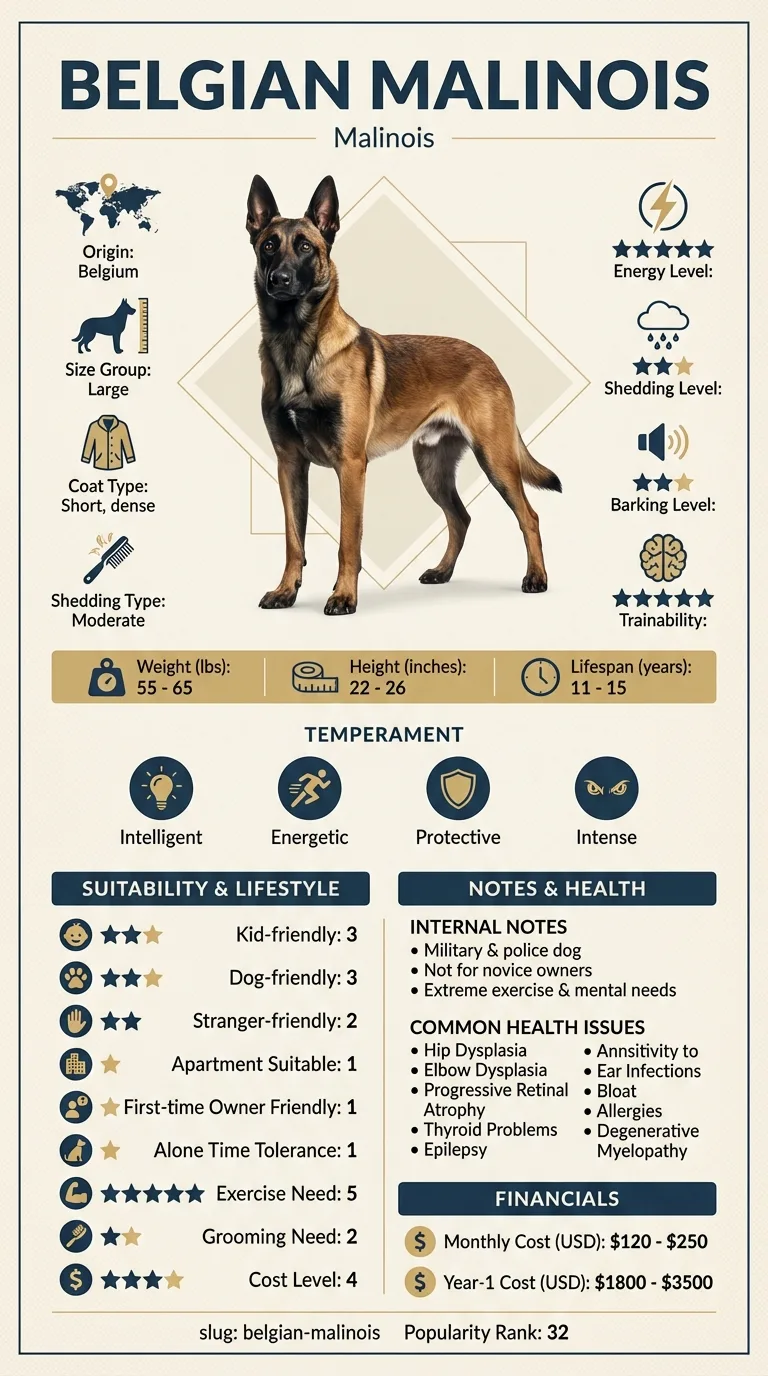
See all Belgian Malinois health problems, which breeds are prone to esophageal disease, or the full Belgian Malinois breed guide for temperament, exercise needs and ownership costs.
You may see improvement in your Belgian Malinois's esophageal disease within a few weeks to several months with consistent management and care.
Success means your dog can eat without difficulty, shows no signs of discomfort, and maintains a healthy weight.
Sarah, a busy veterinarian in Atlanta, noticed her Belgian Malinois, Max, had trouble eating. After a vet visit, she learned he had esophageal disease, which made feeding tricky. Sarah started feeding him smaller, softer meals and elevated his bowl to help. With patience and consistent training, Max began to eat more comfortably. Sarah also learned to monitor his weight and adjust his meals accordingly. It was a challenge at first, but over time, Max's condition improved significantly.
Key takeaway: With the right adjustments and care, you can help your Belgian Malinois manage esophageal disease effectively.
Belgian Malinois can develop esophageal disease due to various factors, including genetics, certain health conditions, and even dietary issues. It's crucial to observe your dog's eating habits and consult a vet for a proper diagnosis.
To address esophageal disease in your Belgian Malinois, focus on feeding smaller, more frequent meals and use elevated feeding bowls. Consult your vet about dietary changes and monitor your dog for any signs of distress during eating.
Yes, treatment options vary based on the severity of the disease. Medications, dietary changes, and in some cases, surgery may be necessary. Always follow your vet's recommendations for the best outcome.
While training itself won't cure esophageal disease, it can help manage your dog's behavior during meals. Teaching commands like 'slow' can encourage them to eat at a healthier pace, reducing the risk of complications.
The long-term outlook depends on the underlying cause and how well it is managed. Regular veterinary check-ups and adherence to treatment plans can significantly improve your dog's quality of life.
While some cases of esophageal disease can be managed, they may not always be completely cured, especially in older dogs. A veterinarian can provide guidance on treatment options and lifestyle adjustments to help manage the condition.
To ease eating for a Belgian Malinois with esophageal disease, try feeding smaller, more frequent meals and elevating the food bowl. This can help reduce regurgitation and make eating more comfortable.
Esophageal disease in Belgian Malinois can be caused by various factors, including genetics, infections, or foreign objects lodged in the esophagus. Regular vet check-ups can help catch issues early.
Training for a Belgian Malinois with esophageal disease often focuses on building calmness during meals and avoiding excitement that could trigger regurgitation. Consistency and patience are key in these training sessions.
Feed smaller meals more frequently and consider elevated feeding dishes to help your dog. Always consult your vet for personalized advice.
Look for symptoms like regurgitation, difficulty swallowing, or excessive drooling. If you notice these signs, seek veterinary advice.
Avoid large kibble sizes and hard-to-digest foods. Stick to softer, easier-to-swallow options recommended by your vet.
Yes, teaching your dog to eat slowly with commands like 'wait' can help. This reduces the risk of regurgitation.
A one-page prep sheet for this condition: the signs, the questions to ask, what to get priced. Unlocks here.
You get: Vet visit prep sheet
No spam. One-click unsubscribe. See our privacy policy.
Preview page 1 before you decide.