Behavior
What are some quick tips for Belgian Malinois cruciate ligament injuries?
Keep your Malinois at a healthy weight and provide regular, moderate exercise to strengthen their legs. Avoid high-impact activities, especially on slippery surfaces.

Quick answer
What are some quick tips for Belgian Malinois cruciate ligament injuries?
Keep your Malinois at a healthy weight and provide regular, moderate exercise to strengthen their legs. Avoid high-impact activities, especially on slippery surfaces.
Belgian Malinois cruciate ligament injuries can be serious and painful for your dog. These knee injuries often require surgery and long recovery times.
New and seasoned owners alike may find themselves dealing with this problem, especially if their Malinois is highly active or has a history of joint issues. Busy families or individuals who exercise their dogs regularly might notice these injuries more often.
This guide is not medical advice. If your dog shows pain, sudden behavior change, or worsening symptoms, consult a licensed veterinarian.
Some links may be affiliate links. We may earn a commission at no extra cost to you. We only suggest products we believe are helpful for dog owners.
We research and check what we publish, but we do not warrant that any figure, date, price, or statement is accurate, complete, or current, and we accept no liability for any loss, cost, injury, or other harm arising from the use of this site. Use it as one reference among several. You remain responsible for your own decisions and for your dog's care - confirm anything that matters with a licensed veterinarian or another qualified professional before you act on it. Full disclaimer.
Check this first
Recognizing when Belgian Malinois cruciate ligament injuries require immediate veterinary attention is crucial. If your dog shows severe lameness or is unable to put weight on the affected leg, it's time to call your vet. Other red flags include significant swelling around the knee, a visible deformity, or signs of extreme pain such as whimpering or growling when touched.
In some cases, your Malinois may exhibit a mild limp or slight stiffness. While these symptoms are concerning, they may not require an emergency visit. If your dog is still able to walk and seems mostly comfortable, you can monitor the situation for a short time. Keep an eye on their behavior and look for any worsening symptoms before deciding whether to visit the vet.
If you notice a combination of moderate limping along with reduced activity levels or reluctance to engage in play, consider making an appointment with your veterinarian soon. It’s always better to err on the side of caution, especially with active breeds like the Belgian Malinois, who might mask their pain. Having a clear plan for monitoring and managing your dog's recovery can help you make informed decisions about their health.
If any of these apply, call your vet or an emergency clinic now. The rest of this page is for the cases that are not an emergency.
Belgian Malinois cruciate ligament injuries are a common issue that can cause pain and limit mobility. These injuries often stem from sudden movements or high-impact activities, which Malinois dogs are prone to due to their energetic nature. Owners may notice limping, difficulty standing, or reluctance to play, which can signal a serious problem.
Cruciate ligament injuries are fairly common in Belgian Malinois, especially given their active lifestyle. Many Malinois owners report at least one incident during their dog's lifetime, often linked to the breed's intense exercise needs and agility.
Belgian Malinois are large, energetic dogs that often engage in high-impact activities. Their strong build and active nature can put extra strain on their knee ligaments. This breed is also prone to certain genetic conditions that may increase the risk of cruciate ligament injuries.
Environmental factors can also contribute to cruciate ligament injuries in Belgian Malinois. Slippery floors, abrupt changes in direction during play, and lack of proper warm-up exercises can lead to accidents. Additionally, an insufficient exercise routine can weaken their muscles, making them more susceptible to injury.
If your Belgian Malinois exhibits persistent limping, swelling, or difficulty in movement, it's time to talk to a vet. Early intervention can prevent further damage and ensure a proper recovery plan.
Avoiding common mistakes can significantly help your Belgian Malinois recover from cruciate ligament injuries. Here are some missteps to watch out for, along with safer alternatives.
Start here: Belgian Malinois Most Common Genetic Disorders: Screening
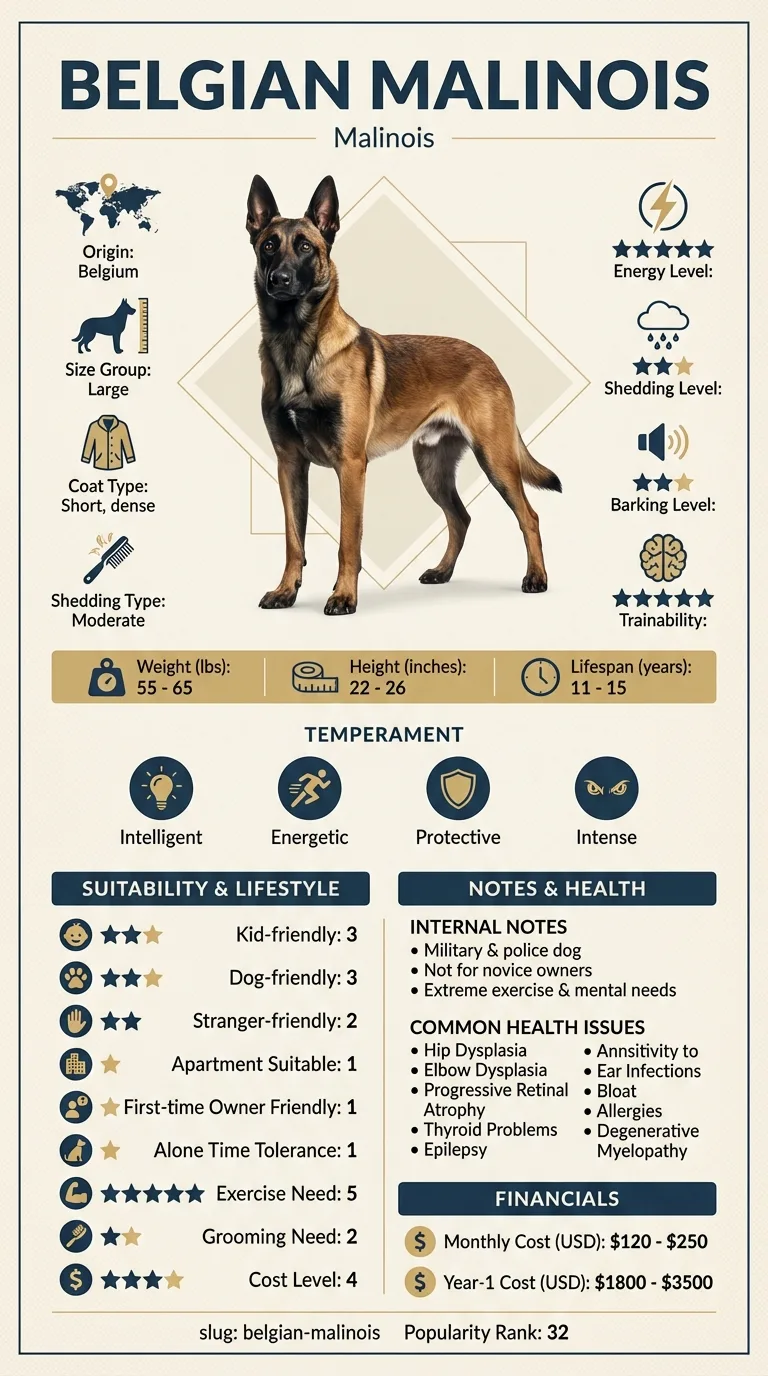
See all Belgian Malinois health problems, which breeds are prone to cruciate ligament injuries, or the full Belgian Malinois breed guide for temperament, exercise needs and ownership costs.
Recovery from Belgian Malinois cruciate ligament injuries usually takes 6 to 12 months, depending on the severity. Consistent care and rehabilitation are key during this period.
Success means your Belgian Malinois can return to normal activities without pain, has regained strength, and is less prone to future injuries. Regular vet check-ups and a tailored exercise plan are crucial.
Emma, a busy nurse in Denver, adopted Max, a spirited Belgian Malinois. After a fun day of hiking, Max started limping and was diagnosed with a cruciate ligament injury. Emma felt overwhelmed but committed to Max’s recovery. She followed her vet's advice for physical therapy and began a gentle training routine focused on strengthening Max's legs. After months of dedication, Max returned to his playful self, enjoying hikes again with Emma. They even discovered new activities together, like swimming, that were easier on his joints.
Key takeaway: With proper care and training, recovery from cruciate ligament injuries in Belgian Malinois is possible. Patience and commitment can lead to a happy, active dog.
Belgian Malinois are active and energetic dogs, which can lead to cruciate ligament injuries, especially if they engage in high-impact activities. Genetics can also play a role, as some dogs may be more prone to these injuries. Additionally, obesity and poor conditioning can increase the risk.
To prevent Belgian Malinois cruciate ligament injuries, maintain a healthy weight, provide regular low-impact exercise, and avoid high-impact activities like jumping from heights. Training your dog to follow commands can also help prevent sudden movements that could lead to injuries.
If you suspect a cruciate ligament injury, limit your dog's activity and consult a veterinarian as soon as possible. They may recommend rest, pain management, and sometimes surgery. Follow their recovery plan closely for the best outcome.
Yes, training can help strengthen the muscles around the knee joint, which may reduce the risk of cruciate ligament injuries. Focus on low-impact exercises and consider working with a professional trainer experienced with the breed.
Yes, older Belgian Malinois may be more prone to cruciate ligament injuries due to age-related wear and tear on their joints. Regular check-ups and a tailored exercise routine can help mitigate risks as they age.
If you notice signs like persistent limping, sudden changes in activity level, or swelling in your Belgian Malinois, it's crucial to see a vet as soon as possible. Early diagnosis can lead to better treatment options and recovery.
Yes, gentle, controlled exercises can help rehabilitate a Belgian Malinois after a cruciate ligament injury. Working with a vet or a professional trainer to create a tailored rehabilitation program is essential for safe recovery.
Keep your Malinois at a healthy weight and provide regular, moderate exercise to strengthen their legs. Avoid high-impact activities, especially on slippery surfaces.
Treatment can vary widely, but you might expect costs between $1,500 and $4,000 depending on whether surgery is needed.
Take your Belgian Malinois to the vet if they show signs of limping or discomfort, especially after exercise. Early intervention can prevent further injury.
A one-page prep sheet for this condition: the signs, the questions to ask, what to get priced. Unlocks here.
You get: Vet visit prep sheet
No spam. One-click unsubscribe. See our privacy policy.
Preview page 1 before you decide.