Behavior
What are quick tips for Beagle myotonia congenita?
Keep a consistent exercise routine to help manage stiffness. Gentle stretching before and after activities can be beneficial. Always consult your vet for personalized advice.

Quick answer
What are quick tips for Beagle myotonia congenita?
Keep a consistent exercise routine to help manage stiffness. Gentle stretching before and after activities can be beneficial. Always consult your vet for personalized advice.
Beagle myotonia congenita is a condition that causes muscle stiffness in your dog.
Typically, owners of Beagles experiencing this stiffness may feel overwhelmed, especially if they notice their pet struggling to run or play. First-time dog owners or those unfamiliar with this condition may find it particularly challenging.
This guide is not medical advice. If your dog shows pain, sudden behavior change, or worsening symptoms, consult a licensed veterinarian.
Some links may be affiliate links. We may earn a commission at no extra cost to you. We only suggest products we believe are helpful for dog owners.
We research and check what we publish, but we do not warrant that any figure, date, price, or statement is accurate, complete, or current, and we accept no liability for any loss, cost, injury, or other harm arising from the use of this site. Use it as one reference among several. You remain responsible for your own decisions and for your dog's care - confirm anything that matters with a licensed veterinarian or another qualified professional before you act on it. Full disclaimer.
Check this first
Red flags include sudden muscle stiffness that lasts longer than usual, difficulty breathing, or extreme lethargy. If your Beagle shows signs of pain, such as whining or refusing to move, you should also seek help immediately. These symptoms could indicate a more serious underlying condition that needs urgent care.
On the other hand, mild cases of myotonia congenita can often be monitored at home. If your Beagle experiences occasional stiffness during play or after exercise but returns to normal quickly, you can likely wait and see how they respond. Keeping a log of these episodes can help you discuss patterns with your vet.
It's essential to observe your Beagle's behavior closely. If your dog seems to be in distress or if symptoms persist, do not hesitate to contact your vet for advice. Early intervention is key to preventing complications and ensuring your Beagle stays healthy.
If any of these apply, call your vet or an emergency clinic now. The rest of this page is for the cases that are not an emergency.
Beagle myotonia congenita is a condition that causes muscle stiffness, making everyday activities a challenge. This stiffness can lead to difficulty in movement, especially after rest or exercise, which may leave your Beagle feeling uncomfortable. Owners often notice their Beagle struggling to get up after lying down or having trouble navigating stairs.
Myotonia congenita is relatively uncommon in Beagles, but it can occur. While not all Beagles will experience this issue, it's important for owners to recognize signs early to manage their dog's comfort and mobility.
Beagles may inherit myotonia congenita due to their genetic background. This condition causes muscle stiffness, which is more common in certain breeds. A Beagle's playful and energetic nature can sometimes mask the effects, making it hard to notice at first.
Environmental factors like lack of exercise or improper training can exacerbate the symptoms of myotonia congenita. Stressful situations may lead to increased muscle stiffness, making it essential to provide a stable home environment. Additionally, sudden changes in routine can trigger muscle issues.
If you notice significant changes in your Beagle's mobility or if muscle stiffness worsens, it's time to consult your vet. They can provide insights on managing myotonia congenita and might suggest specific treatments or medications.
Many Beagle owners unintentionally reinforce myotonia congenita symptoms or delay improvements. Here are some common mistakes and safer alternatives to consider.
Start here: Beagle Most Common Genetic Disorders: What to Screen For
See all Beagle health problems, which breeds are prone to myotonia congenita, or the full Beagle breed guide for temperament, exercise needs and ownership costs.
With consistent care and management, you can start to see improvements in your Beagle's myotonia congenita symptoms within 3 to 6 months.
Success means your Beagle shows less muscle stiffness and can engage in activities without excessive fatigue or discomfort.
Emma adopted Max, a lively Beagle, who started showing signs of myotonia congenita shortly after she brought him home. She noticed that he struggled to get up after resting and would sometimes have difficulty walking. Concerned, Emma reached out to a vet, who recommended a combination of gentle exercise, consistent training, and patience. Emma created a routine that included short, fun walks and playful activities. Gradually, Max became more active and his stiffness lessened, allowing him to enjoy his life more fully.
Key takeaway: With the right care and training, you can help your Beagle manage myotonia congenita effectively, improving their quality of life.
Symptoms of Beagle myotonia congenita include muscle stiffness, especially after rest or exercise. You may notice your Beagle having difficulty in movement or appearing to be temporarily 'stuck' when trying to walk. Monitoring these symptoms can help you assess the situation and consult a vet.
While there's no cure for Beagle myotonia congenita, management strategies can help. Regular exercise and stretching routines can alleviate stiffness. Consult with a vet or a dog trainer for tailored training plans.
Signs include muscle stiffness, difficulty standing after lying down, and delayed relaxation of the muscles. These symptoms are often more noticeable after exercise or rest. Keep an eye on your Beagle for these behaviors.
Yes, myotonia congenita is a genetic condition that can be inherited. If you're considering breeding your Beagle, it's crucial to consult with a vet about potential risks related to this condition. Responsible breeding practices can help reduce the occurrence of this issue.
Training can help manage Beagle myotonia congenita by encouraging movement and flexibility. Positive reinforcement techniques can promote exercise and reduce stiffness. A professional trainer can assist with specialized training approaches.
While myotonia congenita is a genetic condition, its severity can vary. Some Beagles may experience more pronounced stiffness as they age or with increased activity levels. Regular check-ups with your vet can help manage any worsening symptoms.
To support your Beagle, consider incorporating gentle exercises into their routine to improve mobility. Warm-up walks or low-impact activities can help reduce stiffness. Always consult with your vet before starting any new exercise program.
If you notice any significant changes in your Beagle's mobility or if their stiffness seems to be causing pain, it's essential to see a vet. Early intervention can help manage symptoms and improve your dog's quality of life. Don't hesitate to seek professional advice.
Keep a consistent exercise routine to help manage stiffness. Gentle stretching before and after activities can be beneficial. Always consult your vet for personalized advice.
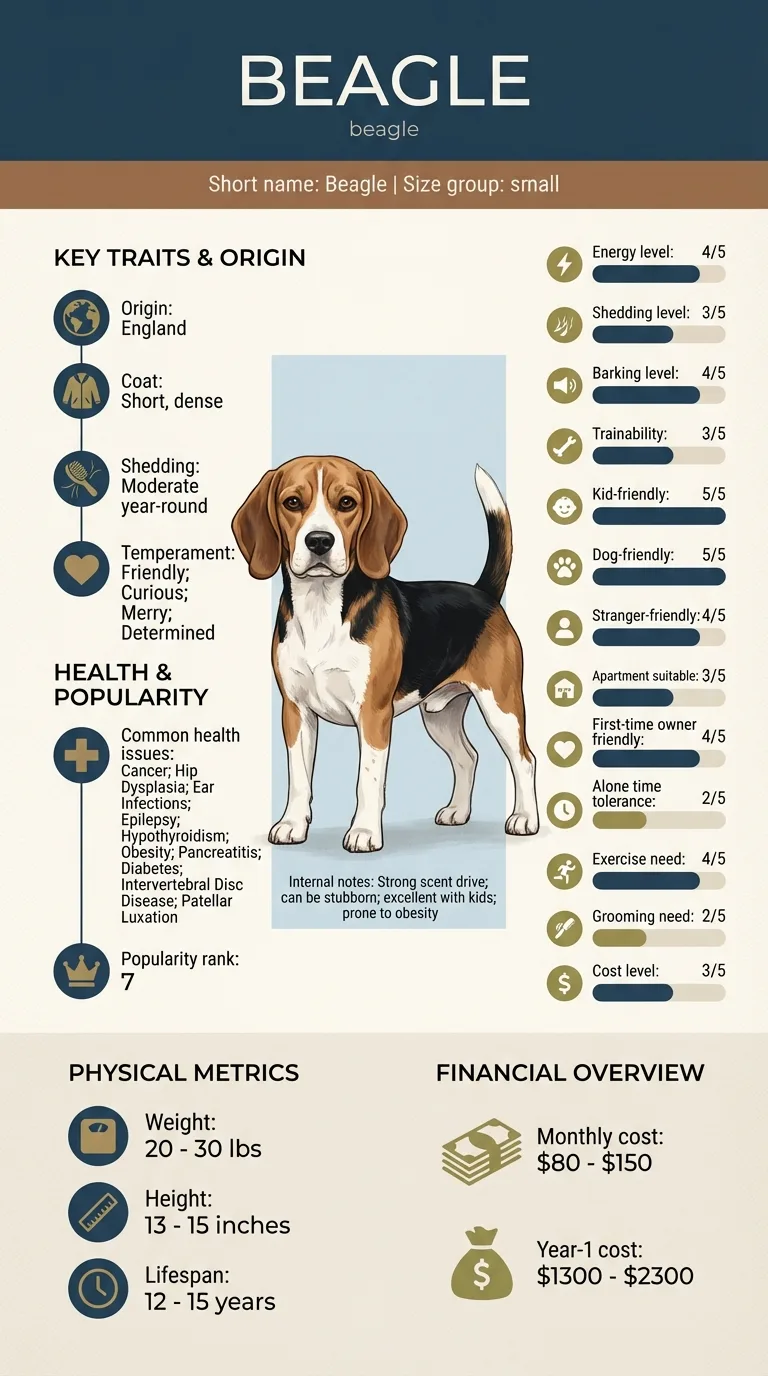
Managing Beagle myotonia congenita may cost between $80 to $150 monthly, depending on vet visits and care needs. It's essential to budget for regular check-ups.
Beagles can face several health issues, including hip dysplasia and obesity. Regular vet visits can help catch these problems early.
Yes, training can address various Beagle behavior problems, including stubbornness. Consistent and positive reinforcement methods work best.
A one-page prep sheet for this condition: the signs, the questions to ask, what to get priced. Unlocks here.
You get: Vet visit prep sheet
No spam. One-click unsubscribe. See our privacy policy.
Preview page 1 before you decide.