Behavior
What are quick tips for managing von Willebrand's disease in my American Staffordshire Terrier?
Keep your dog stress-free, avoid rough play, and schedule regular vet check-ups to monitor their health.

Quick answer
What are quick tips for managing von Willebrand's disease in my American Staffordshire Terrier?
Keep your dog stress-free, avoid rough play, and schedule regular vet check-ups to monitor their health.
American Staffordshire Terrier von Willebrand's disease is a genetic bleeding disorder that can be serious if not managed properly.
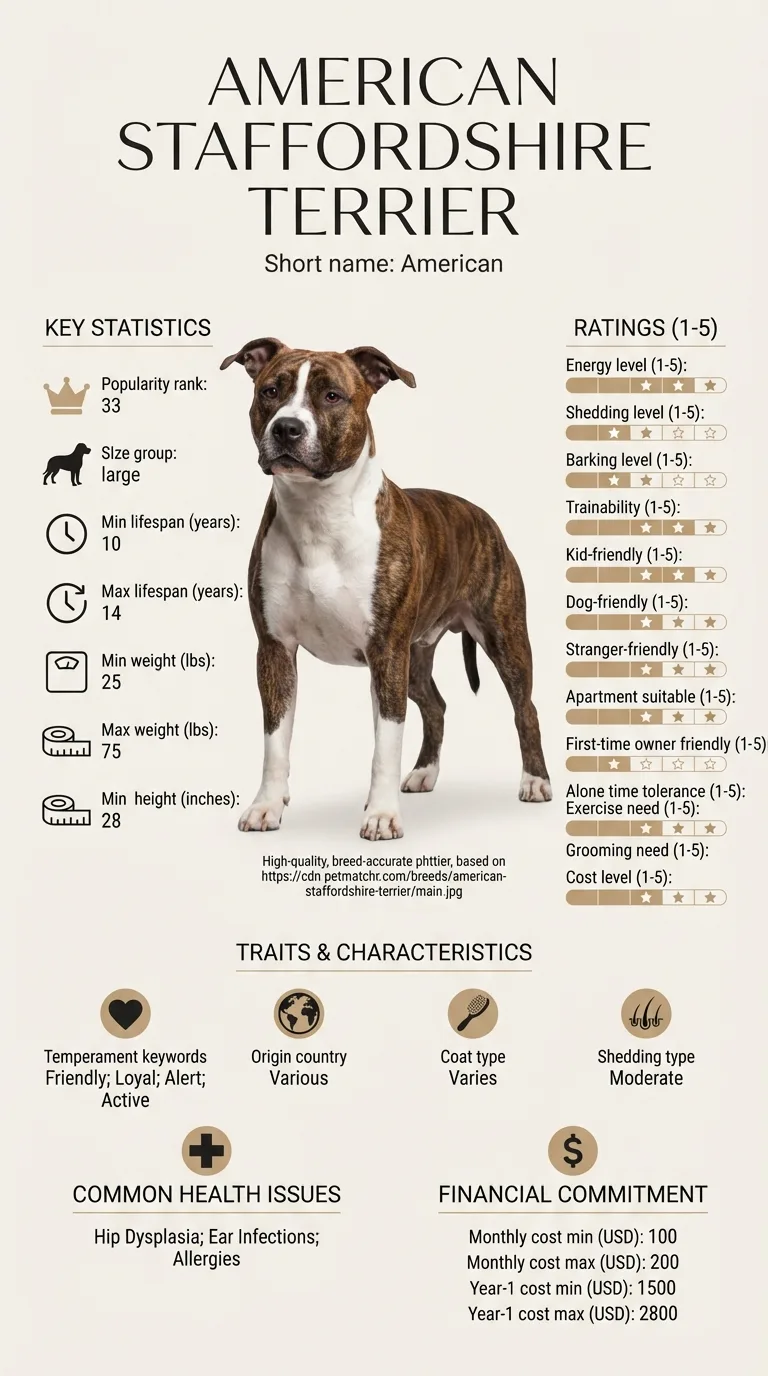
Dog owners of American Staffordshire Terriers, especially those who are first-time pet parents, may struggle with identifying and managing this health issue. It's common for owners to feel overwhelmed by the diagnosis and unsure of how to proceed.
This guide is not medical advice. If your dog shows pain, sudden behavior change, or worsening symptoms, consult a licensed veterinarian.
Some links may be affiliate links. We may earn a commission at no extra cost to you. We only suggest products we believe are helpful for dog owners.
We research and check what we publish, but we do not warrant that any figure, date, price, or statement is accurate, complete, or current, and we accept no liability for any loss, cost, injury, or other harm arising from the use of this site. Use it as one reference among several. You remain responsible for your own decisions and for your dog's care - confirm anything that matters with a licensed veterinarian or another qualified professional before you act on it. Full disclaimer.
Check this first
Understanding when your American Staffordshire Terrier's von Willebrand's disease becomes an emergency is crucial. If your dog experiences severe bleeding, such as from a wound that won't stop, or if they have blood in their urine or stool, you should call your vet immediately. These signs indicate that your dog may be in serious danger and requires urgent care.
On the other hand, mild cases of von Willebrand's disease may not show noticeable symptoms right away. If your dog seems lethargic or has slight bruising without severe bleeding, you can monitor them at home. Set up a plan to track their condition, noting any changes in behavior or health. Regular vet check-ups can help manage the disease effectively, but immediate action is necessary for red flags.
If any of these apply, call your vet or an emergency clinic now. The rest of this page is for the cases that are not an emergency.
American Staffordshire Terrier von Willebrand's disease is a bleeding disorder that can affect your dog's daily life. Symptoms may include excessive bleeding from small cuts or bruises, and prolonged bleeding during surgeries. This condition is often inherited, making it essential for owners to be aware of its signs and management techniques.
Von Willebrand's disease is relatively common in American Staffordshire Terriers compared to other breeds. While not every American will develop this condition, it's important to be vigilant due to its genetic nature.
Von Willebrand's Disease is a genetic bleeding disorder often found in American Staffordshire Terriers. This condition affects the blood's ability to clot properly, which can lead to excessive bleeding during injuries or surgeries. If your dog has a family history of this disease, they may be at a higher risk.
While genetics play a significant role, environmental factors can also impact the severity of the disease. Stress, poor nutrition, and lack of regular vet check-ups can worsen your dog's overall health and may exacerbate the symptoms of Von Willebrand's Disease.
Talk to your vet if you notice any symptoms of Von Willebrand's Disease, such as bleeding gums or frequent bruising. Regular check-ups are crucial to monitor your dog's condition and adjust care as needed.
Avoiding these common mistakes can help manage your American Staffordshire Terrier's von Willebrand's disease more effectively.
Start here: American Staffordshire Terrier Most Common Genetic Disorders
See all American Staffordshire Terrier health problems, which breeds are prone to von willebrands disease, or the full American Staffordshire Terrier breed guide for temperament, exercise needs and ownership costs.
Managing von Willebrand's disease in your American Staffordshire Terrier can take several weeks to months. Regular vet visits and monitoring are essential during this time.
Success means your dog has a stable condition, experiences fewer bleeding episodes, and maintains a good quality of life with appropriate care and training.
Sarah, a dedicated dog owner in Denver, noticed her American Staffordshire Terrier, Max, was bleeding more easily than other dogs. After a vet visit, she learned that Max had von Willebrand's disease. Initially overwhelmed, Sarah researched the condition and discovered training methods to help manage Max's energy without risking injury. She implemented a gentle exercise routine and learned to recognize the signs of potential bleeding. Over time, Max adapted well, and Sarah felt more confident in handling his health needs.
Key takeaway: With the right knowledge and support, managing von Willebrand's disease can lead to a fulfilling life for both you and your dog.
Von Willebrand's disease is a genetic bleeding disorder that affects the blood's ability to clot. It is common in certain dog breeds, including the American Staffordshire Terrier. If your dog has been diagnosed, it's important to talk to your vet about managing this condition.
Managing von Willebrand's disease involves regular veterinary check-ups and monitoring for bleeding episodes. You might also need to adjust their activity level and avoid situations that could lead to injury. Your vet can recommend the best care plan.
Common symptoms include nosebleeds, bleeding gums, and prolonged bleeding from cuts. Some dogs may also show signs of fatigue or weakness if they lose a lot of blood. Monitoring your dog for these signs is crucial.
Currently, there is no cure for von Willebrand's disease. However, with proper management and care, many dogs can lead healthy lives. It's essential to work closely with your vet to create a care plan.
While you can't stop the disease itself, you can manage its effects. Keep your dog calm, avoid risky activities, and ensure they receive regular veterinary care to monitor their health.
Yes, training can help your dog develop good behaviors and reduce anxiety. Positive reinforcement training can create a calmer environment, which is essential for a dog with a health condition.
Yes, older American Staffordshire Terriers can develop von Willebrand's disease. While it's often a hereditary condition, age-related factors can also contribute to bleeding disorders. If your senior dog shows signs of unusual bleeding, consult your vet.
While there is no cure for von Willebrand's disease, treatment options can help manage the condition. Your vet may suggest medications or lifestyle changes to minimize bleeding risks and improve your dog's quality of life.
Keep your dog stress-free, avoid rough play, and schedule regular vet check-ups to monitor their health.
Regular check-ups, ideally every 6 months, are recommended to manage von Willebrand's disease effectively.
Apply pressure to the wound immediately and contact your veterinarian for further guidance.
Positive reinforcement training works best, focusing on calm commands and gentle behavior.
A one-page prep sheet for this condition: the signs, the questions to ask, what to get priced. Unlocks here.
You get: Vet visit prep sheet
No spam. One-click unsubscribe. See our privacy policy.
Preview page 1 before you decide.