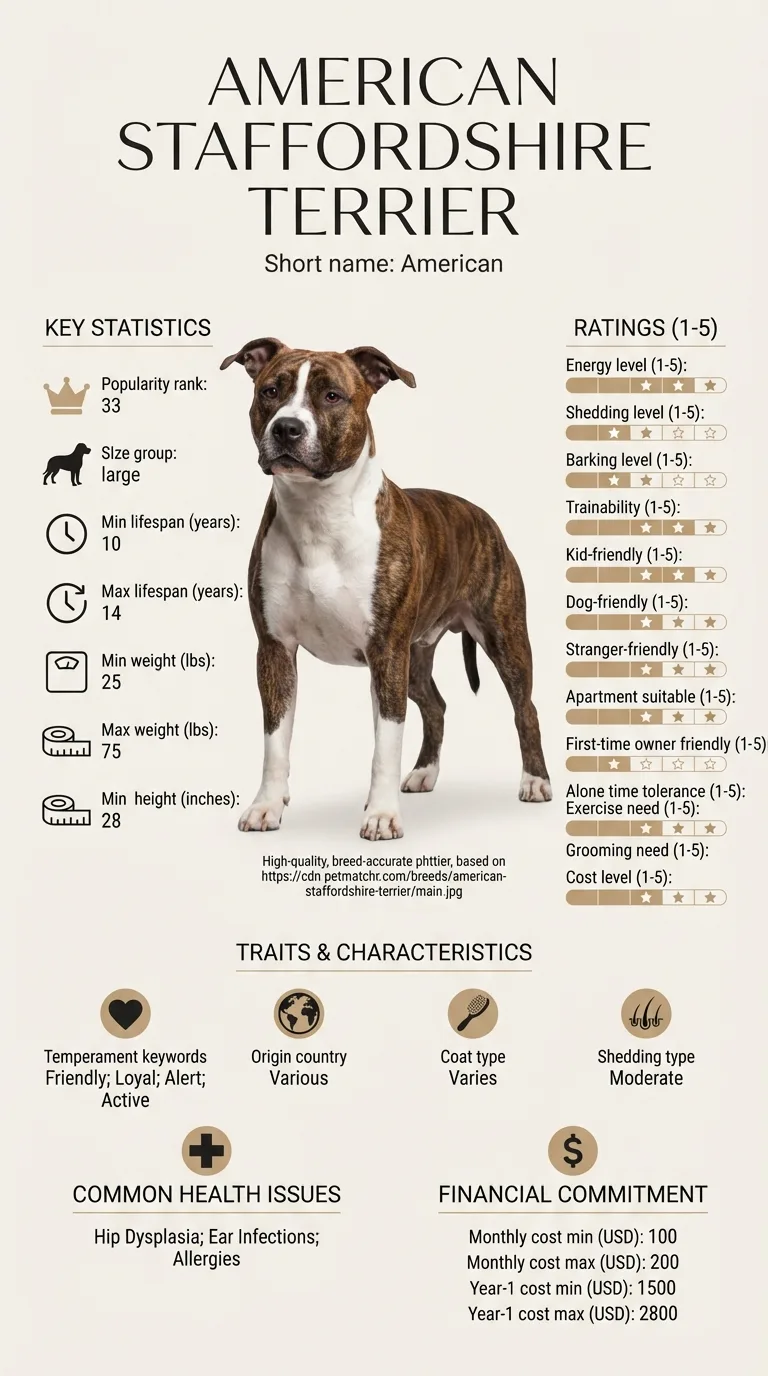
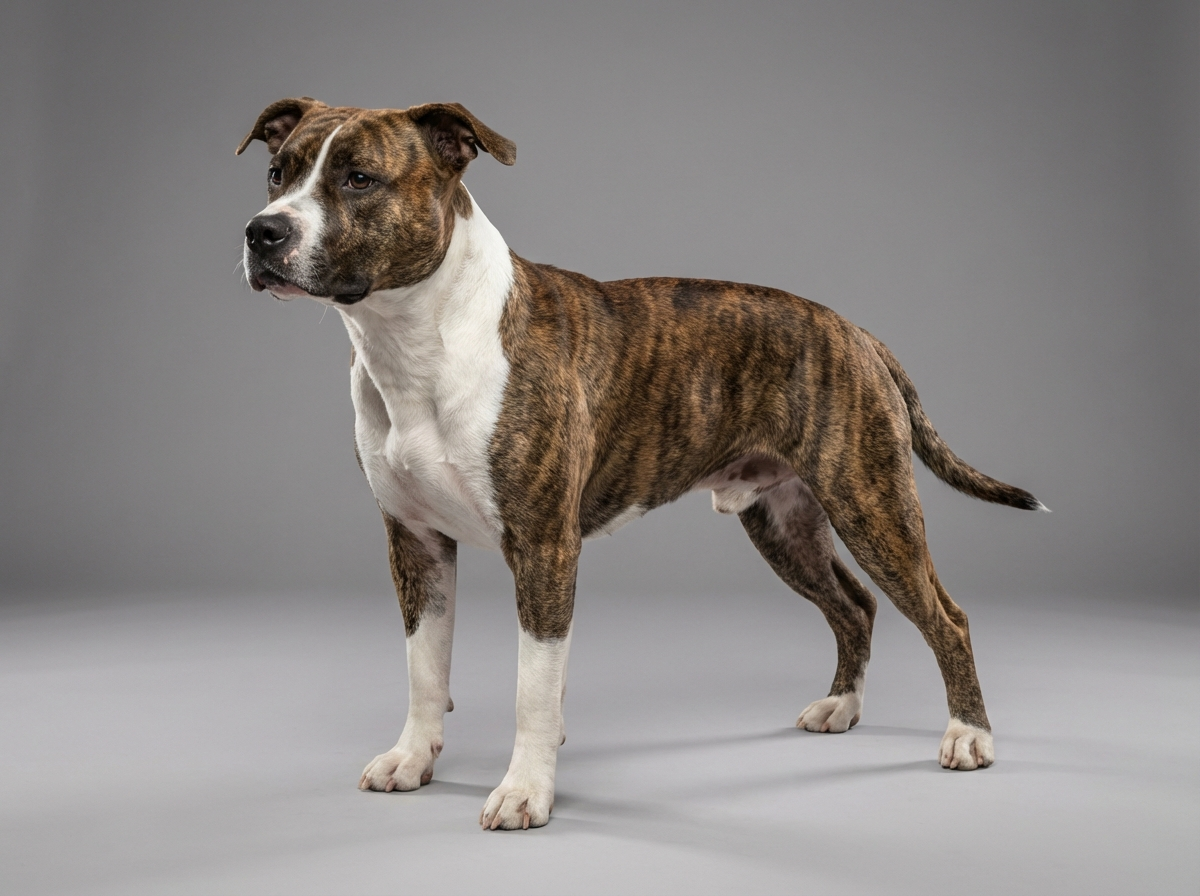
Understanding American Staffordshire Terrier Purebred vs. Mixed Breeds
Deciding between an American Staffordshire Terrier purebred and a mixed breed can be tough. Each has unique traits and challenges. (American Staffordshire Terrier purebred vs. mixed breeds)
New dog owners, families with kids, and even seasoned dog lovers can struggle with this choice. If you’re unsure which option best fits your lifestyle, you're not alone. Many face the same dilemma while weighing the pros and cons of purebred versus mixed breed American Staffordshire Terriers.
Important reminder
This guide is not medical advice. If your dog shows pain, sudden behavior change, or worsening symptoms, consult a licensed veterinarian.
Some links may be affiliate links. We may earn a commission at no extra cost to you. We only suggest products we believe are helpful for dog owners.
What this problem looks like
The debate over American Staffordshire Terrier purebred vs. mixed breeds can create confusion for potential dog owners. Purebred American Staffordshire Terriers are often perceived as having more predictable behavior and traits, while mixed breeds can bring unique characteristics. Daily life with these dogs can vary greatly, with purebreds sometimes being more prone to specific health issues compared to mixed breeds.
Common triggers
Choosing a dog for family dynamics
Concerns about health issues known in purebreds
Misunderstandings about breed stereotypes
This issue is quite common among American Staffordshire Terrier owners, as many people wrestle with the implications of breed purity versus the benefits of mixed breeds. Owners often share experiences of navigating these choices, especially when it comes to training and health.
Why this happens
Breed factors
The American Staffordshire Terrier, like many purebred dogs, can have specific genetic traits that may influence behavior. Some of these traits can lead to anxiety, aggression, or other behavioral issues. Understanding these breed-specific tendencies is crucial for successful training and management.
Environment factors
Environmental factors play a significant role in the behavior of American Staffordshire Terriers. Factors such as lack of socialization, insufficient exercise, or inconsistent training can exacerbate anxiety and behavioral problems. A stable and enriching environment can help mitigate these issues.
What you can try
At-home strategies
Establish a consistent routine for feeding, walking, and playtime. This helps your dog feel secure.
Provide regular exercise to burn off excess energy. Aim for at least 30 to 60 minutes of physical activity each day.
Socialize your dog with other pets and people in controlled settings to reduce anxiety around strangers.
Use positive reinforcement training methods to encourage good behavior. Reward your dog with treats and praise for following commands.
Create a safe space at home where your dog can retreat when feeling anxious. This could be a cozy bed or a quiet room.
When to consider a trainer
If your American Staffordshire Terrier's anxiety or behavioral issues persist despite your efforts, consider hiring a professional dog trainer. A trainer can provide personalized strategies and help address specific problems effectively.
When to talk to your vet
If you notice any sudden changes in behavior, excessive anxiety, or signs of distress, consult your vet. They can rule out any underlying health issues that may be contributing to your dog's behavior.
Realistic expectations
Expect noticeable improvements in behavior within 4 to 6 weeks with consistent training.
Success means your American Staffordshire Terrier is more relaxed around other dogs and less anxious in unfamiliar situations.
Mistakes that make this worse – American Staffordshire Terrier purebred vs. mixed breeds
Avoiding common pitfalls can significantly improve your American Staffordshire Terrier's behavior and overall well-being. Here are some mistakes to steer clear of, along with safer alternatives.
Ignoring Socialization Needs: Failing to expose your American Staffordshire Terrier to various people, environments, and other dogs can lead to anxiety and fear. Instead, gradually introduce your dog to new experiences in a controlled manner to build confidence.
Inconsistent Training Commands: Using different commands for the same behavior can confuse your dog. Stick to consistent commands and cues for training to help your American Staffordshire Terrier understand what you expect.
Overreacting to Barking: Yelling or punishing your dog for barking can worsen anxiety or encourage more barking. Instead, reward quiet behavior and provide distractions, like toys or chew items, to redirect their energy.
Neglecting Exercise: Without enough physical activity, your dog may develop behavioral issues. Ensure your American Staffordshire Terrier gets daily walks, playtime, and mental stimulation to keep them happy and healthy.
Using Negative Reinforcement: Punishing your dog for unwanted behavior can lead to fear and mistrust. Focus on positive reinforcement techniques, rewarding good behavior instead to foster a loving relationship.
Failing to Address Separation Anxiety: Leaving your dog alone for long periods without preparation can lead to destructive behavior. Gradually increase alone time and provide engaging toys to ease anxiety and make alone time more manageable.
Rushing Training Sessions: Trying to teach too much in one go can overwhelm your dog. Break training into shorter, more manageable sessions and allow for plenty of breaks to help your American Staffordshire Terrier learn effectively.
When It Is an Emergency
Call your vet immediately if you notice any of the following red-flag signs:
- Difficulty breathing or choking
- Severe bleeding that doesn’t stop
- Sudden inability to stand or walk
- Signs of severe pain, such as whimpering or aggression
- Unconsciousness or extreme lethargy
These symptoms often point to serious health issues that require quick action.
On the other hand, if your dog is experiencing mild symptoms, you might not need to rush to the vet. Mild cases can include:
- Occasional coughing or sneezing
- Slightly decreased appetite or energy levels
- Minor skin irritations or allergies
In these situations, you can create a monitoring plan. Keep an eye on your dog's symptoms and consult your vet if they worsen. If you’re unsure, it’s always better to err on the side of caution. Your American Staffordshire Terrier relies on you to make the right call for their health and well-being.

Understanding American Staffordshire Terrier Purebred vs. Mixed Breeds - When It Is an Emergency
Finding Balance: A Tale of Max the American Staffordshire Terrier
Jessica, a busy nurse living in a small apartment, adopted Max, a mixed-breed American Staffordshire Terrier. At first, Max struggled with anxiety and was often reactive to other dogs during walks. After consulting with a trainer, Jessica established a routine of daily training sessions and socialization at the local dog park. Slowly, Max learned to feel more secure, and after a few weeks of consistent training, he became more calm and friendly around other dogs.
Key takeaway: With patience and the right training approach, even anxious dogs like Max can become well-adjusted companions.
Frequently asked questions
Why does my American Staffordshire Terrier have behavior issues related to purebred vs. mixed breeds?
Behavior issues in American Staffordshire Terriers may stem from their genetics. Purebred dogs, in particular, can sometimes inherit specific traits that contribute to anxiety or aggression. It's important to assess your dog's history and environment to better understand their behavior. This answer relates to American Staffordshire Terrier purebred vs. mixed breeds.
How can I train my American Staffordshire Terrier regarding purebred vs. mixed breeds challenges?
Training your American Staffordshire Terrier involves consistent reinforcement and socialization. Start with basic commands and gradually introduce more complex tasks. Positive reinforcement, like treats and praise, can help your dog learn effectively.
What are the common health issues for American Staffordshire Terriers that might affect behavior?
American Staffordshire Terriers can face health issues like hip dysplasia and allergies, which may lead to discomfort and behavioral changes. Regular vet check-ups can help in early detection and management of these problems.
How can I stop my American Staffordshire Terrier from showing aggressive behavior?
To manage aggressive behavior, early socialization is crucial. Introduce your dog to various environments, people, and other pets. If problems persist, consider reaching out to a professional trainer or behaviorist for tailored guidance.
What is the cost difference between owning a purebred and a mixed breed American Staffordshire Terrier?
Owning a purebred American Staffordshire Terrier can sometimes be more expensive due to potential health issues and higher initial costs. Mixed breeds often have fewer genetic predispositions, potentially lowering overall healthcare costs.
What are the benefits of choosing a mixed breed American Staffordshire Terrier?
Mixed breed American Staffordshire Terriers often benefit from hybrid vigor, which can lead to fewer health problems. They may also have more varied temperaments, making them adaptable to different lifestyles. This can be a great choice for families looking for a well-rounded companion.
How can I tell if my American Staffordshire Terrier is purebred or mixed?
Identifying whether your American Staffordshire Terrier is purebred or mixed can involve looking at physical traits and checking for breed-specific characteristics. A DNA test can also provide a definitive answer. Consulting with a veterinarian or breed expert can help clarify any uncertainties.
Are purebred American Staffordshire Terriers more prone to health issues?
Yes, purebred American Staffordshire Terriers can face a higher risk of certain health issues, including hip dysplasia and allergies. Research shows that purebreds may develop cancer more frequently than mixed breeds. Regular vet check-ups are essential to monitor their health.
What training techniques are best for American Staffordshire Terrier mixed breeds?
Training mixed breed American Staffordshire Terriers may require a flexible approach since their temperament can vary. Positive reinforcement methods, consistency, and socialization are vital. Tailoring training to their individual personality can lead to better results.
When should I consider seeing a vet for my American Staffordshire Terrier?
If you notice changes in your American Staffordshire Terrier's behavior, such as increased anxiety or aggression, it's time to consult a vet. Additionally, if they show signs of pain or discomfort, such as limping or excessive scratching, seeking professional advice is crucial. Early intervention can prevent more serious issues.
What are some quick tips for managing my American Staffordshire Terrier's behavior?
Ensure consistent training and socialization from a young age. Engage in regular exercise to burn off excess energy, and consider using calming aids if anxiety arises.
Behavior
How can I help my American Staffordshire Terrier with separation anxiety?
Gradually increase the time your dog spends alone, using positive reinforcement when they remain calm. Puzzle toys can keep them engaged while you’re away.
Costs
What are the average monthly costs for an American Staffordshire Terrier?
You can expect to spend between $100 and $200 monthly on food, grooming, and vet check-ups for your American Staffordshire Terrier.
Related DogBreedCompass guides
American Staffordshire Terrier separation anxiety guide – Learn how to manage separation anxiety in American Staffordshire Terriers.