Behavior
What are quick tips for managing American Staffordshire Terrier progressive retinal atrophy (pra-rcd3)?
Keep your home environment stable and free of obstacles. Use verbal cues during training to help your dog navigate safely.
American Staffordshire Terrier progressive retinal atrophy (PRA-RCD3) is a serious condition that leads to vision loss in affected dogs. Understanding this issue is vital for their care and quality of life.
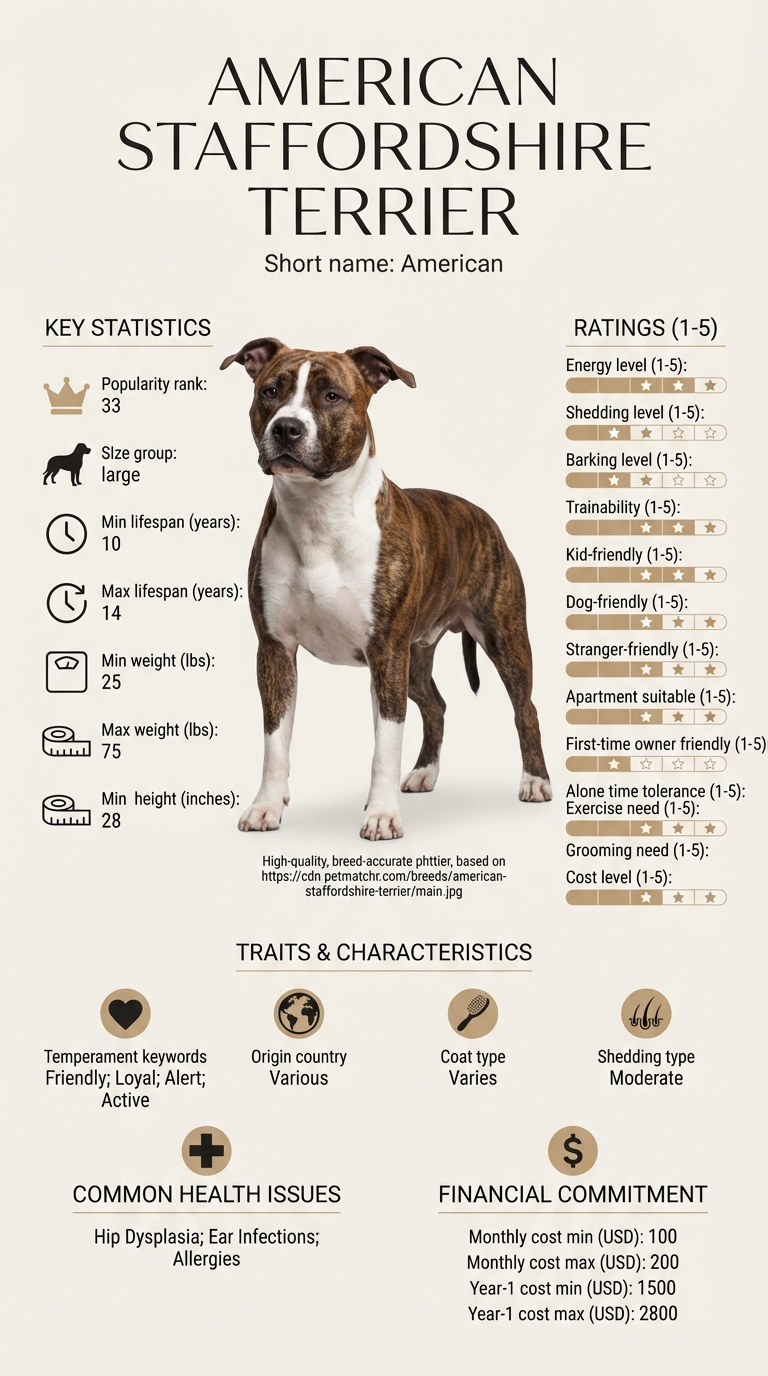
Owners of American Staffordshire Terriers may face challenges with this condition, especially those who are new to dog ownership or have busy lifestyles. Understanding how to adapt to their pet's needs is crucial for providing the best support.
This guide is not medical advice. If your dog shows pain, sudden behavior change, or worsening symptoms, consult a licensed veterinarian.
Some links may be affiliate links. We may earn a commission at no extra cost to you. We only suggest products we believe are helpful for dog owners.
American Staffordshire Terrier progressive retinal atrophy (pra-rcd3) is a serious condition that leads to vision loss. This genetic disorder affects the retina, causing it to deteriorate over time. As a result, your dog may experience difficulty seeing in low light and eventually lose their sight completely.
This condition is relatively common in American Staffordshire Terriers, particularly those with a family history of eye problems. It's important to monitor your dog's vision and consult a vet if you notice changes.
American Staffordshire Terriers are prone to genetic conditions, including Progressive Retinal Atrophy (PRA-rcd3). This inherited disorder affects the retina, leading to gradual vision loss. If you notice signs of diminished eyesight, it may be related to this breed's predisposition.
Environmental factors can also contribute to vision problems. Poor lighting, lack of stimulation, or unsafe surroundings can exacerbate the effects of PRA-rcd3. Additionally, emotional stress or anxiety may lead to behavioral changes that affect how your dog navigates their environment.
If your dog's behavior changes significantly or they struggle with basic commands, it may be time to consult a professional trainer. Trainers can provide tailored strategies to help your dog adapt to their vision loss and enhance their confidence.
Always consult your vet if you notice signs of vision loss. A veterinarian can confirm if it's PRA-rcd3 or another issue. Regular eye check-ups are essential for early intervention and to discuss potential management options.
Managing American Staffordshire Terrier progressive retinal atrophy (pra-rcd3) can vary by dog, but expect to see gradual changes over months to years. Regular vet check-ups will help track progression.
Success means maintaining a good quality of life for your dog. This includes adapting your home and routine to support their vision changes, helping them navigate with confidence, and ensuring they remain active and engaged.
Avoiding common pitfalls can help manage your American Staffordshire Terrier's progressive retinal atrophy (pra-rcd3) more effectively. Here are some mistakes to look out for.
Call your vet immediately if you notice your dog suddenly bumping into objects, showing signs of severe disorientation, or exhibiting unusual behaviors like fearfulness or aggression. These could indicate rapid vision loss or other complications that need urgent assessment.
Other red flags include excessive squinting, unusual eye movements, or any signs of pain, such as whining or pawing at their face. If your dog seems unable to navigate familiar spaces, it’s best to seek help right away.
On the other hand, if your American Staffordshire Terrier is experiencing mild vision issues, such as a gradual decline in sight without the severe behaviors mentioned above, you may choose to monitor them at home. Keep a close eye on their behavior, and maintain a safe environment free of obstacles. Regular vet check-ups can help track the progression of the condition.
In summary, prioritizing your dog’s immediate safety is key. If you are in doubt about your pet's symptoms, it’s always safer to err on the side of caution and consult with your veterinarian.

When Sarah adopted Max, her American Staffordshire Terrier, she noticed he was becoming less enthusiastic about his favorite games. After a vet visit, she learned he had progressive retinal atrophy (pra-rcd3). Instead of resigning to the diagnosis, Sarah began creating a safe environment for him. She rearranged furniture to create clear paths and used sound cues, like a bell, to help him locate his toys. Over time, Max adjusted well and continued to enjoy his daily walks, even if they required a bit more direction. Sarah found that with patience and creativity, they could both adapt to his changing needs.
Key takeaway: With the right adjustments and support, dogs with progressive retinal atrophy can still lead fulfilling lives. Embrace the changes and focus on enhancing their quality of life.
American Staffordshire Terrier progressive retinal atrophy (pra-rcd3) is a genetic condition that leads to gradual vision loss. It affects the retina, causing dogs to lose their sight over time. Early detection is key, so regular vet check-ups are important.
This condition is often hereditary, meaning it can be passed down from parent dogs to puppies. If your dog has been diagnosed, it's crucial to consult with your vet for a proper understanding and management options.
To help your dog, maintain a consistent environment and avoid rearranging furniture. Training them with verbal cues can also enhance their confidence and help them navigate their surroundings better.
Currently, there is no cure for progressive retinal atrophy (pra-rcd3). However, your vet can provide guidance on managing the condition, which may include supplements and supportive care.
Common signs include difficulty navigating in low light, bumping into objects, or appearing disoriented. If you notice these behaviors, it’s crucial to consult your vet for a thorough examination.
Training should focus on verbal commands and positive reinforcement. Start with basic commands and gradually introduce new ones while ensuring a safe and familiar environment for your dog.
Early signs of progressive retinal atrophy in American Staffordshire Terriers can include difficulty seeing in low light, hesitance while navigating around furniture, or bumping into objects. You may also notice your dog being less active or avoiding new environments.
Yes, older American Staffordshire Terriers may experience a more rapid progression of symptoms due to age-related factors. It's crucial to monitor their behavior and consult your vet if you notice any changes in their vision or activity levels.
Currently, there is no cure for progressive retinal atrophy. However, maintaining a safe environment and providing support for your dog can help improve their quality of life. Regular vet check-ups can also help manage any complications.
To help your dog adjust, keep their environment consistent and free of obstacles. Using voice commands and touch can assist them when navigating. Consider training programs that focus on building confidence and adapting to their new way of sensing the world.
If you notice any signs of vision changes or if your dog seems disoriented, it's important to visit the vet promptly. Early diagnosis can help in managing the condition and ensuring your dog receives the necessary support.
Keep your home environment stable and free of obstacles. Use verbal cues during training to help your dog navigate safely.
Yes, it is a genetic condition that can be more prevalent in this breed, so awareness and early detection are vital.
Yes, but you should use a leash and be mindful of their surroundings. Familiar paths will help them feel more secure.
Talk about management options, potential supplements, and how to best support your dog’s quality of life.