Behavior
What are quick tips for American Staffordshire Terrier dental issues?
Brush your dog's teeth regularly, provide dental chews, and schedule annual vet check-ups. These steps can significantly reduce dental problems.

Quick answer
What are quick tips for American Staffordshire Terrier dental issues?
Brush your dog's teeth regularly, provide dental chews, and schedule annual vet check-ups. These steps can significantly reduce dental problems.
American Staffordshire Terrier dental issues can lead to serious health problems if left untreated. These issues often stem from poor dental hygiene, which can affect your dog's overall well-being.
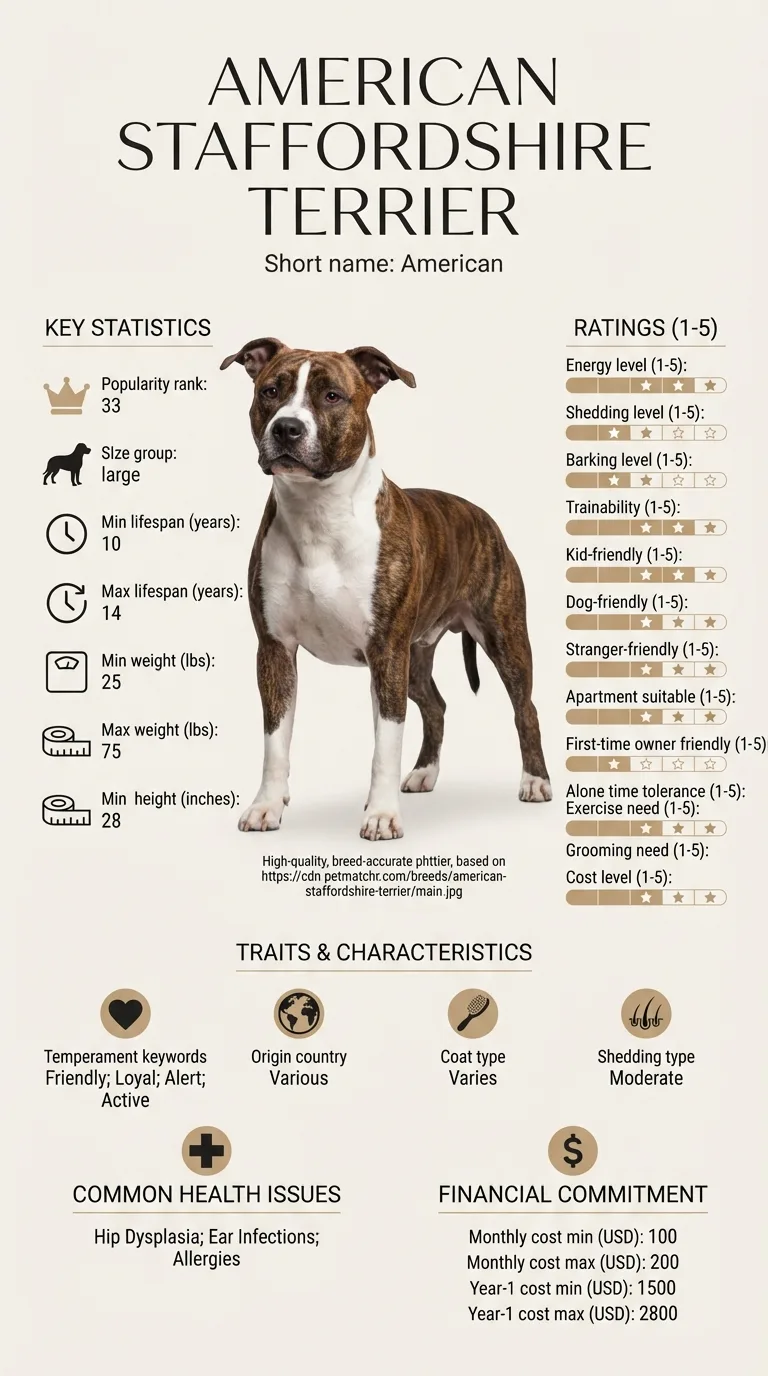
Many American Staffordshire Terrier owners, especially first-time dog parents, face challenges in managing their pet's dental care. Busy lifestyles and lack of awareness about dental health can make it difficult to maintain their dog's oral hygiene.
This guide is not medical advice. If your dog shows pain, sudden behavior change, or worsening symptoms, consult a licensed veterinarian.
Some links may be affiliate links. We may earn a commission at no extra cost to you. We only suggest products we believe are helpful for dog owners.
We research and check what we publish, but we do not warrant that any figure, date, price, or statement is accurate, complete, or current, and we accept no liability for any loss, cost, injury, or other harm arising from the use of this site. Use it as one reference among several. You remain responsible for your own decisions and for your dog's care - confirm anything that matters with a licensed veterinarian or another qualified professional before you act on it. Full disclaimer.
Check this first
Understanding when dental issues in your American Staffordshire Terrier require immediate attention is crucial. It can be the difference between a treatable condition and a serious health risk. Here are the signs to look for that indicate you should call your vet right away.
Red flags include severe bad breath, which could indicate an infection. If your dog is drooling excessively or has difficulty eating, these are signs of potential pain or dental decay that need urgent evaluation. Additionally, if your American Staffordshire Terrier has swollen gums, visible abscesses, or is showing signs of distress, such as whimpering or reluctance to chew or play, you should seek veterinary care immediately.
On the other hand, some dental issues can be monitored with a plan. For example, if you notice slight tartar buildup or occasional bad breath without other concerning symptoms, it may be manageable at home. Regular dental cleanings and good oral hygiene practices can help. If your dog is eating normally, has no swelling, and is not in distress, you can keep an eye on the situation while planning for a vet visit soon. Regular check-ups are essential to catch any developing issues early. Always consult your veterinarian if you're unsure about your dog's dental health.
If any of these apply, call your vet or an emergency clinic now. The rest of this page is for the cases that are not an emergency.
American Staffordshire Terrier dental issues can manifest as bad breath, tartar buildup, and gum inflammation. These problems can lead to pain and difficulty eating, making daily life uncomfortable for your dog. Regular dental care is essential to keep their mouths healthy.
Dental issues are fairly common among American Staffordshire Terriers, especially if their dental care is neglected. Many owners notice signs of dental problems as their dogs age, making it crucial to establish a regular dental routine early on.
American Staffordshire Terriers can be prone to dental issues due to their strong jaws and tendency to chew. Their breed characteristics might lead them to develop tartar buildup or gum disease if dental care is neglected. Additionally, genetics may play a role in their dental health, making some individuals more susceptible to problems than others.
Environmental factors such as diet and dental hygiene practices are significant contributors. If an American Staffordshire Terrier is fed a diet high in soft foods, they may not get the natural abrasion needed to keep their teeth clean. Furthermore, lack of regular dental care, including brushing and dental check-ups, can exacerbate dental issues.
If you notice persistent bad breath, swollen gums, or your dog appears to be in pain while eating, it’s important to talk to your vet. Regular dental check-ups are essential, and your vet can assess whether professional cleaning or treatment is necessary to address any underlying issues.
Avoid these common mistakes to help manage your American Staffordshire Terrier's dental issues more effectively.
Start here: American Staffordshire Terrier Most Common Genetic Disorders
See all American Staffordshire Terrier health problems, which breeds are prone to dental issues, or the full American Staffordshire Terrier breed guide for temperament, exercise needs and ownership costs.
Improving your American Staffordshire Terrier's dental health typically takes about 2 to 3 months with consistent care and follow-up with your vet.
Success means your dog has healthier teeth and gums, reduced bad breath, and fewer vet visits related to dental issues. You'll notice your dog is more comfortable eating and playing.
Ava, a first-time dog owner, noticed her American Staffordshire Terrier, Max, had bad breath and seemed to struggle with chewing. Concerned about potential dental issues, she consulted her vet and learned about the importance of dental hygiene. Ava began a routine of brushing Max's teeth and providing dental chews. At first, it was a challenge; Max resisted the brushing. However, after a few weeks of positive reinforcement and patience, he started to enjoy the process. Now, Max has fresher breath and healthier teeth, and Ava feels proud of their progress.
Key takeaway: Consistency and patience are key when addressing American Staffordshire Terrier dental issues. With dedication, you can significantly improve your dog's dental health.
American Staffordshire Terriers can develop dental issues due to genetics, diet, and lack of dental care. Regular brushing and dental treats can help prevent problems. If you notice bad breath or gum inflammation, consult your vet.
To prevent dental issues in your American Staffordshire Terrier, establish a routine of brushing their teeth at least two to three times a week. You can also provide dental chews that promote oral health. Regular vet check-ups are essential for maintaining their dental hygiene.
Common dental problems in American Staffordshire Terriers include plaque buildup, tartar, gingivitis, and periodontal disease. These issues can lead to pain and other health complications if left untreated. Regular dental cleanings by a vet can help manage these risks.
You should start dental training as early as possible, ideally when your dog is a puppy. Introduce them to tooth brushing gradually to make the experience positive. Use flavored toothpaste made for dogs to encourage acceptance.
Generally, American Staffordshire Terriers should have a dental check-up at least once a year. However, if your dog shows signs of dental issues, such as bad breath or difficulty eating, schedule an appointment sooner. Regular assessments can help catch problems early.
Yes, dental issues can lead to serious health problems in American Staffordshire Terriers, including heart disease and infections. Keeping their teeth healthy is crucial for their overall well-being. Prioritizing dental care is an important part of your dog's health regimen.
Regular dental check-ups with your vet are crucial. Additionally, brushing their teeth at home and providing dental chews can help prevent issues. Incorporating a dental-friendly diet may also make a difference.
Yes, older dogs are generally at a higher risk for dental issues due to wear and tear over time. Regular dental cleanings become even more important as they age to maintain their oral health.
If you notice persistent bad breath, bleeding gums, or if your dog shows signs of pain while eating, you should consult your vet. It's better to address potential issues early to avoid more serious health problems.
Yes, training can encourage your dog to allow you to brush their teeth or use dental tools. Positive reinforcement techniques can make dental care a more pleasant experience for both you and your dog.
Brush your dog's teeth regularly, provide dental chews, and schedule annual vet check-ups. These steps can significantly reduce dental problems.
Use dog-friendly toothpaste and introduce brushing gradually. Pair brushing with dental treats for better results.
Limit sugary and sticky foods that can contribute to plaque buildup. Opt for high-quality dog food that promotes dental health.
Monthly dental care can range from $15 to $50, depending on products used and vet visits. Expect additional costs for professional cleanings.
A one-page prep sheet for this condition: the signs, the questions to ask, what to get priced. Unlocks here.
You get: Vet visit prep sheet
No spam. One-click unsubscribe. See our privacy policy.
Preview page 1 before you decide.