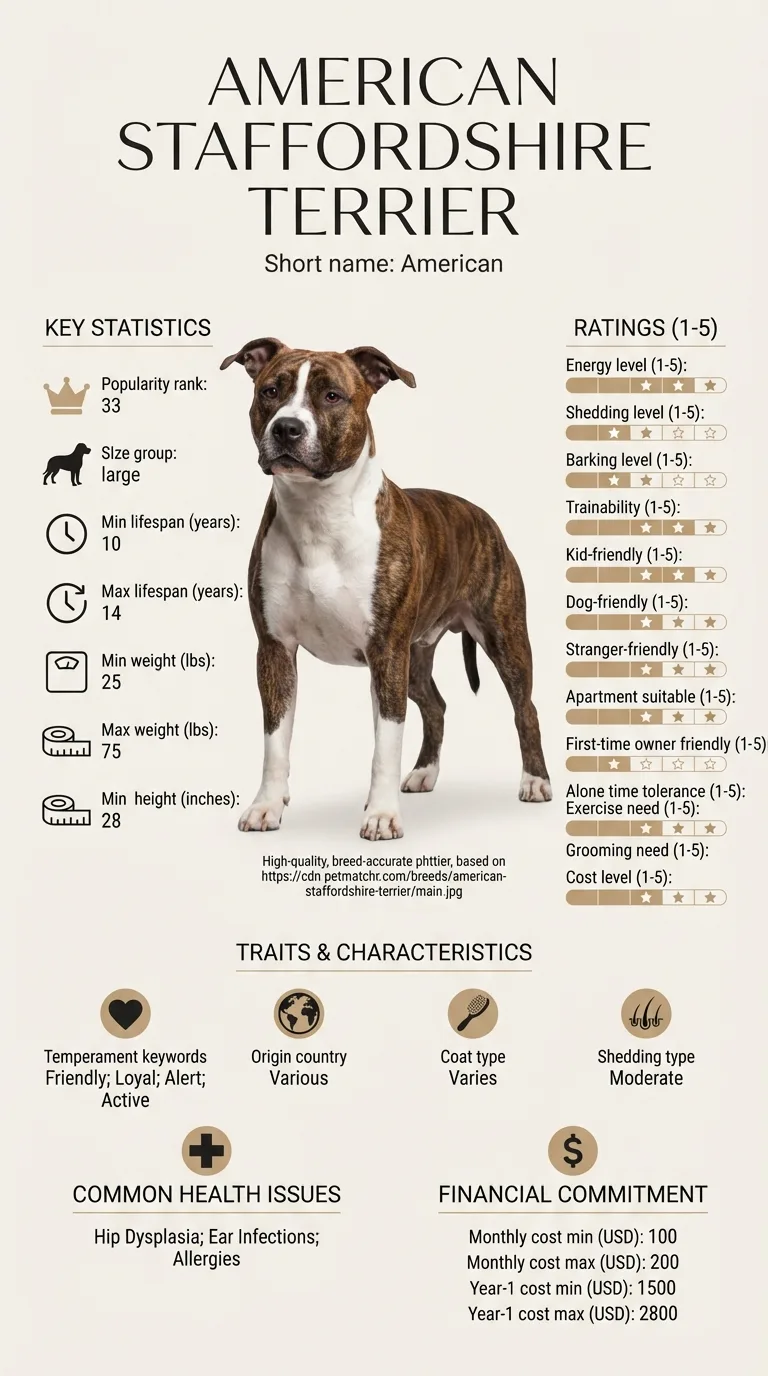
What are some quick tips for American Staffordshire Terrier back/spine issues?
Keep your dog at a healthy weight and provide regular, gentle exercise. Avoid letting them jump from heights and ensure their environment is safe for moving around.
American Staffordshire Terrier back/spine issues can be serious and painful for your dog. Identifying these problems early is crucial for their health.
Owners of American Staffordshire Terriers, especially those who are active or have older dogs, may notice back/spine issues. Busy families or first-time dog owners may find it challenging to recognize the early signs.
Important reminder
This guide is not medical advice. If your dog shows pain, sudden behavior change, or worsening symptoms, consult a licensed veterinarian.
Some links may be affiliate links. We may earn a commission at no extra cost to you. We only suggest products we believe are helpful for dog owners.
We research and check what we publish, but we do not warrant that any figure, date, price, or statement is accurate, complete, or current, and we accept no liability for any loss, cost, injury, or other harm arising from the use of this site. Use it as one reference among several. You remain responsible for your own decisions and for your dog's care - confirm anything that matters with a licensed veterinarian or another qualified professional before you act on it. Full disclaimer.
Check this first
When American Staffordshire Terrier Back/Spine Issues are an Emergency
Red flags that mean "call your vet now" include: sudden inability to move or walk, severe pain when touched, loss of bladder or bowel control, or visible swelling along the spine. These symptoms can indicate serious conditions like intervertebral disc disease or spinal injuries that need immediate attention.
On the other hand, mild cases can be monitored. If your American Staffordshire Terrier shows slight discomfort, such as occasional limping or reluctance to jump, it may be manageable with rest and a vet's guidance. Keep an eye on their behavior for changes, and consider a follow-up with your vet if symptoms persist or worsen.
In summary, be proactive and seek immediate care for severe symptoms, while keeping an eye on mild signs for any escalation. It's always better to err on the side of caution when it comes to your furry friend's health.
If any of these apply, call your vet or an emergency clinic now. The rest of this page is for the cases that are not an emergency.
What this problem looks like
American Staffordshire Terrier back/spine issues can be quite challenging for owners. These problems often manifest as difficulty in movement, reluctance to play, or signs of pain when touched along the back. Commonly, these issues arise from conditions like intervertebral disc disease, which affects mobility and comfort.
Common triggers
Genetics or hereditary conditions
Injury or trauma from rough play
Excessive jumping or strenuous activities
Back and spine issues are relatively common among American Staffordshire Terriers, especially as they age. Active lifestyles can increase the risk, making awareness essential for proactive care.
Why this happens
Breed factors
American Staffordshire Terriers can be prone to back and spine issues due to their strong and muscular build. Their size and weight can put extra strain on their spines, especially if they engage in high-impact activities. Additionally, genetic factors may also play a role in making them susceptible to conditions like intervertebral disc disease.
Environment factors
The environment significantly impacts back health. If an American Staffordshire Terrier is not provided with enough exercise, they may become overweight, exacerbating back issues. Moreover, a lack of proper support when sleeping or lying down can lead to discomfort and potential injury over time.
What you can do at home (once it is not an emergency)
When to talk to your vet
If your dog experiences persistent pain, difficulty in movement, or shows changes in behavior like reluctance to play or jump, it’s time to talk to your vet. They can provide a thorough examination and recommend appropriate treatment or preventive care.
At home, alongside your vet's plan
Ensure your dog maintains a healthy weight by monitoring their diet and providing regular exercise. Aim for daily walks and playtime to keep them fit.
Create a comfortable sleeping area with supportive bedding to help relieve pressure on their spine. Consider orthopedic dog beds designed for larger breeds.
Incorporate gentle stretching and low-impact exercises into their routine. Activities like swimming can be great for strengthening muscles without stressing the spine.
Mistakes that make Back/Spine Issues worse
Avoiding these common mistakes can significantly help your American Staffordshire Terrier's back and spine issues.
Ignoring early signs of pain: Many owners overlook the first signs of discomfort. Early intervention can prevent further issues, so pay attention to your dog's movements.
Inadequate exercise: While exercise is important, too much can strain your dog's back. Aim for low-impact activities like walking or swimming, rather than intense play.
Overweight dogs: Extra weight puts more strain on the spine. Monitor your dog’s diet and maintain a healthy weight to support their overall health.
Improper lifting: Lifting your dog incorrectly can lead to back injuries. Always use proper techniques, bending your knees and supporting their back when lifting.
Neglecting a safe environment: A cluttered space can lead to accidents. Ensure your home is safe and free from obstacles that could cause falls or injuries.
Failing to consult a vet: Many owners wait too long to seek help. Regular vet check-ups can catch spine issues early, so prioritize their health care.
Self-medicating: Using human medications can harm your dog. Always consult your vet before giving any medication to your American Staffordshire Terrier.
More American Staffordshire Terrier health & behavior issues
You can expect to see improvements in your American Staffordshire Terrier's back/spine issues within 4 to 8 weeks of consistent care adjustments and follow-up with your vet.
Success means your dog will show improved mobility and reduced pain, allowing them to enjoy daily activities without discomfort.
Maggie's Journey with Back Issues
Maggie, a 5-year-old American Staffordshire Terrier, started showing signs of back pain after a game of fetch. Her owner, Sarah, noticed Maggie hesitating to jump up on the couch and struggling to play. Concerned, Sarah visited the vet, who diagnosed Maggie with intervertebral disc disease. With a combination of physical therapy, gentle exercise, and a strict weight management plan, Sarah dedicated time each day to help Maggie recover. After two months, Maggie was back to her playful self, bounding around the yard with joy.
Key takeaway: Early intervention and a structured care plan can significantly improve your American Staffordshire Terrier's quality of life when dealing with back/spine issues.
Frequently asked questions
Why does my American Staffordshire Terrier have back/spine issues?
American Staffordshire Terriers can develop back/spine issues due to genetic factors, obesity, or injury. Regular vet check-ups can help catch any early signs of intervertebral disc disease. It's essential to monitor their weight and activity level to prevent stress on their spine.
How can I stop my American Staffordshire Terrier from having back/spine issues?
To prevent back/spine issues in your American Staffordshire Terrier, ensure they maintain a healthy weight and engage in regular, low-impact exercise. Avoid letting them jump from high places, and consider using stairs for access. Working with a veterinarian on a tailored exercise and diet plan can make a significant difference.
What training methods help with American Staffordshire Terrier back/spine issues?
Positive reinforcement training is effective for American Staffordshire Terriers. Teaching them commands like 'stay' and 'gentle' can prevent them from making sudden movements that strain their back. Consistent training sessions can also keep them mentally stimulated, reducing anxiety-related behaviors that may lead to injury.
What signs should I look for in my American Staffordshire Terrier regarding back/spine issues?
Watch for signs such as reluctance to jump, difficulty standing up, or changes in walking patterns. If your dog is whining or seems to be in pain when moving, these may be indicators of back/spine problems. Consult your vet if you notice any of these symptoms.
Can back/spine issues in American Staffordshire Terriers be treated?
Yes, treatment options for back/spine issues include medication, physical therapy, and in some cases, surgery. Early intervention is crucial, so consult your veterinarian if you suspect any spine-related problems. They can recommend the best course of action based on your dog's specific condition.
What are common signs of back/spine issues in American Staffordshire Terriers?
Common signs include difficulty standing up, reluctance to jump, and unusual postures. If your dog is whining or showing discomfort, it may be a sign of back/spine issues.
How can I prevent back/spine issues in my American Staffordshire Terrier?
Regular exercise and maintaining a healthy weight can help prevent back/spine issues. It's also essential to avoid strenuous activities that might strain their back.
Should I see a vet if my American Staffordshire Terrier shows signs of back pain?
Yes, it's crucial to consult a vet if you suspect back pain. Early diagnosis can lead to better treatment options and help avoid severe complications.
Are older American Staffordshire Terriers more prone to back/spine issues?
Yes, older dogs are typically more susceptible to back/spine issues due to natural wear and tear on their bodies. Regular check-ups with a vet can help monitor their health.
What treatments are available for American Staffordshire Terrier back/spine issues?
Treatments can range from medication and physical therapy to surgery, depending on the severity of the issue. Always consult your vet for the best course of action for your dog.
What are some quick tips for American Staffordshire Terrier back/spine issues?
Keep your dog at a healthy weight and provide regular, gentle exercise. Avoid letting them jump from heights and ensure their environment is safe for moving around.
Costs
How much does it cost to treat back/spine issues in American Staffordshire Terriers?
Treatment costs can vary widely, ranging from $300 for basic vet visits to several thousand dollars for surgery and rehabilitation. Regular vet check-ups can help catch issues early, which may reduce overall costs.
Health
What should I do if my American Staffordshire Terrier shows signs of pain?
If your dog shows signs of pain, such as whining or trouble moving, contact your vet immediately. Early intervention can help prevent further damage and improve recovery chances.
A fuller vet-visit kit for American Staffordshire Terrier Backspine Issues
The free prep sheet covers the same-day warning signs, a symptom log and the questions to ask. We are considering a fuller kit that adds a cost worksheet for the usual tests and treatments (US price ranges with their sources) and a plain-English guide to ways of covering the bill. It is not built yet; this list tells us whether it is worth building.
One email, no spam, unsubscribe anytime. Information only, not veterinary advice.