DogBreedCompass
← Back to breed profile

American Staffordshire Terrier Back Problems

American Staffordshire Terrier back problems can be a serious concern for owners. These issues often stem from their unique body structure, which includes a long spine and short legs.

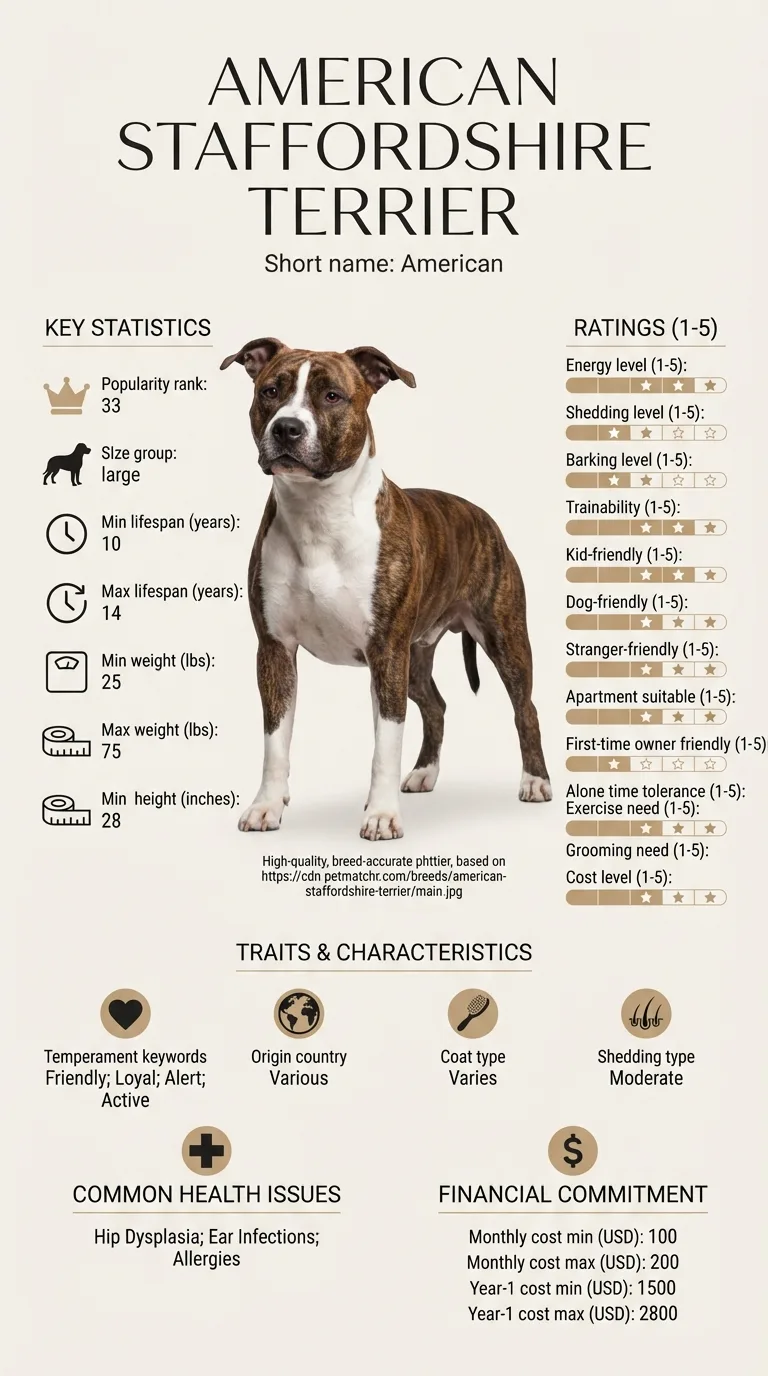
American Staffordshire Terrier Back Problems infographic

First-time dog owners, busy families, or anyone with a high-energy American Staffordshire Terrier may find themselves dealing with back problems. Recognizing the signs early can help prevent further complications.

Important reminder

This guide is not medical advice. If your dog shows pain, sudden behavior change, or worsening symptoms, consult a licensed veterinarian.

Some links may be affiliate links. We may earn a commission at no extra cost to you. We only suggest products we believe are helpful for dog owners.

What this problem looks like

American Staffordshire Terrier back problems often arise from their unique body structure. With a long spine and relatively short legs, these dogs can experience discomfort and mobility issues. Daily life may include signs like difficulty getting up, reluctance to jump, or noticeable pain when moving.

Common triggers

  • Excessive jumping or climbing
  • Overweight or obesity
  • Age-related wear and tear
  • Genetic predispositions

Back problems are fairly common in American Staffordshire Terriers, particularly as they age or if they are not properly exercised. Many owners report these issues, making it a concern that requires attention and management.

Why this happens

Breed factors

The American Staffordshire Terrier has a long spine and relatively short legs. This body structure can put extra strain on their back, making them more susceptible to injuries and chronic pain. Additionally, some genetic factors may predispose them to conditions like hip dysplasia, which can contribute to back issues.

Environment factors

Their environment plays a significant role in their back health. Lack of exercise or improper exercise can lead to weight gain, putting more stress on their backs. Furthermore, jumping from high surfaces or not having proper support when climbing stairs can exacerbate existing back problems.

What you can try

At-home strategies

  • Provide a comfortable, supportive bed to help alleviate pressure on their spine.
  • Ensure your dog has a balanced diet to maintain a healthy weight, reducing strain on their back.
  • Incorporate low-impact exercises like walks and gentle play to keep their muscles strong without overexertion.
  • Use ramps or steps to help them access furniture or cars without jumping.
  • Teach them commands that prevent sudden movements, like 'slow' or 'easy,' to minimize risks.

When to consider a trainer

If your American Staffordshire Terrier shows signs of back pain, such as reluctance to move or play, consider consulting a professional dog trainer. They can help you develop a tailored exercise and training plan that respects your dog's limitations while encouraging mobility.

When to talk to your vet

If you notice persistent signs of discomfort, such as whining, limping, or difficulty standing, it's essential to talk to a vet. They can assess your dog's back health and recommend treatments or therapies, ensuring your furry friend gets the care they need.

Realistic expectations

You can expect to see improvements in your American Staffordshire Terrier's back problems within 4 to 8 weeks of consistent training and care.

Success means your dog shows less discomfort, has improved mobility, and engages in activities they enjoy without pain.

Mistakes that make this worse

Many owners unintentionally worsen American Staffordshire Terrier back problems by making common mistakes. Here are some behaviors to avoid, along with safer alternatives.

  • Ignoring early signs of discomfort: Many owners dismiss initial signs of back pain, thinking their dog will outgrow it. Instead, consult a vet at the first sign of discomfort to prevent worsening issues.
  • Inadequate exercise: Over-exercising or under-exercising can strain your dog’s back. Focus on balanced, low-impact activities that strengthen their core without putting pressure on their spine.
  • Lifting incorrectly: If you lift your dog by their front legs or under their belly, it can cause back strain. Always support their rear end and keep them close to your body when lifting.
  • Using the wrong harness: A poorly fitting harness can create tension on the back. Ensure you use a harness that distributes weight evenly across their body.
  • Neglecting weight management: Overweight dogs are more prone to back problems. Maintain a healthy diet and monitor their weight to reduce strain on their spine.
  • Skipping warm-ups: Many owners forget to warm up their dogs before exercise. Simple stretching exercises can help prepare their muscles and reduce the risk of injury.
  • Inconsistent training: Inconsistent or harsh training methods can increase anxiety, leading to physical strain. Use positive reinforcement to build trust and reduce stress.

When American Staffordshire Terrier Back Problems Are an Emergency

Recognizing when back problems in your American Staffordshire Terrier require immediate veterinary attention is crucial. Some signs are red flags that should prompt a call to your vet right away. If your dog is unable to stand, experiences severe pain, or has difficulty walking, these indicate a serious issue. Other emergency signs include loss of bladder or bowel control, or if your dog shows sudden aggression or disorientation. These symptoms could signal a significant injury or condition that needs urgent care.

On the other hand, some cases of back problems can be monitored at home. If your dog shows mild discomfort, such as occasional limping or reluctance to jump, it may be possible to watch and wait. You can create a plan that includes rest, gentle stretching, and monitoring their activity. However, it's important to note that even mild signs should be discussed with your vet. They can provide guidance on how to manage these issues effectively and prevent them from worsening.

American Staffordshire Terrier Back Problems - When American Staffordshire Terrier Back Problems Are an Emergency

Overcoming Back Problems with Max the American Staffordshire Terrier

When Lisa adopted Max, her American Staffordshire Terrier, she quickly noticed that he struggled to jump onto the couch and seemed stiff after playtime. Concerned, she took him to the vet, who confirmed that Max had some back problems likely due to his long spine and short legs. Realizing that she needed to take action, Lisa enrolled Max in a specialized training class focused on building strength and flexibility. She also adjusted his exercise routine to include low-impact activities like swimming and gentle walks. After several weeks, Max was able to move more freely and even started playing fetch again with enthusiasm.

Key takeaway: With proper training and care, American Staffordshire Terriers can overcome back problems and lead active lives.

Frequently asked questions

Why does my American Staffordshire Terrier have back problems?

American Staffordshire Terrier back problems often arise due to their long spine and short legs, which can lead to strain. Regular exercise and maintaining a healthy weight are essential to support their spine. Additionally, genetics can play a role in their susceptibility to back issues.

How can I prevent back problems in my American Staffordshire Terrier?

To prevent American Staffordshire Terrier back problems, ensure your dog maintains a healthy weight and gets regular exercise. Avoid jumping from high places or excessive twisting during play. Regular vet check-ups can also help identify potential issues early.

What are the signs of back problems in my American Staffordshire Terrier?

Signs of back problems in your American Staffordshire Terrier may include difficulty standing, reluctance to jump or climb stairs, and changes in behavior like increased whining. Watch for signs of pain or stiffness, especially after exercise.

Are there specific training methods to help with back problems?

Yes, training methods that focus on low-impact activities can be beneficial for American Staffordshire Terriers with back problems. Engage them in gentle leash walking or swimming, which helps strengthen muscles without stressing the spine.

When should I see a vet about my American Staffordshire Terrier's back?

If your American Staffordshire Terrier shows signs of pain, has difficulty moving, or if their behavior changes significantly, it's time to see a vet. Early intervention can prevent more serious issues from developing.

What are the common signs of back problems in my American Staffordshire Terrier?

Common signs include reluctance to play, difficulty standing up, or a hunched posture. You might also notice them whining or yelping when moving, which can indicate pain.

Should I take my older American Staffordshire Terrier to the vet for back problems?

Yes, especially if they show signs of discomfort or unusual behavior. Older dogs can be more susceptible to back problems, and early intervention can prevent further issues.

Can back problems in American Staffordshire Terriers be managed with training?

Yes, training can help strengthen their muscles and improve their flexibility. A vet or professional trainer can recommend specific exercises tailored for your dog’s needs.

Why does my American Staffordshire Terrier have back problems?

Back problems can stem from genetics, obesity, or improper exercise. Breeds like the American Staffordshire Terrier, with long spines and short legs, are more prone to these issues.

What are some quick tips to prevent back problems in American Staffordshire Terriers?

Ensure your dog maintains a healthy weight, provide regular exercise, and avoid jumping from high places. Additionally, consult your vet about proper nutrition and exercise routines.

Quick answers

View more answers
Behavior

What are quick tips for American Staffordshire Terrier back problems?

To address American Staffordshire Terrier back problems, keep your dog at a healthy weight and avoid strenuous activities. Regular vet visits can also help monitor their spine health.

Training

How to train an American Staffordshire Terrier to avoid back strain?

Focus on gentle training techniques that limit jumping and twisting. Use positive reinforcement to encourage low-impact activities.

Health

What signs indicate my American Staffordshire Terrier needs a vet?

Look for signs like reluctance to move, whining, or unusual stiffness. If you notice these, consult your vet promptly.

Related DogBreedCompass guides

  • American Staffordshire Terrier back problems trainingUnderstand the common causes of back problems in American Staffordshire Terriers and how to prevent them.
  • American Staffordshire Terrier separation anxiety guideLearn effective strategies for managing separation anxiety in American Staffordshire Terriers, which can relate to back issues.
  • American Staffordshire Terrier behavior problemsGet insights into the typical behavior problems faced by American Staffordshire Terriers and how they can impact their health.
  • American Staffordshire Terrier cost breakdownExplore the costs associated with owning an American Staffordshire Terrier, including potential medical expenses for back problems.
  • American Staffordshire Terrier health issuesFind out more about the common health issues for American Staffordshire Terriers, including back problems and how to address them.

Related guides