Health
What are quick tips for managing American Staffordshire Terrier autoimmune diseases?
Ensure regular vet visits, maintain a balanced diet, and monitor for any skin changes. Consistent care is vital for managing symptoms.

Quick answer
What are quick tips for managing American Staffordshire Terrier autoimmune diseases?
Ensure regular vet visits, maintain a balanced diet, and monitor for any skin changes. Consistent care is vital for managing symptoms.
Autoimmune diseases can seriously affect your American Staffordshire Terrier's health and happiness. These conditions often lead to skin issues, hair loss, and overall discomfort.
Typically, owners of American Staffordshire Terriers who notice unusual skin conditions or persistent health issues will face this challenge. New pet parents or those unfamiliar with autoimmune problems may find it particularly overwhelming.
This guide is not medical advice. If your dog shows pain, sudden behavior change, or worsening symptoms, consult a licensed veterinarian.
Some links may be affiliate links. We may earn a commission at no extra cost to you. We only suggest products we believe are helpful for dog owners.
We research and check what we publish, but we do not warrant that any figure, date, price, or statement is accurate, complete, or current, and we accept no liability for any loss, cost, injury, or other harm arising from the use of this site. Use it as one reference among several. You remain responsible for your own decisions and for your dog's care - confirm anything that matters with a licensed veterinarian or another qualified professional before you act on it. Full disclaimer.
Check this first
If your dog shows severe symptoms like sudden lethargy, significant weight loss, or labored breathing, these are red flags. Other emergency signs include persistent vomiting, diarrhea, or any severe skin lesions that bleed or ooze. In these instances, you should contact your veterinarian immediately.
On the other hand, mild symptoms such as occasional itching or minor skin irritations may not require immediate action. You can monitor these issues at home, keeping an eye on their progression. Consider scheduling a vet appointment if symptoms persist for more than a few days or worsen over time.
Always trust your instincts. If you feel something is off with your American Staffordshire Terrier, don’t hesitate to reach out to your vet. It’s better to be safe than sorry when it comes to your furry friend’s health.
If any of these apply, call your vet or an emergency clinic now. The rest of this page is for the cases that are not an emergency.
American Staffordshire Terriers can face challenges with autoimmune diseases, which are conditions where the immune system mistakenly attacks healthy cells. This often manifests as skin conditions, leading to sores and hair loss. Owners may notice their dog scratching more than usual or developing patches of irritated skin.
Autoimmune diseases are relatively common in American Staffordshire Terriers, with some studies suggesting that certain autoimmune disorders may affect up to 10% of the breed. This highlights the importance of monitoring their health and being proactive in managing any signs of illness.
The American Staffordshire Terrier can be predisposed to autoimmune diseases due to genetic factors. Some lines may carry specific genetic markers that increase susceptibility. Additionally, their immune system may react poorly to certain environmental triggers.
Environmental factors can also play a significant role in autoimmune diseases. Exposure to allergens, toxins, or infections can compromise their immune system. Stressful situations, such as frequent changes in their living environment, may further exacerbate these issues.
If you notice persistent skin issues, hair loss, or unusual behavior, it's essential to talk to your vet. They can conduct tests to determine if autoimmune diseases are present and recommend appropriate treatments.
Avoiding common pitfalls can significantly help your American Staffordshire Terrier's autoimmune conditions. Here are some mistakes to steer clear of, along with safer alternatives.
Start here: American Staffordshire Terrier Most Common Genetic Disorders
See all American Staffordshire Terrier health problems, which breeds are prone to autoimmune diseases, or the full American Staffordshire Terrier breed guide for temperament, exercise needs and ownership costs.
It can take several weeks to months to see improvements in your American Staffordshire Terrier's autoimmune diseases. Consistent treatment and care are key.
Success means your dog shows reduced symptoms, such as fewer sores and better coat health. You'll also notice an overall improvement in their energy and mood.
When Sarah adopted Max, her American Staffordshire Terrier, he had noticeable skin issues. His fur was patchy, and he often scratched, leaving sores. After consulting with her vet, Sarah learned that Max had an autoimmune disease. She committed to a treatment plan that included a special diet, regular vet visits, and topical medications. Over three months, Sarah diligently followed the vet's advice and provided Max with a loving and calm environment. Slowly, his coat began to fill in, and his energy levels improved. Max was happier, and so was Sarah.
Key takeaway: Patience and consistent care can significantly improve your dog's autoimmune health.
Autoimmune diseases in American Staffordshire Terriers can stem from genetic predisposition, environmental factors, or even infections. If your dog shows symptoms like skin sores or hair loss, it's crucial to consult a veterinarian for a proper diagnosis.
Providing a balanced diet rich in omega-3 fatty acids can support your American Staffordshire Terrier's immune system. Regular vet check-ups and following prescribed treatments are essential for managing symptoms.
Look for symptoms like persistent skin irritations, hair loss, or lethargy. If these signs appear, it's important to seek veterinary care to determine if autoimmune disease is the cause.
Training can help your dog cope with stress, which may benefit their overall health. While training won't cure autoimmune diseases, it promotes a healthy relationship and can improve your dog's quality of life.
Treatment often includes medications to suppress the immune response, topical treatments for skin issues, and dietary changes. Always discuss treatment options with your veterinarian.
Focus on managing their environment, maintaining a healthy diet, and providing regular veterinary care. Keeping stress levels low is also key to minimizing flare-ups.
Yes, individual dogs can have genetic factors that make them more susceptible to autoimmune diseases. If you have concerns about your dog's health, consult your vet for advice.
Early signs of autoimmune diseases in an American Staffordshire Terrier can include skin issues like sores, hair loss, and unusual itching. You might also notice changes in energy levels or appetite. If you see these symptoms, it's important to consult your vet.
Yes, some autoimmune diseases can be hereditary in American Staffordshire Terriers. If you have concerns about your dog's lineage, discussing this with a breeder or veterinarian can provide more clarity. Responsible breeding practices can help reduce the risk of these issues.
Support your American Staffordshire Terrier by providing a balanced diet and regular vet check-ups. Keeping their environment stress-free and ensuring they have a consistent routine can also help. Training and socialization can improve their overall well-being.
If your American Staffordshire Terrier's symptoms worsen, it's crucial to contact your veterinarian immediately. They may suggest further testing or a change in treatment to better manage your dog's health. Quick action can make a significant difference.
Yes, older American Staffordshire Terriers can develop autoimmune diseases. As dogs age, their immune systems may weaken, making them more susceptible. Regular veterinary check-ups are essential for early detection and management of these conditions.
Ensure regular vet visits, maintain a balanced diet, and monitor for any skin changes. Consistent care is vital for managing symptoms.
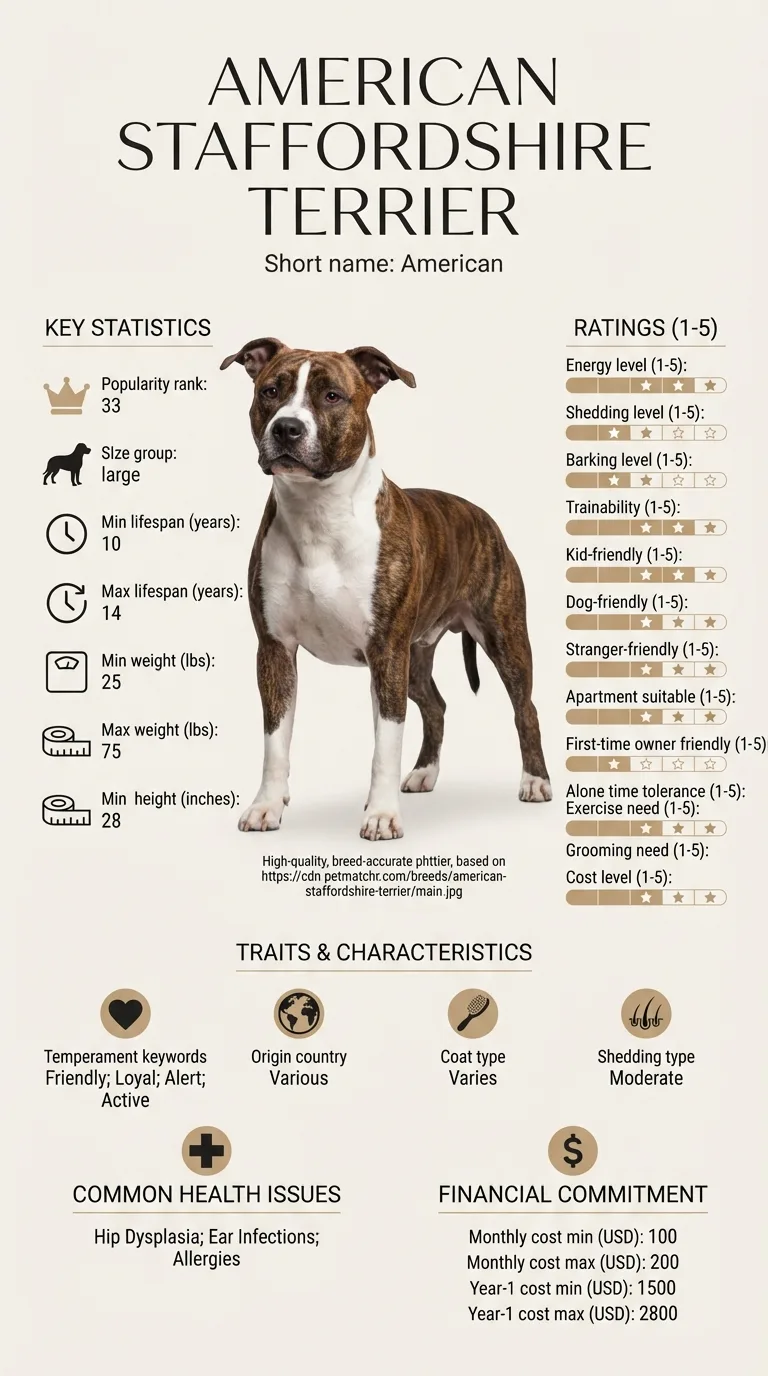
Expect to spend between $100 to $200 monthly on health care costs, including vet visits and medications.
Yes, stress can exacerbate symptoms. Providing a calm environment and engaging in positive training can help reduce stress levels.
A diet rich in omega-3s and low in allergens can support their immune system. Always consult your vet for tailored dietary advice.
Contact your veterinarian immediately for a thorough examination and appropriate treatment options.
A one-page prep sheet for this condition: the signs, the questions to ask, what to get priced. Unlocks here.
You get: Vet visit prep sheet
No spam. One-click unsubscribe. See our privacy policy.
Preview page 1 before you decide.