Behavior
What are quick tips for managing Alaskan Malamute exercise intolerance?
Shorten exercise sessions, offer breaks in the shade, and keep them hydrated. Gradual increases in activity can also help improve their tolerance over time.

Quick answer
What are quick tips for managing Alaskan Malamute exercise intolerance?
Shorten exercise sessions, offer breaks in the shade, and keep them hydrated. Gradual increases in activity can also help improve their tolerance over time.
Alaskan Malamutes can experience exercise intolerance, which poses risks like overheating and overexertion. This can be concerning for their owners.
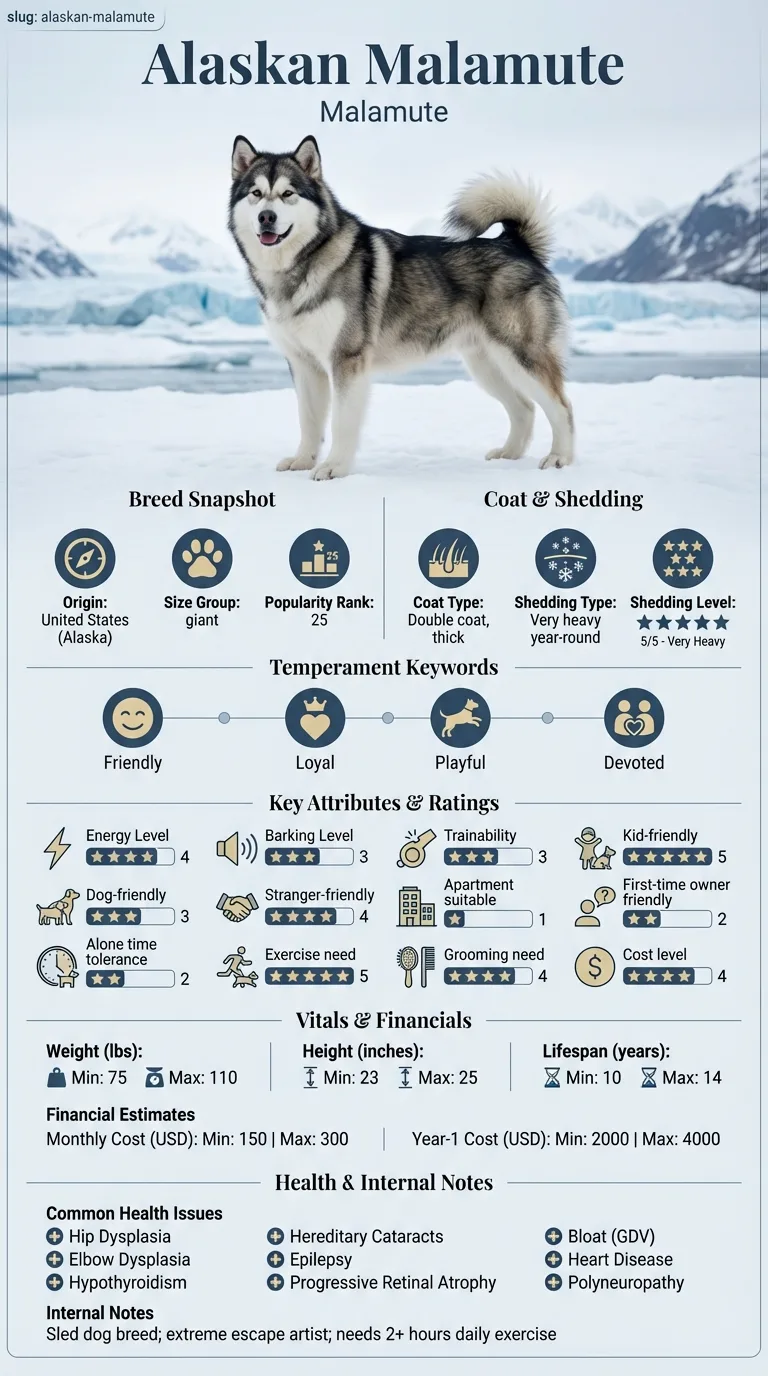
This issue often affects first-time Malamute owners who may not fully understand the breed's exercise requirements. It's also common for busy families or individuals living in warmer climates, where overheating can be a significant concern.
This guide is not medical advice. If your dog shows pain, sudden behavior change, or worsening symptoms, consult a licensed veterinarian.
Some links may be affiliate links. We may earn a commission at no extra cost to you. We only suggest products we believe are helpful for dog owners.
We research and check what we publish, but we do not warrant that any figure, date, price, or statement is accurate, complete, or current, and we accept no liability for any loss, cost, injury, or other harm arising from the use of this site. Use it as one reference among several. You remain responsible for your own decisions and for your dog's care - confirm anything that matters with a licensed veterinarian or another qualified professional before you act on it. Full disclaimer.
Check this first
Recognizing when your Alaskan Malamute's exercise intolerance becomes an emergency is crucial. If your dog shows signs of severe distress, it's time to call your vet immediately. These red flags include excessive panting, inability to stand or walk, lethargy, or a sudden collapse during or after exercise. Another critical sign is if your dog has a rapid heart rate or a high body temperature, indicating overheating.
In contrast, if your Malamute is simply hesitant to engage in play or appears a bit tired after moderate exercise, you can monitor the situation. Look for signs like mild panting, temporary fatigue, or short recovery periods. Make a note of these instances and adjust their exercise routine gradually. Keeping a close eye on their behavior and energy levels can help you identify any patterns that may require further attention.
Overall, if you're ever uncertain about your dog's condition, it's best to err on the side of caution and consult with your vet. They can provide guidance tailored to your Malamute’s specific needs.
If any of these apply, call your vet or an emergency clinic now. The rest of this page is for the cases that are not an emergency.
Alaskan Malamute exercise intolerance can be a real concern for owners. This condition makes it difficult for your Malamute to handle physical activity, leading to overheating or fatigue during what should be enjoyable walks or play sessions. Daily life can become challenging, as these dogs may struggle with their high exercise needs, which can lead to frustration for both the dog and the owner.
Exercise intolerance can affect many Alaskan Malamutes, especially those with underlying health problems. While it's not guaranteed every Malamute will experience this issue, it's frequent enough that potential owners should be aware and prepared.
Alaskan Malamutes are large, powerful dogs bred for endurance rather than speed. Their thick double coat can make them more susceptible to overheating, especially in warmer weather. Additionally, some health issues common in the breed, such as hip dysplasia and heart disease, can contribute to exercise intolerance.
If Malamutes do not gradually acclimate to exercise, they may struggle. Extreme temperatures, either hot or cold, can also impact their ability to perform physically. Stressful environments or lack of proper hydration can further exacerbate their exercise intolerance.
If you notice persistent exercise intolerance or any concerning symptoms, such as coughing or lethargy, it's essential to consult a vet. Health issues like hip dysplasia or heart disease may require medical attention and specific management strategies.
Avoiding these common mistakes can help manage your Alaskan Malamute's exercise intolerance effectively.
Start here: Alaskan Malamute Most Common Genetic Disorders: Screening
See all Alaskan Malamute health problems, which breeds are prone to exercise intolerance, or the full Alaskan Malamute breed guide for temperament, exercise needs and ownership costs.
You can expect to see improvements in your Alaskan Malamute's exercise tolerance within a few weeks to a couple of months with consistent care under your vet's plan.
Success looks like your dog being able to participate in activities without excessive fatigue or overheating, enjoying walks or playtime with manageable energy levels.
Sarah, a busy veterinary nurse in Seattle, adopted Max, an Alaskan Malamute. Initially, she was excited to take him on long hikes, but she quickly noticed that Max would tire out easily and often seemed to overheat. Concerned, she consulted her vet, who suggested a gradual exercise plan combined with training to build Max's stamina safely. Sarah started with shorter walks and gradually increased their length, incorporating water breaks and cooler times of day for exercise. After a few months, Max was not only able to enjoy longer walks but also loved playing fetch in the park without showing signs of fatigue.
Key takeaway: Patience and a structured exercise plan can help manage exercise intolerance in Alaskan Malamutes, allowing them to enjoy physical activities safely.
Alaskan Malamutes may experience exercise intolerance due to their thick double coat, which can lead to overheating during physical activity. Additionally, underlying health issues such as hip dysplasia or hypothyroidism might contribute to low energy levels. It’s essential to monitor their activity and consult a vet if you notice persistent issues. This answer relates to Alaskan Malamute exercise intolerance.
To assist your Alaskan Malamute, ensure they have shorter, more frequent exercise sessions instead of long, intense workouts. Keep activities in cooler temperatures and provide plenty of hydration. Gradually increase their exercise time as they build stamina, and always watch for signs of fatigue.
Signs of exercise intolerance include excessive panting, lethargy, and reluctance to engage in play. If your Malamute seeks shade or water often during exercise, this may also indicate they're overexerted. Always listen to their cues and adjust activities accordingly.
Yes, diet plays a significant role in your Alaskan Malamute's energy levels. A balanced diet rich in essential nutrients can help maintain their stamina. Consult with your vet to ensure their food meets their specific energy needs.
If your Alaskan Malamute shows continuous signs of exercise intolerance, such as persistent fatigue or difficulty breathing, it’s crucial to consult a vet. They can evaluate for underlying health issues and suggest appropriate modifications to their exercise routine.
Yes, exercise intolerance can become more common as Alaskan Malamutes age. Older dogs may have reduced stamina, joint issues, or other health problems that affect their ability to exercise.
If your Malamute shows persistent signs of exercise intolerance, it's important to consult a vet. Symptoms like collapsing, prolonged panting, or reluctance to move could indicate serious health issues.
Yes, exercise intolerance can often be managed with gradual training and conditioning. Start with short, low-intensity sessions and gradually increase the duration and intensity based on your dog's comfort level.
Certain breeds, including the Alaskan Malamute, are more prone to exercise intolerance due to their physical structure and health predispositions. It's crucial to understand your dog's specific needs and adjust exercise routines accordingly.
Shorten exercise sessions, offer breaks in the shade, and keep them hydrated. Gradual increases in activity can also help improve their tolerance over time.
Aim for at least 2 hours of exercise daily, but split it into manageable sessions to avoid overexertion.
Avoid exercising in high temperatures, as Malamutes can overheat quickly. Opt for cooler times of the day for walks or play.
If they refuse to exercise, assess their health and environment. Consider their comfort and energy levels, and consult a vet if the behavior persists.
A one-page prep sheet for this condition: the signs, the questions to ask, what to get priced. Unlocks here.
You get: Vet visit prep sheet
No spam. One-click unsubscribe. See our privacy policy.
Preview page 1 before you decide.