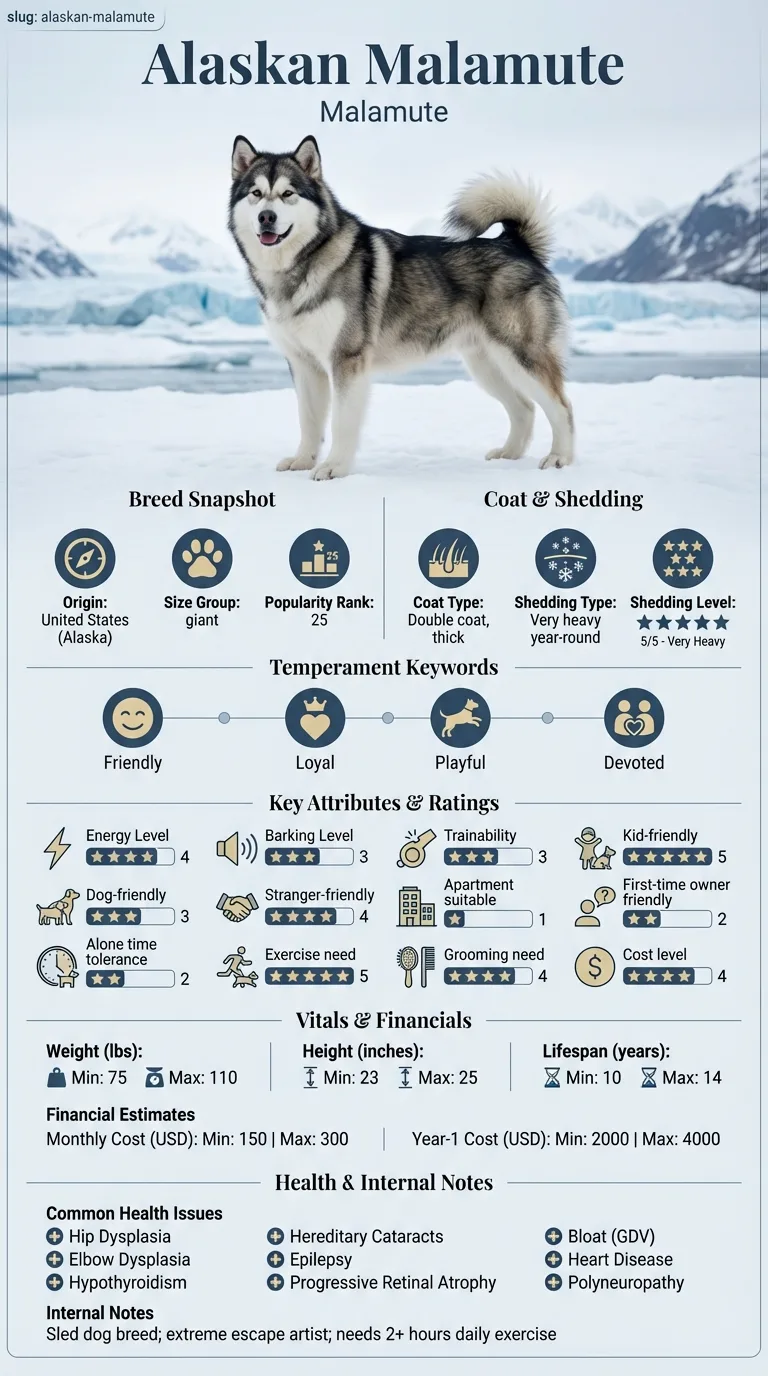
Alaskan Malamute Dilated Cardiomyopathy (DCM): What You Need to Know
Quick answer
What are quick tips for managing DCM in Alaskan Malamutes?
Monitor your Malamute for symptoms and schedule regular vet check-ups. Maintain a healthy diet and limit intense exercise. Follow your vet's recommendations for medication and treatment plans.
Alaskan Malamute dilated cardiomyopathy (DCM) is a serious heart condition that can lead to sudden cardiac death in these dogs.
Owners of Alaskan Malamutes, especially those with older dogs or a family history of heart issues, often face challenges managing this condition. It's crucial for them to stay informed about symptoms and treatment options.
Important reminder
This guide is not medical advice. If your dog shows pain, sudden behavior change, or worsening symptoms, consult a licensed veterinarian.
Some links may be affiliate links. We may earn a commission at no extra cost to you. We only suggest products we believe are helpful for dog owners.
We research and check what we publish, but we do not warrant that any figure, date, price, or statement is accurate, complete, or current, and we accept no liability for any loss, cost, injury, or other harm arising from the use of this site. Use it as one reference among several. You remain responsible for your own decisions and for your dog's care - confirm anything that matters with a licensed veterinarian or another qualified professional before you act on it. Full disclaimer.
Check this first
When Alaskan Malamute Dilated Cardiomyopathy (DCM) is an Emergency
Recognizing when your Alaskan Malamute’s dilated cardiomyopathy (DCM) is an emergency is crucial for their health. Certain signs indicate that immediate veterinary attention is necessary, while others may allow for monitoring at home. Understanding these differences can save your dog’s life and ease your worries.
If any of these apply, call your vet or an emergency clinic now. The rest of this page is for the cases that are not an emergency.
What this problem looks like
Alaskan Malamute dilated cardiomyopathy (DCM) is a serious heart condition that can affect your furry friend. This condition causes the heart to become enlarged and weaken over time, leading to heart failure. Day-to-day, you might notice signs like lethargy, coughing, or difficulty breathing, which can be alarming for any owner.
Common triggers
Genetic predisposition, as DCM is often hereditary in Malamutes.
Age, with older dogs being more susceptible to heart issues.
Stress or lack of exercise, which can exacerbate heart problems.
DCM is one of the most common cardiac diseases in Alaskan Malamutes, affecting a significant number of the breed. While exact statistics can vary, it's crucial to be aware that this condition can lead to a risk of sudden cardiac death, making regular vet check-ups essential.
Why this happens
Breed factors
Alaskan Malamutes have a genetic predisposition to dilated cardiomyopathy (DCM). This breed is prone to heart issues, which can develop as they age. The condition leads to an enlarged heart that can affect their ability to pump blood effectively.
Environment factors
Environmental factors such as poor diet, lack of exercise, and obesity can exacerbate the risk of DCM. Stressful environments may also contribute to heart problems. Additionally, exposure to extreme temperatures can impact their overall heart health.
What you can do at home (once it is not an emergency)
When to talk to your vet
It's essential to consult your vet if you notice symptoms like coughing, lethargy, or difficulty breathing. Regular check-ups can help catch heart problems early, especially for breeds prone to DCM.
At home, alongside your vet's plan
Ensure a balanced diet with high-quality dog food that supports heart health. Look for options rich in omega-3 fatty acids.
Maintain a regular exercise routine. Aim for at least two hours of moderate activity daily to keep your Malamute fit and healthy.
Monitor their weight closely and make adjustments to their food intake and exercise as needed to prevent obesity.
Mistakes that make Dilated Cardiomyopathy (DCM) worse
Understanding the mistakes that can worsen Alaskan Malamute dilated cardiomyopathy (DCM) is crucial for better management. Here are common missteps and safer alternatives.
Ignoring symptoms: Not paying attention to early symptoms like lethargy or coughing can delay treatment. Monitor your Malamute closely and consult your vet if you notice changes.
Overfeeding: Giving too many treats or not managing portion sizes can contribute to obesity, worsening heart issues. Stick to a balanced diet and appropriate portion sizes for your Malamute.
Lack of exercise: While overexertion can be harmful, inadequate exercise can lead to weight gain and stress on the heart. Aim for moderate, regular exercise suited to your dog's energy level.
Neglecting vet visits: Skipping regular check-ups can prevent timely diagnosis and treatment of heart issues. Schedule routine vet visits to keep track of your Malamute's heart health.
Stressful environments: Exposing your Malamute to high-stress situations can exacerbate heart conditions. Create a calm home environment and avoid situations that may induce anxiety.
Self-diagnosing: Relying on online information without professional guidance can lead to poor decisions. Always consult your veterinarian for advice tailored to your Malamute's health needs.
If diagnosed early, you can expect to manage Alaskan Malamute dilated cardiomyopathy (DCM) with regular vet visits and medication over a period of months to years.
Success means maintaining your dog's quality of life, managing symptoms effectively, and having open communication with your vet about treatment options.
Red-Flag Signs: Call Your Vet Now
If your Malamute displays any of the following symptoms, seek veterinary help immediately:
- Difficulty breathing or rapid panting
- Lethargy or weakness that worsens
- Coughing, especially if it’s persistent
- Swelling in the abdomen or limbs
- Fainting or collapsing without warning
These symptoms may indicate severe complications of DCM and require urgent care.
Alaskan Malamute - Red-Flag Signs: Call Your Vet Now
Difficulty breathing or rapid panting
Lethargy or worsening weakness
Persistent coughing
Swelling in abdomen or limbs
Fainting or collapsing
Mild Cases: Watch and Wait
In less severe cases, you can monitor your Alaskan Malamute at home. Keep an eye out for these signs and create a plan:
- Mild coughing that isn’t persistent
- Slight lethargy, but still engaging in daily activities
- Occasional shortness of breath during exercise
- Changes in appetite but still eating
If these symptoms don’t worsen, you may not need to rush to the vet. However, always schedule a follow-up if you’re concerned.
Alaskan Malamute Dilated Cardiomyopathy (DCM): What You Need to Know - Mild Cases: Watch and Wait
Mild coughing not persistent
Slight lethargy but still active
Occasional shortness of breath during exercise
Changes in appetite but still eating
Emily's Journey with Max's DCM Diagnosis
Emily, a dedicated dog owner in Seattle, noticed her Alaskan Malamute, Max, was more lethargic than usual. After a vet visit revealed he had dilated cardiomyopathy (DCM), Emily felt overwhelmed. She learned about the importance of a heart-healthy diet and regular check-ups. With her vet's guidance, she adjusted Max's exercise routine and started him on medication. Over time, Max regained some energy, allowing them to enjoy their walks again. Emily became more proactive in managing Max's health and even joined a local support group for owners of dogs with DCM.
Key takeaway: Early detection and proactive management of Alaskan Malamute dilated cardiomyopathy (DCM) can significantly improve your dog's quality of life.
Frequently asked questions
What is Alaskan Malamute dilated cardiomyopathy (DCM)?
Alaskan Malamute dilated cardiomyopathy (DCM) is a serious heart condition that affects the heart muscle, leading to decreased ability to pump blood. This can result in symptoms like lethargy, coughing, and fainting. It's crucial for owners to recognize these signs early and consult a vet.
How can I help my Alaskan Malamute with DCM?
Helping an Alaskan Malamute with DCM involves regular vet visits to monitor their heart condition and possibly adjusting their diet. Medication may also be prescribed to support heart function. It's essential to keep their exercise gentle and manageable.
What are the treatment options for Alaskan Malamute dilated cardiomyopathy (DCM)?
Treatment for DCM often includes medication to help the heart pump more effectively and manage symptoms. In some cases, a special diet may be recommended. Your vet will guide you on the best course based on your dog's specific condition.
Can training help my Alaskan Malamute with DCM?
While training won't cure DCM, it can provide mental stimulation and help manage weight, which is beneficial for heart health. Focus on low-impact training and obedience exercises. Always consult your vet before starting any new training regimen.
What should I look for in my Alaskan Malamute to identify DCM?
Watch for signs like excessive coughing, lethargy, difficulty breathing, or fainting spells. If you notice these symptoms, it's important to see your vet promptly. Early detection can lead to better management of the condition.
What are the early signs of dilated cardiomyopathy (DCM) in Alaskan Malamutes?
Early signs of dilated cardiomyopathy (DCM) in Alaskan Malamutes can include coughing, fatigue, and difficulty breathing. You might also notice your dog being less active than usual. If you see these signs, it's important to consult your vet right away.
Can older Alaskan Malamutes be diagnosed with DCM?
Yes, older Alaskan Malamutes can develop dilated cardiomyopathy (DCM). While the condition can affect dogs of any age, symptoms often become more apparent in senior dogs. Regular veterinary check-ups are crucial for early detection and management.
How can I help my Alaskan Malamute manage DCM?
Managing an Alaskan Malamute with dilated cardiomyopathy (DCM) often involves medication prescribed by your vet, along with a special diet. Regular vet visits and monitoring their condition are essential. Always follow your vet's recommendations for exercise and lifestyle adjustments.
Is genetic testing available for DCM in Alaskan Malamutes?
Yes, genetic testing for dilated cardiomyopathy (DCM) is available for Alaskan Malamutes. This can help identify dogs at risk for the condition. If you're considering breeding, consult with a vet about genetic testing to make informed decisions.
Why might my Alaskan Malamute develop DCM at a young age?
While dilated cardiomyopathy (DCM) is more common in older dogs, some Alaskan Malamutes can develop it at a young age due to genetic predispositions or other health issues. If your young Malamute shows any signs of heart problems, take them to the vet for evaluation.
What are quick tips for managing DCM in Alaskan Malamutes?
Monitor your Malamute for symptoms and schedule regular vet check-ups. Maintain a healthy diet and limit intense exercise. Follow your vet's recommendations for medication and treatment plans.
Living
How can I support my dog with DCM?
Create a calm environment and reduce stress for your Malamute. Provide low-impact activities and mental stimulation to keep them engaged without overexertion.
Health
What should I feed my Alaskan Malamute with DCM?
Consult your vet for dietary recommendations tailored to your dog’s heart condition. A balanced diet can support overall health and manage weight effectively.
Behavior
Can DCM be hereditary in Alaskan Malamutes?
Yes, DCM can be inherited, making it important to know your dog's family health history. Consider genetic testing if you're concerned about risks.
Health
How often should I take my Alaskan Malamute to the vet for DCM?
Regular vet visits are crucial, especially if your dog has been diagnosed with DCM. Typically, every 6 to 12 months is recommended, but follow your vet's advice.
A fuller vet-visit kit for Alaskan Malamute Dilated Cardiomyopathy DCM
The free prep sheet covers the same-day warning signs, a symptom log and the questions to ask. We are considering a fuller kit that adds a cost worksheet for the usual tests and treatments (US price ranges with their sources) and a plain-English guide to ways of covering the bill. It is not built yet; this list tells us whether it is worth building.
One email, no spam, unsubscribe anytime. Information only, not veterinary advice.