Behavior
What are quick tips for managing Alaskan Malamute corneal dystrophy?
Regular vet visits and protective eyewear can help manage corneal dystrophy. Consider using eye drops as recommended by your vet to alleviate symptoms.

Quick answer
What are quick tips for managing Alaskan Malamute corneal dystrophy?
Regular vet visits and protective eyewear can help manage corneal dystrophy. Consider using eye drops as recommended by your vet to alleviate symptoms.
Alaskan Malamute corneal dystrophy is a condition that causes cloudiness in the eyes, leading to potential vision issues.
Owners of Alaskan Malamutes may struggle with this issue, especially if they are first-time pet parents unfamiliar with canine health concerns.
This guide is not medical advice. If your dog shows pain, sudden behavior change, or worsening symptoms, consult a licensed veterinarian.
Some links may be affiliate links. We may earn a commission at no extra cost to you. We only suggest products we believe are helpful for dog owners.
We research and check what we publish, but we do not warrant that any figure, date, price, or statement is accurate, complete, or current, and we accept no liability for any loss, cost, injury, or other harm arising from the use of this site. Use it as one reference among several. You remain responsible for your own decisions and for your dog's care - confirm anything that matters with a licensed veterinarian or another qualified professional before you act on it. Full disclaimer.
Check this first
Recognizing the signs of Alaskan Malamute corneal dystrophy is crucial for your dog's health. Some symptoms can indicate a more serious issue. If your Malamute shows any of the following red flags, you should contact your vet immediately.
If any of these apply, call your vet or an emergency clinic now. The rest of this page is for the cases that are not an emergency.
Alaskan Malamute corneal dystrophy is a condition that affects the eyes, leading to cloudiness in the cornea. This can cause vision issues, making it difficult for your Malamute to see clearly. Owners may notice their dog squinting or having difficulty navigating in bright light. It's important to monitor any changes in behavior related to sight.
Corneal dystrophy is relatively common in Alaskan Malamutes. If your dog shows signs of corneal cloudiness, it's advisable to consult a veterinarian for a proper diagnosis.
Alaskan Malamutes can be predisposed to corneal dystrophy due to genetic factors. This breed may inherit traits that lead to cloudiness in the cornea, affecting their vision. Understanding this genetic link is crucial for recognizing the issue early.
Environmental factors can also play a role in corneal dystrophy. Exposure to harsh weather conditions, allergens, or irritants may exacerbate the problem. Additionally, inadequate eye care and grooming can contribute to the development of this condition.
Consult your vet if you notice persistent cloudiness in their eyes or if they seem to struggle with vision. Early intervention can prevent further complications. If you have concerns about their overall eye health, a vet visit is essential.
Certain behaviors can unknowingly worsen Alaskan Malamute corneal dystrophy. Here are common mistakes to avoid, along with safer alternatives.
Start here: Alaskan Malamute Most Common Genetic Disorders: Screening
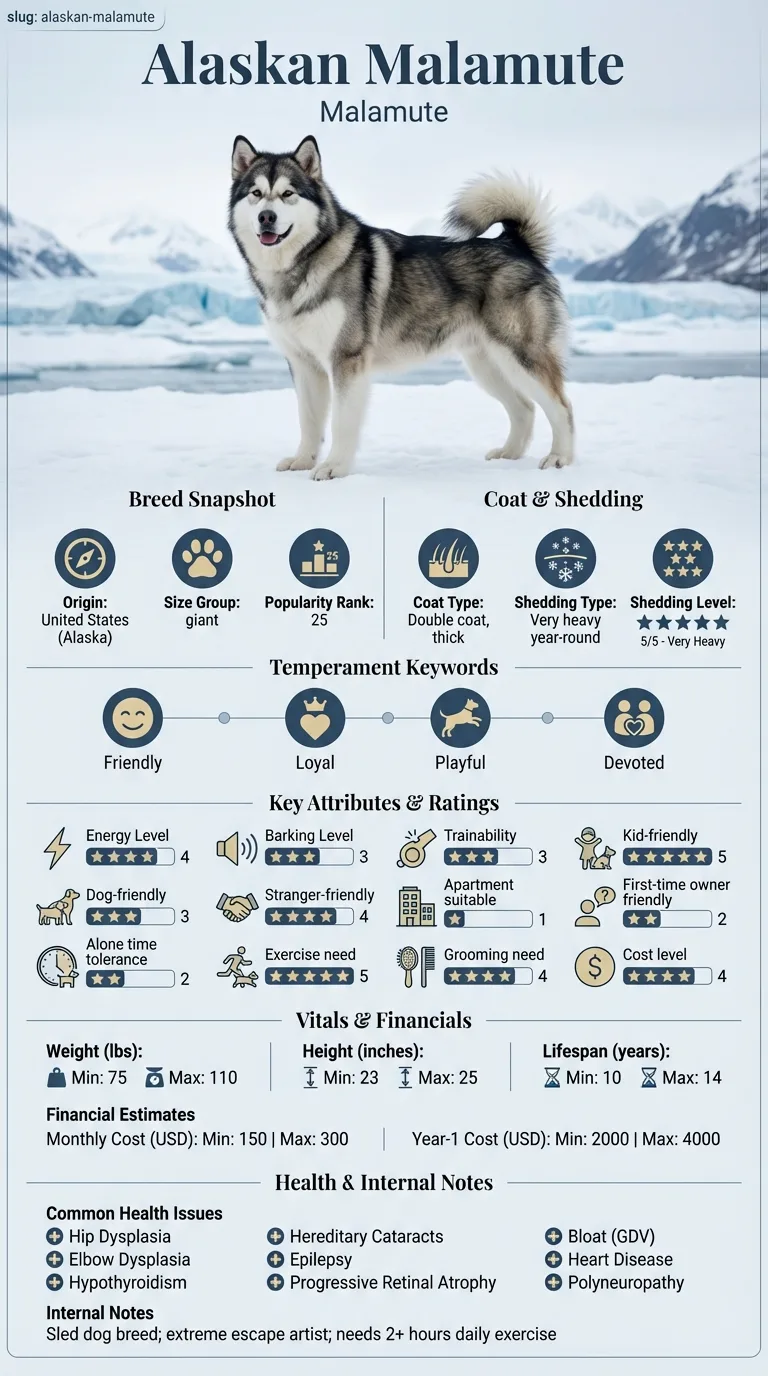
See all Alaskan Malamute health problems, which breeds are prone to corneal dystrophy, or the full Alaskan Malamute breed guide for temperament, exercise needs and ownership costs.
Managing Alaskan Malamute corneal dystrophy typically takes 6 to 12 months of consistent care and monitoring.
Success means noticing reduced symptoms, improved comfort for your dog, and maintaining their quality of life through regular vet check-ups and proper management.
In less severe cases of corneal dystrophy, you can take a wait-and-see approach. If your Alaskan Malamute has mild cloudiness without significant discomfort, monitor them closely. Keep an eye out for changes, such as increased tearing or behavioral shifts.

When Sarah adopted Luna, her Alaskan Malamute, she quickly noticed Luna squinting and having trouble seeing clearly. After a vet visit confirmed corneal dystrophy, Sarah felt overwhelmed. She committed to a treatment plan that included medication and regular check-ups. With time, she learned to recognize signs of discomfort and provided Luna with a cozy environment to thrive. They even worked on training exercises that didn't require much sight. Eventually, Luna adapted well, and Sarah felt relieved to see her enjoying life despite the condition.
Key takeaway: With patience and proper care, managing Alaskan Malamute corneal dystrophy is possible, allowing your dog to live a happy and fulfilled life.
Alaskan Malamute corneal dystrophy can occur due to genetic predisposition or environmental factors. It leads to cloudiness in the cornea, affecting vision. Regular vet check-ups can help diagnose this condition early.
Providing a healthy diet and ensuring they get regular veterinary care is essential. Ask your vet about eye drops or treatments that can alleviate discomfort. Keeping their eyes clean and protected from irritants is also important.
Corneal dystrophy itself is usually not painful, but it can lead to discomfort if it progresses. If your Malamute shows signs of rubbing their eyes or squinting, consult your vet for advice on managing their symptoms.
Treatment options vary from simple eye drops to more invasive procedures like surgery. Your vet will assess the extent of the condition and recommend the best course of action. Early intervention often leads to better outcomes.
While you can't completely prevent corneal dystrophy, you can lower risks by avoiding breeding dogs with known eye issues. Regular eye examinations can catch any problems early, helping to manage them effectively.
Keep an eye out for cloudiness, excessive tearing, or signs of discomfort in your Alaskan Malamute's eyes. If you notice any changes, consult your vet promptly for a thorough examination.
Yes, Alaskan Malamutes are predisposed to corneal dystrophy. This condition can lead to corneal cloudiness, which may affect their vision. Regular vet check-ups can help monitor changes in their eyes.
Look for symptoms like cloudy eyes, squinting, or excessive tearing. If you notice any of these signs, it's crucial to consult your vet. Early detection often leads to better management of the condition.
Treatment options depend on the severity of the condition. While it's more challenging in older dogs, some treatments can provide relief. Consult your vet for the best course of action tailored to your pet's needs.
Corneal dystrophy primarily affects vision, but it can lead to discomfort or pain if left untreated. While the condition itself may not be life-threatening, addressing it early can improve your dog's quality of life and prevent further complications.
Regular vet visits and protective eyewear can help manage corneal dystrophy. Consider using eye drops as recommended by your vet to alleviate symptoms.
Treatment costs for Alaskan Malamute corneal dystrophy can range from $150 to $1,000 depending on the severity and type of treatment needed.
While corneal dystrophy can affect vision, many dogs adapt well. Monitor for any signs of discomfort and consult your vet for guidance.
A one-page prep sheet for this condition: the signs, the questions to ask, what to get priced. Unlocks here.
You get: Vet visit prep sheet
No spam. One-click unsubscribe. See our privacy policy.
Preview page 1 before you decide.