Costs
What is the Shih Tzu first year cost?
Budget $2,000 to $6,000 for year one with a Shih Tzu in Boston.
Quick answer
What is the Shih Tzu first year cost?
Budget $2,000 to $6,000 for year one with a Shih Tzu in Boston.
Bringing a Shih Tzu into your home in Boston can be a delightful journey, but it comes with its costs.
Costs can rise due to unexpected emergencies or big-ticket items like surgeries, which can be particularly stressful for both you and your pup.
The Shih Tzu cost in Boston can vary greatly based on several factors, including initial purchase price, grooming, food, and veterinary care. These ranges depend on your choices regarding grooming, vet visits, and whether you opt for pet insurance.
Estimate · source: estimation · confidence: medium · updated 2026-09-01 · not a quote
| Item | Cost range |
|---|---|
Initial Purchase The cost of acquiring a Shih Tzu varies widely based on breeder reputation and lineage. | $500 - $2000 |
Supplies (toys, bedding, etc.) Initial setup costs for your new pet's comfort. | $100 - $300 |
| Item | Cost range |
|---|---|
Grooming Shih Tzus require regular grooming due to their long, flowing coat. | $50 - $150 |
Food A high-quality diet is essential for their health and well-being. | $30 - $60 |
Pet Insurance Insurance helps cover unexpected veterinary expenses. | $20 - $50 |
Considering pet insurance for your Shih Tzu in Boston can be a smart financial move.
Insurance makes sense if you want to avoid high out-of-pocket costs for emergencies or chronic conditions, like those common in Shih Tzus. Given their propensity for health issues like eye problems and kidney disease, having a policy can save you money over time.
You might skip insurance if you have a solid savings plan for pet care or if your Shih Tzu is young and healthy. Also, if you plan to cover regular vet visits and minor health issues without financial strain, insurance may not be necessary.
Owning a Shih Tzu in Boston can be costly, but there are ways to save money while ensuring your furry friend gets the best care. Here are some practical tips to help you manage your expenses.
When budgeting for a Shih Tzu cost in Boston, many owners overlook several hidden expenses. These recurring costs can add up quickly and might surprise you. Expect to spend around $50 to $100 every month if you choose professional grooming, or you could invest in grooming tools and do it yourself, which still requires time and effort. Unexpected vet visits can also impact your budget significantly. While routine check-ups might cost around $100 to $200, you should set aside a few hundred dollars each year for emergencies. Additionally, consider lifestyle-driven extras such as doggy daycare, which can cost about $25 to $50 per day, especially if you work long hours. Treats, toys, and gear replacements can easily add up to $150 to $300 annually. And let’s not forget the occasional dog training classes, which can be beneficial for first-time owners. These classes typically cost around $100 to $300 for a series of sessions.
When considering the Shih Tzu cost in Boston, local factors play a significant role. For instance, pet-friendly apartments may charge higher rents, and finding a good vet can also be pricier due to demand in the urban setting.

When Sarah and Tom decided to adopt a Shih Tzu in Boston, they had to navigate various costs. They budgeted around $2,000 for the first year, covering things like adoption fees, food, and vet visits. The biggest surprise came when they learned that grooming could cost upwards of $100 every month, which they hadn’t anticipated for their fluffy friend, Bella. To manage their expenses, they started a monthly savings plan to cover Bella's grooming and vet bills. They set aside about $200 each month, which was crucial when Bella needed an unexpected dental cleaning. With regular check-ups, their vet bills averaged around $50 per visit, which fit nicely into their monthly budget. Sarah also found some online resources to help them train Bella, reducing the need for professional training classes. Overall, they learned that while owning a Shih Tzu can be expensive, careful planning and setting aside savings can help manage the financial responsibilities.
Key takeaway: Owning a Shih Tzu in Boston requires careful budgeting, especially for grooming and unexpected vet visits. Planning ahead can ease financial stress.
The initial cost of a Shih Tzu in Boston can range from $1,500 to $3,000. This includes adoption fees, vaccinations, and initial supplies. Be prepared for additional expenses like grooming and training.
Shih Tzus can be considered moderately expensive due to their grooming needs and potential health issues.
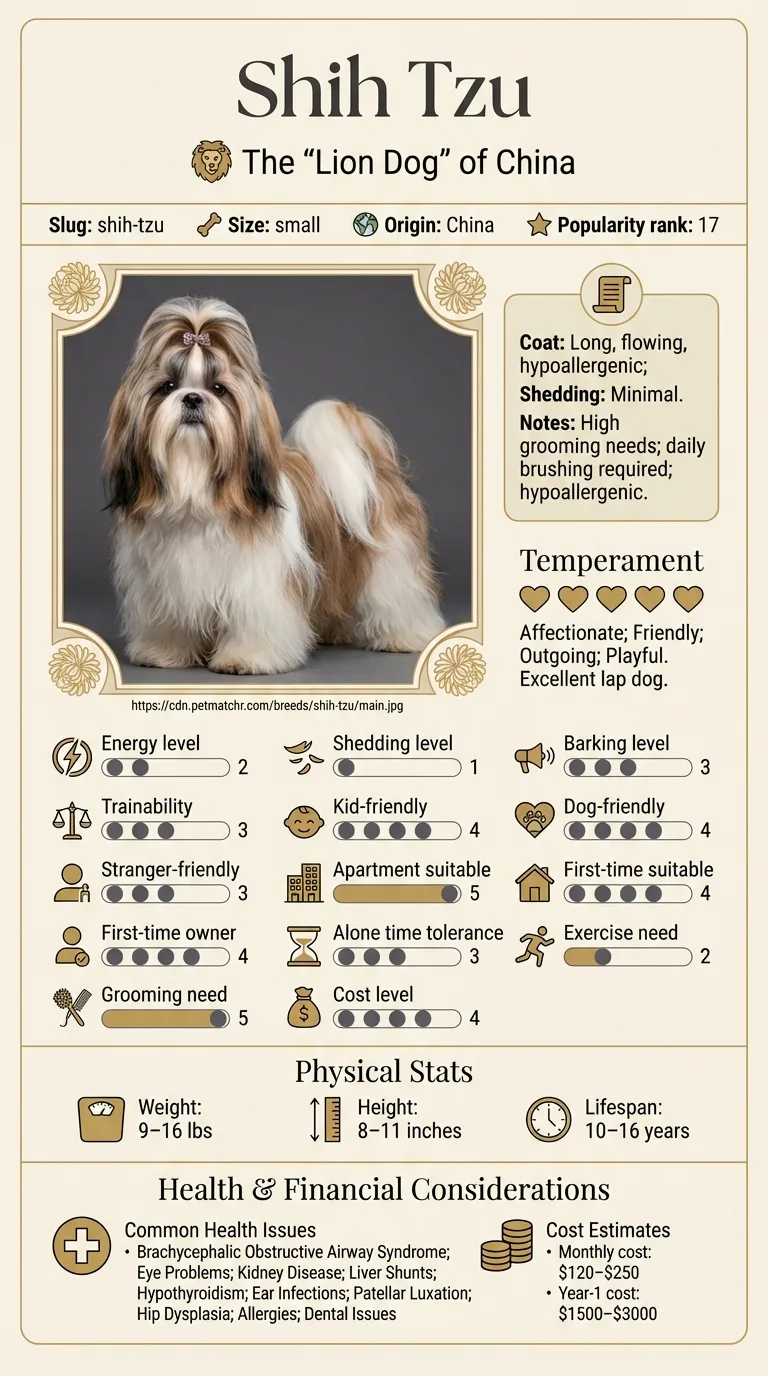
Shih Tzu monthly costs in Boston typically range from $120 to $250. This includes food, grooming, pet insurance, and routine vet visits.
The price depends on the coverage level and provider, so it’s wise to shop around.
This includes vaccinations, check-ups, and preventive treatments.
This includes purchase or adoption fees, supplies, training, and initial healthcare.
This includes vaccinations, check-ups, and preventive medications. Keep in mind that unexpected health issues can arise, which might increase your vet expenses.
While the initial cost of purchasing a Shih Tzu can be around $1,500 to $3,000, ongoing expenses like grooming, food, and vet bills can add up. Overall, Shih Tzus are considered moderately expensive due to their grooming needs and potential health issues.
Hidden costs for Shih Tzu owners in Boston can include grooming, which might cost $50 to $100 every six weeks, and specialty foods for their dietary needs.
The first-year cost of a Shih Tzu in Boston ranges from $1,500 to $3,000.
Budget $2,000 to $6,000 for year one with a Shih Tzu in Boston.
Keeping a Shih Tzu in Boston costs $100 to $250 a month. Grooming is the biggest piece at $50 to $150.
Pet insurance for a Shih Tzu in Boston runs $20 to $50 a month, moving with the deductible and payout limit you choose.
This guide is not medical advice. If your dog shows pain, sudden behavior change, or worsening symptoms, consult a licensed veterinarian.
Some links may be affiliate links. We may earn a commission at no extra cost to you. We only suggest products we believe are helpful for dog owners.