What are quick tips for Shih Tzu pancreatitis & diabetes?
Monitor your Shih Tzu's weight and maintain a consistent feeding schedule. Regular vet visits are key to managing their health. Keep them active with daily exercise to help prevent obesity.
Shih Tzu pancreatitis & diabetes are serious health issues that can affect your furry friend, especially as they age.

Typical owners who face this challenge include those with senior Shih Tzus or those who have pets showing signs of digestive issues. Busy families or first-time dog owners may find this especially overwhelming.
This guide is not medical advice. If your dog shows pain, sudden behavior change, or worsening symptoms, consult a licensed veterinarian.
Some links may be affiliate links. We may earn a commission at no extra cost to you. We only suggest products we believe are helpful for dog owners.
Shih Tzu pancreatitis & diabetes can be serious health issues for this beloved breed. Owners may notice symptoms like vomiting, decreased appetite, and lethargy. These problems often arise in older dogs, but younger Shih Tzus can also be affected, especially if they have a poor diet or struggle with weight management.
Pancreatitis and diabetes are relatively common among Shih Tzus, particularly as they age. Studies suggest that older Shih Tzus have a higher likelihood of developing these conditions, making regular vet check-ups essential.
Shih Tzus are prone to certain health issues, including pancreatitis and diabetes. Their small size and unique metabolism can make them more susceptible to dietary indiscretions and obesity, which are significant risk factors for these conditions. Additionally, their brachycephalic nature may contribute to stress, leading to dietary challenges.
The environment also plays a crucial role. If a Shih Tzu has easy access to high-fat foods or table scraps, this can trigger pancreatitis. Moreover, a sedentary lifestyle, which is common for indoor pets, can lead to weight gain and increase the risk of diabetes.
If your Shih Tzu shows signs of food aggression or anxiety around meal times, it may be beneficial to consult a trainer. A professional can provide strategies to help manage these behaviors and promote a calmer feeding environment.
If your Shih Tzu exhibits symptoms like excessive thirst, frequent urination, vomiting, or lethargy, contact your vet immediately. These could be indicators of pancreatitis or diabetes, and prompt medical attention is crucial.
Managing Shih Tzu pancreatitis and diabetes typically takes 3 to 6 months of consistent effort. Regular vet visits are crucial during this period.
Success means your Shih Tzu maintains stable blood sugar levels, has a balanced diet, and shows improved energy and overall health.
Improper care can worsen Shih Tzu pancreatitis and diabetes. Here are some common mistakes and better alternatives to help your dog manage these conditions.
Recognizing when Shih Tzu pancreatitis and diabetes become emergencies is crucial. If your Shih Tzu shows severe symptoms, it's time to call your vet immediately. Look for signs like vomiting, lethargy, excessive thirst, or inability to eat. These can indicate a serious flare-up that needs urgent attention.
In less severe cases, monitoring your dog might be sufficient. If your Shih Tzu has mild symptoms, like occasional vomiting or a decrease in energy, keep an eye on them for a couple of days. You can manage these situations by adjusting their diet and keeping track of their water intake. Make sure to consult your vet if the symptoms persist or worsen.
Remember, it's better to be safe than sorry. If you're ever in doubt, don't hesitate to reach out to your veterinarian. They can help you decide the best course of action based on your dog's specific condition.

Maria, a retired teacher, noticed her Shih Tzu, Bella, was lethargic and losing weight. After a vet visit, she learned Bella had pancreatitis and diabetes. Determined to help her furry friend, Maria researched diets and consulted a vet nutritionist. Together, they created a tailored meal plan. With diligence, Bella's energy returned, and Maria felt fulfilled watching her playful spirit revive. It wasn't easy, but their bond grew stronger through the challenges.
Key takeaway: With the right diet and veterinary support, managing Shih Tzu pancreatitis and diabetes is possible, enhancing your dog's quality of life.

Shih Tzus are prone to pancreatitis and diabetes due to their genetic makeup and dietary habits. Obesity can worsen these conditions, making it crucial to monitor their weight and diet closely. Regular vet check-ups can help catch these issues early. This answer relates to Shih Tzu pancreatitis & diabetes.
To prevent these conditions, provide a balanced diet with controlled portions to avoid obesity. Regular exercise is also essential; aim for at least 30 minutes of activity daily. Consulting your vet for a tailored diet plan is a smart step.
Watch for symptoms like excessive thirst, frequent urination, vomiting, and lethargy. If you notice any of these signs, it's important to consult your vet immediately for evaluation. Early detection can lead to better management of these conditions.
Yes, training can help by establishing routines for feeding and exercise. Positive reinforcement can encourage healthy behaviors, like controlled eating habits. Incorporating training into your daily routine can be beneficial for both you and your dog.
Opt for high-quality, low-fat dog food that is specifically formulated for dogs with these conditions. Avoid table scraps and high-fat treats. Always consult your vet for recommended diets based on your Shih Tzu's specific health needs.
Common signs of pancreatitis in Shih Tzus include vomiting, diarrhea, loss of appetite, and abdominal pain. If your pet shows any of these symptoms, it's important to consult your veterinarian immediately for proper diagnosis and treatment.
Yes, a carefully managed diet can greatly benefit a Shih Tzu with pancreatitis and diabetes. It's essential to work with your vet to create a diet plan that is low in fat and high in fiber to help manage both conditions.
To help prevent pancreatitis and diabetes in older Shih Tzus, maintain a balanced diet, ensure regular exercise, and schedule routine vet check-ups. Early detection is key to managing these health issues effectively.
While genetics can play a role, pancreatitis and diabetes in Shih Tzus are often influenced by diet and lifestyle factors. Keeping your Shih Tzu at a healthy weight and avoiding high-fat foods can help reduce the risk.
You should take your Shih Tzu to the vet if they exhibit persistent symptoms such as vomiting, lethargy, or unusual thirst and urination. Regular vet visits are also important for monitoring their health, especially as they age.
Monitor your Shih Tzu's weight and maintain a consistent feeding schedule. Regular vet visits are key to managing their health. Keep them active with daily exercise to help prevent obesity.
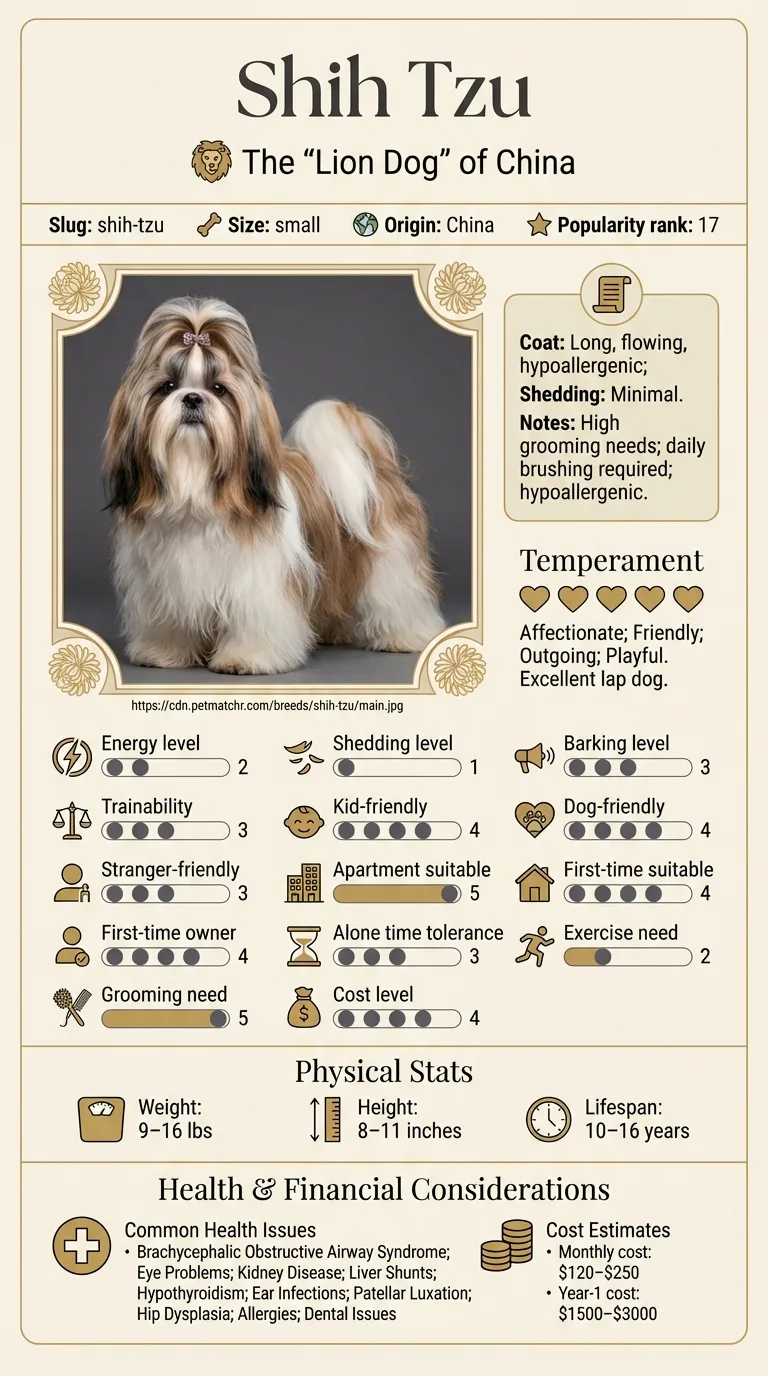
Monthly costs can range from $120 to $250, including food, vet visits, and medications. Be prepared for potential additional expenses related to emergency care or specialized diets.
Training is crucial for establishing routines that support your dog's health. It can help manage their eating habits and encourage regular exercise, which is vital for maintaining a healthy weight.
In addition to pancreatitis and diabetes, Shih Tzus may face problems like eye issues and hip dysplasia. Regular vet check-ups can help monitor and address these concerns early.