Costs
What is the Bloodhound first year cost?
The first year with a Bloodhound in Fargo totals $2,600 to $5,500.

See Bloodhound price across all cities →
Quick answer
What is the Bloodhound first year cost?
The first year with a Bloodhound in Fargo totals $2,600 to $5,500.
Bringing a Bloodhound into your home can be a rewarding experience, but it comes with its costs.
Costs can increase due to emergencies, unexpected vet bills, or major purchases like training courses and high-quality food.
The Bloodhound cost in Fargo can vary based on several factors like food, vet visits, and training.
Estimate · source: us average · confidence: medium · updated 2026-09-05 · not a quote
| Item | Cost range |
|---|---|
Initial Purchase or Adoption Fee Costs vary based on breeder or shelter, including initial vaccinations. | $300 - $800 |
Emergency Vet Fund It's wise to have an emergency fund for unforeseen medical expenses. | $500 - $1000 |
| Item | Cost range |
|---|---|
Food Bloodhounds require a good quality diet due to their size. | $50 - $100 |
Grooming Bloodhounds have moderate grooming needs. | $25 - $50 |
Pet Insurance Insurance can help manage unexpected health costs for common issues. | $50 - $100 |
Each range starts from a national baseline for this breed's size class and is then adjusted for local cost of living and veterinary pricing. The baselines, and the source each one came from, are listed on our sources page (dataset 2026.09). Two inputs, the purchase price and the emergency reserve, have no published national figure we could verify, so we leave them to you rather than invent them.
These are planning estimates, not quotes. Your own numbers will move with the individual dog, your vet and your insurer. Build a budget with your own figures.
When considering Bloodhound cost in Fargo, pet insurance can be a smart choice.
Insurance is particularly valuable if your Bloodhound is young, as it can cover expensive treatments for conditions that may arise later. Additionally, if your dog is active or you live in an area with higher vet costs, insurance can provide peace of mind.
Also, for older dogs with pre-existing conditions, insurance may not be worth the investment, as many plans won't cover those issues.
Owning a Bloodhound in Fargo can be costly, but there are smart ways to save money. Here are some actionable tips to help manage expenses.
For starters, regular grooming is necessary to keep your Bloodhound looking good and healthy. Expect to spend around $30 to $70 for each grooming session, which might be needed every 4 to 8 weeks depending on your dog's needs. Additionally, health-related costs can be unpredictable. Bloodhounds are prone to certain health issues like hip dysplasia and ear infections, which might lead to surprise vet visits. You should also keep in mind the cost of pet insurance, especially if you plan on covering potential health issues. Insurance for a Bloodhound can range from $40 to $75 per month, depending on the coverage level. Another often-overlooked expense is gear replacement. High-quality collars, leashes, and beds can wear out, so setting aside $50 to $100 annually for replacements is wise. If you travel or work long hours, these services can range from $20 to $50 per day, which can add up fast if needed frequently. Overall, when calculating the Bloodhound cost in Fargo, remember to factor in these hidden and underestimated expenses. They can significantly impact your total budget and overall experience as a dog owner.
Understanding the Bloodhound cost in Fargo involves considering several local factors. Fargo's living costs, such as rent and housing prices, are relatively moderate compared to larger cities. This means that if you own a Bloodhound, your overall expenses might be lower than in more expensive urban areas.
However, the availability of veterinary services and dog-friendly facilities in Fargo can significantly impact your monthly and yearly costs.

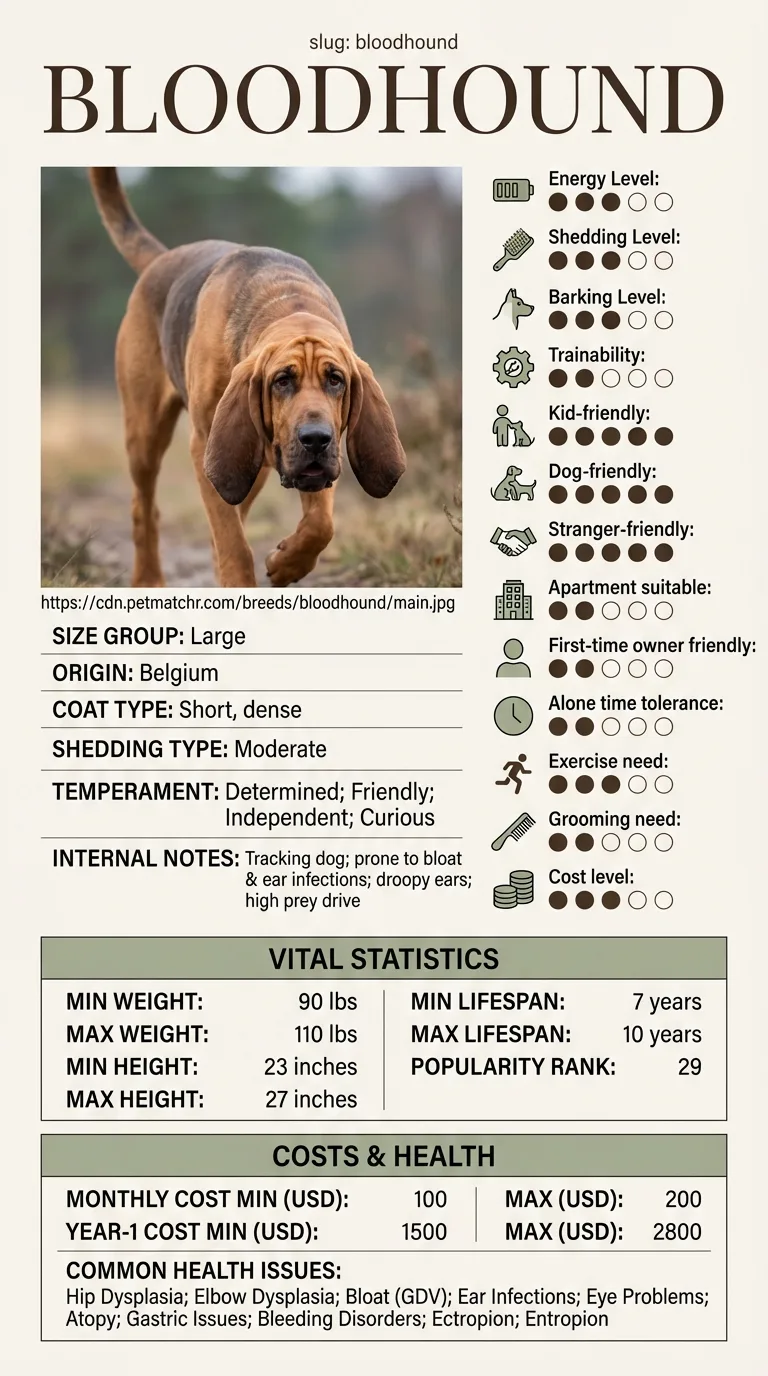
She was excited but nervous about the Bloodhound cost in Fargo, knowing that first-year expenses could reach between $1,500 and $2,800. Sarah budgeted around $200 a month for Max's food, vet visits, and basic supplies, but quickly found that his droopy ears required regular cleaning, leading to unexpected vet bills for ear infections. During Max's first year, Sarah faced a few surprises. While she expected to spend money on his food and toys, she didn’t anticipate the costs related to training classes. Bloodhounds can be stubborn, and she found herself enrolling Max in obedience classes to help with his independent spirit. These classes added an extra $300 to her budget, but they proved invaluable in making Max a well-behaved companion. By communicating openly with her vet and planning for potential emergency expenses, Sarah learned to manage her finances effectively. Overall, Sarah's experience showed that while owning a Bloodhound can be costly, with careful planning, it can fit into her budget, making her and Max very happy.
Key takeaway: Owning a Bloodhound in Fargo requires careful budgeting for expected and unexpected expenses, including food, vet care, and training.
The Bloodhound cost in Fargo can range from $1,500 to $2,800 in the first year. Monthly expenses typically fall between $100 and $200. While they're not the most expensive breed, their costs can add up due to their size and specific health needs.
Pet insurance for a Bloodhound can vary widely, usually costing between $30 and $70 per month. Factors like age and health conditions can influence the price.
The Bloodhound monthly cost in Fargo typically ranges from $100 to $200. This includes food, grooming, and routine vet visits. Be prepared for additional costs during emergencies or unexpected health issues.
This includes initial expenses for food, vaccinations, spaying or neutering, and basic supplies.
Bloodhound vet bills in Fargo can vary but generally fall within $300 to $600 annually for routine care. Be mindful that this dog breed is prone to certain health issues, which may lead to higher costs. Regular check-ups are essential to keep your furry friend healthy.
Unexpected costs with a Bloodhound can include emergency vet visits, which may range from $500 to $3,000 depending on the situation. Their susceptibility to health issues can lead to additional vet bills. It's wise to have a financial buffer for emergencies.
Bloodhound vet bills in Fargo can vary, but you might expect to spend between $500 to $1,000 annually. Regular check-ups, vaccinations, and possible treatments for common issues like ear infections can add up. Be sure to budget for unexpected health concerns, as this breed can be prone to specific health problems.
Yes, Bloodhounds can be considered moderately expensive to maintain due to their specific health needs and maintenance costs. Aside from the initial purchase price, their food, grooming, and veterinary care can add up. It's essential to be prepared for ongoing expenses to keep your Bloodhound healthy and happy.
It's wise to set aside at least $1,000 to $2,000 for emergency situations with a Bloodhound. This breed can face health challenges that require costly treatments. Having an emergency fund ensures you can act quickly without financial stress.
In Fargo, city-specific costs like licensing, dog parks, and pet-friendly housing can impact your Bloodhound's overall expenses. For instance, licensing fees may range from $10 to $25 annually. Being aware of local regulations will help you budget effectively.
The first year with a Bloodhound in Fargo totals $2,600 to $5,500.
Month to month, a Bloodhound in Fargo costs $125 to $250. The food line is the largest at $50 to $100.
In Fargo, insuring a Bloodhound costs $50 to $100 a month once you pick a deductible and payout limit.
This guide is not medical advice. If your dog shows pain, sudden behavior change, or worsening symptoms, consult a licensed veterinarian.
Some links may be affiliate links. We may earn a commission at no extra cost to you. We only suggest products we believe are helpful for dog owners.
We research and check what we publish, but we do not warrant that any figure, date, price, or statement is accurate, complete, or current, and we accept no liability for any loss, cost, injury, or other harm arising from the use of this site. Use it as one reference among several. You remain responsible for your own decisions and for your dog's care - confirm anything that matters with a licensed veterinarian or another qualified professional before you act on it. Full disclaimer.
One sheet with every line item, the emergency fund and when insurance pays off - unlocks on this page.
You get: 12-month budget sheet
No spam. One-click unsubscribe. See our privacy policy.
Preview page 1 before you decide.