Behavior
What are some Schnauzer (Standard) anxiety quick tips?
Provide consistent training and socialization to help your Schnauzer (Standard) feel secure. Regular exercise and mental stimulation can also reduce anxiety levels.

Quick answer
What are some Schnauzer (Standard) anxiety quick tips?
Provide consistent training and socialization to help your Schnauzer (Standard) feel secure. Regular exercise and mental stimulation can also reduce anxiety levels.
Schnauzer (Standard) anxiety can be a real challenge for owners.
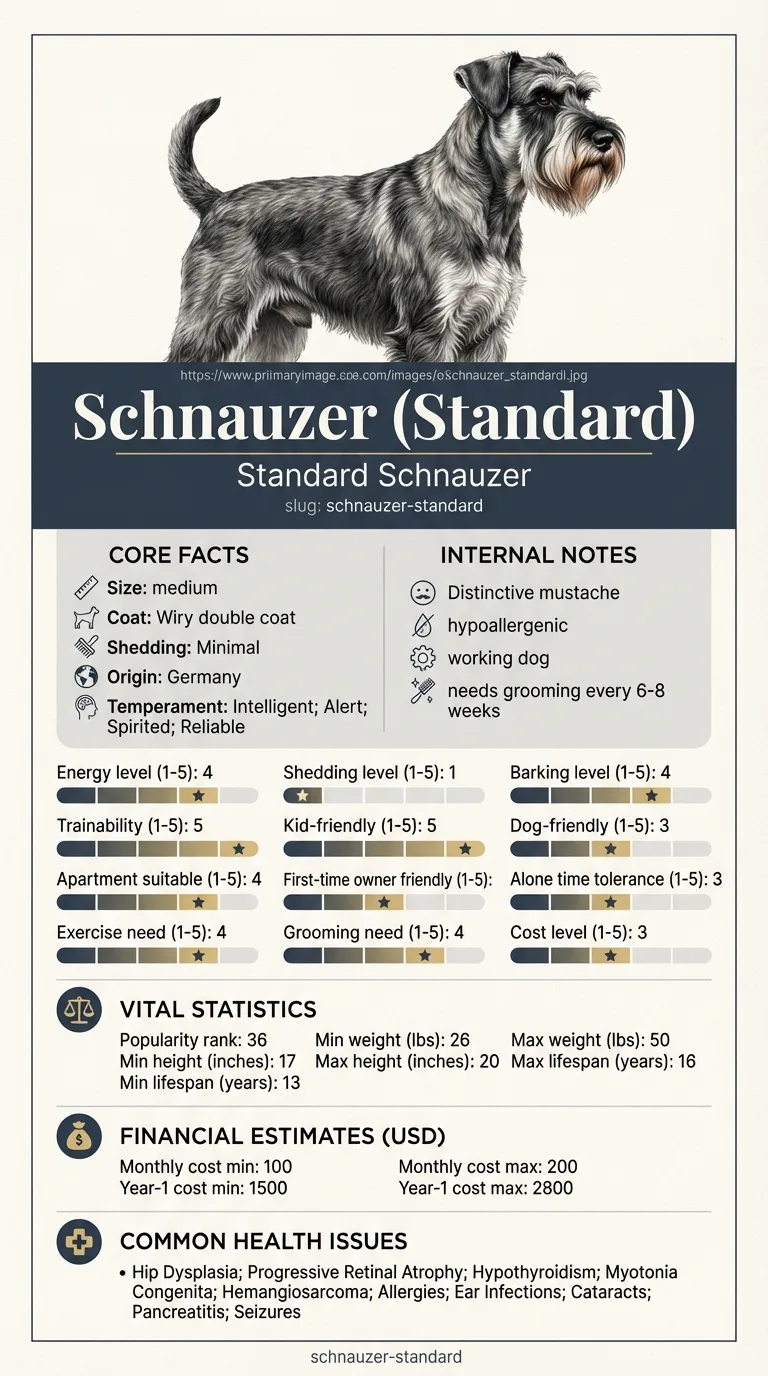
This guide is for Schnauzer (Standard) owners looking for effective strategies to help their anxious pets feel more secure and relaxed.
Schnauzer (Standard) anxiety often appears as restlessness or excessive barking. Owners may notice their dog pacing, whining, or hiding when they feel stressed. This anxiety can disrupt daily life, leading to challenges for both the dog and its family.
If your Schnauzer (Standard) anxiety persists despite your efforts, consider professional training. A certified dog trainer can help develop a tailored training plan to address specific anxiety triggers.
If your Schnauzer shows signs of severe anxiety or if their behavior changes drastically, consult a veterinarian or a certified animal behaviorist. They can assess for underlying health issues and suggest treatment options.
Finding the right tools and products can support your efforts in managing Schnauzer (Standard) anxiety. Here are some categories to consider.
Adjusting your daily routine can significantly help reduce Schnauzer (Standard) anxiety. Start by creating a consistent schedule for feeding, walks, and playtime. This predictability makes your dog feel more secure and reduces stress.
Incorporate regular exercise into your schedule. Schnauzers are energetic and need about an hour of activity each day. This can include walks, fetch, or agility training.
Exercise not only helps burn off energy but also releases endorphins that promote a calmer mindset.
Plan for alone time gradually. If your Schnauzer struggles with separation anxiety, practice leaving them alone for short periods. Gradually increase the time you are away, ensuring they associate your departures with positive experiences.
Consider using puzzle toys or treat-dispensing devices to keep them occupied while you are gone.
Lastly, maintain a calm home environment. Play soft music or use white noise machines to drown out unsettling sounds. Also, create a cozy space for your Schnauzer to retreat to when feeling anxious.
This could be a specific room or a comfy crate that feels safe and secure.
These adjustments may take time, but with patience and consistency, you can help alleviate your Schnauzer's anxiety and improve their overall well-being.
Tracking your Schnauzer (Standard) anxiety progress involves recognizing small 'micro-wins' and understanding typical setbacks. Micro-wins include your dog showing interest in toys during anxiety-inducing situations or settling down faster after a stressful event. Celebrate these small victories as proof that your training efforts are making a difference.
However, setbacks are a normal part of the journey. Your Schnauzer (Standard) may have moments of increased anxiety during changes in routine, like moving to a new home or a family member leaving. Recognizing these moments helps you stay prepared and adjust your training plan accordingly.
When you notice that your dog is reacting less intensely to triggers or is able to calm down on their own sooner, it’s a sign that your plan is working. Keep a journal of these observations to track changes over time. If your Schnauzer (Standard) continues to struggle despite your efforts, it might be time to escalate your training or seek professional help.
Remember, consistency is key, and every step forward counts!

When Jenna, a busy nurse in Chicago, adopted her Standard Schnauzer, Max, she quickly noticed signs of Schnauzer (Standard) anxiety. He would bark excessively at every noise and become anxious during storms. Jenna tried calming techniques at home, like playing soft music and providing a cozy space for Max. However, his anxiety didn't improve. After a particularly tough week filled with storms, Jenna decided to consult a dog trainer. The trainer suggested a structured routine and provided specific anxiety training exercises. With consistent practice, Max began to respond positively. Jenna also started using a calming vest during stressful times. Over a few months, Max's anxiety decreased significantly, allowing him to enjoy walks and relax at home.
Key takeaway: Seeking professional help can make a big difference in managing Schnauzer (Standard) anxiety. Consistency and a structured routine are key.
Schnauzer (Standard) anxiety can stem from various factors, including changes in environment, lack of socialization, or separation from their owner. These dogs are intelligent and can become anxious if they're not mentally stimulated or if they feel neglected. Identifying the specific triggers is crucial for effective management.
Signs of Schnauzer (Standard) anxiety include excessive barking, destructive behavior, or pacing. You might also notice your dog hiding, panting, or being overly clingy. Observing their behavior during stressful situations can help you recognize their anxiety.
Positive reinforcement training is highly effective for managing Schnauzer (Standard) anxiety. Rewarding calm behavior with treats or praise can help them feel secure. Additionally, incorporating desensitization techniques can gradually expose them to anxiety triggers in a controlled way.
In some cases, medication prescribed by a vet can help manage severe Schnauzer (Standard) anxiety. It's important to consult with your veterinarian to discuss the best options and whether medication is necessary alongside behavioral training.
Preventing Schnauzer (Standard) anxiety involves early socialization and consistent training. Engaging them in regular exercise and providing mental stimulation through toys or puzzles can also help. Establishing a routine can provide stability and reduce anxiety triggers.
Creating a safe space for your Schnauzer (Standard) can help them feel secure during stressful situations. Use calming aids like anxiety wraps or pheromone diffusers, and ensure they have a quiet area to retreat to. Staying calm yourself can also reassure them.
Signs of anxiety in a Schnauzer (Standard) can include excessive barking, destructive behavior, and pacing. You might also notice them hiding or refusing to eat. If your dog shows these signs, it’s important to address their anxiety.
Yes, older Schnauzers (Standard) can develop anxiety, often due to changes in their environment or health issues. It's crucial to monitor their behavior and consult a vet if you notice signs of anxiety in your senior dog.
To help a Schnauzer (Standard) with travel anxiety, gradually acclimate them to the car. Start with short trips and reward them with treats. Using calming products or training techniques can also ease their anxiety during travel.
If your Schnauzer (Standard) has separation anxiety, try gradually increasing the time you leave them alone. Leave them with engaging toys or a safe space. Training programs designed for separation anxiety can also be beneficial.
Having multiple Schnauzers (Standard) can sometimes help alleviate anxiety as they provide companionship. However, it can also lead to competition for attention, which may increase anxiety for some dogs. Monitor their interactions closely to see what works best.
Provide consistent training and socialization to help your Schnauzer (Standard) feel secure. Regular exercise and mental stimulation can also reduce anxiety levels.
Create a calm environment with a dedicated safe space for your Schnauzer (Standard). Use calming music or toys to help ease their anxiety.
Yes, Schnauzers (Standard) can experience separation anxiety, especially if they are very attached to their owners. Gradual desensitization can help them adjust to being alone.
If your Schnauzer (Standard) shows severe anxiety signs that interfere with their daily life, consider consulting a vet or a professional dog trainer. Early intervention is key.
Anxiety and pain look alike from the outside. Get the prep sheet for this breed's separation-anxiety page and take it to the vet.
You get: Vet visit prep sheet
No spam. One-click unsubscribe. See our privacy policy.
Preview page 1 before you decide.
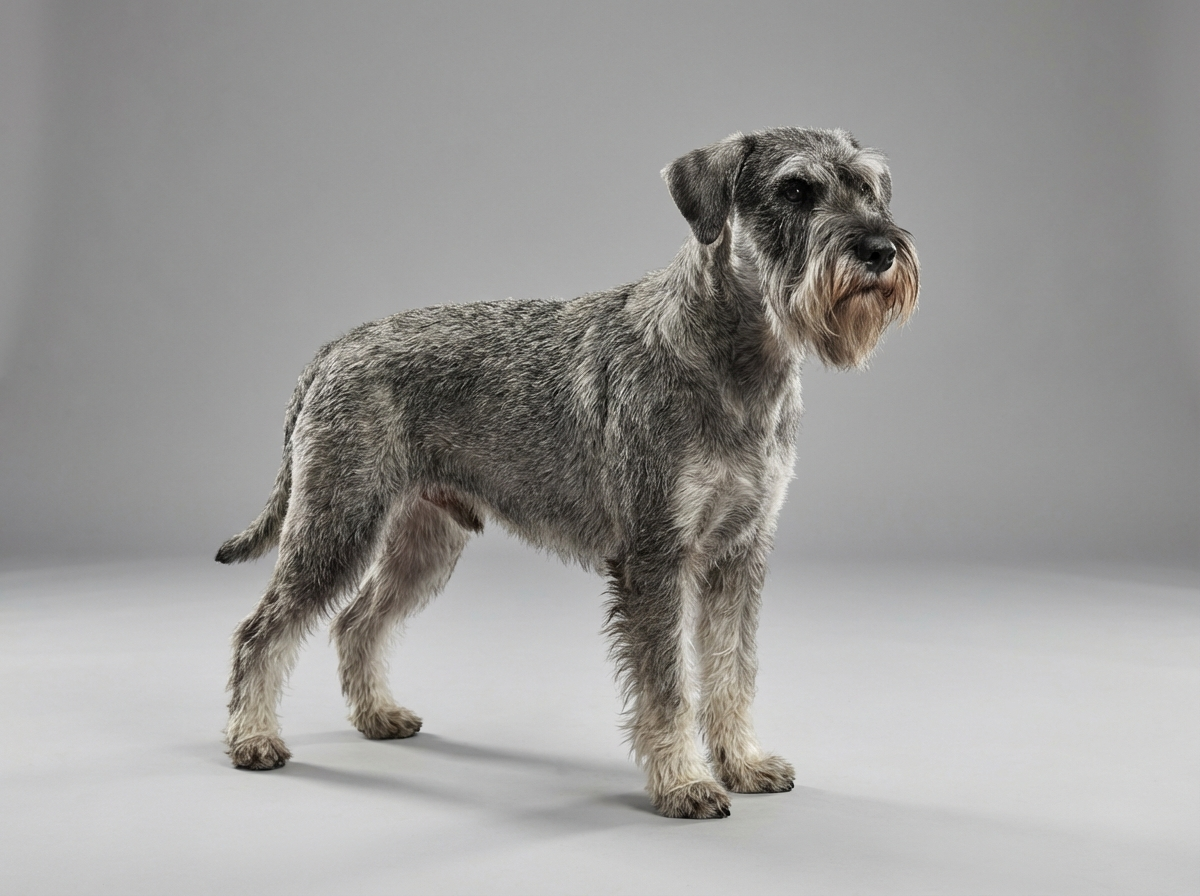

This guide is not medical advice. If your dog shows pain, sudden behavior change, or worsening symptoms, consult a licensed veterinarian.
Some links may be affiliate links. We may earn a commission at no extra cost to you. We only suggest products we believe are helpful for dog owners.
We research and check what we publish, but we do not warrant that any figure, date, price, or statement is accurate, complete, or current, and we accept no liability for any loss, cost, injury, or other harm arising from the use of this site. Use it as one reference among several. You remain responsible for your own decisions and for your dog's care - confirm anything that matters with a licensed veterinarian or another qualified professional before you act on it. Full disclaimer.
Not sure which breed is right for you? Take our 2-minute quiz to find out.
Take the quiz