Behavior
What are Cocker Spaniel anxiety quick tips?
Create a safe space for your Cocker, establish a routine, and use positive reinforcement for calm behavior.

Quick answer
What are Cocker Spaniel anxiety quick tips?
Create a safe space for your Cocker, establish a routine, and use positive reinforcement for calm behavior.
Is your Cocker Spaniel feeling anxious? You're not alone.
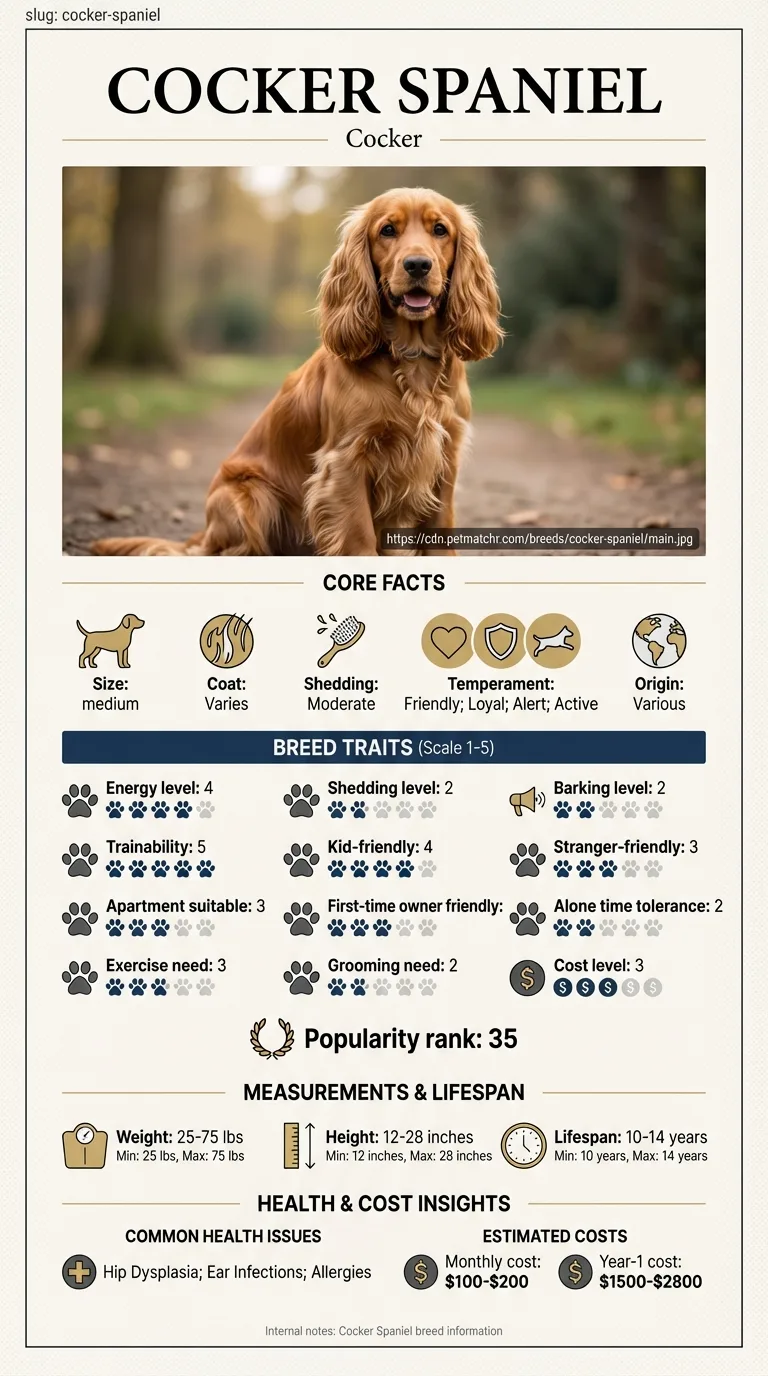
This guide is for Cocker Spaniel owners who want to understand their dog's anxiety and learn practical strategies to help them feel more secure and relaxed.
Cocker Spaniel anxiety often manifests as restlessness and excessive barking. These dogs may follow their owners around, seeking constant reassurance. This anxiety can make them seem nervous or on edge, especially in unfamiliar situations.
If your Cocker Spaniel's anxiety persists despite consistent management strategies, consider professional training. A qualified trainer can help address specific behavioral issues and teach techniques to modify your dog's response to anxiety triggers.
Consult a veterinarian or animal behaviorist if your dog shows signs of severe anxiety, such as destructive behavior or prolonged distress. They can assess the situation and recommend medical or behavioral interventions.
There are various tools and products that can assist with Cocker Spaniel anxiety management. These can help create a calming environment and facilitate effective training.
Adjusting your daily routine can greatly help manage Cocker Spaniel anxiety. Start by creating a consistent schedule for meals, walks, and playtime. Dogs thrive on routine, and knowing what to expect can reduce their stress levels.
It's also essential to incorporate regular exercise into their day. A good walk or play session can help release pent-up energy and anxiety.
Consider the amount of alone time your Cocker Spaniel has. These dogs are social and often struggle when left alone for long periods. Gradually increasing their alone time can help them adjust.
Try to leave them with engaging toys or a comfy space to relax in when you step out. When you return, keep your greetings calm to avoid overstimulating them.
Household routines also play a vital role. Designate quiet times and spaces where your Cocker can retreat if they feel overwhelmed. Additionally, spend quality time together through training and bonding activities.
This not only strengthens your bond but also gives them a sense of security, which is crucial for reducing anxiety.
Tracking progress with Cocker Spaniel anxiety can feel overwhelming, but recognizing micro-wins is key. Small victories might include your dog remaining calm during brief separations or responding better to commands amidst distractions. Celebrate these moments, as they indicate that your training efforts are beginning to pay off.

Setbacks are a normal part of the journey. Signs of anxiety, like excessive barking or destructive behaviors, may still occur at times. However, if these behaviors become less frequent or less intense, it’s a sign that your Cocker’s anxiety is improving.
If you notice setbacks lasting longer than usual, consider adjusting your training approach or seeking professional help.

Meet Sarah, a busy nurse living in a small apartment with her Cocker Spaniel, Bella. Bella suffered from severe separation anxiety, barking and scratching at the door whenever Sarah left for work. After trying to manage the anxiety at home by leaving Bella with toys and treats, Sarah realized this wasn’t enough. She decided to seek help from a professional dog trainer who specialized in anxiety issues. They worked together on a gradual desensitization plan, allowing Bella to get used to being alone for short periods. Over time, Sarah increased the duration, always rewarding Bella when she remained calm. They also incorporated calming pheromones and soothing music during these times. After several weeks, Bella showed significant improvement, feeling more secure even when Sarah left. Now, Bella enjoys her time alone, and Sarah can work without worry.
Key takeaway: With the right support and gradual training, Cocker Spaniel anxiety can be effectively managed.
Cocker Spaniel anxiety can stem from various factors including genetics, lack of socialization, or traumatic experiences. They are sensitive dogs, and changes in their environment or routine can trigger anxiety. It's important to identify the specific triggers for your Cocker to help manage their anxiety.
Signs of Cocker Spaniel anxiety include excessive barking, pacing, destructive behavior, and changes in appetite. You may also notice your dog hiding or seeking constant attention. Observing these behaviors can help you determine if your Cocker needs extra support.
Managing Cocker Spaniel anxiety often involves creating a calm environment, establishing routines, and using positive reinforcement training. Gradual desensitization to triggers can also be helpful. In severe cases, consulting a veterinarian for advice on behavior modification or medication may be necessary.
Yes, Cocker Spaniel anxiety training can significantly improve your dog's comfort and confidence. Training techniques that focus on positive reinforcement can help your dog learn new behaviors and cope with anxiety triggers. Consistency and patience are key to seeing progress.
If your Cocker Spaniel's anxiety leads to aggressive behavior, severe destruction, or if they cannot settle down, it's time to seek professional help. A veterinarian or a certified dog trainer can provide tailored solutions and support. Early intervention often leads to better outcomes.
Yes, there are various products designed to help with Cocker Spaniel anxiety, including calming collars, anxiety wraps, and soothing treats. Additionally, interactive toys can keep your dog engaged and distracted. Always choose products that suit your dog's specific needs.
Yes, Cocker Spaniel anxiety can often intensify as they age, especially if they experience changes in their environment or routine. Older dogs may become more sensitive to stressors, so it's important to provide a stable and comforting environment as they grow.
To ease travel anxiety in your Cocker Spaniel, start with short trips to help them acclimate. Bring familiar items like their favorite blanket or toy to provide comfort. Additionally, consider using calming aids, such as anxiety wraps or pheromone sprays, for longer journeys.
Yes, Cocker Spaniels can be prone to separation anxiety due to their affectionate nature. If your Cocker becomes distressed when left alone, it's essential to gradually train them to feel secure on their own. This can involve short departures and gradually increasing the time apart.
In a multi-dog household, Cocker Spaniel anxiety can manifest if they feel overshadowed or stressed by the other dogs. Ensure each dog has their personal space and time for one-on-one interaction. Providing separate areas for rest and play can help reduce anxiety and promote a more harmonious environment.
Create a safe space for your Cocker, establish a routine, and use positive reinforcement for calm behavior.
Distract your Cocker with toys, provide a comfortable space, and consider calming music or white noise.
Yes, training focused on positive reinforcement can help your Cocker learn to cope with anxiety triggers.
Avoid punishment and negative reinforcement, as these can increase anxiety. Instead, focus on creating a supportive environment.
Anxiety and pain look alike from the outside. Get the prep sheet for this breed's separation-anxiety page and take it to the vet.
You get: Vet visit prep sheet
No spam. One-click unsubscribe. See our privacy policy.
Preview page 1 before you decide.

This guide is not medical advice. If your dog shows pain, sudden behavior change, or worsening symptoms, consult a licensed veterinarian.
Some links may be affiliate links. We may earn a commission at no extra cost to you. We only suggest products we believe are helpful for dog owners.
We research and check what we publish, but we do not warrant that any figure, date, price, or statement is accurate, complete, or current, and we accept no liability for any loss, cost, injury, or other harm arising from the use of this site. Use it as one reference among several. You remain responsible for your own decisions and for your dog's care - confirm anything that matters with a licensed veterinarian or another qualified professional before you act on it. Full disclaimer.
Not sure which breed is right for you? Take our 2-minute quiz to find out.
Take the quiz