Welsh Springer Spaniel Most Common Genetic Disorders: What Owners Should Know
Quick answer
What is the first step if I am worried about Welsh Springer Spaniel genetic disorders?
Arrange a routine veterinary discussion and share any health history or symptoms you have observed. Breed information is a useful starting point, but individual assessment matters.
A family history or breed association is a reason for awareness, not a diagnosis. Regular veterinary care helps put individual risks in context.
Prospective owners, new owners, and families noticing changes in comfort, mobility, ears, or skin may want a clear starting point for a veterinary conversation.
Important reminder
This guide is not medical advice. If your dog shows pain, sudden behavior change, or worsening symptoms, consult a licensed veterinarian.
Some links may be affiliate links. We may earn a commission at no extra cost to you. We only suggest products we believe are helpful for dog owners.
We research and check what we publish, but we do not warrant that any figure, date, price, or statement is accurate, complete, or current, and we accept no liability for any loss, cost, injury, or other harm arising from the use of this site. Use it as one reference among several. You remain responsible for your own decisions and for your dog's care - confirm anything that matters with a licensed veterinarian or another qualified professional before you act on it. Full disclaimer.
What this problem looks like
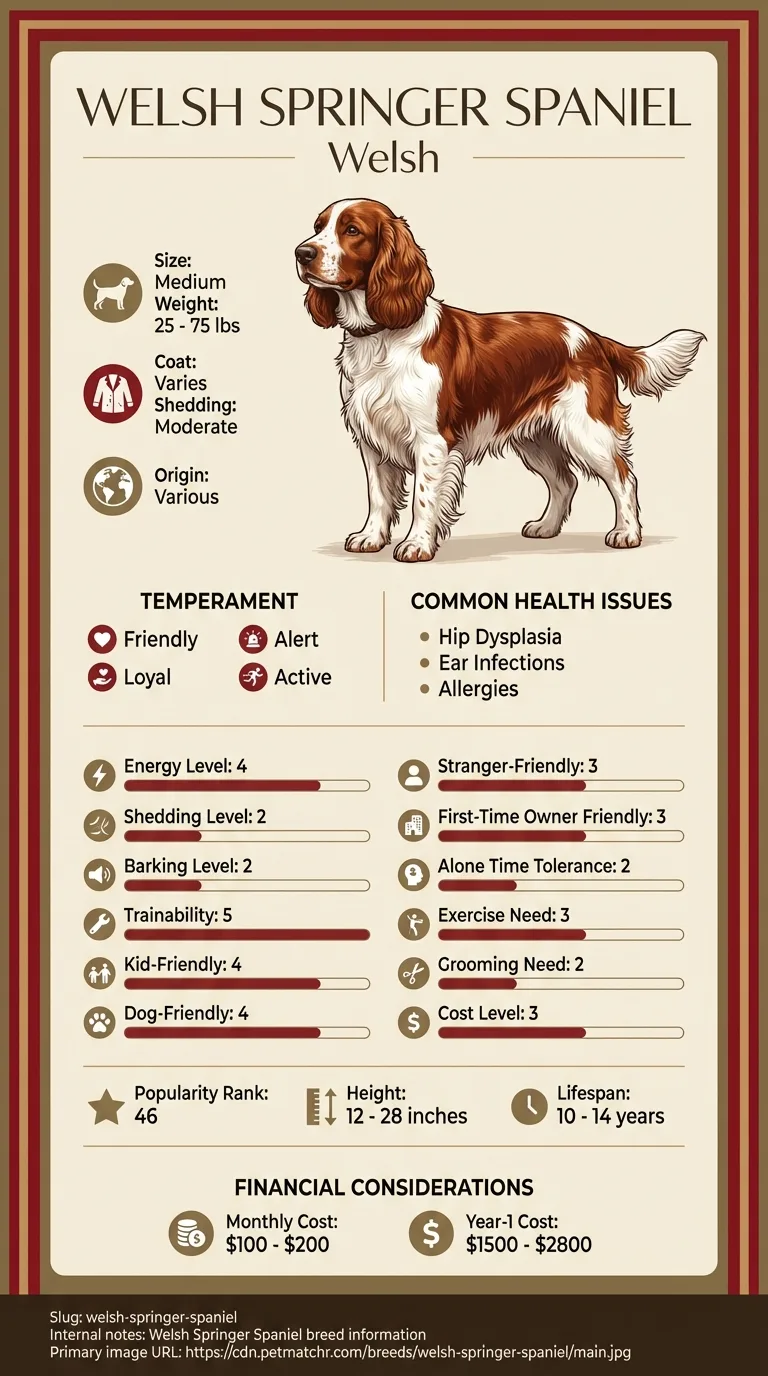
The phrase Welsh Springer Spaniel genetic disorders is best treated as a preventive-care question, not a diagnosis. The breed data used for this page lists hip dysplasia, ear infections, and allergies as concerns owners may want to discuss with their veterinarian.
Common triggers
A family or health history that raises questions before bringing home a dog
New stiffness, lameness, or a change in normal activity
Recurring ear discomfort, odor, discharge, or head shaking
Persistent itching, skin irritation, or repeated ear concerns
This page does not estimate prevalence. The available breed data identifies these as concerns for awareness, while individual risk and diagnosis require veterinary assessment.
Why this happens
Breed factors
Some health conditions can have inherited components, but breed information cannot determine whether a particular Welsh Springer Spaniel has or will develop a condition. A veterinarian can interpret health history and current signs for the individual dog.
Environment factors
Comfort, mobility, skin, and ear symptoms can also be influenced by non-genetic factors. Because similar signs can have more than one cause, avoid assuming that a change is inherited without veterinary guidance.
What you can do at home (once it is not an emergency)
When to talk to your vet
Talk to a veterinarian about persistent itching, recurrent ear discomfort, changes in gait or activity, pain, or any health-history questions. Contact an emergency veterinary service for collapse, serious breathing difficulty, or severe distress.
At home, alongside your vet's plan
Keep a simple record of changes in movement, activity, ears, skin, and behavior to share with your veterinarian.
Maintain regular preventive veterinary visits and ask what observations are most useful for your dog.
Check ears and skin during normal grooming, without inserting objects or using treatments that have not been recommended for your dog.
Seek veterinary advice before changing diet, supplements, exercise, or medications in response to suspected health problems.
Welsh Springer Spaniel Most Common Genetic Disorders: Mistakes to Avoid
The following topics are awareness points from the available breed data. They are not a diagnosis or a complete list of conditions that can affect an individual dog.
Hip dysplasia: This is listed in the breed data as a concern. A veterinarian can assess signs such as stiffness, reluctance to exercise, or changes in gait and advise on next steps.
Ear infections: Long or active ears can make routine ear checks useful. Redness, odor, head shaking, discharge, or persistent scratching warrant veterinary advice rather than home diagnosis.
Allergies: Skin, ear, or digestive signs can have many causes. Tracking when symptoms occur and discussing them with a veterinarian can help avoid assumptions about a trigger.
Individual variation: A Welsh Springer Spaniel can be healthy throughout life, and the presence of a concern in breed information does not mean an individual dog will develop it.
More Welsh Springer Spaniel health & behavior issues
The right timeline depends on the individual concern and veterinary findings. Some questions can be addressed at a routine visit, while ongoing symptoms may require follow-up.
Success means having a clear veterinary plan, recognizing meaningful changes early, and supporting your Welsh Springer Spaniel's comfort and daily routine.
When to seek veterinary care
Contact a veterinarian promptly if your Welsh Springer Spaniel has sudden lameness, obvious pain, trouble standing, a marked change in activity, repeated head shaking, ear discharge, facial swelling, breathing difficulty, or rapidly worsening skin irritation. Seek urgent veterinary care for collapse, severe trouble breathing, or signs of significant distress.
For milder but persistent changes, schedule an appointment rather than trying to identify a genetic disorder at home. A veterinarian can consider the dog's history, examination findings, and any appropriate follow-up.
Welsh Springer Spaniel Genetic Disorders: What Owners Should Know - When to seek veterinary care
Turning a Health Worry Into a Useful Veterinary Conversation
A Welsh Springer Spaniel owner notices that their dog is less eager to jump into the car and has begun shaking its head after walks. Instead of assuming these changes identify a genetic disorder, the owner records when they occur and books a veterinary visit. The examination helps the family focus on the dog's actual needs and follow the care plan recommended for that individual dog.
Key takeaway: Observations and veterinary guidance are more useful than trying to diagnose an inherited condition from breed information alone.
Frequently asked questions
What are Welsh Springer Spaniel most common genetic disorders owners should know?
The available breed data for this page identifies hip dysplasia, ear infections, and allergies as health concerns to discuss with a veterinarian. This does not diagnose any dog or mean every Welsh Springer Spaniel will have these problems.
Does a Welsh Springer Spaniel's breed mean it will develop a genetic disorder?
No. Breed-level information describes areas for awareness, not an outcome for an individual dog. A dog's health depends on many factors, and a veterinarian can give guidance based on that dog's history and examination.
What signs of hip discomfort should I discuss with my veterinarian?
Changes such as stiffness, limping, reluctance to jump, difficulty rising, or reduced willingness to exercise are worth discussing with a veterinarian. Those signs can have different causes, so they should not be used to diagnose hip dysplasia at home.
When should I call the vet about my Welsh Springer Spaniel's ears?
Call your veterinarian if you notice odor, discharge, redness, pain, repeated head shaking, or frequent ear scratching. These signs can indicate an ear problem that needs an examination.
Can allergies be diagnosed from itching alone?
No. Itching, skin irritation, and ear changes can have multiple causes. Keep notes about symptoms and contact your veterinarian for an appropriate evaluation.
How can I prepare for a veterinary visit about possible inherited health concerns?
Bring any available health and family history, note when symptoms began, and record relevant changes in activity, appetite, skin, ears, or mobility. This information can help your veterinarian decide what to assess.
What is the first step if I am worried about Welsh Springer Spaniel genetic disorders?
Arrange a routine veterinary discussion and share any health history or symptoms you have observed. Breed information is a useful starting point, but individual assessment matters.
Health
Can I prevent every inherited health problem in a Welsh Springer Spaniel?
No approach can guarantee that. Consistent preventive care, attention to changes, and timely veterinary guidance can support informed care for an individual dog.
Living
What should I monitor at home?
Watch for changes in comfort, movement, activity, ears, skin, and behavior, then share persistent or concerning changes with your veterinarian.
Welsh Springer Spaniel anxiety guide – Explore practical support for Welsh Springer Spaniel anxiety and handling routines after medical causes have been assessed.