Behavior
What are quick tips for Siberian Husky corneal dystrophy?
Regular vet check-ups and eye exams are crucial for managing corneal dystrophy. Use protective eyewear when outdoors to shield their eyes from irritants.

Quick answer
What are quick tips for Siberian Husky corneal dystrophy?
Regular vet check-ups and eye exams are crucial for managing corneal dystrophy. Use protective eyewear when outdoors to shield their eyes from irritants.
Siberian Husky corneal dystrophy can lead to cloudiness in your dog's eyes, impacting their sight and comfort.
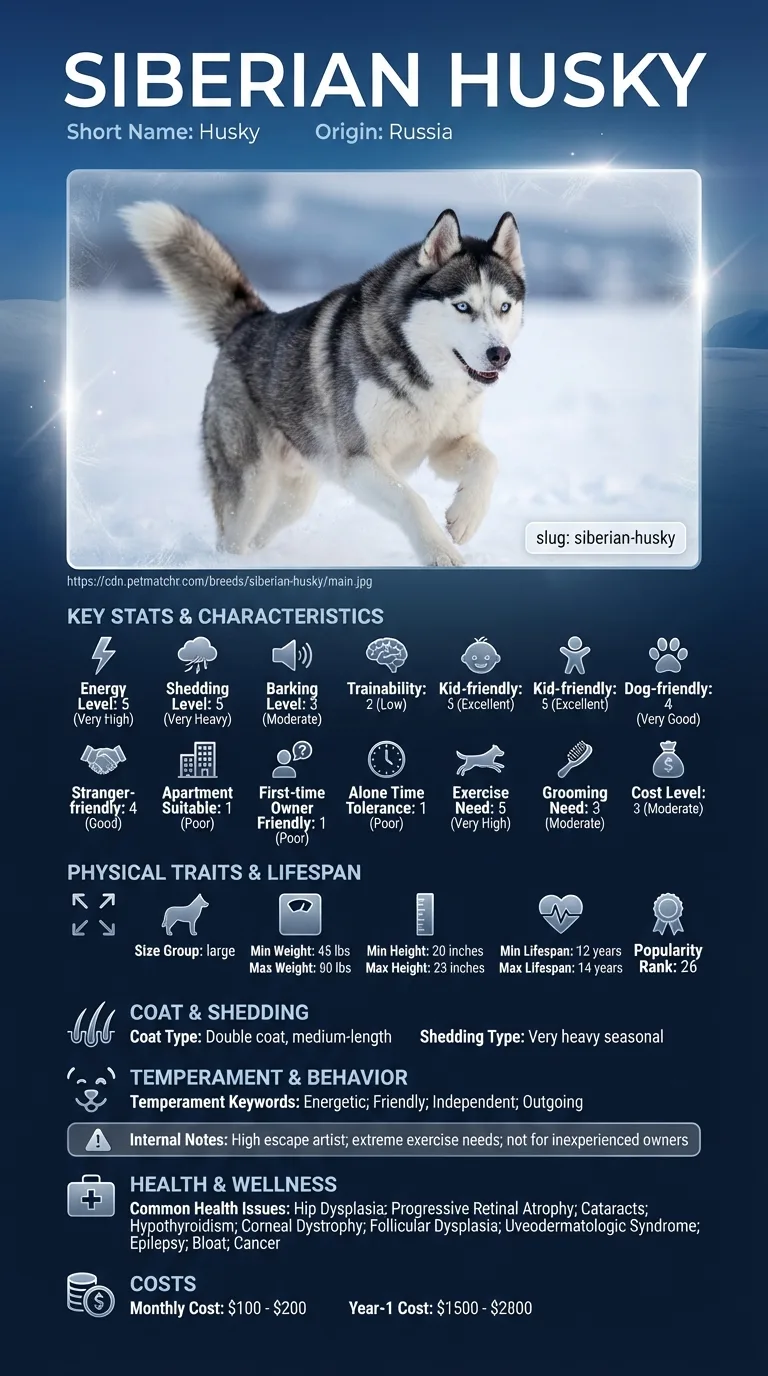
Owners of Siberian Huskies may find themselves facing this problem, particularly those who are new to dog care or unaware of the breed's specific health risks. It can be especially concerning for families with active Huskies who rely on their sight for play and exercise.
This guide is not medical advice. If your dog shows pain, sudden behavior change, or worsening symptoms, consult a licensed veterinarian.
Some links may be affiliate links. We may earn a commission at no extra cost to you. We only suggest products we believe are helpful for dog owners.
We research and check what we publish, but we do not warrant that any figure, date, price, or statement is accurate, complete, or current, and we accept no liability for any loss, cost, injury, or other harm arising from the use of this site. Use it as one reference among several. You remain responsible for your own decisions and for your dog's care - confirm anything that matters with a licensed veterinarian or another qualified professional before you act on it. Full disclaimer.
Check this first
Corneal dystrophy in Siberian Huskies can vary in severity. It's crucial to know when to act quickly and when you can monitor the situation at home. If your Husky shows signs of severe eye issues, it’s time to call your vet immediately.
If any of these apply, call your vet or an emergency clinic now. The rest of this page is for the cases that are not an emergency.
Siberian Husky corneal dystrophy is a condition that leads to cloudiness in the eyes, affecting their vision. This problem often appears as a gray or white haze on the cornea, and it can vary in severity. Daily life for a Husky with this issue may include difficulty seeing, which can affect their behavior and playfulness.
Corneal dystrophy is relatively common in Siberian Huskies, with many experiencing some degree of this condition as they age. While it may not be present in every Husky, it's something owners should be aware of.
Siberian Huskies are prone to corneal dystrophy due to genetic factors. This condition can cause cloudiness in the eyes and is more common in certain breeds. It often stems from inherited traits that affect the cornea's health.
Environmental factors can also contribute to the development of corneal dystrophy. Exposure to harsh weather conditions, irritants, or allergens may exacerbate the condition. Additionally, poor nutrition can impact eye health.
Talk to your vet if you notice persistent cloudiness in your Husky's eyes or if they seem to be in pain. Early intervention can help manage the condition effectively.
Avoiding these common mistakes can help improve your Siberian Husky's corneal dystrophy.
Start here: Siberian Husky Most Common Genetic Disorders: Screening
See all Siberian Husky health problems, which breeds are prone to corneal dystrophy, or the full Siberian Husky breed guide for temperament, exercise needs and ownership costs.
You can expect to see improvements in your Siberian Husky's corneal dystrophy within a few weeks to months of consistent care and treatment.
Success means your Husky experiences less discomfort, and their vision remains stable without worsening symptoms.
Watch for these symptoms indicating an emergency: - Sudden vision loss or inability to see - Severe eye pain, indicated by squinting or pawing at the eye - Excessive tearing or discharge from the eye - Swelling or redness around the eye area - Cloudiness that worsens quickly If you notice any of these signs, don’t wait. Your dog’s vision and comfort are at stake.

In less severe cases of Siberian Husky corneal dystrophy, you can take a watch-and-wait approach. Look for mild signs such as slight cloudiness without other symptoms. Monitor your pet's behavior and eye condition closely, and keep an eye out for any changes.

These are signs that allow you to monitor your Husky at home: - Mild cloudiness that doesn’t worsen - No signs of pain or discomfort - Normal eating and drinking habits - Stable behavior and energy levels Consult your vet for a plan if you're unsure. Regular check-ups can help ensure your dog stays healthy.
Chad, a new Husky owner, noticed that his dog Luna was squinting and seemed sensitive to light. After a vet visit, he learned she had corneal dystrophy. Chad felt overwhelmed but committed to helping Luna. He followed the vet's advice, which included moisturizing eye drops and regular check-ups. Over a few months, Luna's discomfort lessened, and Chad learned to spot signs of worsening conditions. He even joined a local support group for Husky owners, finding tips and encouragement from others who faced similar challenges.
Key takeaway: With dedication and proper care, you can manage your Siberian Husky's corneal dystrophy effectively, improving their quality of life.
Corneal dystrophy in Siberian Huskies is often inherited genetically. Certain bloodlines are more prone to this condition, so it's worth discussing your dog's family history with your veterinarian. Regular eye check-ups can help detect issues early.
To help your Siberian Husky with corneal dystrophy, ensure they have regular veterinary check-ups. Your vet may recommend treatments like eye drops to manage symptoms. In severe cases, surgery might be necessary to improve vision.
Training a Siberian Husky with corneal dystrophy requires patience and understanding. Use positive reinforcement techniques and be mindful of their vision limitations. Gradually introduce new commands and environments, allowing them to adjust.
Yes, corneal dystrophy can sometimes be associated with other eye conditions. It's essential to keep an eye on your Husky's overall eye health. Regular veterinary visits will help catch any additional problems early.
Signs that your Siberian Husky's corneal dystrophy may be worsening include increased cloudiness, squinting, or rubbing their eyes. If you notice these symptoms, consult your vet for an evaluation and any necessary treatment.
While there is no cure for Siberian Husky corneal dystrophy, treatment options can help manage symptoms. Your vet may suggest medications or lifestyle adjustments to improve your dog's comfort and quality of life.
Yes, corneal dystrophy can lead to cloudiness in the eyes, which may impact a Siberian Husky's vision. However, many dogs adapt well, and the severity of the condition can vary.
In older Siberian Huskies, look for signs like excessive tearing, squinting, or rubbing their eyes. If you notice any changes in their behavior or eye appearance, consult your vet.
Yes, corneal dystrophy can be hereditary in Siberian Huskies. If you have concerns about breeding or the risk of this condition, it's wise to discuss this with a veterinarian.
To support a Siberian Husky with corneal dystrophy, ensure regular vet check-ups and consider protective eyewear for outdoor activities. Keeping their environment safe and comfortable is also important.
If you notice symptoms like persistent squinting, excessive tearing, or changes in their eye color, it’s time to see a vet. Early intervention can help manage the condition effectively.
Regular vet check-ups and eye exams are crucial for managing corneal dystrophy. Use protective eyewear when outdoors to shield their eyes from irritants.
Use positive reinforcement and avoid overwhelming your Husky with too many new commands at once. Be patient and allow them to adapt to their surroundings.
If your Siberian Husky exhibits signs of vision problems, such as bumping into things, schedule a visit with your veterinarian promptly.
While diet doesn't directly affect corneal dystrophy, a balanced diet can support overall health. Consult your vet for specific dietary recommendations.
The cost of treatment for Siberian Husky corneal dystrophy can vary widely, typically ranging from $100 for basic vet visits to several thousand for more extensive procedures.
A one-page prep sheet for this condition: the signs, the questions to ask, what to get priced. Unlocks here.
You get: Vet visit prep sheet
No spam. One-click unsubscribe. See our privacy policy.
See a sample page before you decide.
Early access list
The free prep sheet covers the same-day warning signs, a symptom log and the questions to ask. We are considering a fuller kit that adds a cost worksheet for the usual tests and treatments (US price ranges with their sources) and a plain-English guide to ways of covering the bill. It is not built yet; this list tells us whether it is worth building.
One email, no spam, unsubscribe anytime. Information only, not veterinary advice.