Behavior
What are quick tips for Siberian Husky bone & growth issues?
Monitor their growth regularly and consult a vet if you notice any issues. Ensure they have a balanced diet and adequate exercise to support healthy development.

Quick answer
What are quick tips for Siberian Husky bone & growth issues?
Monitor their growth regularly and consult a vet if you notice any issues. Ensure they have a balanced diet and adequate exercise to support healthy development.
Siberian Husky bone & growth issues can be a significant concern for owners. These problems often arise due to the breed's large size and rapid growth.
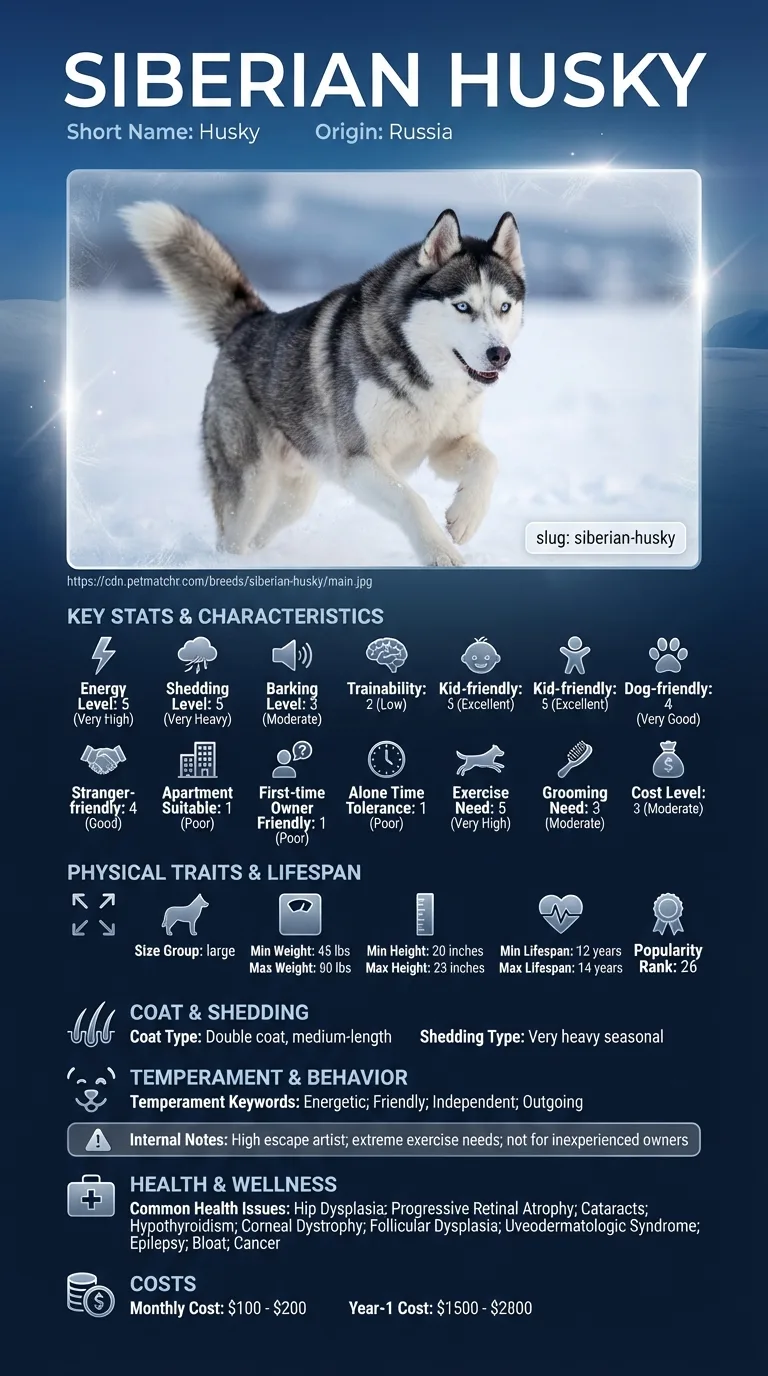
Many first-time Husky owners or those unfamiliar with the breed's specific needs often struggle with bone and growth issues. Busy families and individuals may also find it challenging to provide the specialized care and training required to manage these problems.
This guide is not medical advice. If your dog shows pain, sudden behavior change, or worsening symptoms, consult a licensed veterinarian.
Some links may be affiliate links. We may earn a commission at no extra cost to you. We only suggest products we believe are helpful for dog owners.
We research and check what we publish, but we do not warrant that any figure, date, price, or statement is accurate, complete, or current, and we accept no liability for any loss, cost, injury, or other harm arising from the use of this site. Use it as one reference among several. You remain responsible for your own decisions and for your dog's care - confirm anything that matters with a licensed veterinarian or another qualified professional before you act on it. Full disclaimer.
Check this first
Identifying when bone and growth issues in your Siberian Husky require immediate attention is crucial for their health. Watch for red flags that indicate an emergency, as these signs can lead to serious complications if not addressed promptly. If your Husky experiences sudden lameness, severe pain, or noticeable swelling in the joints or limbs, call your vet right away. Additionally, if your dog has trouble standing or walking, this could signify a severe issue that needs quick intervention.
On the other hand, some bone and growth issues can be monitored at home. If your Husky shows mild stiffness after exercise or a slight limp that improves with rest, you may not need to rush to the vet. In these cases, keep an eye on their condition and consider implementing a gentle exercise plan. If the symptoms persist or worsen over a few days, it’s best to seek professional advice.
Another sign to watch for is a change in appetite or behavior. If your Siberian Husky is eating less or seems unusually lethargic, these could be indicators of pain or discomfort. Monitoring these changes closely can help you decide whether to wait it out or seek veterinary care.
If any of these apply, call your vet or an emergency clinic now. The rest of this page is for the cases that are not an emergency.
Siberian Husky bone & growth issues can be a significant concern for owners. These problems often manifest as limping, reluctance to play, or difficulty in climbing stairs. They typically stem from the breed's large size and rapid growth patterns, making them susceptible to various bone and joint conditions.
Bone and growth issues are relatively common among Siberian Huskies, especially in their first year. Many owners notice symptoms as their puppies grow rapidly, making awareness and early intervention crucial.
Siberian Huskies are large dogs that grow rapidly in their first year. This fast growth can lead to bone and joint issues, particularly if they are not properly managed. Genetics also play a role, as some Huskies may be predisposed to conditions like hip dysplasia.
The environment can exacerbate bone and growth issues, especially if a Husky does not get enough balanced nutrition or proper exercise. Overfeeding or feeding a diet too high in calories can lead to excessive weight gain, stressing developing bones and joints.
Consult a vet if you notice persistent limping, difficulty with stairs, or unusual behavior, as these may indicate serious bone or growth issues. Early intervention can help prevent long-term problems.
Avoiding these common mistakes can help you better manage your Siberian Husky's bone and growth issues.
Start here: Siberian Husky Most Common Genetic Disorders: Screening
See all Siberian Husky health problems, which breeds are prone to bone growth issues, or the full Siberian Husky breed guide for temperament, exercise needs and ownership costs.
You may start noticing improvements in your Siberian Husky's bone and growth issues within 6 to 12 months of consistent care and management.
Success means your Husky can move comfortably and play without pain, showing an overall healthy growth pattern and increased energy.
Sarah, a first-time Husky owner, noticed that her puppy Max had trouble keeping up during playtime. After a vet visit confirmed bone growth issues, Sarah felt overwhelmed. She learned the importance of a balanced diet and proper exercise tailored for Max's needs. With guidance from a vet and a dog trainer, Sarah focused on low-impact activities and adjusted Max's diet. Over the next year, she saw Max grow stronger and more active, with fewer signs of discomfort.
Key takeaway: With the right support and adjustments to care, you can help your Siberian Husky thrive despite bone and growth issues.
Siberian Huskies may face bone and growth issues due to their large size and rapid growth rate. Genetics can play a role, as can diet and exercise levels. It’s crucial to monitor their growth and consult a vet if you notice any abnormalities.
To prevent bone and growth issues, provide a balanced diet rich in essential nutrients. Ensure your Husky has regular, controlled exercise to support healthy bone development. Regular vet check-ups are also important to catch any issues early.
Look for signs like limping, reluctance to exercise, or unusual stiffness. If your Husky seems to be in pain or has noticeable swelling around joints, consult your vet promptly. Early detection can make a significant difference.
Yes, treatment options may include dietary adjustments, physical therapy, or medication prescribed by your vet. In some cases, surgery might be necessary for severe issues. Always follow your vet's recommendations for the best outcome.
A proper diet is crucial for healthy bone growth in Siberian Huskies. Ensure their food contains appropriate levels of calcium and phosphorus, and avoid overfeeding, which can lead to rapid growth and subsequent issues. Always consult your vet for specific dietary recommendations.
Training can help by promoting controlled physical activity, which is essential for healthy bone development. Positive reinforcement and engaging exercises tailored to their age can prevent excessive strain on their growing bones. Consistency in training is key.
For older Huskies, weight management and low-impact exercises can help alleviate discomfort. Joint supplements might also be beneficial, but always check with your vet before starting any new treatment.
Yes, diet plays a crucial role in a Siberian Husky's bone health. A balanced diet rich in vitamins and minerals, particularly calcium and phosphorus, is essential for proper growth. Consult your vet for specific dietary recommendations.
If you notice persistent signs like lameness, swelling, or changes in behavior, it's time to see a vet. Early intervention can prevent serious complications related to bone and growth issues.
Gentle training that focuses on low-impact activities can aid in managing bone and growth issues. Avoid high-impact exercises and emphasize mental stimulation to keep your Husky engaged without straining their joints.
Monitor their growth regularly and consult a vet if you notice any issues. Ensure they have a balanced diet and adequate exercise to support healthy development.
Regular vet check-ups every 6-12 months are recommended, especially during their growth phases. This helps catch any potential issues early.
Controlled activities like leash walks and gentle play are ideal. Avoid high-impact exercises until they are fully grown to prevent injury.
Yes, large breeds like Siberian Huskies are more prone to bone and growth issues due to their rapid growth. Early intervention is crucial.
Include high-quality dog food with balanced nutrients, focusing on calcium and phosphorus for bone health. Consult your vet for specific recommendations.
A one-page prep sheet for this condition: the signs, the questions to ask, what to get priced. Unlocks here.
You get: Vet visit prep sheet
No spam. One-click unsubscribe. See our privacy policy.
Preview page 1 before you decide.