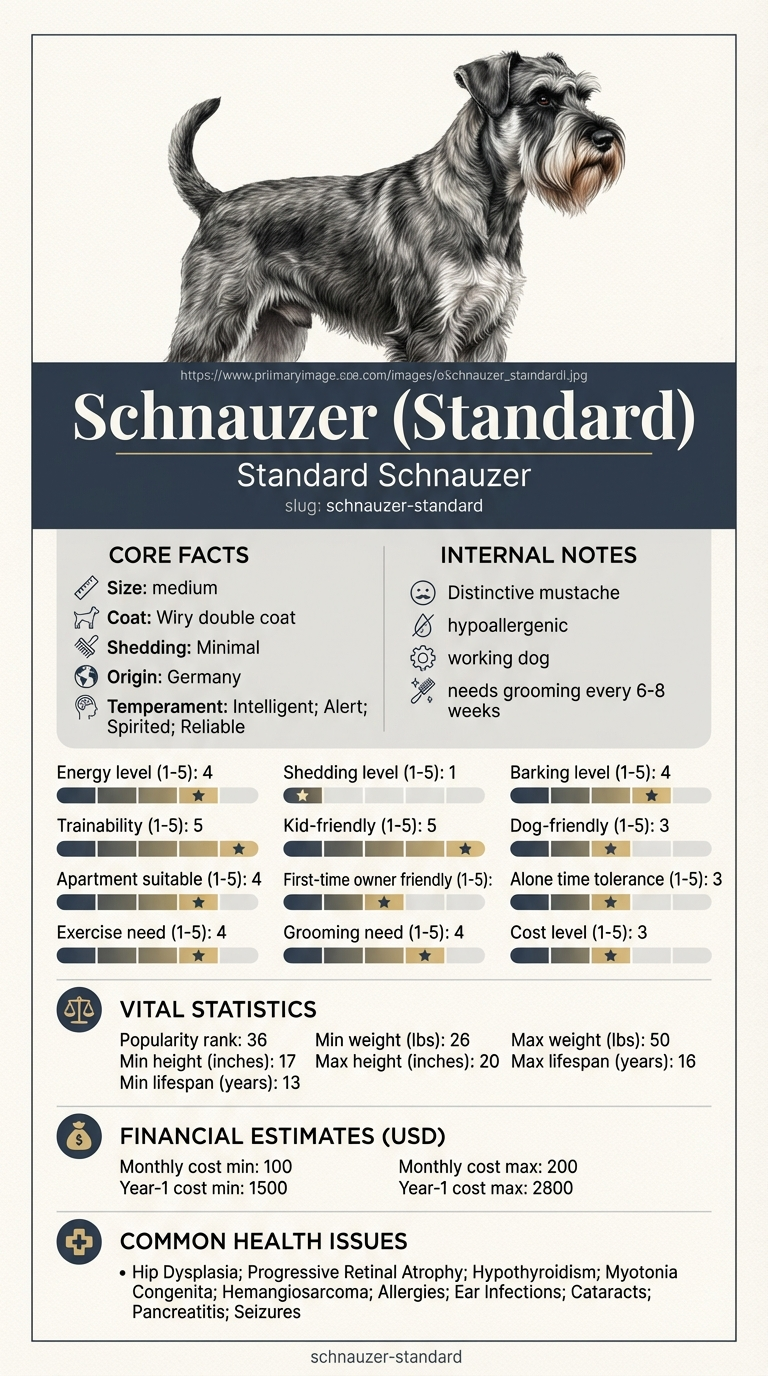
Schnauzer (Standard) progressive retinal atrophy (PRA-RCD3) is a serious condition that leads to vision loss in affected dogs.
Owners of Schnauzers (Standard) may find themselves worried about their dog's vision and quality of life. Those with busy schedules or limited experience may feel particularly overwhelmed when navigating this health challenge.
Important reminder
This guide is not medical advice. If your dog shows pain, sudden behavior change, or worsening symptoms, consult a licensed veterinarian.
Some links may be affiliate links. We may earn a commission at no extra cost to you. We only suggest products we believe are helpful for dog owners.
What this problem looks like
Schnauzer (Standard) progressive retinal atrophy (pra-rcd3) is a genetic eye disorder leading to gradual vision loss. Owners may notice their dog bumping into furniture or struggling to navigate familiar spaces. This condition typically manifests in middle age, but some symptoms can appear as early as two years old.
Common triggers
Genetic predisposition due to inheritance
Age-related deterioration
Low light conditions that exacerbate vision challenges
Progressive retinal atrophy is relatively common in Schnauzers, with studies suggesting a significant percentage may develop it during their lifespan. This breed's genetic background makes them particularly susceptible to this condition.
Why this happens
Breed factors
Schnauzers (Standard) can inherit progressive retinal atrophy (PRA-rcd3) due to their genetic makeup. This condition is more common in certain breeds, including Schnauzers, and it leads to gradual vision loss. It's important to understand that some dogs may be more predisposed to this issue based on their lineage.
Environment factors
While genetics play a significant role, environmental factors can also contribute to the progression of PRA. Factors like poor nutrition, lack of proper eye care, and exposure to harmful substances can exacerbate existing conditions. Ensuring a healthy environment and diet can help manage overall eye health.
What you can try
At-home strategies
Maintain a balanced diet rich in vitamins A and E to support eye health. Incorporate foods like carrots and leafy greens.
Provide a stable and familiar environment for your Schnauzer. This can help reduce anxiety related to vision loss.
Engage in gentle, interactive play that encourages your Schnauzer to use their other senses, which can boost confidence and comfort.
When to consider a trainer
If your Schnauzer shows signs of anxiety or confusion due to vision loss, consider consulting a professional trainer. They can help with behavior modification techniques to ease your dog's stress and improve their quality of life.
When to talk to your vet
If you notice any sudden changes in your Schnauzer's vision or behavior, it's crucial to talk to your vet. They can provide a thorough eye examination and suggest appropriate treatments or interventions.
Realistic expectations
Managing Schnauzer (Standard) progressive retinal atrophy (pra-rcd3) is an ongoing process. You may notice gradual changes over several months, with symptoms worsening potentially over years.
Success looks like effectively adapting your dog's environment to minimize hazards and continuing to engage them through other senses. Regular veterinary check-ups will help monitor progress and adjust care as needed.
Mistakes that make this worse
Understanding the common mistakes that can worsen Schnauzer (Standard) progressive retinal atrophy (PRA-rcd3) is crucial. By avoiding these pitfalls, you can help your dog manage their condition more effectively.
Ignoring early signs of vision loss: If you notice your Schnauzer stumbling or bumping into things, don’t dismiss it. Seek veterinary advice promptly to address the issue early.
Not providing a safe environment: Failing to clear obstacles in your home can make navigation difficult for a dog with PRA-rcd3. Keep pathways clear and use baby gates to prevent falls.
Over-relying on verbal commands: While training with voice commands is essential, too much reliance can confuse a visually impaired dog. Incorporate touch signals or tactile cues to guide them.
Neglecting regular vet check-ups: Skipping vet appointments can delay important updates on your dog's condition. Regular check-ups can help monitor progression and adjust care plans accordingly.
Forgetting to engage their other senses: Sticking strictly to visual cues can limit interaction. Use toys that make noise or have distinct textures to stimulate your Schnauzer's other senses.
Failing to modify exercise routines: Continuing with the same exercise routines without adjustments can be risky. Opt for low-risk activities that don't require extensive sight, such as scent games or gentle walks.
Not educating family and friends: If those around you aren’t aware of your Schnauzer's condition, they might inadvertently cause stress. Educate them on how to interact kindly and safely.
When Schnauzer (Standard) Progressive Retinal Atrophy (PRA-rcd3) Is an Emergency
Progressive retinal atrophy (PRA-rcd3) in Schnauzers can lead to serious vision loss. It's important to know when to act quickly and when you might just need to monitor your pet's condition. If your Schnauzer suddenly exhibits signs like disorientation, walking into objects, or showing fear in familiar environments, these are red flags. You should call your vet immediately.
Other emergency signs include unusual eye movements, bleeding from the eye, or your dog becoming unresponsive. These symptoms require urgent attention. On the other hand, if your Schnauzer is showing mild signs, like slight hesitance in low light or occasional bumping into furniture, it may be manageable at home. Keep track of these behaviors and set up a follow-up appointment with your vet to discuss the best plan for monitoring.
Being proactive is key. If you notice a gradual change in your dog's vision or behavior, it’s wise to consult your vet. They can provide guidance and resources for managing Schnauzer (Standard) progressive retinal atrophy (PRA-rcd3) effectively, ensuring your furry friend has the best quality of life possible.
Schnauzer (Standard) Progressive Retinal Atrophy (PRA-RCD3) - When Schnauzer (Standard) Progressive Retinal Atrophy (PRA-rcd3) Is an Emergency
Navigating Vision Loss with Charlie
When Lisa adopted Charlie, her Standard Schnauzer, she was thrilled to have a spirited companion. However, after a year, Charlie began to bump into furniture and seemed less playful. A vet diagnosed him with progressive retinal atrophy (pra-rcd3). Determined to help Charlie, Lisa rearranged their home to create a safer, more navigable space. She also used toys with different textures and sounds to keep Charlie engaged. Over time, he adjusted well and still enjoyed long walks and playtime.
Key takeaway: With patience and adjustments to their environment, owners can help Schnauzers adapt to life with vision loss. Regular vet check-ups and creative engagement are crucial.
Frequently asked questions
What causes Schnauzer (Standard) progressive retinal atrophy (pra-rcd3)?
Schnauzer (Standard) progressive retinal atrophy (pra-rcd3) is primarily caused by genetic factors. It leads to a gradual decline in vision due to the degeneration of retinal cells. Regular veterinary check-ups can help in early detection.
How can I manage my Schnauzer's (Standard) progressive retinal atrophy (pra-rcd3)?
While there is no cure for progressive retinal atrophy, you can help your Schnauzer adapt to vision loss. Use consistent commands and maintain a familiar environment to reduce anxiety. Training can also focus on touch and sound to guide your dog.
What are the signs of progressive retinal atrophy in Schnauzers (Standard)?
Common signs include difficulty seeing in low light, bumping into objects, and hesitance to navigate familiar areas. If you notice these behaviors, consult your vet for a proper diagnosis and guidance.
Is progressive retinal atrophy painful for my Schnauzer (Standard)?
No, progressive retinal atrophy itself is not painful. However, your dog may experience frustration or anxiety as their vision deteriorates. Providing a stable home environment can help ease these feelings.
Can I prevent Schnauzer (Standard) progressive retinal atrophy (pra-rcd3)?
Since progressive retinal atrophy is genetic, prevention is challenging. However, responsible breeding practices can help reduce the incidence of this condition. Always choose a reputable breeder who tests for genetic conditions.
How can training help a Schnauzer (Standard) with progressive retinal atrophy (pra-rcd3)?
Training can enhance your Schnauzer's confidence and coping skills with vision loss. Focus on verbal cues and tactile signals to guide them. Consistency and patience are key in this training process.
What should I do if my Schnauzer (Standard) shows signs of vision loss?
If you notice signs of vision loss, schedule a veterinary appointment. Early diagnosis can lead to better management strategies. Your vet may recommend adjustments to your dog's environment and routine.
What should I do if my Schnauzer (Standard) shows signs of vision loss?
If you notice your Schnauzer (Standard) struggling to see, it's crucial to consult a veterinarian as soon as possible. Early detection can help manage Progressive Retinal Atrophy (PRA-rcd3) more effectively. Your vet may suggest regular check-ups to monitor your dog's condition.
Can Progressive Retinal Atrophy (PRA-rcd3) affect older Schnauzers (Standard) differently?
Yes, older Schnauzers (Standard) may experience a faster progression of PRA-rcd3 symptoms. Age can impact their adaptability to vision loss, making it more important to provide them with a stable environment. Keeping their routines consistent can help them adjust.
Are there any treatments available for Schnauzer (Standard) with PRA-rcd3?
Currently, there is no cure for Progressive Retinal Atrophy (PRA-rcd3). However, management strategies, such as providing a safe and familiar environment, can help your Schnauzer adjust. Discussing options with your vet can lead to personalized care plans.
How can I help my Schnauzer (Standard) cope with Progressive Retinal Atrophy (PRA-rcd3)?
To assist your Schnauzer (Standard), keep furniture and obstacles in the same place to prevent confusion. Engage in scent-based games and use verbal cues to guide them. Training can enhance their confidence and help them navigate their surroundings more easily.
Is there a genetic test for Schnauzers (Standard) for Progressive Retinal Atrophy (PRA-rcd3)?
Yes, genetic testing is available to determine if a Schnauzer (Standard) carries the gene for Progressive Retinal Atrophy (PRA-rcd3). This can be particularly useful for breeders to make informed decisions and for owners to understand their dog's risk. Consult your vet for testing options.
What are quick tips for Schnauzer (Standard) progressive retinal atrophy (pra-rcd3)?
Keep your home layout consistent to help your dog navigate safely. Use scent and sound cues to assist them in moving around. Regular vet check-ups are essential for monitoring their condition.
Health
How long do Schnauzers (Standard) live with progressive retinal atrophy (pra-rcd3)?
Schnauzers (Standard) typically live 13-16 years. Progressive retinal atrophy itself does not shorten lifespan but managing its effects is crucial for their quality of life.
Living
Can Schnauzer (Standard) progressive retinal atrophy (pra-rcd3) be inherited?
Yes, this condition is hereditary and can be passed from parent to offspring. It's important to choose breeders who screen for genetic issues.
Behavior
What should I avoid with a Schnauzer (Standard) that has progressive retinal atrophy (pra-rcd3)?
Avoid moving furniture or changing their environment frequently, as this can confuse and stress them. Stick to predictable routines and settings.
Health
How often should I take my Schnauzer (Standard) to the vet for progressive retinal atrophy (pra-rcd3)?
Regular vet visits every 6-12 months are advised to monitor the condition and make necessary adjustments to care. Your vet will guide you based on your dog's needs.
Related DogBreedCompass guides
Schnauzer (Standard) behavior problems – Learn about common behavior issues that may arise due to vision loss.
Schnauzer (Standard) separation anxiety guide – Discover how separation anxiety can affect your Schnauzer, especially during challenging times.
Schnauzer (Standard) progressive retinal atrophy (pra-rcd3) training – Explore effective training methods to support your Schnauzer with PRA-rcd3.
Schnauzer (Standard) cost breakdown – Understand the potential costs associated with caring for a Schnauzer affected by health issues.