Behavior
What should I do if my Schnauzer (Standard) is snoring loudly?
Loud snoring can be a sign of BOAS, especially if combined with other breathing difficulties. Consult your vet to assess your dog's airway health.
Schnauzer (Standard) Brachycephalic Obstructive Airway Syndrome (BOAS) can make breathing a challenge for your pup.
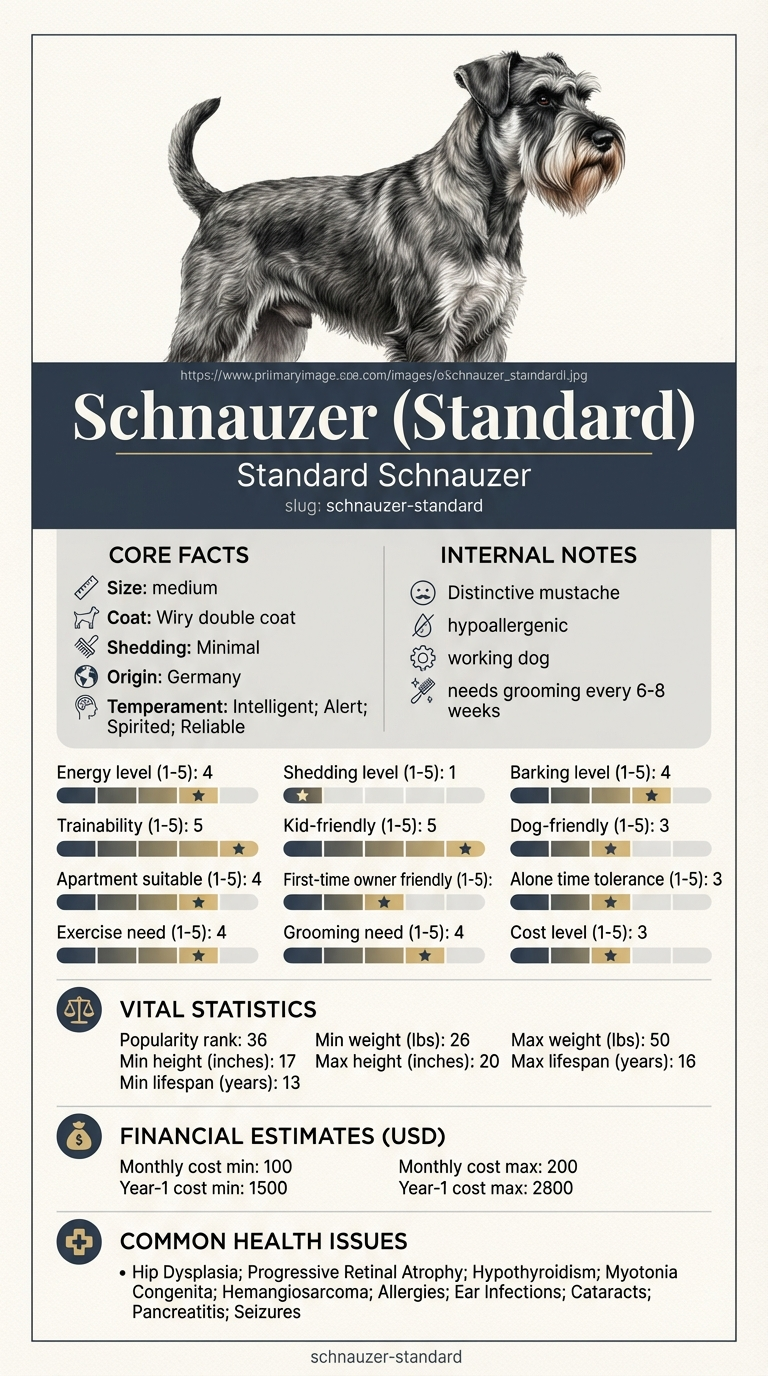
Typically, owners of Schnauzers (Standard) may notice their dogs struggling with breathing, especially during exercise or in warm weather. This issue can be concerning for first-time dog owners or those unfamiliar with breed-specific health risks.
This guide is not medical advice. If your dog shows pain, sudden behavior change, or worsening symptoms, consult a licensed veterinarian.
Some links may be affiliate links. We may earn a commission at no extra cost to you. We only suggest products we believe are helpful for dog owners.
Schnauzer (Standard) brachycephalic obstructive airway syndrome (BOAS) commonly presents as breathing difficulties, snoring, and sensitivity to heat. This condition stems from their unique facial structure, which can obstruct airflow. Owners may notice their Schnauzer struggling to breathe, especially during exercise or in hot weather.
Brachycephalic obstructive airway syndrome is relatively common in Schnauzer (Standard) breeds, affecting many individuals to varying degrees. Awareness and proactive care can help manage symptoms effectively.
Schnauzers (Standard) can inherit brachycephalic traits, leading to narrower airways. This structure can cause breathing problems, especially during exercise or in hot weather. Their unique facial structure makes them prone to Brachycephalic Obstructive Airway Syndrome (BOAS).
Environmental factors like obesity can worsen breathing issues in Schnauzers (Standard). High temperatures and humidity can also make it harder for them to breathe. Stressful situations or excessive exercise may trigger or amplify their breathing difficulties.
If your Schnauzer is showing anxiety or behavioral changes due to their breathing difficulties, a professional trainer can help. Training can also assist in teaching commands that minimize exertion during playtime.
If your Schnauzer frequently struggles to breathe, snores loudly, or shows signs of distress, consult your vet. They can assess the severity of BOAS and suggest treatments or management strategies.
Improvement in breathing and comfort can typically be seen within a few weeks after implementing training and lifestyle changes. For more severe cases, a longer-term plan involving veterinary intervention may take several months.
Success means your Standard Schnauzer breathes more easily during exercise and is less prone to overheating. They should show reduced instances of snoring and have a better overall quality of life.
Avoiding these common mistakes can help improve your Schnauzer's condition.
Red-flag signs that require immediate veterinary attention include:
- Severe labored breathing or gasping for air - Blue-tinged gums or tongue - Excessive wheezing or snoring that suddenly worsens - Signs of heatstroke, like panting heavily in a cool environment - Collapse or fainting during activity
If you notice any of these symptoms, don’t wait. Call your vet right away.
On the other hand, if your Schnauzer (Standard) shows mild signs, you can monitor them at home. Mild cases may include:
- Occasional snoring or mild wheezing - Slight difficulty breathing during play but recovering quickly - Short periods of coughing that don’t worsen
In these situations, keep an eye on your dog’s behavior. If symptoms improve, you may not need to act immediately. However, always consult your vet if you’re unsure.
Understanding the difference between emergency symptoms and mild cases can help you ensure your Schnauzer (Standard) stays safe and healthy.
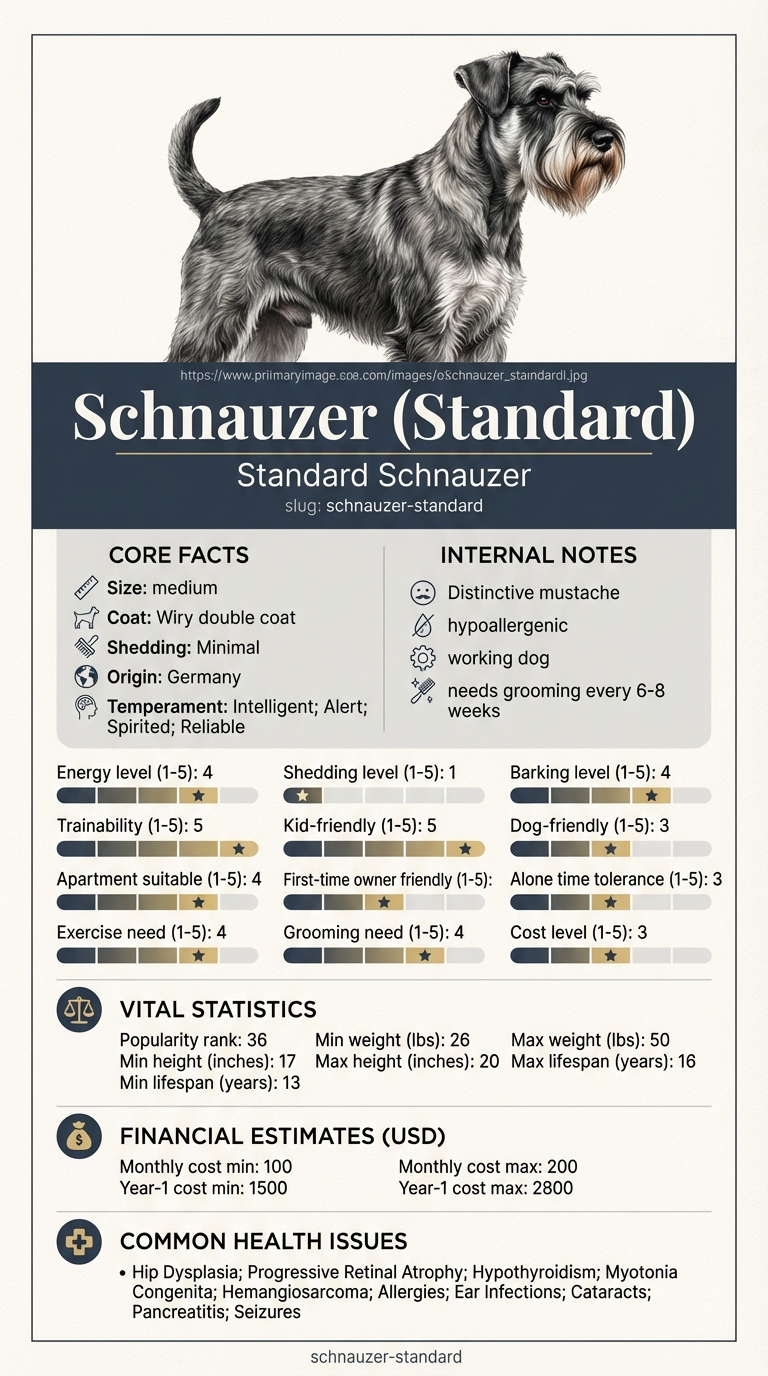
Emily, a busy nurse in San Francisco, adopted Max, her Standard Schnauzer, excited to bring a spirited companion into her city life. However, she soon noticed Max struggling to breathe after short walks, often snoring loudly while sleeping. After researching, she discovered that Max had Brachycephalic Obstructive Airway Syndrome (BOAS). With her vet's guidance, Emily implemented training to help Max relax during walks, adjusted his activity level, and committed to regular vet check-ups. Over a few months, Max became more comfortable, and Emily felt empowered knowing she was helping him lead a happier life.
Key takeaway: Understanding and addressing BOAS can significantly improve your Schnauzer's quality of life, and proactive management makes all the difference.
Brachycephalic obstructive airway syndrome (BOAS) occurs in breeds with short noses and flat faces, like the Schnauzer (Standard). This conformation can lead to narrowed airways, causing breathing difficulties. Genetics and breeding practices play a significant role in this condition.
Signs of BOAS in your Schnauzer (Standard) may include labored breathing, snoring, or excessive panting. You might also notice your dog struggling during exercise or becoming easily fatigued. If you observe these symptoms, consult your veterinarian for an evaluation.
Treatment for BOAS can range from lifestyle changes to surgical options. Mild cases may only require weight management and avoiding heat. More severe cases may necessitate surgical procedures to widen the airways.
You can help manage your Schnauzer's BOAS by ensuring they maintain a healthy weight and avoiding strenuous exercise, especially in hot weather. Keeping your dog calm and minimizing stress can also reduce breathing difficulties. Regular veterinary check-ups are essential.
Yes, breeds with short snouts, like the Schnauzer (Standard), Pugs, and Bulldogs, are more prone to BOAS. These breeds often exhibit the characteristic conformation that leads to airway obstruction. It's important for owners of these breeds to be aware of the potential health risks.
Signs of Schnauzer (Standard) brachycephalic obstructive airway syndrome (boas) include loud snoring, difficulty breathing, and excessive panting, especially in heat. If your dog shows signs of distress while exercising or has a bluish tongue, consult your vet immediately.
Yes, older Schnauzers (Standard) can develop brachycephalic obstructive airway syndrome (boas). As they age, their airways may become more restricted, making it crucial to monitor their breathing and overall health regularly.
To assist your Schnauzer (Standard) in hot weather, keep them indoors in a cool area, provide plenty of water, and avoid strenuous activities. Short, gentle walks in the early morning or late evening can help reduce overheating.
In severe cases, surgery may be recommended to open the airways for a Schnauzer (Standard) with brachycephalic obstructive airway syndrome (boas). A vet can evaluate the severity and discuss surgical options if necessary.
If your Schnauzer (Standard) is having a breathing emergency, remain calm and try to keep them cool. Take them to the vet immediately, as timely care is essential for their well-being.
Loud snoring can be a sign of BOAS, especially if combined with other breathing difficulties. Consult your vet to assess your dog's airway health.
Ensure your Schnauzer has access to shade and cool water. Avoid long walks during peak heat times and consider indoor play to keep them active.
Surgery can be effective in severe cases of BOAS, helping to improve airflow. Consult with a veterinary specialist to explore your options.
Signs include excessive panting, lethargy, and difficulty breathing. If you notice these symptoms, move your Schnauzer to a cooler area immediately.