Behavior
What are quick tips for Rottweiler bloat (gastric dilatation-volvulus/gdv)?
Feed smaller portions multiple times a day, avoid vigorous exercise after meals, and monitor your dog for any signs of distress.
Rottweiler bloat, also known as gastric dilatation-volvulus (GDV), is a serious and potentially life-threatening condition. It occurs when a dog's stomach fills with gas and twists, leading to severe health risks. (Rottweiler bloat (gastric dilatation-volvulus/gdv))
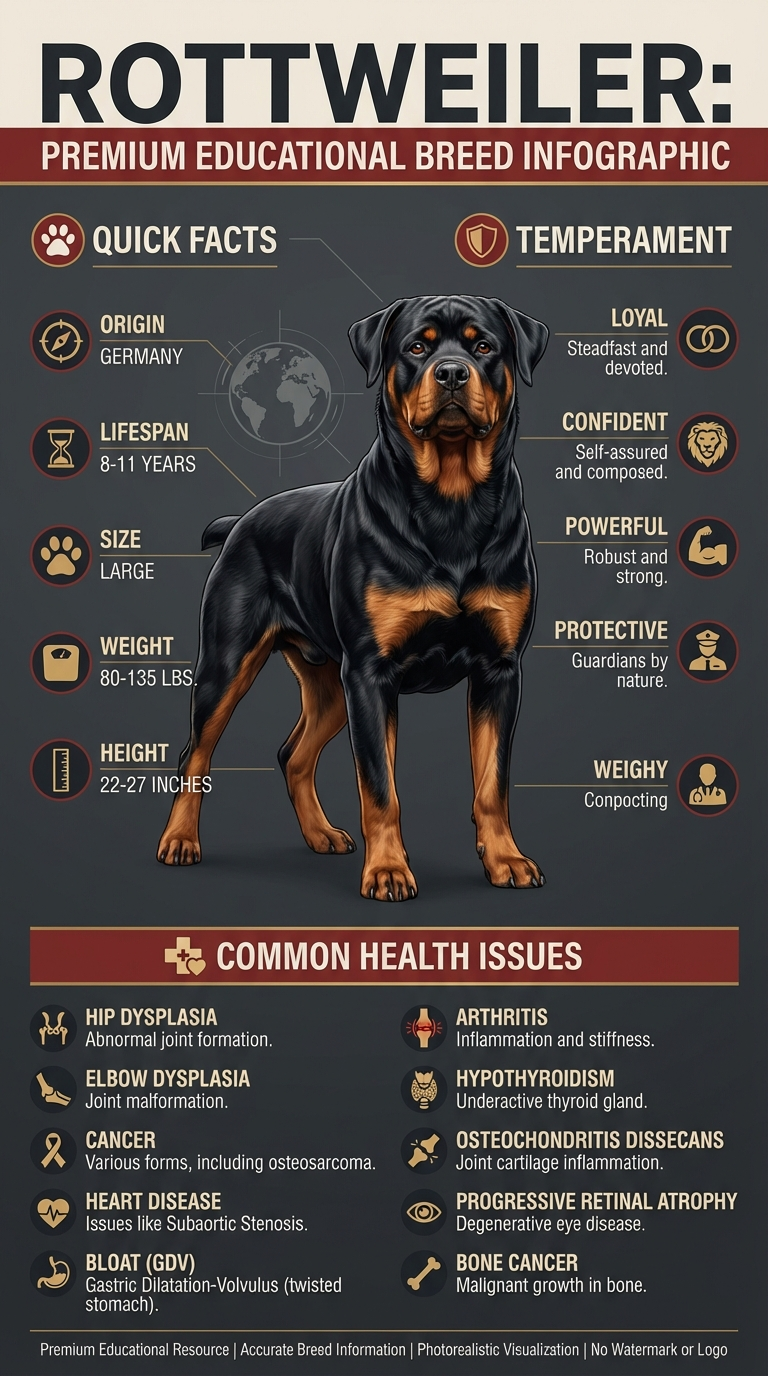
Typically, owners of Rottweilers, especially those with active dogs, may face challenges related to bloat. First-time Rottweiler owners or those unaware of this serious issue often find themselves unprepared when symptoms arise.
This guide is not medical advice. If your dog shows pain, sudden behavior change, or worsening symptoms, consult a licensed veterinarian.
Some links may be affiliate links. We may earn a commission at no extra cost to you. We only suggest products we believe are helpful for dog owners.
Rottweiler bloat, or gastric dilatation-volvulus (GDV), is a serious and often life-threatening condition. It occurs when a dog's stomach becomes distended with gas and twists on itself, which can cut off blood flow and lead to shock. Owners may notice their Rottweiler appearing restless, pacing, or trying to vomit without success, along with a swollen belly.
Bloat is particularly common in large breeds like Rottweilers, with studies suggesting that about 20-30% of Rottweilers may experience it at some point in their lives. This condition requires immediate veterinary attention, as it can progress rapidly.
Rottweilers are large, deep-chested dogs, which makes them more prone to bloat (gastric dilatation-volvulus/GDV). Their temperament can also influence their eating habits. Some may gulp food quickly or eat large meals, increasing the risk of this condition.
Bloat can also be triggered by environmental factors. Stressful situations, such as loud noises or changes in routine, can cause anxiety, leading to rapid eating. Additionally, exercising right after meals can increase the likelihood of bloat.
If your Rottweiler is consistently gulping food or showing signs of anxiety around mealtimes, consider consulting a professional trainer. They can help address eating behaviors and anxiety triggers effectively.
If you notice signs of bloat, such as a swollen abdomen, excessive drooling, or restlessness, contact your vet immediately. Bloat is a medical emergency and requires prompt treatment.
Managing Rottweiler bloat (gastric dilatation-volvulus/GDV) typically takes several months of focused effort. You should expect to see improvements in your dog's behavior and feeding habits within 4 to 6 weeks after implementing changes.
Success looks like a Rottweiler that eats calmly, avoids stress during feeding, and shows no signs of discomfort after meals. Regular vet check-ups will also help ensure ongoing health.
Avoiding certain common mistakes can help manage Rottweiler bloat (gastric dilatation-volvulus/GDV) more effectively. Here are some behaviors to steer clear of, along with safer alternatives.
Recognizing when Rottweiler bloat is an emergency can save your dog's life. It's crucial to be aware of red flags that indicate you need to call your vet immediately. Signs of a true emergency include a distended abdomen, unproductive attempts to vomit, excessive drooling, restlessness, and signs of shock such as weakness or rapid breathing.
If your Rottweiler shows any of these symptoms, you should seek veterinary help right away. Delaying treatment can lead to severe complications, including death. On the other hand, if your dog experiences mild symptoms, such as mild discomfort, occasional burping, or a slightly bloated belly without severe distress, you might choose to monitor the situation at home.
In these cases, keep a close eye on your pet. Provide easy access to water, but limit food intake for a while. You can also track their behavior and comfort levels.
If symptoms worsen or if you’re unsure, it’s always best to err on the side of caution and consult your vet. Remember, early detection can make all the difference in managing Rottweiler bloat effectively.
Jessica, a first-time Rottweiler owner, was shocked when her dog, Max, suffered from bloat after a rushed meal. After an emergency vet visit, she learned about the importance of slow feeding and reducing stress during mealtime. With a slow feeder bowl and a strict routine, Max's eating habits improved significantly over the next few months.
Key takeaway: The key takeaway is that preventing Rottweiler bloat (gastric dilatation-volvulus/GDV) requires patience, a structured feeding routine, and awareness of your dog's stress levels. Prioritizing these factors can lead to a healthier, happier dog.
Rottweiler bloat is often caused by rapid eating, drinking large amounts of water, or exercise after meals. Stress and genetics can also play a role. Understanding these triggers can help prevent this serious condition.
To prevent Rottweiler bloat, feed smaller meals throughout the day instead of one large meal. Avoid vigorous exercise right after eating and ensure your Rottweiler remains calm during and after meals.
Signs of bloat include a swollen abdomen, excessive drooling, restlessness, and attempts to vomit without success. If you notice these symptoms, seek veterinary help immediately, as bloat can be life-threatening.
While bloat can occur in any dog, certain breeds, including Rottweilers, are more prone to it due to their body structure. Genetics may increase the likelihood, so knowing your dog's lineage can help assess risk.
If you suspect bloat, take your Rottweiler to the vet immediately. Treatment often requires emergency intervention, which can range from decompression to surgery, with costs between $1,500 and $7,500.
If your Rottweiler displays signs of bloat, such as a swollen abdomen, retching, or unproductive vomiting, seek immediate veterinary care. Bloat can escalate quickly and requires urgent treatment to prevent serious complications.
Yes, certain Rottweilers with specific genetic backgrounds or those who eat quickly are at a higher risk for bloat. Understanding your dog's family history can help you take preventative measures.
Bloat can affect Rottweilers of any age, but older dogs may be at increased risk due to other health issues. Regular vet check-ups can help monitor your dog's health and catch potential problems early.
To prevent bloat, feed your Rottweiler smaller meals throughout the day instead of one large meal. Avoid vigorous exercise right after eating and consider using a slow-feeder bowl to help them eat more slowly.
Bloat symptoms can sometimes appear without a clear cause, as factors like stress, eating habits, and genetics can all contribute. Keeping a close eye on your Rottweiler's behavior and diet can help you identify potential triggers.
Feed smaller portions multiple times a day, avoid vigorous exercise after meals, and monitor your dog for any signs of distress.
Choose high-quality dog food, avoid feeding immediately after exercise, and consider using a slow feeder bowl to encourage slower eating.
Training your Rottweiler to be calm during meal times can reduce stress and help prevent bloat. Positive reinforcement techniques work well.
Treatment for bloat can cost between $1,500 and $7,500, depending on the severity and required procedures.