DogBreedCompass
← Back to breed profile

Poodle (Standard) Wobbler Syndrome: Causes and Solutions

Poodle (Standard) wobbler syndrome is a serious condition that affects mobility and quality of life. It involves cervical vertebral instability, causing wobbling and coordination issues.

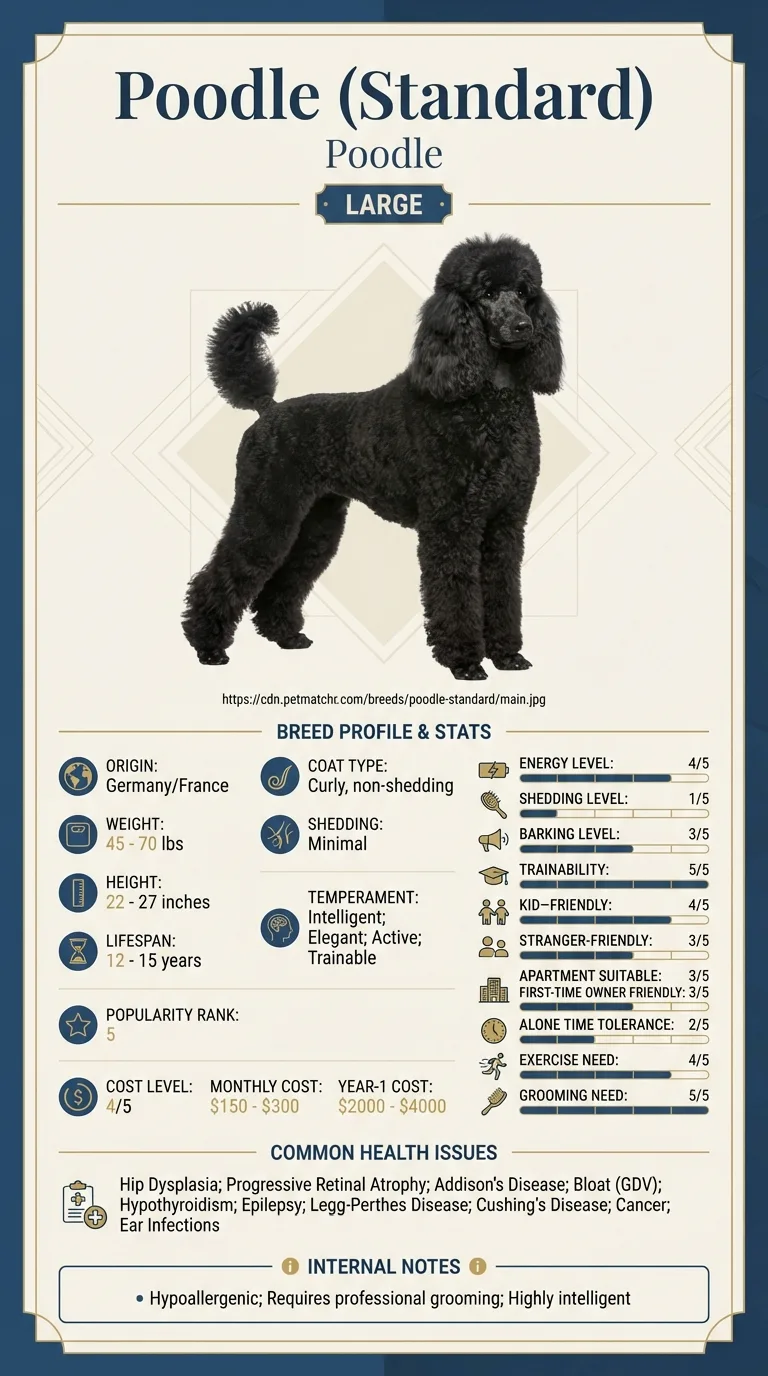
Poodle (Standard) Wobbler Syndrome: Causes and Solutions infographic

Owners of Poodles, especially those who engage in regular physical activities, often notice their dogs struggling with balance or coordination. First-time dog owners may find this condition alarming, as it can affect their pet's overall well-being.

Important reminder

This guide is not medical advice. If your dog shows pain, sudden behavior change, or worsening symptoms, consult a licensed veterinarian.

Some links may be affiliate links. We may earn a commission at no extra cost to you. We only suggest products we believe are helpful for dog owners.

What this problem looks like

Poodle (Standard) wobbler syndrome is a serious health issue that affects the neck area, leading to instability in the cervical vertebrae. This condition can cause symptoms like wobbling, weakness, and difficulty in walking. Owners might notice their Poodle struggling to maintain balance or having trouble with coordination during daily activities.

Common triggers

  • Genetic predisposition, especially in larger breeds.
  • Injury or trauma to the neck region.
  • Age-related degeneration in older dogs.

Wobbler syndrome is relatively common in Poodles, particularly Standard Poodles. While not every Poodle will experience this condition, it is important for owners to be aware of the risks and monitor their dog's health.

Why this happens

Breed factors

The Poodle (Standard) is prone to wobbler syndrome due to its genetic background. This condition, characterized by cervical vertebral instability, can be influenced by their large size and growth patterns. It's more common in breeds with a longer neck and back structure.

Environment factors

Environmental factors like lack of exercise, obesity, or previous injuries can also contribute to wobbler syndrome. If your Poodle is not getting enough physical activity or is overweight, it may increase the risk of developing this condition. Additionally, rough play or accidents can lead to cervical instability.

What you can try

At-home strategies

  • Ensure your Poodle gets regular, gentle exercise to maintain healthy weight and muscle tone. Aim for daily walks and playtime that do not put too much strain on the neck.
  • Create a safe environment by removing obstacles that could cause falls or injuries. Use rugs or mats to provide better traction on slippery floors.
  • Monitor your Poodle's behavior for signs of discomfort or difficulty moving. Adjust their playtime or activities accordingly to avoid strain.

When to consider a trainer

If your Poodle shows severe balance issues or you struggle to manage their exercise routine, consider hiring a professional trainer. A trainer can help tailor a fitness program that supports your dog's needs without overexerting them.

When to talk to your vet

If you notice persistent wobbliness, pain, or changes in your Poodle's mobility, it’s time to consult your veterinarian. They can evaluate the symptoms and recommend appropriate diagnostic tests or treatments. Early intervention can be crucial for managing wobbler syndrome effectively.

Realistic expectations

Managing Poodle (Standard) wobbler syndrome typically takes several weeks to months. With consistent training and veterinary care, you should start to see improvements in your dog's stability and mobility within 4-6 weeks.

Success means your Poodle can move more confidently, show reduced wobbling, and exhibit fewer signs of discomfort. Regular exercises and a balanced routine will help maintain their quality of life.

Mistakes that make this worse

Many dog owners unintentionally reinforce Poodle (Standard) wobbler syndrome symptoms. Here are common mistakes and safer alternatives.

  • Ignoring early symptoms: Delaying a vet visit when you notice wobbling can worsen the condition. Schedule an appointment as soon as you see any signs.
  • Over-exercising your dog: Pushing your Poodle too hard during walks or play can strain their neck and spine. Instead, opt for shorter, more frequent walks tailored to their comfort.
  • Using harsh training methods: Negative reinforcement can increase anxiety and worsen symptoms. Focus on positive reinforcement techniques to encourage good behavior.
  • Neglecting weight management: Excess weight can exacerbate wobbler syndrome. Ensure your Poodle maintains a healthy diet and weight through portion control and regular vet check-ups.
  • Avoiding mobility aids: Some owners feel their dog should cope without help. Consider using harnesses or ramps to assist your Poodle and reduce strain during daily activities.
  • Forgetting regular vet check-ups: Skipping vet visits can lead to undetected progression of the syndrome. Regular check-ups are essential for monitoring your dog's condition.

When Poodle (Standard) Wobbler Syndrome is an Emergency

Wobbler syndrome in Poodles can be serious. Understanding when to call your vet is crucial. Look for red flags that indicate an emergency, as these symptoms require immediate attention.

Poodle (Standard) Wobbler Syndrome: Causes and Solutions - When Poodle (Standard) Wobbler Syndrome is an Emergency

Finding Balance: A Poodle's Journey with Wobbler Syndrome

Laura, a first-time dog owner in Denver, was heartbroken when her Standard Poodle, Max, started showing signs of wobbler syndrome. Initially, she felt overwhelmed and unsure of how to help him. After consulting with her vet, she learned that a combination of physical therapy and targeted training could help. Laura started a tailored exercise program and worked on training exercises to enhance Max's stability. Within a few months, Max was not only moving better but also enjoying walks again. Their bond grew stronger as they navigated this challenge together.

Key takeaway: With the right support and a proactive approach, you can significantly improve your Poodle's quality of life despite wobbler syndrome.

Frequently asked questions

What is Poodle (Standard) wobbler syndrome?

Poodle (Standard) wobbler syndrome is a condition caused by cervical vertebral instability. This leads to neurological issues, causing your dog to wobble or have difficulty walking. Early detection and intervention are crucial for better outcomes.

Why does my Poodle (Standard) have wobbler syndrome?

Wobbler syndrome can be due to genetic factors or structural abnormalities in the spine. Large breeds like the Poodle (Standard) are often more susceptible. Factors like age and weight can also influence the likelihood of developing this condition.

How to stop Poodle (Standard) wobbler syndrome?

While you cannot completely stop wobbler syndrome, you can manage it through veterinary care. Treatment options include medication, physical therapy, or possibly surgery, depending on the severity. Always consult your vet for a tailored treatment plan.

What are the symptoms of Poodle (Standard) wobbler syndrome?

Common symptoms include wobbling, difficulty walking, and weakness in the legs. You may also notice your Poodle having trouble with coordination. If you see these signs, it's essential to see your veterinarian for evaluation.

Is Poodle (Standard) wobbler syndrome hereditary?

Yes, wobbler syndrome can have a hereditary component, especially in larger breeds like the Poodle. Responsible breeding practices can help reduce the risk. If you're considering a Poodle, look for breeders who test for this condition.

What treatment options are available for Poodle (Standard) wobbler syndrome?

Treatment can vary based on severity but may include medications for pain and inflammation, physical therapy, or surgery. Your vet will recommend the best course of action based on your dog's specific condition.

Can Poodles with wobbler syndrome still live a happy life?

Yes, many Poodles with wobbler syndrome can lead fulfilling lives with appropriate management. Regular vet check-ups, a supportive environment, and tailored exercise can help maintain their quality of life.

What are the early signs of Poodle (Standard) wobbler syndrome?

Early signs of Poodle (Standard) wobbler syndrome include wobbling or unsteady gait, difficulty walking, and a hesitance to jump or run. If you notice these symptoms, it's crucial to consult a vet promptly to discuss potential treatment options.

Can older Poodles develop wobbler syndrome?

Yes, older Poodles can develop wobbler syndrome, often due to age-related changes in their spine. Regular vet check-ups are important for older dogs to catch any health issues early, including signs of this syndrome.

How can I help my Poodle (Standard) with wobbler syndrome at home?

To help your Poodle at home, provide a safe environment with non-slip surfaces and avoid stairs or obstacles that could cause falls. Controlled, low-impact exercise is also beneficial, but consult your vet for a tailored exercise plan.

Are there specific training techniques for Poodles with wobbler syndrome?

For Poodles with wobbler syndrome, focus on positive reinforcement training that encourages slow, gentle movements. Avoid high-impact activities and consider working with a professional trainer experienced in handling dogs with special needs.

When should I consider surgery for my Poodle's wobbler syndrome?

Surgery for Poodle (Standard) wobbler syndrome is generally considered when conservative treatments fail to improve mobility or quality of life. Discuss all options with your vet to determine the best course of action for your dog's specific condition.

Quick answers

View more answers
Behavior

What are quick tips for managing Poodle (Standard) wobbler syndrome?

Maintain a healthy weight for your Poodle and provide a safe environment to prevent falls. Regular vet visits are crucial for monitoring their condition and adjusting treatment as needed.

Costs

How much does it cost to treat Poodle (Standard) wobbler syndrome?

Treating wobbler syndrome can range from $500 to $7,000 depending on the severity and treatment options. It's essential to discuss costs with your veterinarian upfront.

Training

Can training help with Poodle (Standard) wobbler syndrome?

Training can help improve your Poodle's coordination and confidence. However, it’s essential to focus on gentle exercises tailored to their abilities and avoid strenuous activities.

Health

What is the average lifespan of a Poodle (Standard) with wobbler syndrome?

With proper management, Poodles can live for 12 to 15 years, even with wobbler syndrome. Consistent care can help maintain their health and longevity.

Behavior

What are common signs of wobbler syndrome in Poodles?

Look for symptoms like wobbling, difficulty walking, or weakness in the legs. If you notice these signs, consult your veterinarian immediately.

Related DogBreedCompass guides

  • Poodle (Standard) behavior problemsUnderstanding wobbler syndrome can help you manage your Poodle's health better.
  • Poodle (Standard) wobbler syndrome trainingLearn how to train your Poodle to cope with wobbler syndrome effectively.
  • Poodle (Standard) separation anxiety guideExplore separation anxiety issues that may arise with your Poodle.
  • Poodle (Standard) health issues overviewGet insights into common health issues affecting Standard Poodles.
  • Poodle (Standard) ownership costs breakdownFind out the costs associated with owning a Poodle.

Related guides