Behavior
How to manage Poodle (Standard) anxiety?
Provide a structured routine and plenty of exercise to help reduce anxiety in your Poodle. Consider calming products or training techniques for added support.

Quick answer
How to manage Poodle (Standard) anxiety?
Provide a structured routine and plenty of exercise to help reduce anxiety in your Poodle. Consider calming products or training techniques for added support.
The debate between Poodle (Standard) purebred and mixed breeds can be complex, but it's essential for potential dog owners to understand. (Poodle (Standard) purebred vs. mixed breeds)
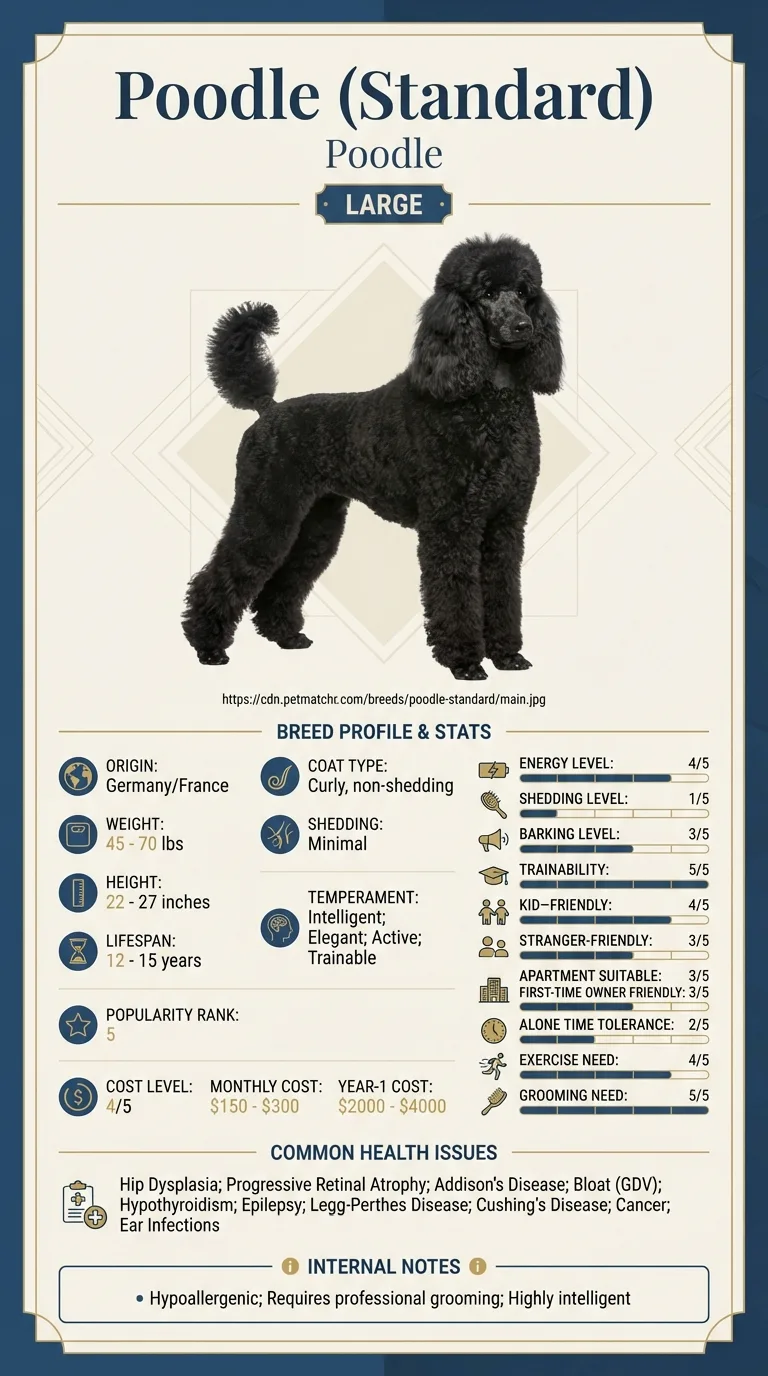
First-time dog owners and families often struggle with this choice. They want a friendly, trainable companion but may not be aware of the unique challenges that come with purebreds versus mixed breeds.
This guide is not medical advice. If your dog shows pain, sudden behavior change, or worsening symptoms, consult a licensed veterinarian.
Some links may be affiliate links. We may earn a commission at no extra cost to you. We only suggest products we believe are helpful for dog owners.
We research and check what we publish, but we do not warrant that any figure, date, price, or statement is accurate, complete, or current, and we accept no liability for any loss, cost, injury, or other harm arising from the use of this site. Use it as one reference among several. You remain responsible for your own decisions and for your dog's care - confirm anything that matters with a licensed veterinarian or another qualified professional before you act on it. Full disclaimer.
Check this first
Understanding when a situation with your Poodle (Standard) is an emergency versus something that can be monitored is crucial. Red-flag signs often indicate that you should call your vet immediately. These include difficulty breathing, excessive vomiting or diarrhea, seizures, or any signs of severe pain. If your dog is unresponsive or has a swollen abdomen, do not wait—seek veterinary care right away.
On the other hand, some issues are less urgent and can be managed at home. If your Poodle (Standard) shows mild lethargy or a decrease in appetite, it could be due to stress or a minor illness. Monitor your dog closely for any changes in behavior or condition. If your Poodle is still playful, drinking water, and responsive, you may choose to observe for a day or two. Keeping a journal of their symptoms can help you and your vet assess the situation later.
In summary, trust your instincts. If something feels off, it’s better to err on the side of caution and consult your vet. A quick phone call can save you from a bigger issue down the road.
If any of these apply, call your vet or an emergency clinic now. The rest of this page is for the cases that are not an emergency.
The debate between Poodle (Standard) purebred vs. mixed breeds often comes down to health concerns, behavior, and temperament. Owners may notice that purebred Poodles can be more prone to certain health issues, like hip dysplasia and cancer, making them more expensive in the long run. Mixed breeds, on the other hand, may offer more genetic diversity and potentially fewer health problems.
Many Poodle (Standard) owners face this dilemma, as purebred dogs are reported to be 1.9 times more likely to develop cancer compared to mixed breeds. This issue is common among dog owners who prioritize health and longevity.
Poodles (Standard) are known for their intelligence and sensitivity. This means they can be more prone to anxiety and behavioral issues compared to mixed breeds, which may have more varied temperaments. Additionally, their high energy and grooming needs can lead to stress if not managed properly.
The environment plays a significant role in a Poodle's behavior. Factors like loud noises, lack of exercise, or not enough mental stimulation can contribute to anxiety and behavioral problems. A busy home with young kids or other pets can also create challenges that trigger stress.
If you notice sudden changes in your Poodle's behavior, such as excessive barking or withdrawal, it's important to consult a veterinarian. They can rule out any underlying health issues that may be affecting your dog's behavior.
When dealing with the Poodle (Standard) purebred vs. mixed breeds dilemma, avoiding common mistakes can help improve your dog's behavior. Here are some common pitfalls to watch out for.
Start here: Standard Poodle Most Common Genetic Disorders: Screening
See all Poodle Standard health problems, which breeds are prone to purebred vs mixed breeds, or the full Poodle Standard breed guide for temperament, exercise needs and ownership costs.
You may see improvements in behavior within a few weeks, but substantial changes can take several months of consistent care and a steady routine.
Success means your Poodle (Standard) can engage positively with other dogs and people, showing less anxiety and more confidence in varied environments.
Jenna adopted Max, a Standard Poodle, thinking his friendly nature would make him a great companion. However, she quickly noticed that Max was anxious around other dogs, often barking and trying to hide. After researching, Jenna learned about the importance of positive reinforcement training and gradually introduced Max to new environments. With patience and consistency, Max began to relax and even made a few dog friends at the local park.
Key takeaway: With the right training approach, even a nervous Poodle (Standard) can become well-adjusted and sociable.
Poodles (Standard) may face behavioral issues due to their genetics, environment, or lack of training. Purebred dogs can be prone to certain health problems, which might affect their behavior. Regular vet check-ups and proper training can help mitigate these issues. This answer relates to Poodle (Standard) purebred vs. mixed breeds.
Start with basic obedience training using positive reinforcement. Consistency is key, so practice commands daily and incorporate socialization with other dogs. Consider enrolling in a training class specifically for Poodles to address their unique needs.
Common issues include separation anxiety, excessive barking, and stubbornness. Purebreds might also exhibit more anxiety due to their sensitive nature. Understanding their temperament can help tailor your training approach.
Create a consistent routine and provide plenty of physical and mental stimulation. Gradually introduce your Poodle to new environments and experiences to build confidence. If anxiety persists, consult with a vet for additional strategies.
Yes, purebreds can be more susceptible to specific health issues, which may influence behavior. Their genetic background may also lead to certain traits that can manifest as behavioral problems. Mixed breeds often have a more varied genetic makeup, which may lessen this risk.
Yes, Poodles (Standard) that are purebred may face a higher risk of health problems, including certain cancers. Research shows purebred dogs are 1.9 times more likely to develop cancer compared to mixed breeds. It's essential to monitor their health closely and consult a vet regularly.
Training can vary based on individual temperament rather than breed alone. While Poodles (Standard) are generally trainable, mixed breeds may inherit different traits. This means some mixed breeds may be easier or harder to train, depending on their background and socialization.
Adopting an older mixed breed Poodle can be rewarding, but consider their specific health needs and past experiences. Older dogs may require more medical care and a gentle approach to training. It's best to consult a vet to create a suitable care plan.
Behavior can differ significantly based on genetics and environment. Purebred Poodles (Standard) often have predictable traits, while mixed breeds may show a blend of behaviors from their parent breeds. Understanding your dog's unique personality will help manage any behavior issues.
If your Poodle (Standard) shows sudden or severe changes in behavior, such as increased aggression or anxiety, it's essential to see a vet. These changes may indicate underlying health issues or stress. Early intervention can help address any problems effectively.
Provide a structured routine and plenty of exercise to help reduce anxiety in your Poodle. Consider calming products or training techniques for added support.
Positive reinforcement methods work best for training Poodles. Use treats and praise to encourage desired behaviors and build trust.
Focus on daily exercise and mental stimulation. Regular grooming and socialization with other dogs are also essential for their well-being.
A one-page prep sheet for this condition: the signs, the questions to ask, what to get priced. Unlocks here.
You get: Vet visit prep sheet
No spam. One-click unsubscribe. See our privacy policy.
Preview page 1 before you decide.