Behavior
What are Poodle (Standard) pregnancy complications quick tips?
Monitor your Poodle closely for any unusual behaviors and ensure she receives regular vet check-ups. A balanced diet and a calm environment can also help.

Quick answer
What are Poodle (Standard) pregnancy complications quick tips?
Monitor your Poodle closely for any unusual behaviors and ensure she receives regular vet check-ups. A balanced diet and a calm environment can also help.
Poodle (Standard) pregnancy complications can pose serious risks to both the mother and her puppies. Understanding these issues is crucial for responsible breeding.
Dog owners who are new to breeding or those with limited experience may find it especially challenging. Additionally, busy pet parents may struggle to monitor and address potential complications during their Poodle's pregnancy.
This guide is not medical advice. If your dog shows pain, sudden behavior change, or worsening symptoms, consult a licensed veterinarian.
Some links may be affiliate links. We may earn a commission at no extra cost to you. We only suggest products we believe are helpful for dog owners.
We research and check what we publish, but we do not warrant that any figure, date, price, or statement is accurate, complete, or current, and we accept no liability for any loss, cost, injury, or other harm arising from the use of this site. Use it as one reference among several. You remain responsible for your own decisions and for your dog's care - confirm anything that matters with a licensed veterinarian or another qualified professional before you act on it. Full disclaimer.
Check this first
Call your vet immediately if you notice any of the following red flags:
- Excessive bleeding or dark discharge - Severe lethargy or unresponsiveness - Difficulty breathing or rapid panting - Signs of severe pain, such as whining or restlessness - Abdominal swelling or hardening
These symptoms can indicate serious issues like uterine rupture or infection, which need prompt medical intervention. If your Poodle experiences any of these, don’t wait—reach out to your vet right away.
On the other hand, if your Poodle is experiencing mild signs, you may choose to monitor them at home. These can include:
- Mild vomiting that occurs occasionally - Slight changes in appetite - Minor restlessness or nesting behavior
In such cases, it's essential to have a care plan in place. Keep track of any changes and note their frequency or severity. If these mild symptoms persist or worsen, consult your vet for further guidance.
Being aware of these signs can help ensure a safe and healthy pregnancy for your Poodle (Standard). The key is to trust your instincts and seek help when something feels off.
If any of these apply, call your vet or an emergency clinic now. The rest of this page is for the cases that are not an emergency.
Poodle (Standard) pregnancy complications can manifest in various ways, including difficulty during labor, infections, and health issues for both the mother and puppies. These complications often arise due to the breed's size and health predispositions. It's essential to be attentive to signs of distress, which can include excessive panting, restlessness, or refusal to eat.
Pregnancy complications in Poodles (Standard) are relatively common, with studies suggesting they face a 419% higher risk than some other breeds. Many owners may not be aware of these risks, so it's crucial to monitor the dog's health closely throughout pregnancy.
Poodles (Standard) can face pregnancy complications due to their size and certain genetic predispositions. They are prone to health issues like hip dysplasia and bloat, which can complicate pregnancy. Additionally, their high intelligence and activity level may lead to stress, impacting their overall health during pregnancy.
The environment plays a significant role in a Poodle's pregnancy. Stressful living conditions, lack of proper nutrition, and inadequate veterinary care can increase the risk of complications. Factors like exposure to extreme temperatures or high levels of noise can also affect a pregnant Poodle's well-being.
Talk to your vet immediately if you notice any unusual symptoms, such as excessive vomiting, lethargy, or swelling. If you suspect complications, it's crucial to seek veterinary advice as soon as possible to ensure the health of both the mother and her puppies.
Addressing Poodle (Standard) pregnancy complications requires careful handling. Here are common mistakes owners make that can worsen the situation, along with safer alternatives.
Start here: Standard Poodle Most Common Genetic Disorders: Screening
See all Poodle Standard health problems, which breeds are prone to pregnancy complications, or the full Poodle Standard breed guide for temperament, exercise needs and ownership costs.
It may take several weeks to months to fully address Poodle (Standard) pregnancy complications, depending on the severity. Regular veterinary check-ups can help monitor progress.
Success looks like a healthy pregnancy for your Poodle with minimal complications, leading to a safe delivery and healthy puppies.
When Sarah, a first-time Poodle (Standard) owner, decided to breed her dog Bella, she was excited but nervous. Bella experienced unexpected pregnancy complications, including loss of appetite and lethargy. After consulting her vet, Sarah learned the importance of a specialized diet and regular monitoring. With consistent care and support, Bella's condition improved, leading to a safe delivery of four healthy puppies. Sarah now shares her experience with other Poodle owners, emphasizing the significance of early intervention and proper veterinary guidance.
Key takeaway: Always consult a veterinarian immediately if you notice any complications during your Poodle's pregnancy; timely action can make all the difference.
Signs of pregnancy complications in a Poodle (Standard) can include excessive vomiting, lethargy, loss of appetite, or unusual discharge. If you notice any of these symptoms, it's important to contact your veterinarian immediately for guidance.
Preventing pregnancy complications involves providing proper prenatal care, including a balanced diet, regular vet check-ups, and appropriate exercise. Monitoring your Poodle's health closely during pregnancy will also help catch any issues early.
If you suspect complications, contact your veterinarian immediately. They may recommend tests or treatments to ensure the health of both the mother and her puppies.
Yes, complications can lead to health issues for the puppies, including low birth weight or developmental problems. Close monitoring during pregnancy is essential.
Signs may include excessive panting, lethargy, or unusual discharge. If you see these symptoms, consult your vet as soon as possible.
Preventive care is key. Regular vet visits, a nutritious diet, and avoiding extreme stress can help reduce the risk of complications during your Poodle's pregnancy.
Some Poodles (Standard) may be predisposed to pregnancy complications due to underlying health issues or age. It's crucial to discuss your dog's health history with your vet to understand any potential risks.
If your Poodle (Standard) is having difficulty during labor, it's essential to call your vet right away. They can provide advice and determine if an emergency cesarean section is necessary to ensure the safety of both the mother and her puppies.
Recovery after pregnancy complications may involve follow-up veterinary care, a quiet environment, and a nutritious diet to help your Poodle regain strength. Be sure to keep an eye on her health in the weeks following the complications and consult your vet for any concerns.
Monitor your Poodle closely for any unusual behaviors and ensure she receives regular vet check-ups. A balanced diet and a calm environment can also help.
During pregnancy, regular vet visits every few weeks are recommended to monitor your Poodle's health and address any concerns early.
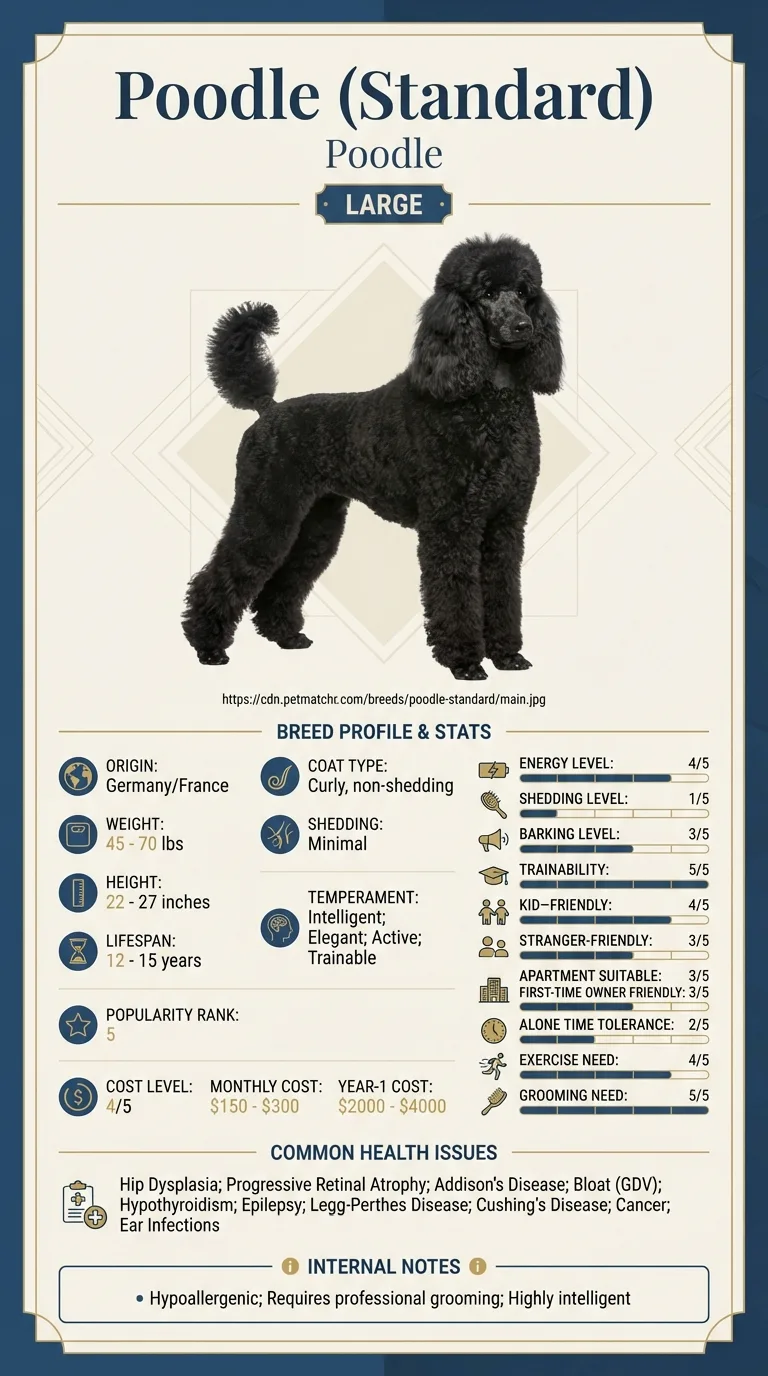
Expect to spend between $2000 and $4000 in the first year, which includes prenatal care, delivery, and initial puppy care.
Look for excessive panting, restlessness, or refusal to eat. These could indicate complications requiring immediate veterinary attention.
A nutritious diet is vital for your Poodle's health and the development of her puppies. Consult your vet for specific dietary recommendations.
A one-page prep sheet for this condition: the signs, the questions to ask, what to get priced. Unlocks here.
You get: Vet visit prep sheet
No spam. One-click unsubscribe. See our privacy policy.
See a sample page before you decide.
Early access list
The free prep sheet covers the same-day warning signs, a symptom log and the questions to ask. We are considering a fuller kit that adds a cost worksheet for the usual tests and treatments (US price ranges with their sources) and a plain-English guide to ways of covering the bill. It is not built yet; this list tells us whether it is worth building.
One email, no spam, unsubscribe anytime. Information only, not veterinary advice.