What are some quick tips for managing Poodle (Standard) insurance claims?
Keep up with regular vet visits and vaccinations, monitor your dog's health closely, and maintain a balanced diet. Early intervention can prevent many costly health issues.
Poodle (Standard) insurance claims can be a concern for owners. These claims often arise from specific health issues related to the breed.

Owners of Poodle (Standard) often find themselves facing insurance claims due to the breed's predisposition to certain health conditions. Busy families or first-time pet owners may feel overwhelmed navigating these claims and ensuring their dog's health.
This guide is not medical advice. If your dog shows pain, sudden behavior change, or worsening symptoms, consult a licensed veterinarian.
Some links may be affiliate links. We may earn a commission at no extra cost to you. We only suggest products we believe are helpful for dog owners.
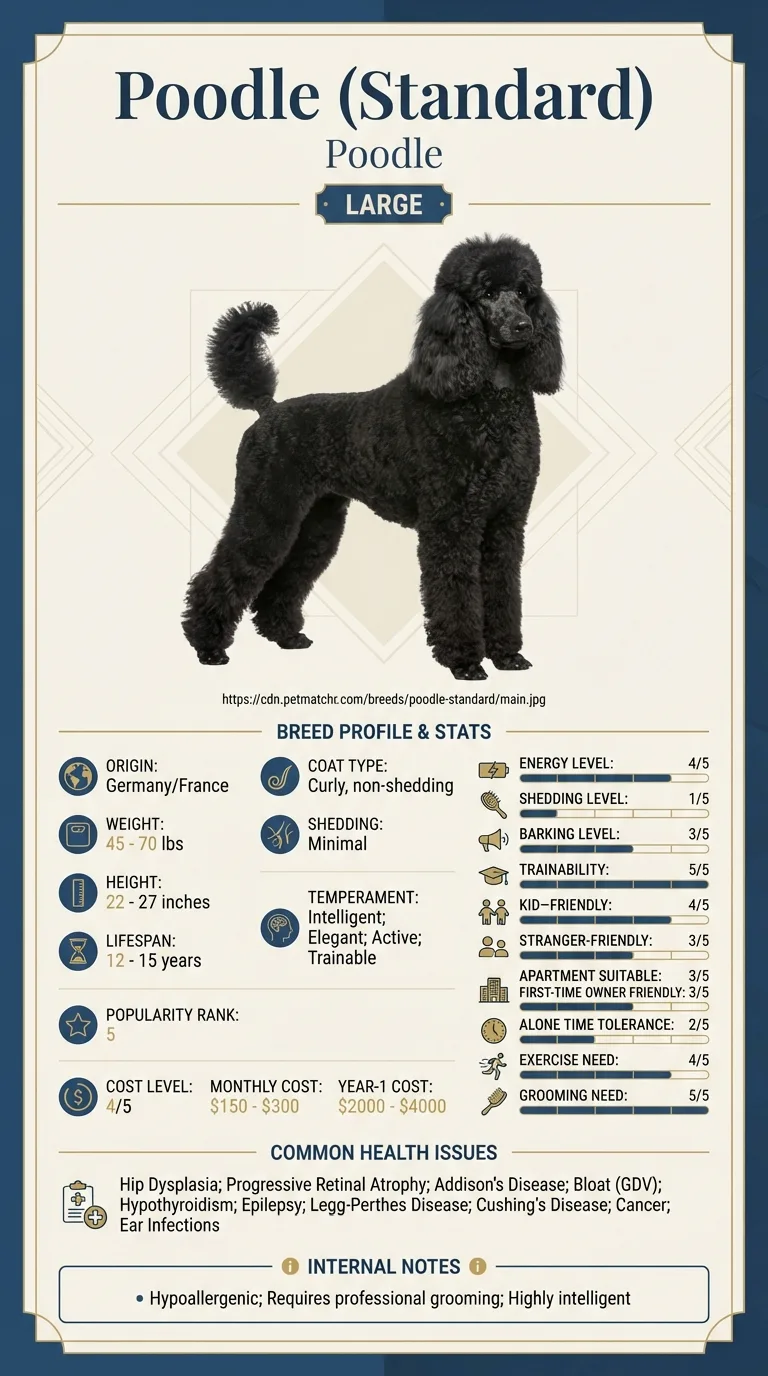
Poodle (Standard) insurance claims can be a significant concern for many owners. These dogs often face specific health issues that lead to higher vet visits and, consequently, more claims. Common problems include hip dysplasia, progressive retinal atrophy, and even conditions like cancer, which can spike insurance costs over time.
Insurance claims in Standard Poodles are relatively common due to their susceptibility to several health problems. Many owners find that their claims are often related to chronic conditions, especially as these dogs age. It's important to be proactive about health management to mitigate these costs.
Poodles (Standard) are known for their intelligence and active nature. This breed may develop certain health issues that can lead to more frequent insurance claims, such as hip dysplasia and bloat. Their high energy levels can also result in injuries if not properly managed.
The environment plays a significant role in the likelihood of insurance claims. Factors such as a stressful home setting, lack of exercise, and insufficient mental stimulation can contribute to anxiety and behavioral problems. If your Poodle feels anxious or bored, they may engage in destructive behaviors that lead to injuries.
If your Poodle's insurance claims are linked to behavioral issues, consider hiring a professional trainer. A trainer can help you address specific problems, such as separation anxiety or destructive behavior, using positive reinforcement techniques.
If your Poodle experiences frequent health issues leading to insurance claims, it's essential to consult a vet. A veterinarian can assess your dog's overall health and suggest preventative measures or treatments for specific conditions.
With consistent training and monitoring, you can see improvements in your Poodle's behavior within 4 to 6 months.
Success means your Poodle has reduced anxiety and fewer incidents that lead to insurance claims, resulting in better overall health and fewer vet visits.
Avoiding these common mistakes can help reduce insurance claims for your Poodle (Standard) and improve their overall health.
Recognizing when your Poodle (Standard) needs immediate attention is crucial. Some signs indicate a potential emergency that requires a call to your vet right away, while others may warrant monitoring at home. Understanding the differences can help you act quickly and appropriately.

Nancy, a busy nurse in Seattle, faced constant insurance claims for her Standard Poodle, Max. His anxiety led to destructive behavior, resulting in multiple vet visits and claims for injuries and accidents. After realizing the pattern, Nancy sought help and started a structured training program focused on reducing anxiety. With patience and dedication, Max gradually learned to cope with being alone and even became more confident during outings. After several months, Nancy noticed a significant drop in claims and a happier, healthier Max.
Key takeaway: With the right training and attention, you can minimize anxiety issues in Poodles and reduce the likelihood of insurance claims.

Poodles (Standard) may have higher insurance claims due to common health issues like hip dysplasia and progressive retinal atrophy. These conditions can lead to frequent vet visits or treatments, which increase claim rates. Regular check-ups and preventive care can help mitigate some of these risks.
To reduce the likelihood of insurance claims, focus on preventive care such as regular vet visits and maintaining a healthy diet. Training your Poodle to avoid risky behaviors can also help. Engage in consistent exercise to keep them fit and reduce health issues.
Common health issues for Poodles (Standard) that lead to insurance claims include hip dysplasia, bloat, and ear infections. Awareness of these conditions allows you to monitor your dog closely and seek early treatment. Regular vet check-ups are essential for catching potential issues early.
Insurance claims for Poodles (Standard) can be higher due to their predisposition to certain health problems. Depending on the severity of these conditions, treatment costs can add up quickly. It's important to choose an insurance plan that covers breed-specific health issues.
Training should focus on obedience and socialization to prevent anxiety-related behaviors that can lead to health issues. Regular exercise and mental stimulation are essential to keep your Poodle healthy. Consider consulting a professional trainer for tailored advice.
Poodles often have insurance claims related to hip dysplasia, progressive retinal atrophy, and bloat. These conditions can be costly to treat, so it's wise to be aware of them as a Poodle owner.
Regular vet check-ups, a balanced diet, and proper exercise can help prevent health issues in your Poodle. Training and socialization also play a key role in minimizing behavior-related claims.
If your Poodle shows signs of distress, like excessive barking or sudden changes in behavior, it's time to consult a vet. Early intervention can prevent more serious health problems down the line.
Yes, older Poodles are generally more prone to health issues, leading to increased insurance claims. Conditions like arthritis and heart disease may become more common as they age.
Effective training can reduce the likelihood of behavior-related insurance claims. A well-trained Poodle is less likely to develop anxiety or aggression issues that could lead to costly claims.
Keep up with regular vet visits and vaccinations, monitor your dog's health closely, and maintain a balanced diet. Early intervention can prevent many costly health issues.
Regular exercise, a healthy diet, and routine veterinary care can significantly reduce health risks. Engage in activities that stimulate both their mind and body.
The average monthly cost for insuring a Poodle (Standard) ranges from $150 to $300 based on coverage levels and health history.