Behavior
What are quick tips for managing Poodle (Standard) gastrointestinal disorders?
Feed a high-quality, vet-recommended diet and maintain regular feeding schedules. Monitor their stress levels and ensure a calm environment.

Quick answer
What are quick tips for managing Poodle (Standard) gastrointestinal disorders?
Feed a high-quality, vet-recommended diet and maintain regular feeding schedules. Monitor their stress levels and ensure a calm environment.
Gastrointestinal disorders can cause discomfort and distress for your Poodle (Standard). These issues can affect their appetite, energy, and overall health. (Poodle (Standard) gastrointestinal disorders)
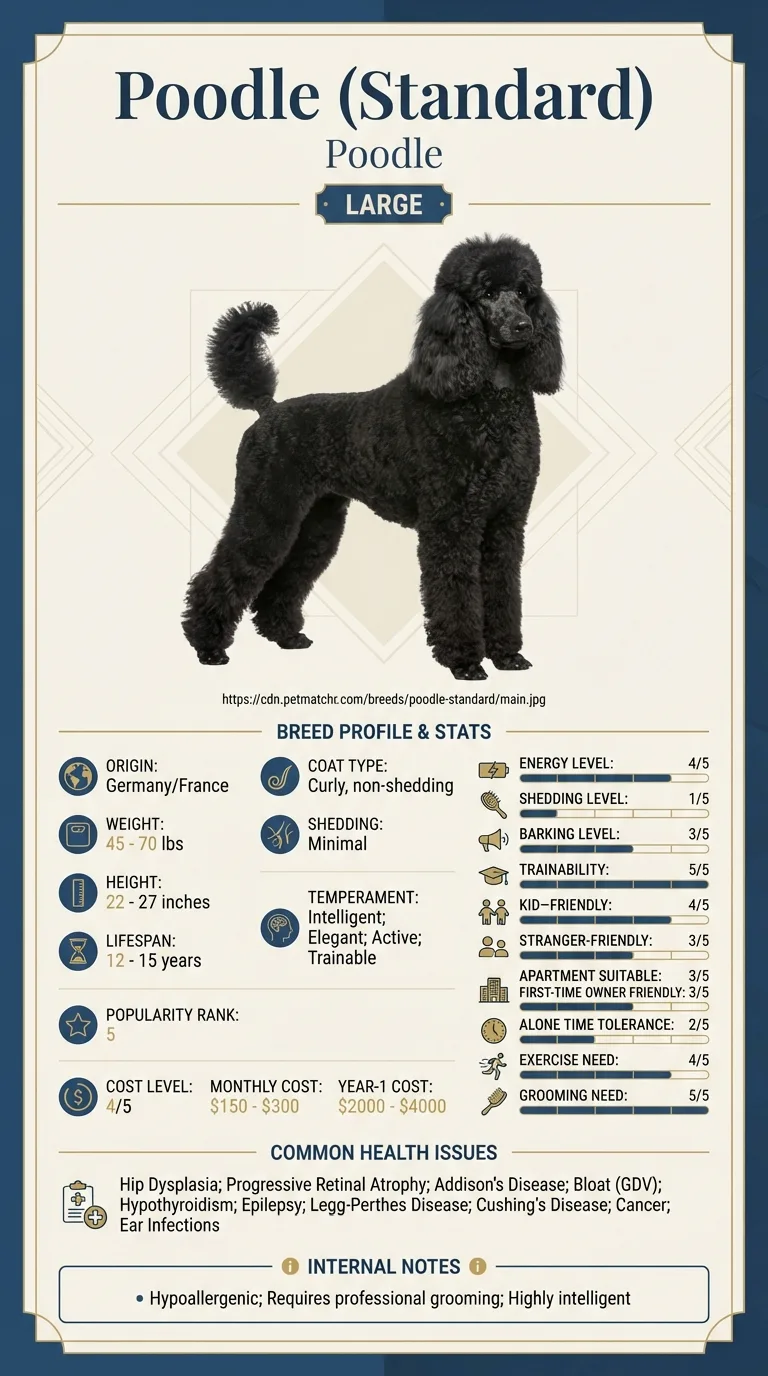
Owners of Poodle (Standard) dogs often face challenges with gastrointestinal disorders, particularly those who are new to dog ownership or those with busy lifestyles. If your Poodle shows signs of digestive discomfort, you’re not alone in this struggle.
This guide is not medical advice. If your dog shows pain, sudden behavior change, or worsening symptoms, consult a licensed veterinarian.
Some links may be affiliate links. We may earn a commission at no extra cost to you. We only suggest products we believe are helpful for dog owners.
We research and check what we publish, but we do not warrant that any figure, date, price, or statement is accurate, complete, or current, and we accept no liability for any loss, cost, injury, or other harm arising from the use of this site. Use it as one reference among several. You remain responsible for your own decisions and for your dog's care - confirm anything that matters with a licensed veterinarian or another qualified professional before you act on it. Full disclaimer.
Check this first
Emergency signs include severe vomiting or diarrhea, especially if it occurs multiple times in a short period. If your Poodle shows signs of abdominal pain, such as whining, restlessness, or a stiff posture, it’s time to call your vet. Additionally, any signs of dehydration, like dry gums or lethargy, should prompt an immediate veterinary visit.
On the other hand, mild gastrointestinal issues, such as occasional soft stools or minor vomiting, can often be monitored at home. If your Poodle has a slight stomach upset but remains active and alert, you might consider withholding food for a few hours and then offering a bland diet. Keep an eye on the symptoms and consult your vet if they persist beyond a day or worsen.
Remember, while it’s important to be vigilant, not every gastrointestinal upset is an emergency. Understanding your dog's normal behavior and habits will help you make informed decisions. When in doubt, it's always best to err on the side of caution and consult your veterinarian.
If any of these apply, call your vet or an emergency clinic now. The rest of this page is for the cases that are not an emergency.
Poodle (Standard) gastrointestinal disorders can manifest as vomiting, diarrhea, or changes in appetite. These issues often lead to discomfort and stress for both the dog and the owner. Common triggers include sudden diet changes, stress, and specific food intolerances, making it essential to monitor your Poodle's eating habits and environment closely.
Gastrointestinal disorders are relatively common in Poodles, especially as they age or if they experience significant stress. Owners should be aware of these potential issues and consult a vet if symptoms persist.
Poodles (Standard) can be prone to certain gastrointestinal disorders due to their genetic makeup. Conditions like inflammatory bowel disease and pyloric stenosis may arise from inherited traits. Their highly intelligent nature can also lead to stress-related gastrointestinal issues if not managed properly.
Environmental factors, such as diet and stress levels, can significantly impact your Poodle's digestive health. Poor-quality food or sudden dietary changes can trigger gastrointestinal problems. Additionally, high-stress situations, like loud noises or lack of routine, can exacerbate these issues.
If your Poodle experiences persistent vomiting, diarrhea, or shows signs of pain, seek veterinary advice immediately. A vet can provide a proper diagnosis and recommend specific treatments for gastrointestinal disorders.
Avoiding certain common mistakes can help your Poodle (Standard) manage gastrointestinal disorders more effectively. Here are some pitfalls to steer clear of:
Start here: Standard Poodle Most Common Genetic Disorders: Screening
See all Poodle Standard health problems, which breeds are prone to gastrointestinal disorders, or the full Poodle Standard breed guide for temperament, exercise needs and ownership costs.
You can expect to see improvements in your Poodle's gastrointestinal issues within 4 to 8 weeks of implementing dietary changes and care strategies. Regular follow-ups with a vet can help monitor progress.
Success is when your Poodle has fewer gastrointestinal episodes, improved digestion, and a happier demeanor. You'll notice them eating with enthusiasm and enjoying playtime without discomfort.
Sarah, a busy nurse from Chicago, was worried about her Standard Poodle, Charlie, who frequently experienced gastrointestinal disorders. After a visit to the vet, they discovered that his diet was too rich and needed adjusting. Sarah gradually switched Charlie to a specialized diet and implemented a feeding schedule. Over a few months, she saw significant improvements in his digestion and energy levels, making both their lives much easier.
Key takeaway: Adjusting your dog's diet and maintaining consistency can resolve many gastrointestinal disorders. Don't hesitate to work closely with your vet for the best outcomes.
Poodle (Standard) gastrointestinal disorders can arise from various factors including genetics, diet, and stress. Conditions like inflammatory bowel disease or acid reflux may affect their digestive system. If your Poodle shows signs of discomfort or unusual behavior, consult your vet for a thorough evaluation.
To help manage Poodle (Standard) gastrointestinal disorders, start by reviewing their diet. A vet-recommended, high-quality dog food can make a significant difference. Regular feeding schedules and minimizing stress are also key components in addressing these issues.
Signs of gastrointestinal disorders in Poodles can include vomiting, diarrhea, and changes in appetite. You may also notice excessive gas or bloating. If your Poodle exhibits any of these symptoms, it's essential to seek veterinary advice promptly.
Training alone won't cure gastrointestinal disorders, but establishing a routine can help reduce stress. Consistent feeding times and a stable environment can improve their overall well-being. Incorporating positive reinforcement can also ease anxiety related to food and feeding.
Avoid feeding your Poodle (Standard) fatty foods, dairy, and human snacks, as these can exacerbate gastrointestinal issues. Stick to vet-approved diets that are gentle on their stomach. Always introduce new foods gradually to prevent further upset.
If your Poodle has ongoing gastrointestinal issues, regular vet check-ups are crucial. Initially, visits every few months may be necessary to monitor their condition. Once stabilized, annual check-ups should suffice unless new symptoms arise.
Treatments for Poodle (Standard) gastrointestinal disorders vary based on the diagnosis. Options may include dietary changes, medications, or probiotics. Always consult your vet for a tailored treatment plan to suit your Poodle's needs.
To help prevent gastrointestinal disorders in your Poodle, provide a balanced diet and avoid sudden changes in their food. Regular vet check-ups and ensuring your dog is not eating harmful substances can also be beneficial.
Certain gastrointestinal disorders can have a genetic component in Poodles, particularly those related to their digestive system. If you're concerned about hereditary issues, discussing your Poodle's family history with your vet may help.
You should take your Poodle to the vet if they experience persistent vomiting, diarrhea, or signs of pain. If they show lethargy or refuse to eat, it's crucial to seek veterinary care immediately.
Yes, stress can contribute to gastrointestinal disorders in Poodles. Changes in environment, routine, or even separation anxiety can lead to digestive issues, so it's important to maintain a stable and calm environment for your dog.
Feed a high-quality, vet-recommended diet and maintain regular feeding schedules. Monitor their stress levels and ensure a calm environment.
Look for persistent vomiting, diarrhea, or changes in appetite. If symptoms last more than a day, consult your vet promptly.
Treatment costs can vary widely, typically ranging from $150 to $300 per month, depending on dietary needs and vet visits.
Yes, stress can significantly impact a Poodle's digestive health. Providing a stable routine and a calm environment can help mitigate these effects.
Yes, using puzzle feeders or spreading their food out can encourage slower eating and reduce the risk of gastrointestinal upset.
A one-page prep sheet for this condition: the signs, the questions to ask, what to get priced. Unlocks here.
You get: Vet visit prep sheet
No spam. One-click unsubscribe. See our privacy policy.
See a sample page before you decide.
Early access list
The free prep sheet covers the same-day warning signs, a symptom log and the questions to ask. We are considering a fuller kit that adds a cost worksheet for the usual tests and treatments (US price ranges with their sources) and a plain-English guide to ways of covering the bill. It is not built yet; this list tells us whether it is worth building.
One email, no spam, unsubscribe anytime. Information only, not veterinary advice.