Behavior
How can I clean my Poodle's ears?
Use a vet-approved ear cleaner and cotton balls to gently clean the outer ear canal, avoiding deep insertion. Do this regularly to prevent buildup.

Quick answer
How can I clean my Poodle's ears?
Use a vet-approved ear cleaner and cotton balls to gently clean the outer ear canal, avoiding deep insertion. Do this regularly to prevent buildup.
Poodle (Standard) ear infections can be a frustrating issue for many dog owners. These chronic problems can lead to discomfort and health complications if left untreated.
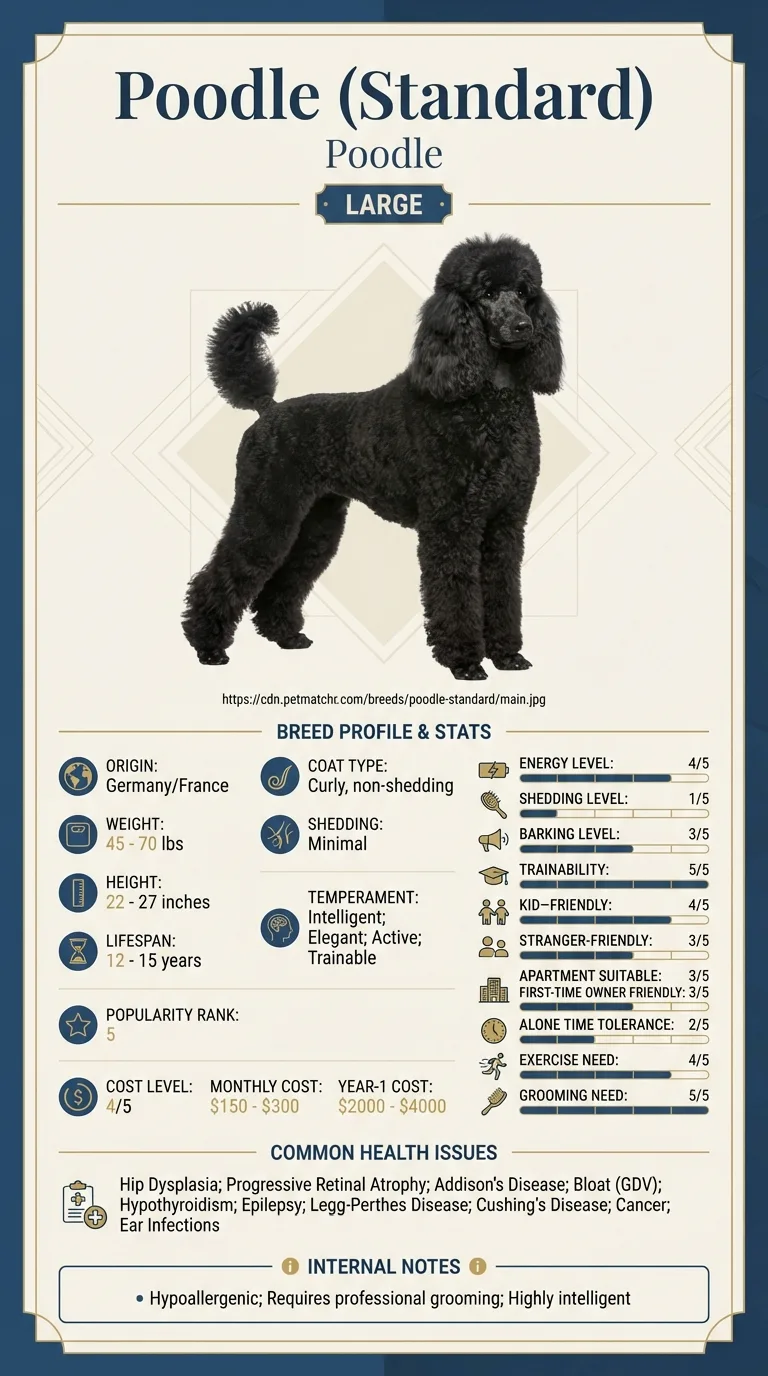
Owners of Poodle (Standards), especially first-time dog parents or those with busy schedules, often struggle with recognizing and managing ear infections. These owners may feel overwhelmed by the grooming needs and health concerns associated with this breed.
This guide is not medical advice. If your dog shows pain, sudden behavior change, or worsening symptoms, consult a licensed veterinarian.
Some links may be affiliate links. We may earn a commission at no extra cost to you. We only suggest products we believe are helpful for dog owners.
We research and check what we publish, but we do not warrant that any figure, date, price, or statement is accurate, complete, or current, and we accept no liability for any loss, cost, injury, or other harm arising from the use of this site. Use it as one reference among several. You remain responsible for your own decisions and for your dog's care - confirm anything that matters with a licensed veterinarian or another qualified professional before you act on it. Full disclaimer.
Check this first
Understanding when a Poodle (Standard) ear infection is an emergency can save your dog's hearing and health. Red flags include severe head shaking, constant scratching at the ears, or discharge that is yellow, green, or bloody. If your dog is also showing signs of pain, like whining or being overly sensitive around their ears, it’s time to call your vet immediately.
Mild cases can be monitored if your Poodle is simply shaking their head occasionally or if there is minimal wax buildup. If your dog is eating, drinking, and behaving normally, you might choose to observe for a few days. However, keep track of any changes and be proactive if symptoms worsen. Regular ear cleaning and monitoring can help prevent future infections, but don’t hesitate to consult a vet if you’re unsure about your dog’s condition.
If any of these apply, call your vet or an emergency clinic now. The rest of this page is for the cases that are not an emergency.
Poodle (Standard) ear infections can be a frustrating issue for many owners. These infections often present as a foul smell, excessive scratching of the ears, or shaking of the head. Regular grooming and ear cleaning are essential, but some Poodles may still struggle with ear infections due to their floppy ears, which can trap moisture and debris.
Ear infections are relatively common in Poodles, especially if they have a history of allergies or insufficient ear care. Many Poodle owners report dealing with this issue at least once in their dog's lifetime.
Poodles (Standard) are prone to ear infections due to their floppy ears, which can trap moisture and debris. Their curly, non-shedding coat may also contribute to the ear's environment, making it more susceptible to infections. Additionally, their high grooming needs mean that if not properly maintained, ear hygiene can decline.
Poor ear hygiene, exposure to water, and allergens in the environment can increase the risk of ear infections. If a Poodle is frequently in dirty or damp conditions, it can lead to bacterial or yeast growth. Moreover, food allergies or sensitivities can exacerbate skin issues, which may also affect the ears.
If your Poodle experiences frequent ear infections, it's essential to consult a vet. They can determine if there's an underlying issue, such as allergies or a more severe health problem, that needs to be addressed.
Avoiding common pitfalls can help your Poodle (Standard) recover from ear infections more quickly. Here are some mistakes to steer clear of.
Start here: Standard Poodle Most Common Genetic Disorders: Screening
See all Poodle Standard health problems, which breeds are prone to ear infections, or the full Poodle Standard breed guide for temperament, exercise needs and ownership costs.
Most owners see improvement in their Poodle's ear health within 1-3 months of consistent, proper care.
Success means fewer ear infections, reduced discomfort for your Poodle, and a better quality of life. Your Poodle should be more active and happy, without frequent scratching or shaking of the head.
Emily, a busy nurse in Seattle, adopted Max, a playful Standard Poodle. Shortly after bringing him home, she noticed him scratching his ears and shaking his head frequently. After a vet visit confirmed ear infections, she learned that Max's curly coat required regular cleaning and grooming to prevent moisture buildup. Emily committed to a routine of weekly ear cleaning and scheduled monthly grooming appointments. Within two months, Max's ear issues significantly improved, and he returned to his usual playful self.
Key takeaway: Consistency in ear care and grooming can dramatically reduce the frequency of ear infections in Standard Poodles.
Poodles (Standard) are prone to ear infections due to their ear structure and hair growth. Moisture and debris can get trapped in their ears, leading to infections. Regular cleaning and grooming can help reduce this risk.
To prevent ear infections in your Poodle (Standard), ensure you clean their ears regularly. Use a vet-recommended ear cleaner and dry their ears after baths or swimming. Additionally, monitor for signs of infection like redness or discharge.
Signs of ear infections in Poodles can include frequent scratching or rubbing of the ears, shaking their head, and a bad odor coming from the ears. You may also notice redness or swelling in the ear canal, along with discharge. If you see any of these symptoms, it's best to consult your vet.
While minor ear issues can sometimes be managed at home, it's essential to consult your vet for proper diagnosis and treatment. They may prescribe medication or recommend specific cleaning techniques.
Yes, ear infections are a common issue for Poodles (Standard) due to their floppy ears. Regular grooming and ear care can significantly reduce the frequency of infections.
If your Poodle (Standard) frequently suffers from ear infections, discuss this with your vet. They may suggest dietary changes, allergy testing, or specialized cleaning routines to help manage the problem.
Yes, diet can play a role in your Poodle's ear health. Allergies to certain ingredients can trigger ear infections. Consider discussing your dog's diet with your vet to identify any potential allergens.
To prevent ear infections in your Poodle, keep their ears clean and dry. Regular grooming and checking their ears for debris or wax buildup can help. If your Poodle is prone to infections, your vet may recommend specific cleaning solutions.
Ear infections can be more common in older Poodles due to factors like reduced immunity or underlying health issues. Regular vet check-ups are essential to catch any problems early and keep your older Poodle healthy.
If your Poodle shows persistent signs of ear discomfort, such as shaking their head, has a foul smell from the ears, or experiences changes in behavior, it's time to see the vet. Early intervention can prevent more serious health issues.
Use a vet-approved ear cleaner and cotton balls to gently clean the outer ear canal, avoiding deep insertion. Do this regularly to prevent buildup.
Ear infections can result from allergies, moisture, or foreign objects trapped in the ear canal. Keeping your dog's ears dry and clean is crucial.
Check your Poodle's ears weekly for signs of redness, odor, or discharge. Regular checks can help catch infections early.
Treatment costs for ear infections in Poodles can vary, typically ranging from $100 to $300 depending on the severity and required treatment. Regular care can help minimize these costs.
A one-page prep sheet for this condition: the signs, the questions to ask, what to get priced. Unlocks here.
You get: Vet visit prep sheet
No spam. One-click unsubscribe. See our privacy policy.
See a sample page before you decide.
Early access list
The free prep sheet covers the same-day warning signs, a symptom log and the questions to ask. We are considering a fuller kit that adds a cost worksheet for the usual tests and treatments (US price ranges with their sources) and a plain-English guide to ways of covering the bill. It is not built yet; this list tells us whether it is worth building.
One email, no spam, unsubscribe anytime. Information only, not veterinary advice.