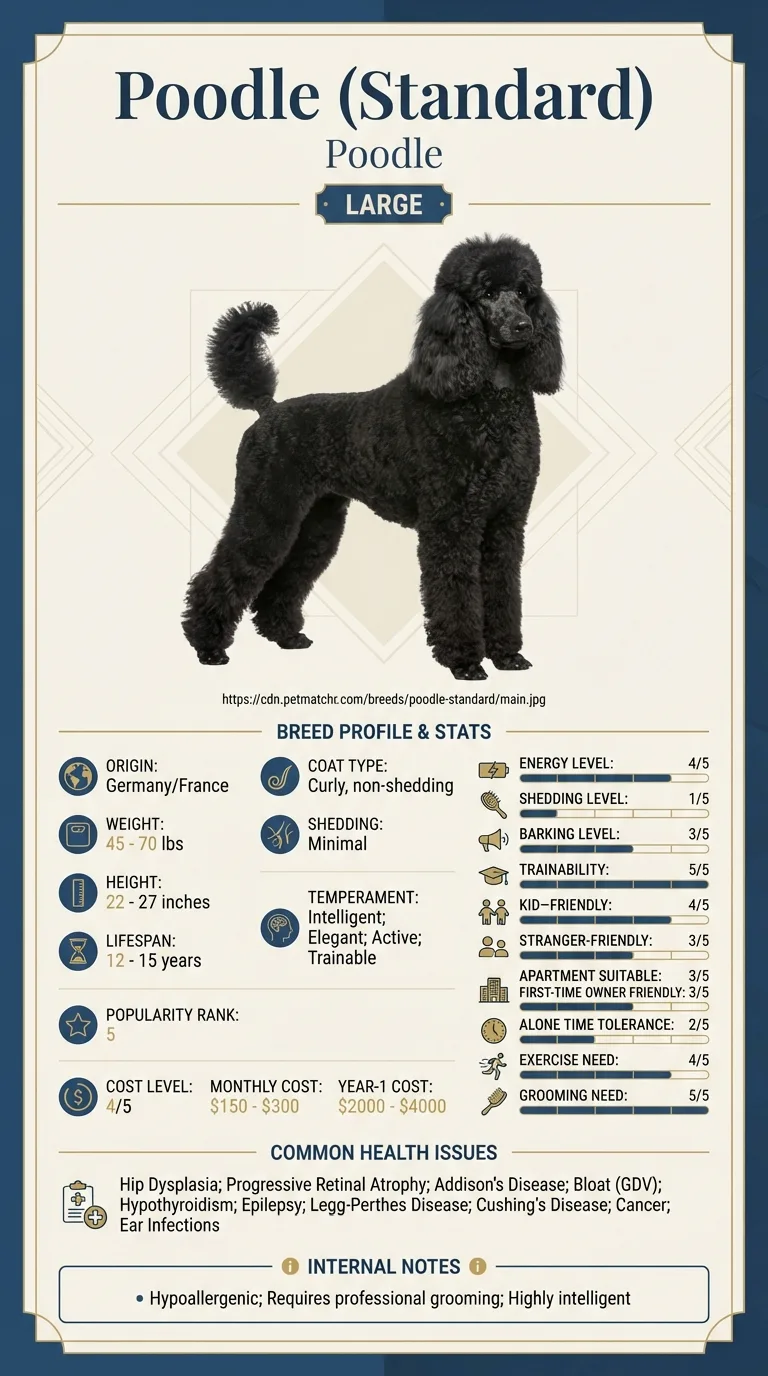
What are quick tips for Poodle (Standard) degenerative myelopathy (dm)?
Focus on gentle exercise, maintain a healthy diet, and consult your vet regularly for monitoring. Mobility aids can also help your dog navigate their environment more easily.
Poodle (Standard) degenerative myelopathy (DM) is a serious condition that affects your dog's mobility and quality of life. Understanding this progressive spinal cord disease is crucial for any Poodle owner.
Owners of Poodles, especially those who are older or have a family history of the disease, often face the challenges of managing DM. They may feel overwhelmed by the emotional and physical toll it takes on both the dog and themselves.
Important reminder
This guide is not medical advice. If your dog shows pain, sudden behavior change, or worsening symptoms, consult a licensed veterinarian.
Some links may be affiliate links. We may earn a commission at no extra cost to you. We only suggest products we believe are helpful for dog owners.
We research and check what we publish, but we do not warrant that any figure, date, price, or statement is accurate, complete, or current, and we accept no liability for any loss, cost, injury, or other harm arising from the use of this site. Use it as one reference among several. You remain responsible for your own decisions and for your dog's care - confirm anything that matters with a licensed veterinarian or another qualified professional before you act on it. Full disclaimer.
Check this first
When Is Poodle (Standard) Degenerative Myelopathy (DM) an Emergency?
Knowing when Poodle (Standard) degenerative myelopathy (DM) is an emergency can be crucial for your dog's well-being. While DM is progressive, some signs demand immediate veterinary attention, while others can be monitored with a plan. Let's break it down.
If any of these apply, call your vet or an emergency clinic now. The rest of this page is for the cases that are not an emergency.
What this problem looks like
Poodle (Standard) degenerative myelopathy (dm) is a progressive spinal cord disease that affects mobility over time. This condition typically starts with subtle signs, like dragging a back paw or difficulty getting up after resting. Owners may notice their dog stumbling or having trouble with stairs, which can be distressing both for the dog and the owner.
Common triggers
Genetic predisposition, particularly in older Poodles
Inactivity or lack of exercise, leading to muscle atrophy
Obesity, which can exacerbate mobility issues
Degenerative myelopathy is somewhat common in Poodles, especially Standard Poodles, affecting approximately 10% of this breed. While not every Poodle will develop DM, it tends to appear in middle-aged to older dogs, making awareness crucial for early intervention.
Why this happens
Breed factors
Degenerative myelopathy (DM) is a genetic condition that is more common in Poodles (Standard) than some other breeds. This progressive spinal cord disease can lead to loss of coordination and mobility. It's inherited, so if your Poodle's parents had it, the risk is higher.
Environment factors
While genetics play a significant role, environmental factors can also contribute to the progression of DM. Lack of exercise, obesity, and inadequate nutrition can exacerbate symptoms. A supportive environment with proper care can help manage the condition.
What you can do at home (once it is not an emergency)
When to talk to your vet
If you notice any signs of weakness, lack of coordination, or changes in behavior, it's essential to consult your vet. They can provide a proper diagnosis and recommend a management plan for your Poodle's degenerative myelopathy.
At home, alongside your vet's plan
Create a safe space for your Poodle to navigate without obstacles. This helps reduce the risk of falls as mobility decreases.
Implement a low-impact exercise routine. Short, gentle walks can maintain muscle strength and mobility without overexerting your dog.
Focus on a balanced diet that supports joint health. Consult with your vet for specific nutritional recommendations.
Mistakes that make Poodle (Standard) Degenerative Myelopathy (DM) worse
Avoiding certain behaviors can help your Poodle (Standard) manage degenerative myelopathy (DM) better. Here are some common mistakes to avoid.
Ignoring early signs of DM: Many owners overlook subtle signs like wobbliness. Early detection can lead to better management strategies.
Lack of exercise: Over-restriction on physical activity may weaken your Poodle's muscles. Instead, opt for low-impact exercises to maintain strength without overexerting.
Neglecting weight management: An overweight dog struggles more with mobility. Focus on a balanced diet and regular check-ups to keep your Poodle at a healthy weight.
Inconsistent training: Failing to reinforce commands can lead to confusion. Use positive reinforcement consistently to help your dog navigate their changing mobility.
Avoiding vet visits: Some owners delay seeking professional help. Regular check-ups are crucial for monitoring DM's progression and adjusting care plans.
Using stairs or jumping: Allowing your Poodle to navigate stairs can exacerbate mobility problems. Use ramps or carry them to help minimize strain.
Overlooking mental stimulation: A bored dog can develop anxiety or depression. Engage your Poodle with puzzles or training sessions to keep their mind active.
Managing Poodle (Standard) degenerative myelopathy (DM) typically requires ongoing assessment and care. You might see gradual changes over several months as the disease progresses, with noticeable impacts on mobility and well-being.
Success in managing DM means implementing a tailored exercise and rehabilitation plan. Your Poodle may maintain a good quality of life with support, enjoying daily walks and engaging activities, even as symptoms progress.
Red-Flag Signs That Require Immediate Attention
If your Poodle shows any of these signs, call your vet right away:
- Sudden loss of coordination or inability to stand.
- Severe weakness in the hind limbs affecting mobility.
- Signs of pain or distress, such as whining or not wanting to be touched.
- Inability to control bowel or bladder functions.
- Rapid deterioration in overall health.
Severe weakness in the hind limbs affecting mobility
Signs of pain or distress, such as whining
Inability to control bowel or bladder functions
Rapid deterioration in overall health
Mild Cases to Monitor
If your Poodle exhibits these less severe signs, you can monitor them while developing a management plan:
- Mild wobbliness or difficulty climbing stairs.
- Occasional stumbling or tripping over their own feet.
- Slight changes in behavior or energy levels.
- Gradual loss of muscle tone without pain.
Poodle Standard - Mild Cases to Monitor
Mild wobbliness or difficulty climbing stairs
Occasional stumbling or tripping over their own feet
Slight changes in behavior or energy levels
Gradual loss of muscle tone without pain
Finding Hope with Max the Poodle
After adopting Max, a 6-year-old Standard Poodle, Lisa noticed he was struggling to get up and was wobbling during walks. Concerned, she took him to the vet, who diagnosed him with degenerative myelopathy (DM). Overwhelmed but determined, Lisa researched and started Max on a daily exercise regimen focused on low-impact activities. She also joined a support group for owners dealing with DM. With patience and love, Lisa helped Max adapt his lifestyle, ensuring he stayed active and engaged despite his condition. Together, they found joy in shorter, more frequent walks and gentle playtime in the yard.
Key takeaway: With the right care and support, you can help your Poodle (Standard) live a fulfilling life despite degenerative myelopathy (DM).
Frequently asked questions
What is Poodle (Standard) degenerative myelopathy (dm)?
Poodle (Standard) degenerative myelopathy (dm) is a progressive spinal cord disease. It primarily affects the hind legs, leading to weakness and difficulty walking. Unfortunately, there is currently no cure for this condition.
How to stop Poodle (Standard) degenerative myelopathy (dm)?
While there is no way to stop degenerative myelopathy, early intervention can help manage symptoms. Physiotherapy, mobility aids, and a balanced diet might improve your dog's quality of life. Always consult your vet for personalized advice.
What are the symptoms of degenerative myelopathy in Poodles?
Initial symptoms include difficulty standing, dragging of the back legs, and a loss of coordination. As the disease progresses, your dog may show signs of paralysis. Monitoring these changes is crucial for timely care.
What training methods can help a Poodle with degenerative myelopathy (dm)?
Training methods focusing on positive reinforcement can be beneficial. Simple commands and gentle exercises can help maintain their mobility for as long as possible. Consistency and patience are key.
Can diet affect degenerative myelopathy (dm) in Poodles?
Yes, a well-balanced diet can support overall health. Nutrients like Omega-3 fatty acids may help reduce inflammation. Discuss specific dietary needs with your veterinarian to tailor a plan.
How can I support my Poodle (Standard) with degenerative myelopathy (dm)?
Providing a comfortable living space and mobility aids can make a significant difference. Regular vet visits and physical therapy may also help manage symptoms. Staying emotionally connected is vital for their well-being.
What are the early signs of degenerative myelopathy (DM) in a Poodle (Standard)?
Early signs of degenerative myelopathy in a Poodle (Standard) may include difficulty getting up, dragging paws, or unsteady walking. These symptoms can progress, so it's crucial to monitor your dog closely and consult a vet if you notice any changes.
Can degenerative myelopathy (DM) affect older Poodles more severely?
Yes, older Poodles (Standard) may experience more severe effects from degenerative myelopathy due to their age and overall health. Older dogs may also have additional health issues that can complicate DM, making regular vet visits essential.
Is there a cure for Poodle (Standard) degenerative myelopathy (DM)?
Currently, there is no cure for degenerative myelopathy in Poodles (Standard). However, management strategies like physical therapy and mobility aids can help improve their quality of life.
How can I help my Poodle (Standard) with degenerative myelopathy (DM) stay comfortable?
You can help your Poodle (Standard) by providing a supportive bed, keeping their living area safe and clutter-free, and using harnesses or slings for support during walks. Regular vet check-ups can also help manage their condition effectively.
What are quick tips for Poodle (Standard) degenerative myelopathy (dm)?
Focus on gentle exercise, maintain a healthy diet, and consult your vet regularly for monitoring. Mobility aids can also help your dog navigate their environment more easily.
Health
How often should I take my Poodle (Standard) to the vet for degenerative myelopathy (dm)?
Regular check-ups, at least every six months, are recommended to monitor the progression of degenerative myelopathy. Your vet can adjust care plans as needed.
Behavior
What are common signs of degeneration in my Poodle (Standard)?
Look for signs like difficulty standing, dragging back legs, or loss of coordination. Noticing these symptoms early can help in managing the condition effectively.
Training
Can exercise help a Poodle (Standard) with degenerative myelopathy (dm)?
Yes, gentle exercise can help maintain muscle strength and mobility. Always tailor activities to your dog's comfort level and consult your vet for safe options.
Health
Is there a specific diet for Poodles with degenerative myelopathy (dm)?
A diet rich in Omega-3 fatty acids and antioxidants can support brain and joint health. Consult your vet for a diet plan tailored to your dog's specific needs.
Related DogBreedCompass guides
Poodle (Standard) behavior problems – Learn more about the behavior issues that can arise with Poodles, including anxiety and training challenges.
A fuller vet-visit kit for Poodle Standard Degenerative Myelopathy DM
The free prep sheet covers the same-day warning signs, a symptom log and the questions to ask. We are considering a fuller kit that adds a cost worksheet for the usual tests and treatments (US price ranges with their sources) and a plain-English guide to ways of covering the bill. It is not built yet; this list tells us whether it is worth building.
One email, no spam, unsubscribe anytime. Information only, not veterinary advice.