DogBreedCompass
← Back to breed profile

Poodle (Standard) Allergies: Understanding and Managing Issues

Poodle (Standard) allergies can cause discomfort and health issues for your furry friend.

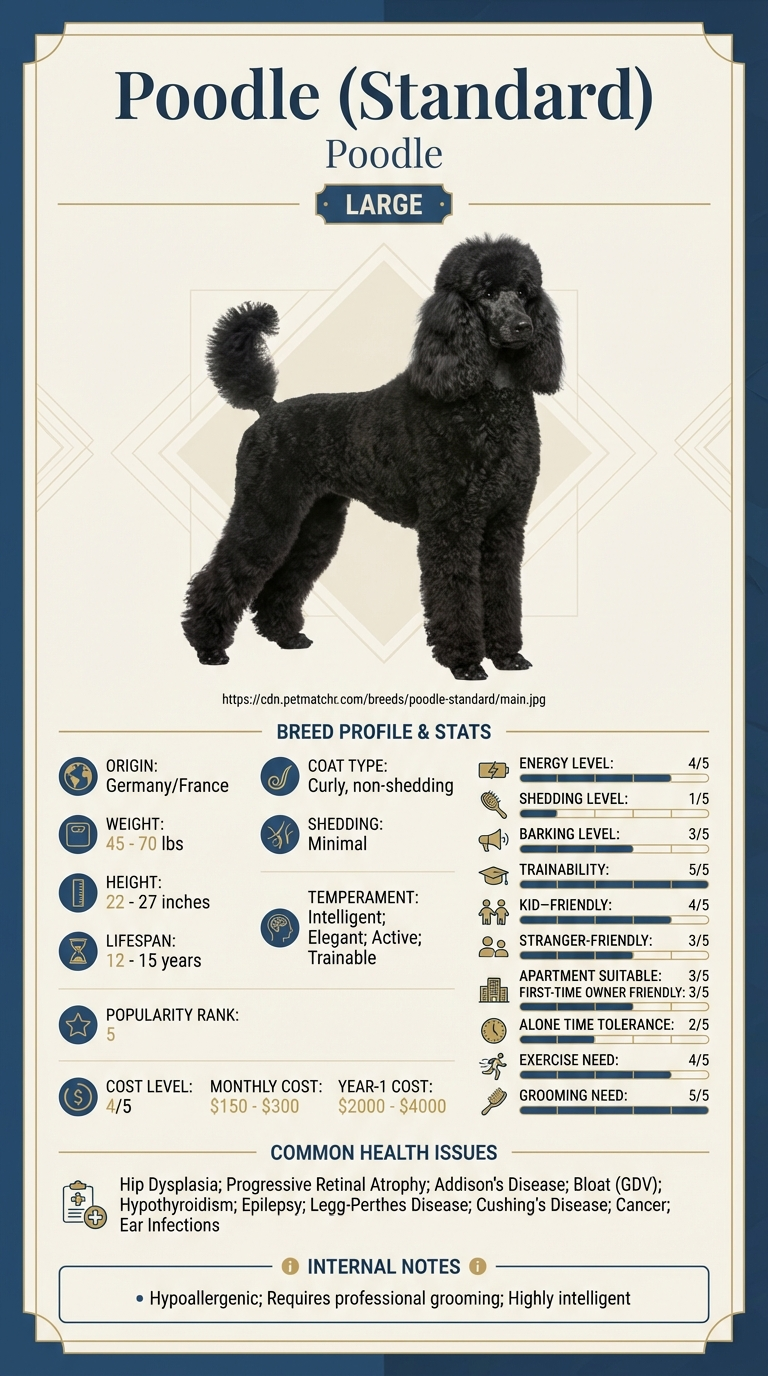
Poodle (Standard) Allergies: Understanding and Managing Issues infographic

Owners of Poodles often find themselves dealing with these allergy-related concerns, especially those who live in urban areas or have high exposure to allergens. Busy families or first-time dog owners may feel overwhelmed by the symptoms and solutions.

Important reminder

This guide is not medical advice. If your dog shows pain, sudden behavior change, or worsening symptoms, consult a licensed veterinarian.

Some links may be affiliate links. We may earn a commission at no extra cost to you. We only suggest products we believe are helpful for dog owners.

What this problem looks like

Poodle (Standard) allergies can be a frustrating issue for owners. Common symptoms include itching, redness, and skin infections. These allergies can stem from environmental triggers like pollen, dust, or even certain foods, making daily life challenging for both the dog and the owner.

Common triggers

  • Environmental factors such as pollen, dust mites, and mold
  • Food ingredients like grains, chicken, or beef
  • Flea bites and other insect allergies

Allergies are quite common in Poodles, affecting a significant number of them at some point in their lives. Many Poodles will show signs of allergies, especially as they age or if they are exposed to certain allergens frequently.

Why this happens

Breed factors

Poodles (Standard) are known for their hypoallergenic coats, but they can still develop allergies. Their sensitive skin may react to certain foods, pollen, or household allergens. Genetic predisposition also plays a role, making them more vulnerable to allergies compared to some other breeds.

Environment factors

Environmental factors can trigger allergies in Poodles. Common irritants include dust mites, mold, and pollen. Changes in diet or exposure to new cleaning products can also lead to allergic reactions, resulting in discomfort and irritation.

What you can try

At-home strategies

  • Keep your home clean by regularly vacuuming and dusting to reduce allergens. Consider using air purifiers to filter out pollen and dust.
  • Bathe your Poodle regularly with a gentle, hypoallergenic shampoo to soothe their skin and remove allergens. Aim for once every 4-6 weeks, or as advised by your vet.
  • Monitor your Poodle's diet and avoid common allergens like grains or certain proteins. If you suspect a food allergy, try a limited ingredient diet under guidance.

When to consider a trainer

If your Poodle's allergies lead to behavioral issues, such as excessive scratching or anxiety, consider consulting a professional trainer. They can help with strategies to manage stress and discomfort.

When to talk to your vet

If home remedies don’t improve your Poodle's allergies, or if they experience severe symptoms like swelling, persistent itching, or ear infections, it’s time to consult your vet. They can provide specific treatments or allergy testing to identify triggers.

Realistic expectations

Addressing Poodle (Standard) allergies typically takes 4 to 8 weeks. This period allows for proper diagnosis, treatment adjustments, and observation of changes.

Success means your Poodle shows reduced allergy symptoms, such as less itching and fewer ear infections. You'll also notice improved overall comfort and happiness in their daily activities.

Mistakes that make this worse

Avoid these common owner mistakes that can worsen your Poodle's allergies. Instead, try these safer alternatives to help your furry friend feel better.

  • Ignoring Symptoms: Many owners overlook signs of allergies, thinking they will go away. Regularly check for symptoms like itching or redness and consult a vet if they persist.
  • Using Harsh Cleaning Products: Cleaning products with strong chemicals can irritate your dog's skin. Opt for pet-safe, hypoallergenic cleaners to create a safe environment.
  • Inconsistent Diet: Switching your Poodle's food too often can trigger allergy flare-ups. Stick to a consistent, high-quality diet and consult your vet before making changes.
  • Overbathing: Bathing your Poodle too frequently can strip their skin of natural oils, leading to dryness and irritation. Bathe them only as needed, using a gentle, hypoallergenic shampoo.
  • Neglecting Grooming: Failing to groom your Poodle regularly can lead to matting and skin issues. Schedule regular professional grooming to keep their coat healthy and minimize allergens.
  • Not Managing Environmental Allergens: Allergens can come from outside as well. Limit your Poodle's exposure to pollen or dust by keeping them indoors during high-allergen seasons.
  • Delay in Vet Visits: Some owners wait too long to seek veterinary help. If your Poodle shows signs of allergies, timely intervention can prevent further health complications.

When Poodle (Standard) Allergies Are an Emergency

Recognizing when Poodle (Standard) allergies require immediate veterinary attention is crucial. If your dog shows severe symptoms, it’s time to act fast. Look out for difficulty breathing, extreme swelling, or hives. These signs can indicate anaphylaxis, a life-threatening condition that needs urgent care.

Other red flags include persistent vomiting, diarrhea, or signs of severe pain. If your Poodle is lethargic, refuses to eat, or shows unusual behavior, don’t hesitate to call your vet. Additionally, if you've recently introduced a new food or medication, and your dog reacts negatively, it’s best to get professional advice right away.

On the other hand, mild allergies may not require immediate action. If your Poodle exhibits itching, mild skin irritation, or occasional sneezing, you can monitor these symptoms at home. In such cases, keep a record of food and environmental exposures, and consider making gradual changes to their diet or living environment. This way, you can identify potential allergens without causing stress to your dog. If symptoms persist or worsen, make an appointment with your vet for a proper evaluation.

Poodle (Standard) Allergies: Understanding and Managing Issues - When Poodle (Standard) Allergies Are an Emergency

Finding Relief for Bella's Allergies

When Sarah adopted Bella, her Standard Poodle, she noticed Bella scratching and shaking her head frequently. After a trip to the vet, Sarah learned that Bella had food and environmental allergies. Together, they created a treatment plan, which included switching to a hypoallergenic diet and regular vet check-ups. Over time, Bella's symptoms improved significantly, allowing her to enjoy playtime without constant discomfort.

Key takeaway: With patience and proper care, managing Poodle (Standard) allergies can lead to a happier, healthier life for your dog.

Frequently asked questions

Why does my Poodle (Standard) have allergies?

Poodles (Standard) can have allergies due to environmental factors like pollen, dust, or certain foods. Common signs include itching, redness, or ear infections. Identifying the allergen through a vet can help tailor a treatment plan.

How can I stop my Poodle (Standard) from having allergies?

To manage Poodle (Standard) allergies, start by consulting your vet for allergy testing. Depending on the results, you might need to change their diet, remove allergens from your home, or use antihistamines. Regular grooming can also help reduce exposure to allergens.

What are the best treatments for Poodle (Standard) allergies?

Treatments for Poodle (Standard) allergies may include hypoallergenic diets, medications, or allergy shots. Keeping your dog’s ears clean and using anti-itch sprays can also provide relief. Always consult your vet before starting any treatment.

How can I tell if my Poodle (Standard) has a food allergy?

Food allergies in Poodles often manifest as itchy skin, digestive issues, or chronic ear infections. To confirm, try an elimination diet under your vet's guidance and gradually reintroduce foods to identify triggers. Note any reactions closely.

Are there specific foods that trigger allergies in Poodles (Standard)?

Common allergens for Poodles (Standard) include beef, dairy, wheat, and chicken. If you suspect food allergies, consult your vet for a tailored diet plan. They can help you find alternative protein sources that are less likely to cause reactions.

What are the signs that my Poodle (Standard) has allergies?

Common signs of allergies in Poodles include itching, redness, and swelling of the skin. You might also notice excessive scratching, ear infections, or watery eyes. If these symptoms persist, it's best to consult your vet.

Can allergies develop in older Poodles (Standard)?

Yes, allergies can develop at any age, including in older Poodles. Factors like changes in diet or environmental exposure can trigger allergic reactions later in life. Regular vet check-ups can help you manage these issues.

How can I manage my Poodle (Standard) allergies at home?

To manage allergies at home, consider keeping your home clean and minimizing exposure to allergens like dust and pollen. Regular baths with hypoallergenic shampoo can help soothe their skin. Always check with your vet before starting any new treatment.

What should I do if my Poodle (Standard) has a severe allergic reaction?

If your Poodle shows signs of a severe allergic reaction, such as difficulty breathing or swelling, seek emergency veterinary care immediately. Quick action is crucial for their safety and health.

Are there specific foods that trigger allergies in Poodles (Standard)?

Certain ingredients like wheat, soy, and dairy can trigger allergies in some Poodles. A vet-recommended elimination diet can help identify food sensitivities. Always consult your vet before making dietary changes.

Quick answers

View more answers
Behavior

What are some quick tips for managing Poodle (Standard) allergies?

Regular grooming and bathing can help reduce allergens on your Poodle's coat. Keep your home clean and consider air purifiers to minimize environmental triggers. Always consult your vet for personalized advice.

Costs

How much does it cost to treat Poodle (Standard) allergies?

The cost for treating Poodle (Standard) allergies can range from $150 to $300 monthly, depending on the severity and type of treatment required. Initial vet consultations and allergy testing may add to that cost.

Health

Can Poodle (Standard) allergies be cured?

While allergies can't be completely cured, they can be effectively managed with the right strategies. Regular vet check-ups and tailored treatments can keep your Poodle comfortable.

Behavior

What are signs of allergies in Poodle (Standard)?

Signs of allergies in your Poodle (Standard) include excessive itching, skin redness, and ear infections. Watch for changes in behavior or frequent scratching, as these may indicate allergic reactions.

Living

How do I maintain my Poodle's coat to help with allergies?

Regular grooming is essential for Poodles (Standard) to reduce allergens. Schedule professional grooming every 4-6 weeks and brush them weekly to keep their curly coat clean and healthy.

Related DogBreedCompass guides

  • how to stop Poodle (Standard) allergiesLearn how to manage your Poodle's allergies effectively.
  • Poodle (Standard) behavior problemsExplore common behavioral issues that can arise with Poodles.
  • Poodle (Standard) allergies trainingFind out what specific training techniques work for Poodles with allergies.
  • Poodle (Standard) separation anxiety guideDiscover how to help your Poodle cope with separation anxiety.
  • Poodle (Standard) cost breakdownGet a detailed cost breakdown for owning a Poodle (Standard).

Related guides