Behavior
What are quick tips for managing Poodle (Miniature) brachycephalic features?
Keep your Poodle cool, avoid strenuous activities, and monitor their breathing closely. Regular vet visits are essential for managing their health.

Quick answer
What are quick tips for managing Poodle (Miniature) brachycephalic features?
Keep your Poodle cool, avoid strenuous activities, and monitor their breathing closely. Regular vet visits are essential for managing their health.
Poodle (Miniature) brachycephalic features can lead to breathing difficulties, which is a concern for many owners.
Owners of Poodle (Miniature) often find themselves worried about their pet's breathing and overall well-being, especially in warmer weather or during exercise.
This guide is not medical advice. If your dog shows pain, sudden behavior change, or worsening symptoms, consult a licensed veterinarian.
Some links may be affiliate links. We may earn a commission at no extra cost to you. We only suggest products we believe are helpful for dog owners.
We research and check what we publish, but we do not warrant that any figure, date, price, or statement is accurate, complete, or current, and we accept no liability for any loss, cost, injury, or other harm arising from the use of this site. Use it as one reference among several. You remain responsible for your own decisions and for your dog's care - confirm anything that matters with a licensed veterinarian or another qualified professional before you act on it. Full disclaimer.
Check this first
It's crucial to know when to call your vet regarding your Poodle (Miniature) and their brachycephalic features. If you notice any severe symptoms, it's best to act quickly. Signs that indicate an emergency include labored breathing, excessive panting, or blue-tinged gums. These can signal serious respiratory distress that needs immediate veterinary attention.
On the other hand, mild cases can often be monitored at home. If your Mini Poodle shows occasional snoring or slight difficulty breathing during exercise but remains active and alert, you might not need to rush to the vet. Establish a plan to manage their symptoms, focusing on weight management and avoiding extreme heat.
Monitor your dog's behavior closely. If symptoms worsen or you notice other concerning signs, such as lethargy or decreased appetite, call your vet promptly. Remember, erring on the side of caution is always a wise choice when it comes to your furry friend's health.
If any of these apply, call your vet or an emergency clinic now. The rest of this page is for the cases that are not an emergency.
Poodle (Miniature) brachycephalic features can lead to noticeable breathing difficulties. This issue often manifests as labored breathing, snoring, or excessive panting, especially during exercise or in hot weather. Owners may also notice their Mini Poodle struggling to cool down after playtime.
While not all Mini Poodles exhibit brachycephalic features, these characteristics can be common in the breed. Many owners will encounter some level of breathing difficulty, particularly in warmer climates or during physical activity.
Poodle (Miniature) brachycephalic features stem from their genetics. Brachycephalic traits can lead to shorter snouts and compressed airways, making breathing more difficult. This breed's structure can influence their overall health and comfort.
Environmental factors can also play a role. Heat, humidity, and high-stress situations can exacerbate breathing issues. Additionally, a lack of proper exercise or weight gain can worsen these features, making it harder for your Mini Poodle to breathe.
If you notice persistent coughing, wheezing, or signs of distress while breathing, consult your vet. Regular check-ups are essential since brachycephalic features can lead to serious health issues over time.
Addressing Poodle (Miniature) brachycephalic features can be tricky. Here are some common mistakes that owners make, along with safer alternatives to help improve the situation.
Start here: Miniature Poodle Most Common Genetic Disorders: Screening
See all Poodle Miniature health problems, which breeds are prone to brachycephalic features, or the full Poodle Miniature breed guide for temperament, exercise needs and ownership costs.
You may see improvements in your Poodle (Miniature) within a few weeks to a few months with consistent care and follow-up with your vet.
Success means your dog breathes easier during walks, plays without excessive panting, and shows reduced signs of anxiety or discomfort.
Jessica, a first-time dog owner in a busy city, noticed that her Mini Poodle, Bella, struggled with breathing during walks. Concerned about Bella's brachycephalic features, she researched how to manage this issue. With the help of a local trainer and focused exercises, Jessica gradually built Bella's endurance and improved her breathing. After a few months, Bella was able to enjoy longer walks and playtime without distress, and Jessica felt more confident as an owner.
Key takeaway: With patience and the right training, you can help your Mini Poodle thrive despite brachycephalic features.
Brachycephalic features in your Poodle (Miniature) arise from their genetic background. These characteristics can lead to breathing difficulties, especially during hot weather or exercise. If you notice excessive panting or lethargy, consult your vet. This answer relates to Poodle (Miniature) brachycephalic features.
To help your Poodle (Miniature), ensure they get regular vet check-ups to monitor their health. Keep their environment cool and avoid strenuous activities in high temperatures. Training them to breathe calmly during excitement can also help.
Common signs include snoring, labored breathing, and excessive panting. You might also notice your Poodle being more anxious or reluctant to exercise. Recognizing these signs early can help in managing their condition.
Yes, training can help! Teaching your Poodle to remain calm and breathe steadily can reduce anxiety and improve their overall breathing. Use positive reinforcement techniques and be patient with the process.
To minimize health risks, maintain a healthy weight for your Poodle and provide regular exercise. It's also important to keep them in a cool environment and avoid activities that may lead to overexertion.
Contact your vet if you notice any sudden changes in your Poodle's breathing, such as wheezing or gasping. Persistent coughing or nasal discharge is also a cause for concern and should be addressed promptly.
Yes, brachycephalic features can lead to serious health problems like respiratory distress and heat intolerance. These issues can become worse in hot weather or during strenuous activities. Regular vet check-ups are crucial to monitor your dog's health.
For older Poodles with brachycephalic features, ensure they have a comfortable and cool environment. Limit intense exercise and provide short, gentle walks. Always consult your vet for a tailored care plan to manage any existing health issues.
You should see a vet if your Poodle (Miniature) shows signs of severe breathing difficulties, such as choking or gasping for air. Additionally, if they exhibit persistent coughing or lethargy, it’s time for a check-up. Early intervention can make a significant difference.
Training methods for managing brachycephalic features focus on positive reinforcement and gentle behavior shaping. Teaching commands like 'slow' can help them pace themselves during walks. Always prioritize your dog's comfort and health during training sessions.
Keep your Poodle cool, avoid strenuous activities, and monitor their breathing closely. Regular vet visits are essential for managing their health.
Use calming exercises and positive reinforcement to teach your Poodle to breathe steadily. Practice in low-stress environments to build their confidence.
Yes, consider using cooling vests or harnesses designed for brachycephalic breeds. These can help regulate their body temperature during outings.
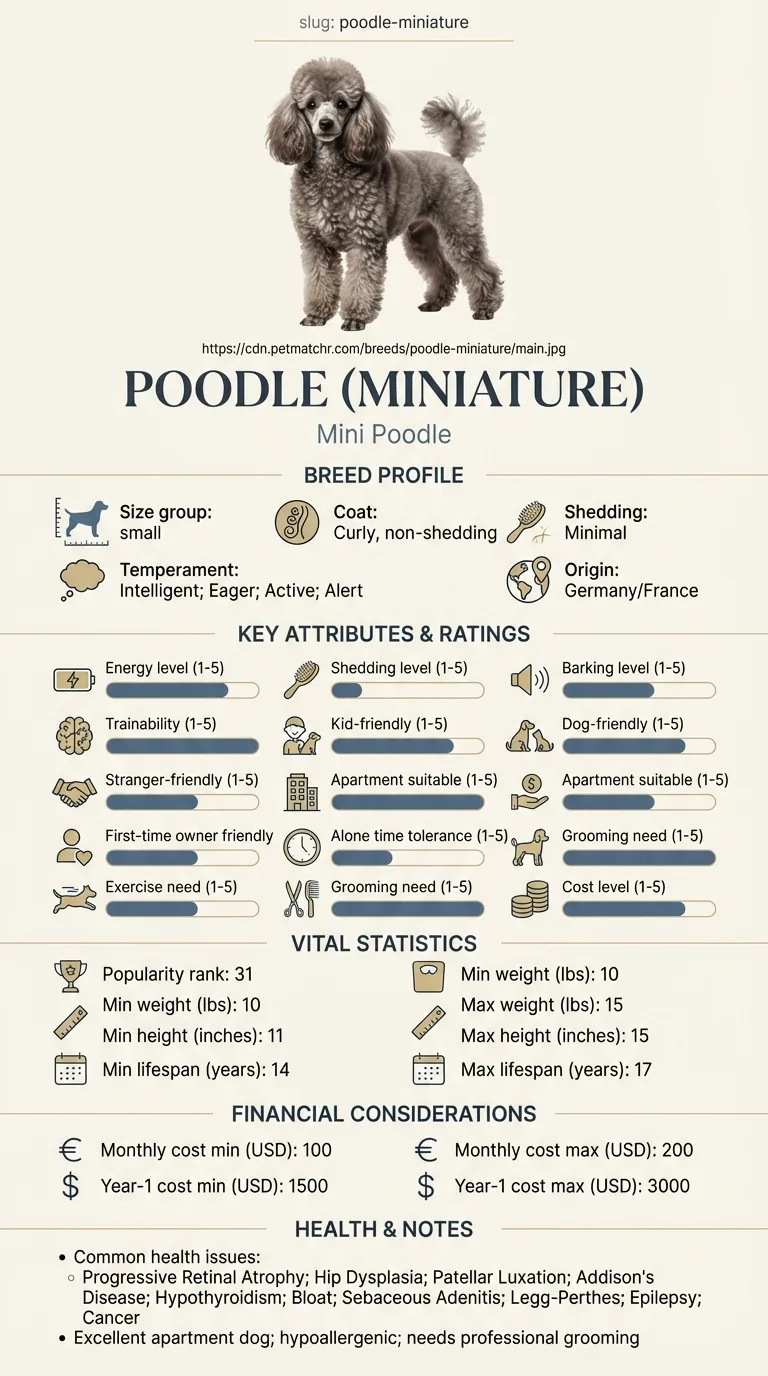
Monthly costs for a Poodle (Miniature) can range from $100 to $200, depending on health needs. Expect higher costs for vet visits and specialty care for brachycephalic issues.
A one-page prep sheet for this condition: the signs, the questions to ask, what to get priced. Unlocks here.
You get: Vet visit prep sheet
No spam. One-click unsubscribe. See our privacy policy.
Preview page 1 before you decide.