Behavior
What are Poodle (Miniature) bloat (gastric dilatation-volvulus/gdv) quick tips?
Feed smaller meals throughout the day and use slow feeders to prevent rapid eating. Avoid exercise immediately after meals to reduce bloat risk.
Bloat, also known as gastric dilatation-volvulus (GDV), is a serious condition that can affect your Poodle (Miniature). (Poodle (Miniature) bloat (gastric dilatation-volvulus/gdv))
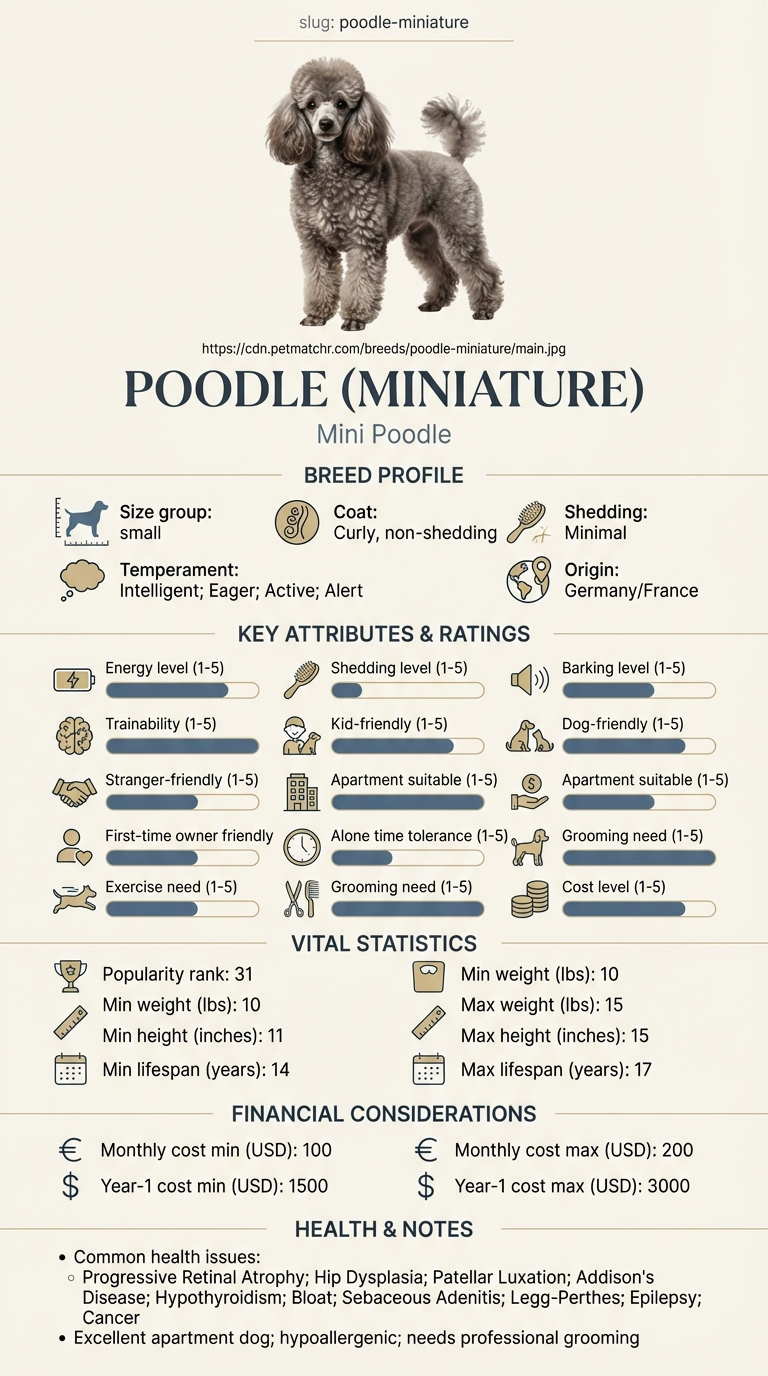
Typically, owners of Poodles (Miniature) face this challenge, especially those who are first-time dog parents or those unfamiliar with the breed's unique health risks.
This guide is not medical advice. If your dog shows pain, sudden behavior change, or worsening symptoms, consult a licensed veterinarian.
Some links may be affiliate links. We may earn a commission at no extra cost to you. We only suggest products we believe are helpful for dog owners.
Poodle (Miniature) bloat, also known as gastric dilatation-volvulus (GDV), is a serious condition that can escalate quickly. This often manifests as swelling in the dog's abdomen, restlessness, and difficulty breathing. If your Mini Poodle seems anxious or is pacing around while trying to vomit without success, it could be a sign of bloat.
Bloat is a relatively common issue in Poodles, especially in Miniature Poodles. It is more prevalent in breeds with deep chests, and while not every Mini Poodle will experience this, it's important for owners to be aware and vigilant.
Mini Poodles can be prone to bloat (gastric dilatation-volvulus or GDV) due to their small size and unique body structure. Their deep chest and narrow waist can create a risk for the stomach to twist, especially during vigorous activity or after eating. Additionally, their eager nature can lead them to eat too quickly, which increases the chances of this condition.
Environmental factors also play a role in bloat. Stressful situations, such as loud noises or changes in routine, can contribute to anxiety and eating habits that heighten the risk of bloat. Furthermore, feeding large meals or allowing immediate exercise after eating can exacerbate the problem.
If your Mini Poodle shows signs of anxiety around meal times or during changes in routine, consulting a dog trainer can help. They can provide tips on creating a calm feeding environment and help with behavior modifications.
If you notice symptoms like bloating, restlessness, or attempts to vomit without success, it's crucial to contact a vet immediately. Bloat is a serious condition that requires prompt treatment to prevent severe complications.
Managing Poodle (Miniature) bloat requires immediate action, and treatment can take a few days to stabilize your dog. Long-term management, including dietary changes and monitoring, may take several weeks to establish.
Success looks like your Poodle (Miniature) showing no signs of discomfort, maintaining a healthy appetite, and regular vet check-ups to ensure they are free from bloat.
Avoiding common pitfalls can significantly improve your Poodle (Miniature)'s chances of overcoming bloat (gastric dilatation-volvulus/GDV). Here are some mistakes to steer clear of.
Recognizing when Poodle (Miniature) bloat (gastric dilatation-volvulus/GDV) is an emergency is crucial. If your Mini Poodle shows signs like a swollen abdomen, excessive drooling, or attempts to vomit without success, call your vet immediately. These symptoms can indicate life-threatening bloat that requires urgent treatment.
Mild cases may include minor stomach upset, decreased appetite, or slight lethargy. In such situations, monitor your dog closely for changes. Keep them calm and avoid exercise until you can consult with your vet. Remember, if symptoms worsen, seek help right away.
In summary, look out for these red flags: - Distended or swollen abdomen - Rapid breathing or panting - Weakness or collapse - Excessive drooling - Restlessness or inability to settle down These signs could mean your Poodle (Miniature) is in serious trouble, and timely veterinary intervention could save their life. On the other hand, if your dog is merely acting a bit off but showing no severe symptoms, watch and wait while staying in touch with your vet.
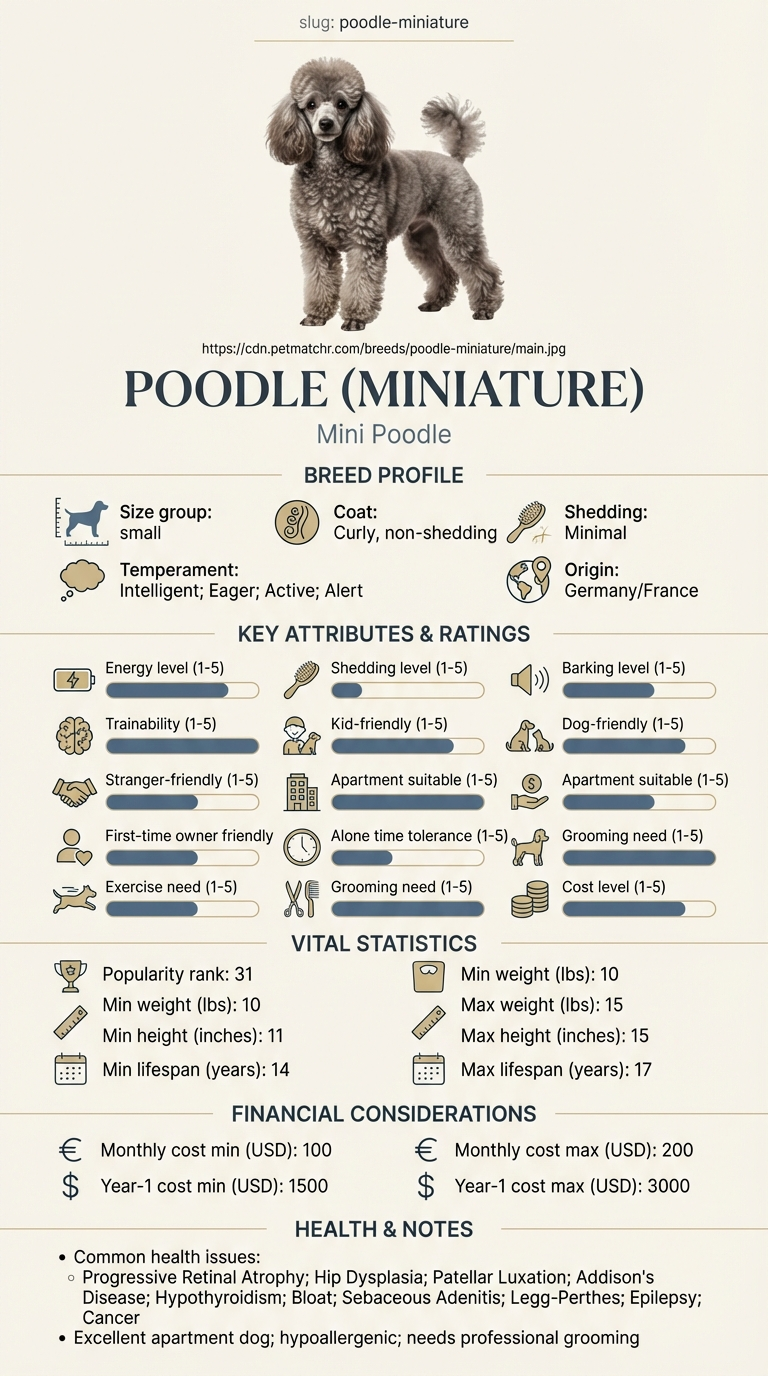
Sarah, a busy nurse in Seattle, noticed her Mini Poodle, Charlie, was acting strangely after meals. After a few trips to the vet and a diagnosis of bloat, she learned the importance of feeding him smaller, more frequent meals. By adjusting his diet and keeping him calm after eating, Charlie's symptoms improved significantly. Sarah also educated herself on the signs of bloat, ensuring she could react quickly if it happened again.
Key takeaway: Recognizing the early signs of Poodle (Miniature) bloat and adjusting feeding habits can be life-saving.
Bloat can occur in Poodles (Miniature) due to various factors, including eating too quickly, consuming large meals, or having a stressful environment. Genetic predisposition may also play a role. If your dog shows signs of bloat, such as a swollen abdomen or distress, seek immediate veterinary care.
To prevent bloat in your Poodle (Miniature), feed smaller, more frequent meals instead of one large meal. Use slow feeder bowls to encourage slower eating and avoid vigorous exercise right after meals. Keeping your dog calm during feeding times can also help.
Signs include a visibly swollen abdomen, excessive drooling, restlessness, and attempts to vomit without success. If you notice these symptoms, contact a vet immediately, as bloat is a medical emergency.
Training can indirectly help by teaching your dog to eat calmly and reduce anxiety around mealtime. Reinforcing calm behavior during feeding can decrease the likelihood of bloat. However, training alone will not prevent this condition.
Surgery is often required if bloat occurs to relieve pressure and prevent serious complications. The cost of treatment can range from $1,500 to $7,500, depending on the severity. Early detection is crucial for a better prognosis.
Signs of bloat in a Poodle (Miniature) can include a swollen abdomen, excessive drooling, attempts to vomit without success, restlessness, and a rapid heartbeat. If you notice any of these symptoms, it's crucial to seek veterinary help immediately, as this condition can escalate quickly.
Yes, older Poodle (Miniatures) are at a higher risk for bloat due to age-related health issues. It's important to monitor their eating habits and activity levels closely, as changes in these can indicate potential problems.
To help prevent bloat, feed your Poodle (Miniature) smaller, more frequent meals and avoid vigorous exercise right before or after eating. Additionally, consider using a slow-feed bowl to reduce the speed at which they eat.
If your Poodle (Miniature) is diagnosed with bloat, follow your vet's treatment plan closely, which may include surgery and post-operative care. It's also helpful to educate yourself on the condition so you can better support your dog during recovery.
There is some evidence suggesting that certain breeds, including Poodles, may have a genetic predisposition to bloat. While it's not fully understood, being aware of the risk can help you take preventive measures and seek help promptly if symptoms arise.
Feed smaller meals throughout the day and use slow feeders to prevent rapid eating. Avoid exercise immediately after meals to reduce bloat risk.
Look for signs like a swollen belly, restlessness, or attempts to vomit. If you see these symptoms, seek veterinary help right away.
Eating too quickly, large meals, and stress can contribute to bloat. Genetic factors may also play a role in your dog's risk.