Behavior
What are quick tips for Poodle (Miniature) back problems?
Limit jumping and provide supportive bedding for your Poodle (Miniature). Regular vet check-ups are essential for early detection of potential issues.

Quick answer
What are quick tips for Poodle (Miniature) back problems?
Limit jumping and provide supportive bedding for your Poodle (Miniature). Regular vet check-ups are essential for early detection of potential issues.
Poodle (Miniature) back problems can be distressing for both dogs and their owners. These issues often stem from their long spine and short legs, leading to discomfort or pain.
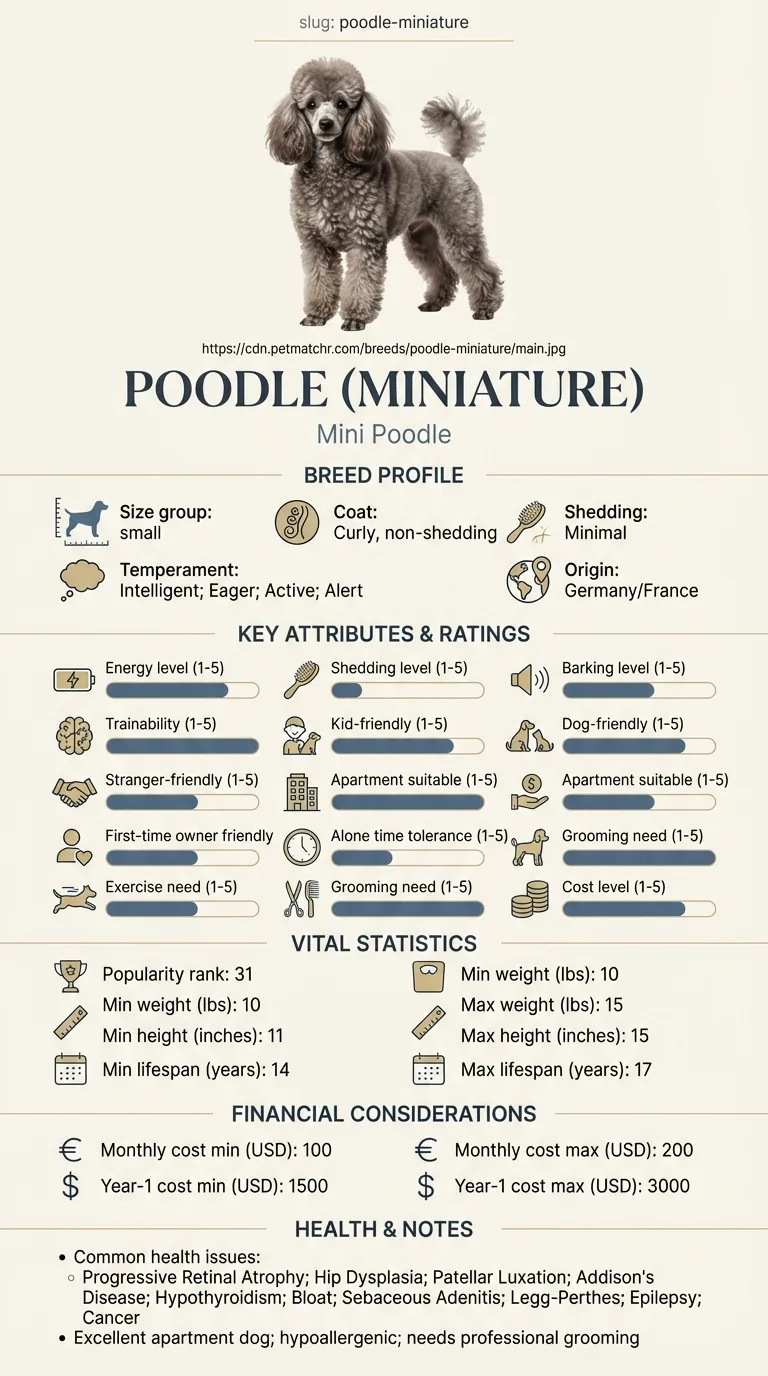
This problem typically affects owners who may not be aware of the specific health risks associated with their Mini Poodle's physique. Busy families, first-time dog owners, and those living in smaller spaces might find these back problems particularly challenging to manage.
This guide is not medical advice. If your dog shows pain, sudden behavior change, or worsening symptoms, consult a licensed veterinarian.
Some links may be affiliate links. We may earn a commission at no extra cost to you. We only suggest products we believe are helpful for dog owners.
We research and check what we publish, but we do not warrant that any figure, date, price, or statement is accurate, complete, or current, and we accept no liability for any loss, cost, injury, or other harm arising from the use of this site. Use it as one reference among several. You remain responsible for your own decisions and for your dog's care - confirm anything that matters with a licensed veterinarian or another qualified professional before you act on it. Full disclaimer.
Check this first
Recognizing when back problems in your Poodle (Miniature) are an emergency is crucial for their health. If you notice any severe symptoms, it's time to call your vet immediately. Signs like inability to walk, severe pain when touched, or sudden weakness in the back legs require urgent attention. Additionally, if your dog shows signs of incontinence or has lost control of bowel movements, seek help right away.
If any of these apply, call your vet or an emergency clinic now. The rest of this page is for the cases that are not an emergency.
Poodle (Miniature) back problems often stem from their unique body structure, which features a long spine and short legs. Owners may notice their dog struggling to jump onto furniture, showing reluctance to climb stairs, or displaying signs of discomfort when moving. This breed is particularly prone to back issues, which can lead to chronic pain if not addressed early.
Back problems are relatively common in Poodle (Miniature) dogs, given their physical traits. Many owners report occasional issues, while some dogs may experience more significant problems that require veterinary attention.
Poodle (Miniature) back problems primarily arise from their unique body structure, which features a long spine and short legs. This anatomical design puts additional strain on their back, making them more susceptible to injuries and conditions like intervertebral disc disease. Their agility and playful nature can also lead to overexertion, increasing the risk of back problems.
Environmental factors play a significant role in back issues as well. If your Mini Poodle frequently jumps from high places or engages in rough play, this can lead to stress on their spine. Additionally, a lack of proper support when sleeping or inadequate space for movement can exacerbate existing back issues.
It's essential to consult your vet if you notice any signs of pain, like reluctance to jump, difficulty walking, or changes in behavior. Early intervention can prevent more serious issues and improve your dog's quality of life.
Avoiding certain behaviors can help improve your Poodle (Miniature)'s back problems. Here are some common mistakes and safer alternatives.
Start here: Miniature Poodle Most Common Genetic Disorders: Screening
See all Poodle Miniature health problems, which breeds are prone to back problems, or the full Poodle Miniature breed guide for temperament, exercise needs and ownership costs.
With consistent care and follow-up with your vet, you can see improvements in your Poodle (Miniature)'s back health within 3 to 6 months.
Success means your Mini Poodle can engage in regular activities without pain and shows improved mobility.
In less severe cases, you can monitor your Mini Poodle's back problems at home. If your dog is showing mild signs of discomfort, such as occasional limping or reluctance to jump, observe them closely. Adjusting their activity levels and providing a comfortable resting area can help. However, if symptoms persist or worsen over a few days, it's wise to consult your vet for further evaluation.

Maggie, a busy nurse in Chicago, adopted Charlie, a Mini Poodle, hoping for a playful companion. Soon, she noticed him struggling to jump onto the couch and hesitating during walks. Concerned, she learned that Mini Poodles are prone to back problems due to their long spines. After consulting her vet, she started a gradual exercise routine and invested in a supportive harness. Within months, Charlie was more active and even started to play fetch again, much to Maggie's relief.
Key takeaway: Understanding your dog's specific health needs and taking proactive steps can significantly enhance their quality of life.
Poodle (Miniature) back problems often arise due to their long spine and short legs. This breed is prone to spinal issues like intervertebral disc disease, which can cause pain and mobility challenges. Regular vet check-ups can help catch these issues early.
To prevent back problems in your Poodle (Miniature), maintain a healthy weight and avoid jumping or excessive stair climbing. Providing a supportive bed and gentle exercise can also help strengthen their back. Consider consulting a vet for specific recommendations tailored to your dog.
Yes, training techniques focused on low-impact activities and controlled movements can help. Teaching commands that minimize jumping or twisting can protect their back. Positive reinforcement works best to encourage safe behavior.
Watch for signs like reluctance to jump, difficulty climbing stairs, or any sudden changes in behavior. If your Poodle seems to be in pain or has trouble walking, it’s important to consult a veterinarian. Early intervention can lead to better outcomes.
Not always, but surgery may be required for severe cases, especially if there’s nerve damage. Many back issues can be managed with medication, physical therapy, or lifestyle changes. Always discuss options with your vet before making decisions.
Poodle (Miniature) back problems can often stem from their long spine and short legs. Conditions like intervertebral disc disease or injuries from jumping can also contribute to these issues.
Signs of back pain in your Poodle (Miniature) may include reluctance to jump, difficulty walking, or whining when touched. If you notice these signs, it's best to consult your vet for a thorough evaluation.
Yes, older Poodle (Miniature) dogs may be more susceptible to back problems due to age-related wear and tear on their spines. Regular vet check-ups can help catch these issues early.
To prevent back problems, ensure your Poodle (Miniature) maintains a healthy weight and avoids high-impact activities. Providing a supportive bed and avoiding excessive jumping can also help.
If your Poodle (Miniature) shows persistent signs of pain, difficulty moving, or any sudden changes in behavior, seek veterinary help immediately. Early intervention can make a significant difference.
Limit jumping and provide supportive bedding for your Poodle (Miniature). Regular vet check-ups are essential for early detection of potential issues.
A moderate amount of daily exercise, like short walks or gentle play, helps maintain their health without straining their back. Aim for 30 minutes a day.
Yes, treatment for back problems can vary widely but may include vet visits, medications, or even surgery. Budget for potential costs ranging from $500 to $2,000 depending on the severity.
Contact your veterinarian immediately to assess your dog’s condition. Early intervention can make a significant difference in treatment outcomes.
A one-page prep sheet for this condition: the signs, the questions to ask, what to get priced. Unlocks here.
You get: Vet visit prep sheet
No spam. One-click unsubscribe. See our privacy policy.
See a sample page before you decide.
Early access list
The free prep sheet covers the same-day warning signs, a symptom log and the questions to ask. We are considering a fuller kit that adds a cost worksheet for the usual tests and treatments (US price ranges with their sources) and a plain-English guide to ways of covering the bill. It is not built yet; this list tells us whether it is worth building.
One email, no spam, unsubscribe anytime. Information only, not veterinary advice.