Behavior
What are Poodle (All Sizes) pregnancy complications quick tips?
Monitor her health closely and maintain regular vet visits for the best outcomes during her pregnancy.

Quick answer
What are Poodle (All Sizes) pregnancy complications quick tips?
Monitor her health closely and maintain regular vet visits for the best outcomes during her pregnancy.
Pregnancy complications in Poodles (All Sizes) can pose serious health risks. Understanding these issues is crucial for any dog owner. (Poodle (All Sizes) pregnancy complications)
Typically, owners of pregnant Poodles may struggle with recognizing the signs of complications. New dog parents, in particular, may feel overwhelmed and unsure about what to monitor during their dog's pregnancy. This situation can be stressful, especially if the owner is inexperienced or unaware of potential risks.
This guide is not medical advice. If your dog shows pain, sudden behavior change, or worsening symptoms, consult a licensed veterinarian.
Some links may be affiliate links. We may earn a commission at no extra cost to you. We only suggest products we believe are helpful for dog owners.
We research and check what we publish, but we do not warrant that any figure, date, price, or statement is accurate, complete, or current, and we accept no liability for any loss, cost, injury, or other harm arising from the use of this site. Use it as one reference among several. You remain responsible for your own decisions and for your dog's care - confirm anything that matters with a licensed veterinarian or another qualified professional before you act on it. Full disclaimer.
Check this first
Recognizing when Poodle (All Sizes) pregnancy complications become an emergency is crucial for your dog's health. Immediate veterinary care is essential if you notice any of the following red flags: excessive bleeding, severe vomiting, signs of distress, or a noticeable decrease in the puppies' movement. These symptoms can indicate serious issues that require urgent attention.
In contrast, some mild complications can be monitored at home. If your Poodle shows slight lethargy, mild nausea, or a bit of discomfort, you can plan to observe her closely. Ensure she stays hydrated, and keep her environment calm and comfortable. If these symptoms persist or worsen over time, don’t hesitate to contact your vet for advice.
Always err on the side of caution. If you’re ever uncertain about your Poodle’s condition, it’s better to reach out to your veterinarian. They can provide guidance and determine if immediate action is necessary.
If any of these apply, call your vet or an emergency clinic now. The rest of this page is for the cases that are not an emergency.
Poodle (All Sizes) pregnancy complications can be distressing for both the dog and the owner. These complications may include issues like gestational diabetes, infections, or complications during delivery. Owners might notice signs of distress, such as lethargy, loss of appetite, or unusual behavior in their Poodle during this critical time.
Pregnancy complications in Poodles are relatively common, occurring in about 10-15% of pregnancies. Factors like age, size, and overall health can significantly influence the likelihood of complications.
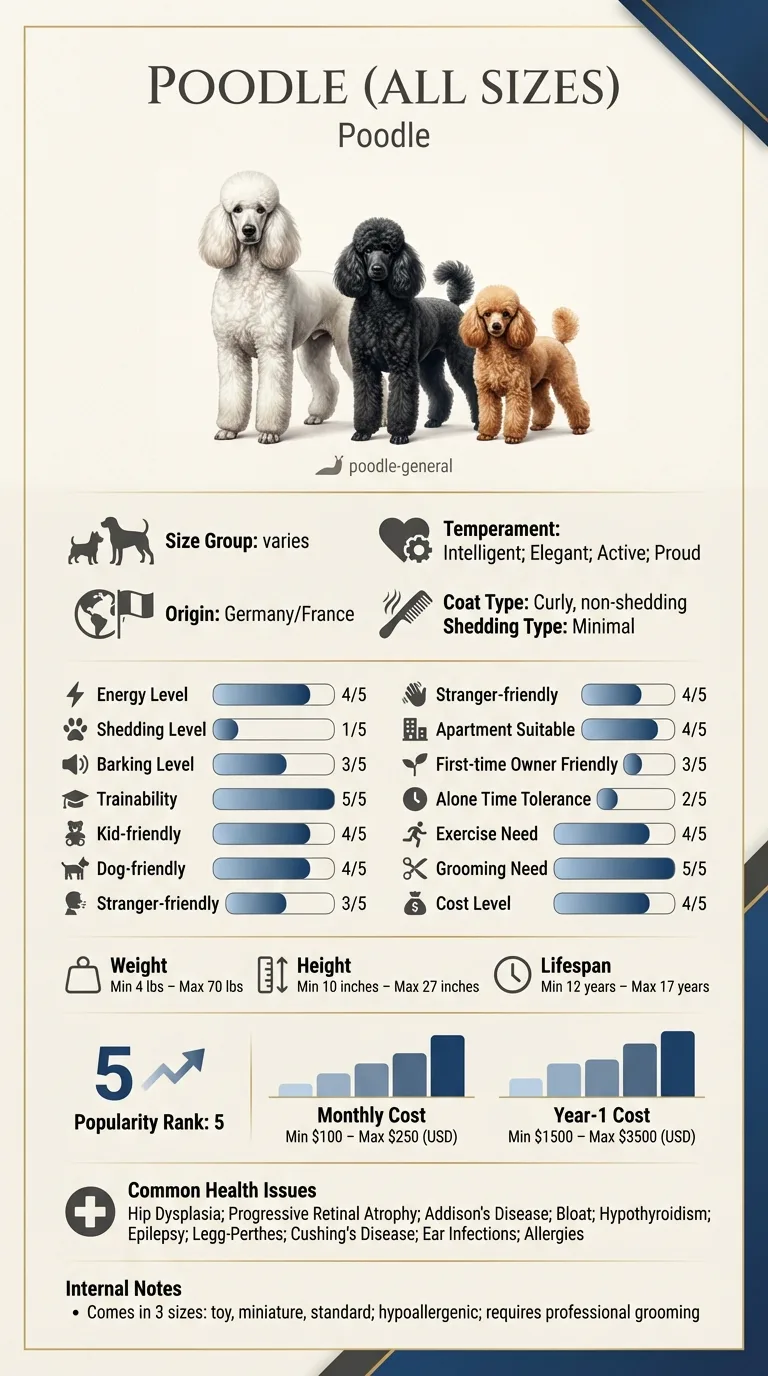
Poodles, regardless of size, may face certain pregnancy complications due to their genetic predispositions. For instance, issues like hip dysplasia or bloat can affect their pregnancy health. Their intelligence and energy levels also mean they might not always recognize when to slow down during pregnancy.
Environmental factors can greatly impact a Poodle's pregnancy. Stress from loud noises, lack of a comfortable space, or inadequate nutrition can lead to complications. Additionally, overcrowding or exposure to other aggressive pets may increase anxiety and stress, affecting the pregnancy.
Reach out to your vet if you notice any unusual symptoms, such as excessive vomiting, lethargy, or lack of appetite. These could indicate serious complications. Always discuss any concerns about her pregnancy to ensure both her and the puppies' health.
Understanding common mistakes can help you navigate Poodle (All Sizes) pregnancy complications more effectively. Here are some behaviors to avoid.
Start here: Poodle (All Sizes) Genetic Disorders: What to Screen For
See all Poodle General health problems, which breeds are prone to pregnancy complications, or the full Poodle General breed guide for temperament, exercise needs and ownership costs.
It may take several weeks to a few months to effectively manage Poodle (All Sizes) pregnancy complications. Consistent care and monitoring are crucial during this time.
Successful management means your Poodle has a healthy pregnancy, with minimal complications. You’ll notice improved health and comfort for your dog, along with a smoother delivery process.
Sarah, a first-time dog owner, noticed her Poodle, Bella, showing signs of distress during her pregnancy. Bella had a history of anxiety, which was heightened by the changes in her body. After consulting her vet, Sarah learned how to create a calm environment and provide proper nutrition. She implemented a routine that included gentle exercise and relaxation techniques. Over time, Bella became more settled, leading to a successful delivery of healthy puppies.
Key takeaway: Understanding your dog's specific needs during pregnancy can significantly reduce complications. Patience, vet guidance, and a supportive environment can make all the difference.
Poodle (All Sizes) pregnancy complications can arise due to several factors. These may include genetic predispositions, age, or underlying health issues. It's crucial to monitor your dog's health throughout her pregnancy and consult your vet if you notice any unusual symptoms.
To prevent pregnancy complications in your Poodle, ensure she receives proper prenatal care. This includes a balanced diet, regular vet check-ups, and avoiding stress. If complications arise, your vet can provide tailored treatment options.
Common signs of pregnancy complications in Poodles include excessive vomiting, lethargy, or a lack of appetite. Additionally, if your Poodle is experiencing unusual discharge or seems to be in pain, it's important to consult your vet immediately.
Training can help manage stress during pregnancy. Positive reinforcement and gentle commands can keep your Poodle calm. Consider enrolling in a basic obedience class or working with a trainer experienced in pregnant dogs.
Yes, Poodles can be prone to conditions like hip dysplasia and bloat, which can complicate pregnancy. Regular vet visits and monitoring are vital to catch any issues early.
Consult your vet as soon as you suspect your Poodle is pregnant. Regular check-ups throughout her pregnancy will help ensure her health and the health of her puppies.
Provide a quiet, comfortable space for her to rest and maintain a healthy diet. Regular gentle exercise and mental stimulation can also help keep her healthy and happy during this time.
To support your Poodle during pregnancy, ensure she has a balanced diet rich in essential nutrients. Regular vet check-ups are crucial, and minimizing stress in her environment can help prevent complications.
Yes, pregnancy complications can sometimes lead to long-term health issues, such as difficulties with future pregnancies or chronic health problems. It's vital to monitor your Poodle's health closely and follow your vet's advice.
You should take your Poodle to the vet if you notice any concerning symptoms, such as severe swelling of the abdomen, excessive bleeding, or if she is in distress. Early intervention can be crucial for her health and the health of her puppies.
Yes, smaller Poodle sizes, like Toy Poodles, can be more prone to pregnancy complications due to their size. They may face greater risks during delivery, so it's essential to have a vet monitor their pregnancy closely.
Monitor her health closely and maintain regular vet visits for the best outcomes during her pregnancy.
Create a calm environment and engage in gentle training to help keep her relaxed.
Provide a balanced diet rich in nutrients and consult your vet for specific dietary recommendations.
Schedule a vet visit as soon as you suspect she is pregnant, and follow up regularly throughout her pregnancy.
Yes, but early intervention and proper care are crucial to managing complications effectively.
A one-page prep sheet for this condition: the signs, the questions to ask, what to get priced. Unlocks here.
You get: Vet visit prep sheet
No spam. One-click unsubscribe. See our privacy policy.
Preview page 1 before you decide.