DogBreedCompass
← Back to breed profile

Poodle (All Sizes) Genetic Load: Understanding the Issue

Poodle (All Sizes) genetic load refers to the presence of harmful genetic variants that can affect their health and behavior. This issue is crucial for owners to understand, as it influences the dog's overall well-being.

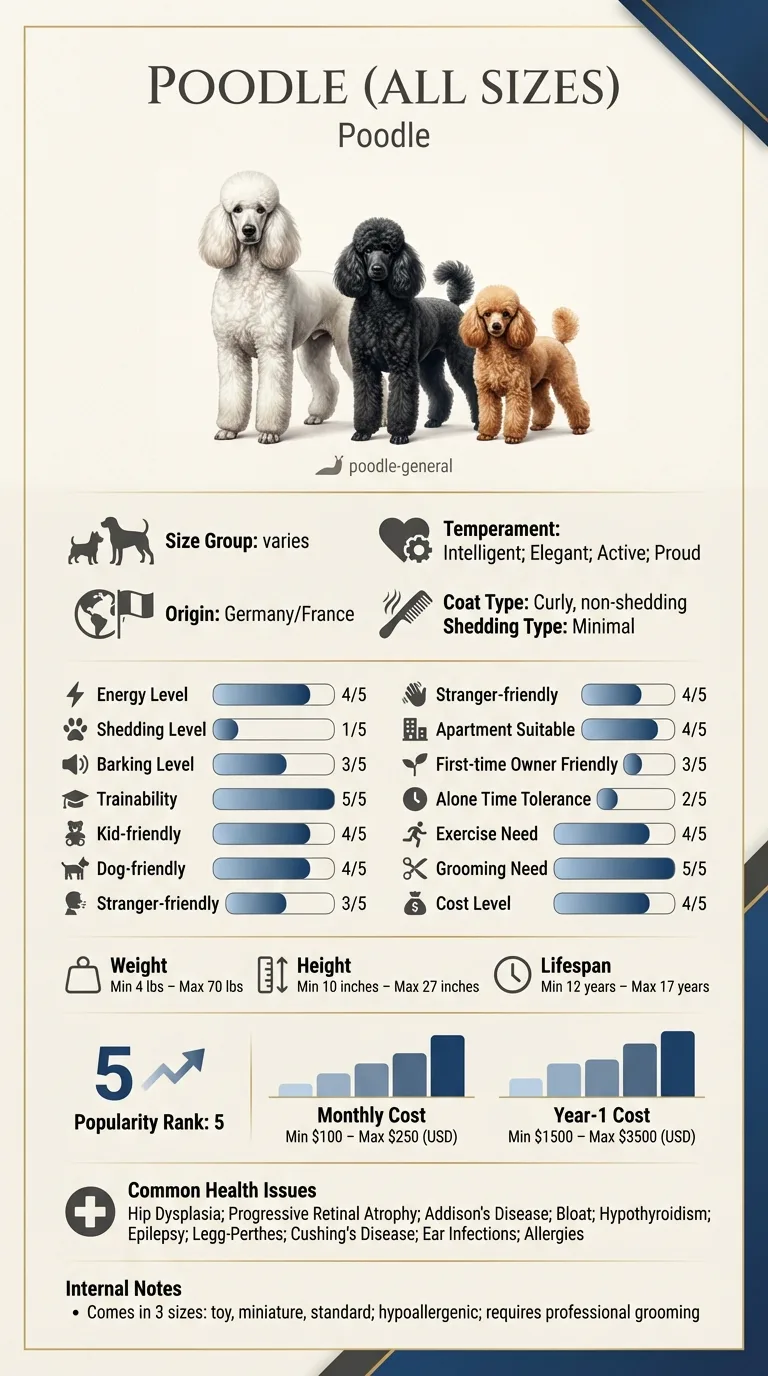
Poodle (All Sizes) Genetic Load: Understanding the Issue infographic

Owners of Poodles, especially first-time dog parents or those living in urban areas, often face challenges related to genetic load. They may notice unusual behaviors or health issues that require careful management and understanding.

Important reminder

This guide is not medical advice. If your dog shows pain, sudden behavior change, or worsening symptoms, consult a licensed veterinarian.

Some links may be affiliate links. We may earn a commission at no extra cost to you. We only suggest products we believe are helpful for dog owners.

What this problem looks like

The Poodle (All Sizes) genetic load refers to the risk of inherited health issues due to the concentration of harmful genetic variants. Day-to-day, this can manifest as various health problems, such as hip dysplasia, progressive retinal atrophy, and allergies. Owners may notice their Poodle showing signs of discomfort or illness, leading to frequent vet visits and unexpected medical expenses.

Common triggers

  • Breeding practices that focus on appearance over health
  • Inbreeding within certain lines or sizes
  • Age-related health decline

Genetic load is a significant concern for the Poodle breed, affecting a notable percentage of individuals. Many Poodles may face one or more genetic health issues during their lifetime, making it essential for owners to stay informed and proactive.

Why this happens

Breed factors

Poodles, despite being intelligent and elegant, can have a higher genetic load due to their breeding history. This means they may inherit harmful genetic variants that can lead to health issues. Breeding practices focused on specific traits sometimes overlook genetic diversity, increasing the risk of these variants.

Environment factors

Environmental factors can also play a role in how genetic load affects Poodles. Stress, poor nutrition, and lack of exercise can exacerbate inherited health issues. A stable and loving environment can help mitigate some behavioral issues related to genetic load.

What you can try

At-home strategies

  • Establish a consistent routine. Set regular feeding, exercise, and playtimes to help your Poodle feel secure.
  • Provide mental stimulation. Engage your Poodle with puzzle toys, training sessions, and interactive games to keep their mind sharp.
  • Monitor their health closely. Keep an eye out for any signs of common health issues, and maintain a healthy diet to support their well-being.

When to consider a trainer

If you notice persistent behavioral issues or anxiety that basic training does not resolve, consider hiring a professional trainer. They can provide tailored strategies to address specific problems related to your Poodle's genetic load.

When to talk to your vet

If your Poodle shows signs of health problems, such as lethargy, unusual behavior, or difficulty with mobility, it's crucial to consult a vet. They can perform assessments to determine if these issues are linked to genetic load and suggest appropriate treatments.

Realistic expectations

Addressing genetic load in Poodles can take several months to years. Regular vet check-ups and consistent training can yield noticeable improvements over time.

Success means a healthier, happier Poodle with fewer genetic-related health issues. You'll also notice improved behavior and a stronger bond with your dog.

Mistakes that make this worse – Poodle (All Sizes) genetic load

Avoiding these common mistakes can help you manage your Poodle's genetic load more effectively. Here are some behaviors that could delay improvement.

  • Skipping Regular Vet Check-Ups: Neglecting to take your Poodle for regular health check-ups can allow issues related to genetic load to go unnoticed. Instead, schedule routine visits to catch potential problems early.
  • Ignoring Behavioral Changes: If your Poodle starts showing unusual behavior, it might be a sign of underlying health issues linked to genetic load. Pay attention to these changes and consult your vet promptly.
  • Overlooking Nutrition: Feeding your Poodle low-quality food can exacerbate health issues related to genetic load. Opt for a balanced diet rich in nutrients to support their overall health.
  • Inconsistent Training: Inconsistent training methods can increase stress and anxiety in your Poodle, making genetic load issues worse. Stick to a consistent, positive reinforcement training plan.
  • Focusing Solely on Symptoms: Treating symptoms without addressing the root causes of genetic load can lead to ongoing problems. Work with a vet to develop a holistic management plan.
  • Neglecting Socialization: Not allowing your Poodle to socialize can increase anxiety and stress, worsening the effects of genetic load. Gradually introduce them to new environments and other dogs.
  • Rushing Training Sessions: Short, rushed training sessions can lead to frustration for both you and your Poodle. Aim for calm, focused sessions to improve their behavior over time.

When Genetic Load Is an Emergency

Recognizing when your Poodle (All Sizes) is facing a genetic load emergency is crucial. If your dog shows signs of severe health issues such as sudden lethargy, difficulty breathing, or unresponsive behavior, you should contact your vet immediately. These can be symptoms of serious conditions linked to genetic predispositions, like bloat or Addison's disease, which require urgent care.

On the other hand, if your Poodle (All Sizes) exhibits mild symptoms such as occasional coughing or slight changes in appetite, it may be manageable with careful monitoring. Create a plan that includes regular vet visits and maintain a log of any changes in your dog’s behavior. This allows you to track potential issues and address them before they escalate.

It's essential to know the difference. Call your vet right away if your dog experiences seizures, persistent vomiting, or severe diarrhea, as these may indicate a genetic issue that needs immediate attention. For less severe cases, keep an eye on your dog and consult your vet when symptoms persist or worsen.

Poodle (All Sizes) Genetic Load: Understanding the Issue - When Genetic Load Is an Emergency

A Journey Towards Health: Emily and Her Poodle, Max

Emily, a first-time dog owner, noticed that her Poodle, Max, was frequently anxious and had some health issues. After visiting the vet, she learned about the genetic load affecting Poodles. Determined to help Max, Emily started a routine of regular vet visits, a balanced diet, and focused on training exercises to alleviate his anxiety. Over time, Max became more confident and his health improved significantly, demonstrating that a proactive approach really pays off.

Key takeaway: Addressing genetic load takes commitment, but with patience and the right strategies, you can enhance your Poodle's quality of life.

Frequently asked questions

Why does my Poodle (All Sizes) have genetic load?

Poodle (All Sizes) can have genetic load due to inherited traits from their breeding. This concentration of harmful genetic variants often leads to increased health issues. It's important to choose a reputable breeder who screens for these issues to help reduce genetic load.

How can I reduce genetic load in my Poodle (All Sizes)?

Reducing genetic load involves careful breeding practices. Consider adopting from shelters or rescue organizations that prioritize health screening. Regular veterinary check-ups can also help manage any arising health problems.

What are common health issues associated with Poodle (All Sizes) genetic load?

Poodles may experience health issues like Hip Dysplasia, Progressive Retinal Atrophy, and Addison's Disease due to genetic load. Being informed about these risks can help you monitor your dog's health closely. Early detection and intervention are key to managing these conditions.

Can training help with Poodle (All Sizes) genetic load problems?

While training cannot eliminate genetic load, it can help manage behavior influenced by health issues. Consistent training can improve your Poodle's overall well-being and behavior. A well-trained dog is typically healthier and happier.

What should I look for in a breeder to avoid genetic load in Poodles?

Choose a breeder who conducts health screenings and genetic testing for common Poodle issues. Ask for health guarantees and review their breeding practices. A responsible breeder should be transparent about their dogs' health histories.

What are the signs that my Poodle (All Sizes) has a high genetic load?

Signs of a high genetic load in your Poodle (All Sizes) may include frequent health issues, unusual behavioral changes, or poor coat quality. If your dog seems lethargic or has recurring illnesses, it’s a good idea to consult your vet.

Can older Poodles (All Sizes) develop issues related to genetic load later in life?

Yes, older Poodles (All Sizes) can develop health issues related to genetic load as they age. Conditions like hip dysplasia and hypothyroidism may become more apparent, so regular vet check-ups are essential for early detection.

How can I help reduce genetic load in my Poodle (All Sizes)?

To help reduce genetic load in your Poodle (All Sizes), consider responsible breeding practices and genetic testing. Regular health screenings and focusing on a balanced diet can also contribute to your dog's overall well-being.

Is genetic load more common in certain sizes of Poodles (All Sizes)?

Genetic load can vary among the different sizes of Poodles (All Sizes), but all sizes are at risk for inherited health issues. Always choose a reputable breeder who tests for common genetic conditions, regardless of the size.

When should I take my Poodle (All Sizes) to the vet for genetic load concerns?

If you notice persistent health problems, behavioral changes, or if your Poodle (All Sizes) is not responding to training, it’s time to see the vet. Early intervention can make a significant difference in managing genetic load-related issues.

Quick answers

View more answers
Behavior

What are quick tips for managing Poodle (All Sizes) genetic load?

Ensure regular vet check-ups and choose a healthy diet to support your Poodle's health. Training and socialization can also help reduce stress and behavioral issues related to genetic load.

Living

How often should I groom my Poodle (All Sizes)?

Poodles require professional grooming every 4-6 weeks due to their curly, non-shedding coat. Regular brushing at home is also essential to prevent matting.

Costs

What is the average monthly cost for a Poodle (All Sizes)?

The monthly cost for a Poodle (All Sizes) can range from $100 to $250, depending on factors like grooming, food, and healthcare.

Living

Is a Poodle (All Sizes) suitable for first-time owners?

Poodles can be suitable for first-time owners, but they require consistent training and socialization. Their energy and grooming needs may be challenging for some new owners.

Related DogBreedCompass guides

  • Poodle (All Sizes) behavior problemsLearn more about genetic load issues specific to Poodles and how to manage them.
  • Poodle (All Sizes) separation anxiety guideUnderstand how separation anxiety can affect Poodles and find solutions.
  • Poodle (All Sizes) genetic load trainingExplore training methods to mitigate the effects of genetic load in Poodles.
  • Poodle (All Sizes) cost breakdownGet a detailed cost breakdown for owning a Poodle, factoring in genetic health issues.
  • Poodle (All Sizes) health issuesDiscover the common health issues faced by Poodles, including those related to genetic load.

Related guides