Behavior
What are quick tips for managing degenerative myelopathy (dm)?
Use ramps and supportive harnesses to help your Poodle (All Sizes) move safely. Regular vet visits for monitoring are essential.

Quick answer
What are quick tips for managing degenerative myelopathy (dm)?
Use ramps and supportive harnesses to help your Poodle (All Sizes) move safely. Regular vet visits for monitoring are essential.
Degenerative myelopathy (DM) is a serious condition affecting Poodles of all sizes. It progressively impacts their mobility and quality of life. (Poodle (All Sizes) degenerative myelopathy (dm))
Owners of Poodles, especially those who notice changes in their dog's mobility or coordination, often struggle with the emotional and practical challenges of managing degenerative myelopathy. This issue is particularly concerning for families and individuals who rely on their pets for companionship and support.
This guide is not medical advice. If your dog shows pain, sudden behavior change, or worsening symptoms, consult a licensed veterinarian.
Some links may be affiliate links. We may earn a commission at no extra cost to you. We only suggest products we believe are helpful for dog owners.
We research and check what we publish, but we do not warrant that any figure, date, price, or statement is accurate, complete, or current, and we accept no liability for any loss, cost, injury, or other harm arising from the use of this site. Use it as one reference among several. You remain responsible for your own decisions and for your dog's care - confirm anything that matters with a licensed veterinarian or another qualified professional before you act on it. Full disclaimer.
Check this first
You should call your vet immediately if you notice: sudden loss of coordination, severe weakness in the hind legs, inability to stand or walk, or signs of pain when moving. These symptoms could indicate a worsening condition or related issues that need urgent care.
On the other hand, if your Poodle is showing mild signs like occasional stumbling, slight weakness, or changes in activity levels, you can monitor these at home. Keep a close watch on their behavior, and consider making adjustments to their daily routine, such as gentle exercise or supportive care, while keeping your vet informed.
It’s crucial to have a plan in place. Regular check-ups with your veterinarian can help identify any changes early. If you’re unsure whether to wait or call, trust your instincts. If something feels off, don’t hesitate to reach out to your vet for advice. Their expertise can guide you on whether to act immediately or observe the situation further.
If any of these apply, call your vet or an emergency clinic now. The rest of this page is for the cases that are not an emergency.
Degenerative myelopathy (DM) in Poodles is a progressive spinal cord disease that primarily affects their mobility and coordination. Owners may notice their Poodle stumbling, dragging their hind legs, or having difficulty standing up. As the condition worsens, it can lead to paralysis, which is heartbreaking for both the dog and its owner.
Degenerative myelopathy is relatively common in Poodles, especially those over the age of 8. It's estimated that about 10-15% of this breed may develop signs of DM, making it important for owners to be aware of early symptoms and seek veterinary advice.
Poodles (All Sizes) are genetically predisposed to degenerative myelopathy (DM). This condition is often inherited and affects the spinal cord, leading to loss of coordination and mobility. The likelihood of developing DM can vary based on the specific lineage of the Poodle.
Environmental factors can also play a role in the progression of DM. Lack of exercise or a poor diet may exacerbate the symptoms. Additionally, stress or changes in routine can affect your Poodle's overall health and well-being.
It's essential to talk to your vet if you notice any signs of weakness or coordination loss in your Poodle. They can diagnose DM, recommend appropriate treatments, and monitor your dog's health as the condition progresses.
Understanding common mistakes can help you manage your Poodle's degenerative myelopathy (DM) more effectively. Here are some behaviors to avoid and better approaches to consider.
Start here: Poodle (All Sizes) Genetic Disorders: What to Screen For
See all Poodle General health problems, which breeds are prone to degenerative myelopathy dm, or the full Poodle General breed guide for temperament, exercise needs and ownership costs.
Managing Poodle (All Sizes) degenerative myelopathy (DM) typically takes several months to years. Early detection and consistent care can slow progression and improve quality of life.
Success means maintaining mobility for as long as possible and ensuring your Poodle enjoys daily activities. Regular vet check-ups and a supportive home environment are key.
Sarah, a busy nurse in Atlanta, noticed her Poodle, Max, struggling to get up after naps. After a vet visit, she learned Max had degenerative myelopathy (DM). At first, Sarah felt overwhelmed, but she quickly educated herself about DM. She adjusted Max's diet, introduced gentle exercises, and even enrolled him in a mobility class. Over time, Max adapted well. Though he has limitations, he still enjoys walks and playtime. Sarah learned that with patience and the right tools, they could make the most of their time together.
Key takeaway: Understanding degenerative myelopathy (DM) and taking proactive steps can greatly enhance your Poodle's quality of life.
Poodle (All Sizes) degenerative myelopathy (dm) is a progressive spinal cord disease that affects mobility. It typically begins with weakness in the hind legs and can lead to paralysis. Understanding this condition is crucial for proper care.
Managing degenerative myelopathy (dm) involves providing physical support and modifying your dog's environment. Use ramps for easier access to furniture and consider mobility aids like carts. Regular vet visits are essential to monitor progression.
Training a Poodle (All Sizes) with degenerative myelopathy (dm) should focus on gentle movements and encouragement. Avoid high-impact activities, and instead, use positive reinforcement for basic commands. Tailored training sessions can help maintain mental stimulation.
Signs of degenerative myelopathy (dm) include difficulty walking, dragging of the hind legs, and loss of balance. Early detection can help in managing the condition. Observing your dog's behavior closely is key.
While no specific diet cures degenerative myelopathy (dm), a balanced diet can support overall health. Some owners find that supplements like omega-3 fatty acids may help with inflammation. Always consult your vet before introducing new supplements.
Currently, there is no cure for degenerative myelopathy (dm). The focus should be on managing symptoms and maintaining quality of life through supportive care and adaptations at home.
Early signs of degenerative myelopathy (DM) in Poodles include difficulty walking, dragging of the back paws, or stumbling. You might also notice a decrease in coordination. If you see any of these signs, it’s crucial to consult your vet for a proper diagnosis.
Currently, there is no cure for degenerative myelopathy in Poodles. However, physical therapy, assisted walking devices, and supportive care can help manage symptoms. Working closely with your vet can provide you with options to improve your dog's quality of life.
Yes, degenerative myelopathy can be hereditary in Poodles. The condition is often caused by a genetic mutation. If you are considering getting a Poodle, ask the breeder about health screenings and genetic testing for DM.
Support for a Poodle with degenerative myelopathy includes providing a safe environment, using non-slip rugs, and ensuring easy access to food and water. Regular vet check-ups and a tailored exercise plan will also help keep your dog comfortable and engaged.
If your older Poodle shows signs of degenerative myelopathy, it’s essential to see a vet right away. Early intervention can help manage the condition better. Your vet can recommend appropriate treatments and lifestyle adjustments tailored to your dog's needs.
Use ramps and supportive harnesses to help your Poodle (All Sizes) move safely. Regular vet visits for monitoring are essential.
Focus on gentle, positive reinforcement techniques while avoiding strenuous activities. Short and engaging training sessions are best.
Watch for signs like weakness in the hind legs and difficulty balancing. Early detection can lead to better management.
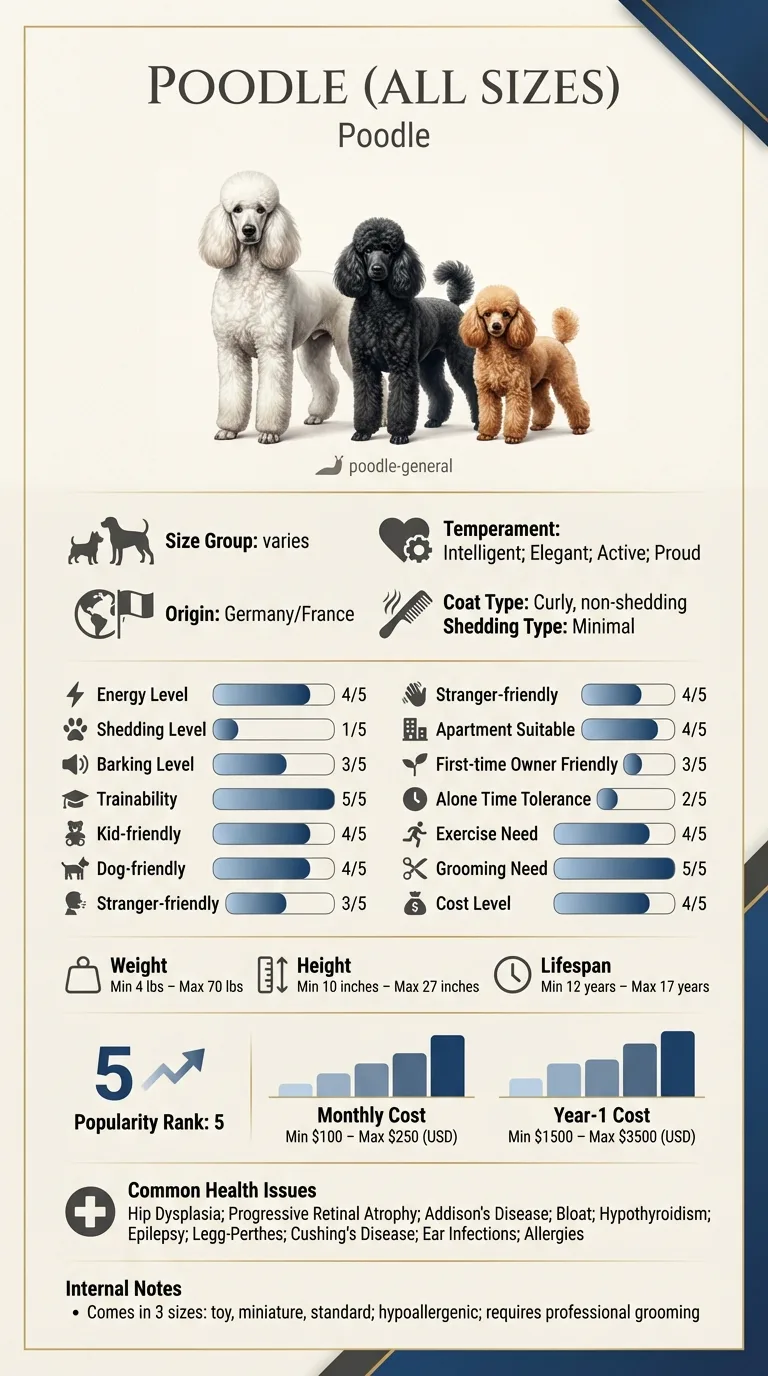
While there’s no cure, management costs can range from $100 to $250 monthly for supportive care and veterinary visits.
Yes, adapting your home with ramps and avoiding slippery surfaces can greatly help your dog navigate safely.
A one-page prep sheet for this condition: the signs, the questions to ask, what to get priced. Unlocks here.
You get: Vet visit prep sheet
No spam. One-click unsubscribe. See our privacy policy.
See a sample page before you decide.
Early access list
The free prep sheet covers the same-day warning signs, a symptom log and the questions to ask. We are considering a fuller kit that adds a cost worksheet for the usual tests and treatments (US price ranges with their sources) and a plain-English guide to ways of covering the bill. It is not built yet; this list tells us whether it is worth building.
One email, no spam, unsubscribe anytime. Information only, not veterinary advice.