Behavior
What are quick tips for managing Poodle (All Sizes) allergies?
Regular grooming, hypoallergenic diets, and avoiding known allergens can help manage Poodle (All Sizes) allergies effectively.
Poodles, despite their elegance and charm, can struggle with allergies that affect their health and happiness. (Poodle (All Sizes) allergies)
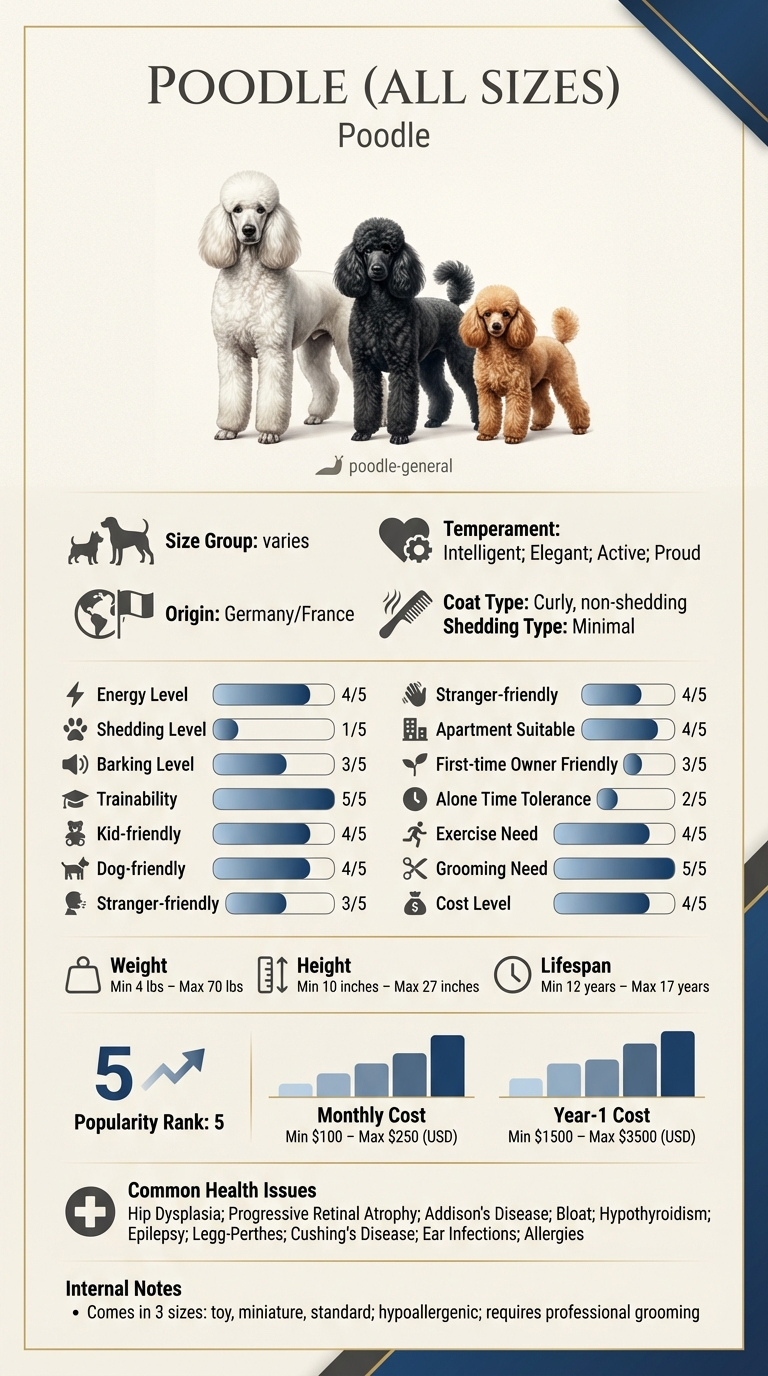
Owners of Poodles, including first-time pet parents or busy families, often face challenges with allergies. Those living in areas with high pollen counts or specific allergens may find their Poodles particularly susceptible.
This guide is not medical advice. If your dog shows pain, sudden behavior change, or worsening symptoms, consult a licensed veterinarian.
Some links may be affiliate links. We may earn a commission at no extra cost to you. We only suggest products we believe are helpful for dog owners.
Poodle (All Sizes) allergies can manifest in various ways, such as itchy skin, ear infections, and gastrointestinal upset. These symptoms often disrupt daily life, leading to discomfort for your dog and frustration for you. Common triggers include certain foods, pollen, dust mites, and mold, which can cause allergic reactions.
Allergies are quite common in Poodles, affecting many at some point in their lives. Estimates suggest that a significant number of Poodles experience some form of allergies, especially as they age. This breed's unique coat can also complicate the detection of skin issues, leading to delayed treatment.
Poodles (all sizes) are known for their sensitive skin and immune systems. This makes them more prone to allergies, which can manifest as skin irritations or ear infections. Their unique curly coat may also trap allergens, leading to increased reactions.
Environmental factors like pollen, dust, and mold can trigger allergies in Poodles. Additionally, exposure to certain foods or chemicals in grooming products can cause allergic reactions. Changes in diet or new household items may also contribute to these issues.
If your Poodle's allergies lead to behavioral issues like excessive scratching or chewing, consider consulting a dog trainer. A trainer can help implement activities that keep your dog engaged and distracted from discomfort.
If your Poodle shows severe symptoms like persistent itching, redness, or swelling, it's time to consult a vet. They can provide allergy testing and recommend appropriate treatments, such as medications or specialized diets.
Resolving Poodle (All Sizes) allergies can take several weeks to months, depending on the severity and type of allergies. You may see gradual improvements within the first few weeks after changing diets or managing environmental triggers.
Success means your Poodle has fewer allergy symptoms, such as itching, skin infections, or ear issues. You'll also have a better understanding of their triggers and how to manage them effectively.
Many owners unknowingly reinforce their Poodle's allergies by making common mistakes. Here are some behaviors to avoid, along with safer alternatives.
Allergies in your Poodle can sometimes be serious. Knowing when to call your vet can make a big difference. Here are some clear signs that indicate you should seek immediate veterinary care.
If you notice any of the following symptoms, don’t wait. Call your vet immediately:
In less severe situations, you can monitor your Poodle at home. Watch for these milder symptoms that may be managed with a plan:
For mild symptoms, create an action plan. Keep an eye on your Poodle and record any changes. If symptoms persist or worsen, don’t hesitate to call your vet for advice.
Emily, a busy nurse, adopted Max, a Standard Poodle. Soon after bringing him home, she noticed he was constantly scratching and had frequent ear infections. After a visit to the vet, they discovered Max had environmental allergies and needed a special diet. Emily started a strict routine, eliminating potential allergens and introducing a new hypoallergenic dog food. Over the next few months, she saw a remarkable change. Max's itching decreased significantly, and his ear infections became less frequent. Emily learned to recognize the signs of allergies and now feels equipped to manage Max's health.
Key takeaway: With patience and the right strategies, you can effectively manage your Poodle's allergies and improve their quality of life.
Poodles can develop allergies due to various factors, including food, pollen, dust mites, and mold. Their sensitive skin and immune systems make them more prone to allergic reactions. Identifying the specific allergen is key to managing their symptoms.
To manage Poodle (All Sizes) allergies, start by consulting a vet for proper diagnosis and treatment. Common strategies include switching to hypoallergenic food, regular grooming to remove allergens, and using air purifiers to reduce environmental triggers.
Signs of allergies in Poodles may include itching, red or inflamed skin, watery eyes, and chronic ear infections. You might also notice excessive licking or chewing on their paws. Monitoring these behaviors can help you identify allergies early.
Yes, hypoallergenic dog foods with limited ingredients can help reduce allergic reactions. Look for foods that contain novel proteins, like duck or venison, and avoid common allergens such as wheat and corn. Always consult your vet before making dietary changes.
Yes, your vet may prescribe antihistamines or corticosteroids to manage allergy symptoms in your Poodle. These medications can help reduce itching and inflammation, but should only be used under veterinary guidance to avoid side effects.
Allergies are fairly common in Poodles due to their sensitive skin and immune systems. Regular check-ups and good grooming practices can help manage and prevent severe allergy reactions.
Common signs of allergies in Poodles include itching, redness, and excessive scratching. You might also notice skin infections or chronic ear problems. Keep an eye on any unusual behaviors that could indicate discomfort.
Yes, Poodles can develop allergies at any age, including as they get older. New sensitivities can arise due to changes in their environment or diet. If you notice new allergy symptoms in your senior Poodle, consult your vet for advice.
During allergy season, keep your Poodle indoors when pollen counts are high. Regular baths with hypoallergenic shampoo can help reduce allergens on their skin. Also, consider using air filters in your home to improve air quality.
You should see a vet if your Poodle shows persistent signs of allergies, like itching or ear infections, that don’t improve with home care. If you notice severe symptoms, such as swelling or difficulty breathing, seek immediate veterinary attention.
Yes, food allergies are common in Poodles and can cause skin and digestive issues. If you suspect a food allergy, consider an elimination diet and consult your vet for guidance on finding the right food for your Poodle.
Regular grooming, hypoallergenic diets, and avoiding known allergens can help manage Poodle (All Sizes) allergies effectively.
Aim to groom your Poodle at least once a week to keep their coat clean and reduce allergens. Professional grooming every 4-6 weeks is also recommended.
Some over-the-counter antihistamines may help, but it's crucial to consult your vet before giving any medication to your Poodle.
Using air purifiers, keeping the home clean from dust and mold, and limiting outdoor time during pollen seasons can greatly benefit your Poodle.