Behavior
What are quick tips for managing Pembroke Welsh Corgi von Willebrand's disease?
Regular vet check-ups and avoiding injury are key. Monitor for signs of bleeding and keep your Corgi calm during activities.

Quick answer
What are quick tips for managing Pembroke Welsh Corgi von Willebrand's disease?
Regular vet check-ups and avoiding injury are key. Monitor for signs of bleeding and keep your Corgi calm during activities.
Pembroke Welsh Corgi von Willebrand's disease is a serious bleeding disorder that can affect your dog's health and happiness.
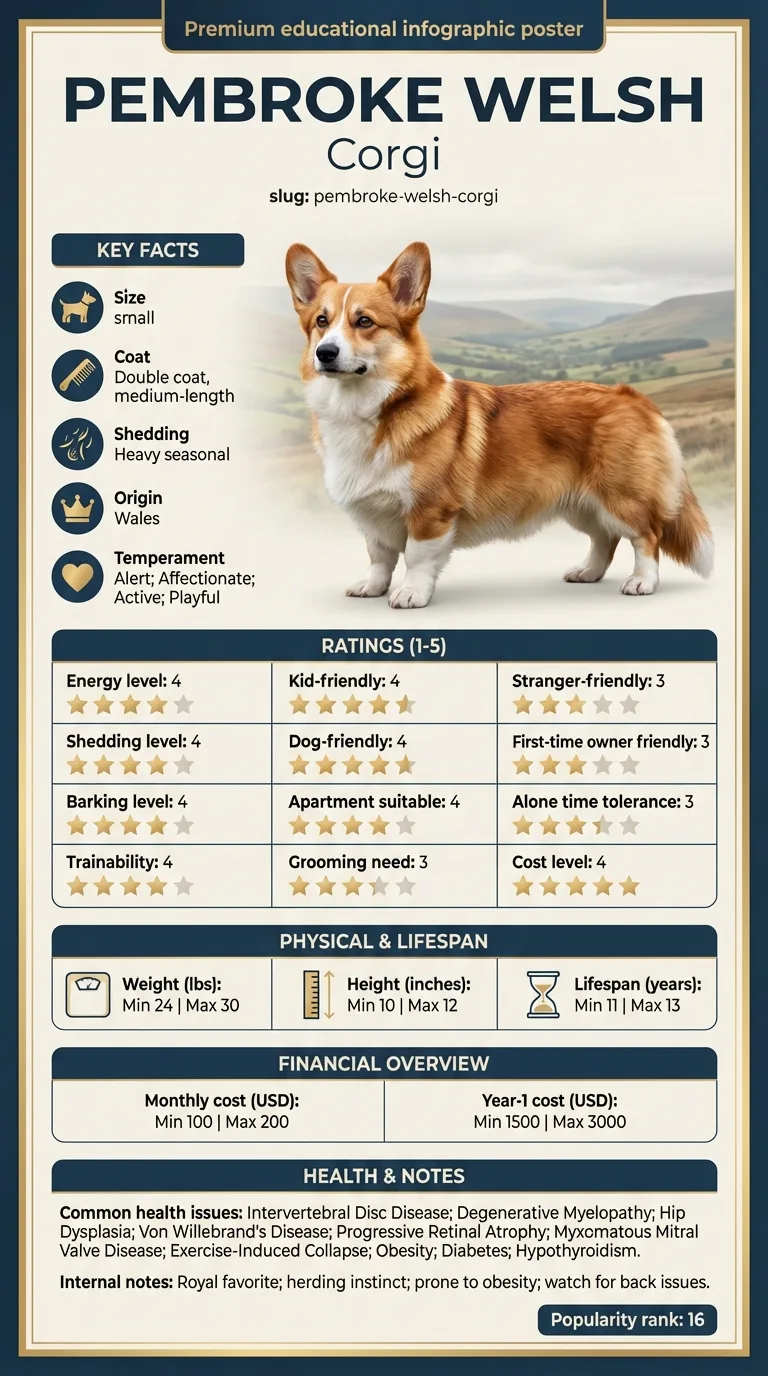
Typical owners facing this issue include those who love their Pembroke Welsh Corgis yet are unaware of the potential health risks. Busy families or individuals who may not have experience with dog health issues often find themselves needing guidance on how to manage this condition.
This guide is not medical advice. If your dog shows pain, sudden behavior change, or worsening symptoms, consult a licensed veterinarian.
Some links may be affiliate links. We may earn a commission at no extra cost to you. We only suggest products we believe are helpful for dog owners.
We research and check what we publish, but we do not warrant that any figure, date, price, or statement is accurate, complete, or current, and we accept no liability for any loss, cost, injury, or other harm arising from the use of this site. Use it as one reference among several. You remain responsible for your own decisions and for your dog's care - confirm anything that matters with a licensed veterinarian or another qualified professional before you act on it. Full disclaimer.
Check this first
Von Willebrand's Disease can be serious, so knowing when to act is crucial. If your Pembroke Welsh Corgi shows signs of excessive bleeding, such as prolonged bleeding from a minor cut or spontaneous nosebleeds, it’s time to call your vet immediately. Other red flags include swollen gums, blood in urine or stool, or severe lethargy. These symptoms indicate that your dog may need urgent care.
In contrast, if your Corgi has mild symptoms like occasional, minor bleeding or bruising without any other concerning signs, you may be able to monitor them at home. Keep an eye on their behavior and ensure they’re eating and drinking normally. It's helpful to have a plan in place with your vet for regular check-ups to manage the condition effectively.
Always trust your instincts; err on the side of caution if you’re unsure. Quick action can make a significant difference in your dog's health.
If any of these apply, call your vet or an emergency clinic now. The rest of this page is for the cases that are not an emergency.
Pembroke Welsh Corgi von Willebrand's disease is a bleeding disorder that can lead to excessive bleeding during minor injuries or surgeries. This condition occurs when there is a deficiency in a specific clotting protein, making it crucial to monitor your Corgi closely. Day-to-day, you might notice signs like excessive bleeding from small cuts or difficulty stopping bleeding after a nail trim.
Von Willebrand's disease is relatively common in Pembroke Welsh Corgis. While not every Corgi will develop this condition, awareness and early detection can help manage it effectively.
Von Willebrand's Disease is a hereditary bleeding disorder common in Pembroke Welsh Corgis. This condition affects the blood's ability to clot properly, leading to excessive bleeding. Genetics play a significant role, as the disease is passed down from parent to offspring.
Environmental factors can also contribute to the severity of symptoms. Stressful situations or injuries may exacerbate the condition, causing more noticeable bleeding episodes. Additionally, certain medications or surgical procedures can increase the risk of bleeding in affected dogs.
It's crucial to talk to your vet if you notice any bleeding or bruising. They can provide guidance on managing Von Willebrand's Disease and may recommend specific treatments or lifestyle adjustments. Regular check-ups are essential for monitoring your Corgi's health.
Avoiding certain behaviors can help manage your Pembroke Welsh Corgi's von Willebrand's disease. Here are some common mistakes to steer clear of.
Start here: Pembroke Welsh Corgi Most Common Genetic Disorders
See all Pembroke Welsh Corgi health problems, which breeds are prone to von willebrands disease, or the full Pembroke Welsh Corgi breed guide for temperament, exercise needs and ownership costs.
Managing von Willebrand's disease in your Pembroke Welsh Corgi will typically involve ongoing care and monitoring. Expect to see noticeable improvements in your dog's health within a few months of following a treatment plan.
Success means your Corgi maintains a stable condition with minimal bleeding episodes, allowing them to enjoy a normal, active life. You'll feel confident in managing their health and responding to any issues.
Sarah, a dedicated Pembroke Welsh Corgi owner, noticed her pup, Max, had frequent nosebleeds and bruising. After a vet visit, she learned Max had von Willebrand's disease. Over the next few months, Sarah worked closely with her vet to develop a management plan that included medication and careful monitoring. She learned to recognize triggers and adjusted Max's playtime to avoid injuries. Slowly, Max's health improved, allowing him to enjoy walks and playdates again.
Key takeaway: With the right care and attention, managing a Pembroke Welsh Corgi's von Willebrand's disease can lead to a happy, active life for your furry friend.
Von Willebrand's disease is a hereditary bleeding disorder common in Pembroke Welsh Corgis. It occurs due to a deficiency of a specific protein necessary for blood clotting. If you suspect your Corgi has this condition, consult your vet for testing and guidance. This answer relates to Pembroke Welsh Corgi von willebrand's disease.
Management includes regular veterinary check-ups and monitoring for symptoms like excessive bleeding. It’s essential to avoid activities that might lead to injury and to discuss treatment options, such as desmopressin, with your vet.
Yes, training is important but should be done cautiously. Focus on gentle activities that minimize risk and avoid overly strenuous exercises. Positive reinforcement training methods work well for Corgis.
While there’s no specific diet for von Willebrand's disease, maintaining a healthy weight is crucial. Discuss with your vet about a balanced diet that supports overall health and well-being.
Signs of von Willebrand's disease in Pembroke Welsh Corgis can include excessive bleeding from minor cuts, prolonged bleeding after surgery, or spontaneous bleeding. You might also notice bruising or bleeding gums. If you see any of these symptoms, it's important to consult your vet.
Yes, von Willebrand's disease can be managed in older Pembroke Welsh Corgis with regular vet check-ups and appropriate care. Your vet may suggest specific treatments or lifestyle adjustments to help minimize risks. Always monitor your dog closely for any changes in behavior or health.
Yes, diagnosing von Willebrand's disease typically involves blood tests that check for the levels of von Willebrand factor. Your vet may also conduct a complete blood count and assess clotting function. Early diagnosis is crucial for effective management.
When training a Pembroke Welsh Corgi with von Willebrand's disease, focus on gentle, low-impact activities. Avoid overly strenuous exercises that could lead to injury. Positive reinforcement techniques work well, and keeping training sessions short can help maintain their interest and well-being.
Regular vet check-ups and avoiding injury are key. Monitor for signs of bleeding and keep your Corgi calm during activities.
With proper management, many Corgis with von Willebrand's disease live normal lifespans. Regular vet care is essential.
Yes, they are also prone to conditions like hip dysplasia and intervertebral disc disease. Regular vet visits can help catch issues early.
Costs can vary, typically ranging from $100 to $300 per month for regular care and medications. Discuss potential costs with your vet.
A one-page prep sheet for this condition: the signs, the questions to ask, what to get priced. Unlocks here.
You get: Vet visit prep sheet
No spam. One-click unsubscribe. See our privacy policy.
Preview page 1 before you decide.