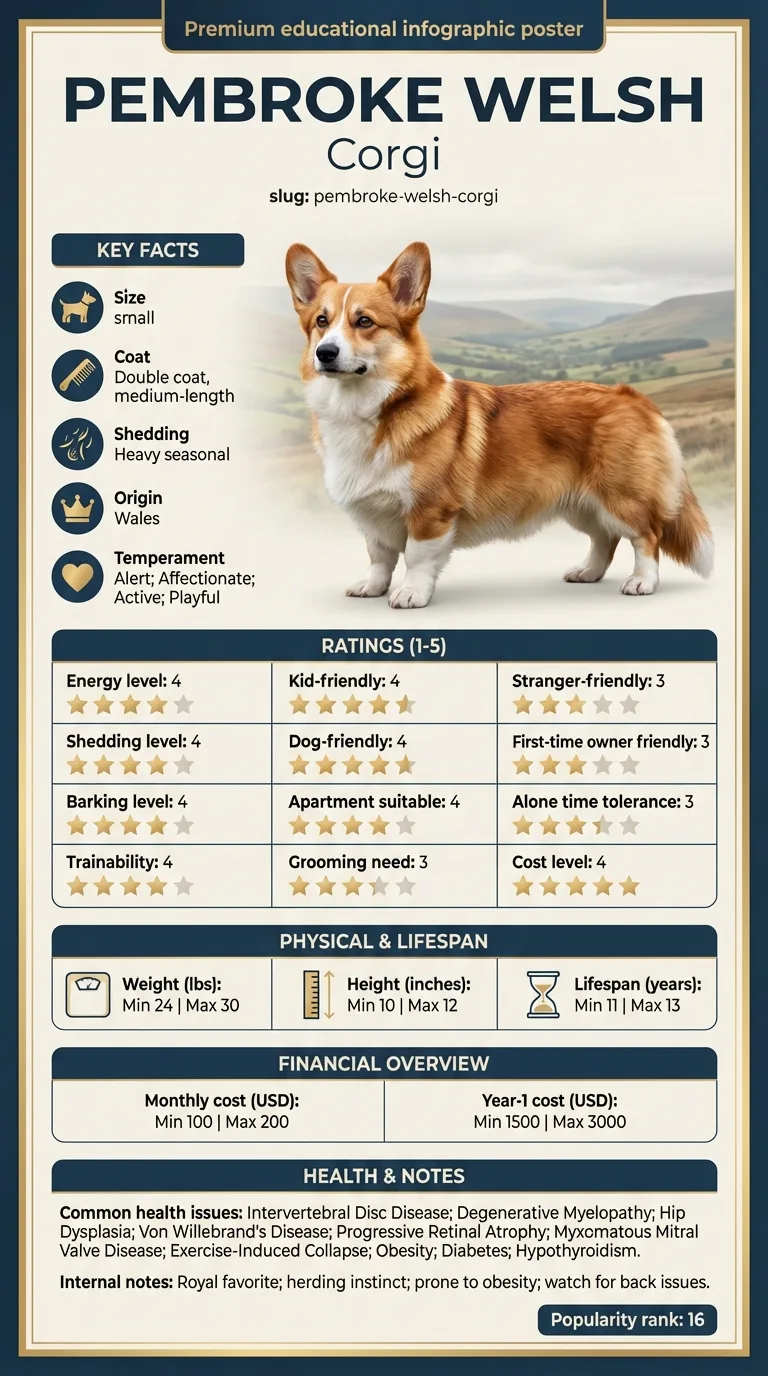
What are quick tips for managing Pembroke Welsh Corgi exercise-induced collapse (EIC)?
Monitor your Corgi during exercise, avoid extreme weather, and provide ample rest breaks. Keeping activities low-impact can also help manage EIC symptoms.
Exercise-induced collapse (EIC) is a serious concern for Pembroke Welsh Corgis. This condition can cause sudden collapse during or after exercise, which can be alarming for owners. (Pembroke Welsh Corgi exercise-induced collapse (eic))

Typically, first-time Corgi owners or those who lead active lifestyles with their pets can struggle with EIC. If you're an owner who enjoys regular exercise with your Corgi, knowing how to identify and manage EIC is essential to keeping your dog safe and healthy.
This guide is not medical advice. If your dog shows pain, sudden behavior change, or worsening symptoms, consult a licensed veterinarian.
Some links may be affiliate links. We may earn a commission at no extra cost to you. We only suggest products we believe are helpful for dog owners.
Pembroke Welsh Corgi exercise-induced collapse (EIC) is a serious condition where dogs suddenly collapse during or after physical activity. This often occurs after intense exercise or excitement, and it can be alarming for both the dog and their owner. Recognizing the signs early on can help manage this condition effectively.
Exercise-induced collapse is relatively common in Pembroke Welsh Corgis, particularly those with a high energy level. While not all Corgis will experience EIC, it's essential for owners to be aware of this issue, especially during vigorous exercise.
Pembroke Welsh Corgis are small, energetic dogs, often displaying high levels of excitement during play. Their herding background may lead to a tendency to overexert themselves, leading to exercise-induced collapse (EIC). Some dogs are genetically predisposed to this condition, making them more vulnerable during intense physical activity.
Warm weather and humidity can exacerbate EIC symptoms. If your Corgi is in a stressful or overly stimulating environment, it may contribute to their risk of collapsing during exercise. Lack of proper hydration and overexertion without adequate breaks are also significant factors.
If your Corgi frequently collapses or shows signs of distress, a professional trainer can help tailor a suitable exercise regimen. A trainer experienced with EIC can help you understand the right balance of activity for your dog.
Consult your vet if your Corgi experiences episodes of collapse. It's crucial to rule out other health issues and get guidance on managing EIC. If symptoms persist or worsen, a veterinary behaviorist may also be a good resource.
You may see improvements within a few weeks, but full management often takes several months.
Success means your Pembroke Welsh Corgi can enjoy physical activities without collapsing, and you feel confident in monitoring their exercise.
Avoiding these common mistakes can help improve your Pembroke Welsh Corgi's exercise-induced collapse (EIC) situation.
Understanding when Pembroke Welsh Corgi exercise-induced collapse (EIC) is an emergency versus a situation to monitor can be crucial for your pet's health. If your Corgi suddenly collapses during or after exercise, it's vital to assess their condition immediately. Red flags include difficulty breathing, unresponsiveness, or lack of movement after the episode. If any of these symptoms occur, call your vet right away.

In less severe cases of EIC, your Pembroke Welsh Corgi may recover quickly after a collapse. If your dog seems to regain strength and can stand or walk again without severe distress, you can monitor them closely at home. Keep track of their exercise levels and avoid intense activities that could trigger another episode. It's still wise to consult your vet for a follow-up if your dog experiences any collapses, even if they seem mild.

Emily, a busy teacher in Texas, noticed her Pembroke Welsh Corgi, Daisy, would suddenly collapse after playing fetch. At first, she was alarmed and unsure how to help. After consulting her vet, Emily learned that Daisy had exercise-induced collapse (EIC). Together, they developed a management plan, which included shorter, more frequent play sessions and monitoring Daisy's breathing. Over time, Daisy adapted, and now they enjoy their daily walks without issues.
Key takeaway: With the right plan and patience, managing exercise-induced collapse in Pembroke Welsh Corgis is possible, allowing them to live an active life.

Pembroke Welsh Corgi exercise-induced collapse (EIC) is a condition where dogs suddenly collapse during or after vigorous exercise. It is often characterized by weakness and a lack of coordination. This condition is typically triggered by physical exertion and is most prevalent in younger dogs.
EIC is caused by a genetic mutation that affects the dog's ability to regulate muscle function during intense activity. While it can be alarming, understanding the triggers can help manage the condition. It's important to consult your vet for proper diagnosis and management strategies.
To prevent EIC, avoid intense exercise in hot or humid weather. Gradually increase activity levels and include plenty of rest breaks during playtime. Monitoring your dog closely during exercise can help catch signs of distress early.
If your Pembroke Welsh Corgi collapses, immediately stop all activity and move them to a cool, shaded area. Allow them to rest and hydrate. If they do not recover within a few minutes or exhibit unusual symptoms, contact your veterinarian.
While there is no definitive training to cure EIC, you can condition your Pembroke Welsh Corgi to respond to cues for taking breaks. Positive reinforcement can help them learn to pace themselves during playtime. Always consult a trainer experienced with EIC cases for tailored strategies.
Signs of exercise-induced collapse (EIC) in Pembroke Welsh Corgis include sudden weakness, muscle tremors, or collapse during or after exercise. This typically occurs during intense physical activities like running or playing. If you notice these symptoms, it’s essential to stop the activity immediately and let your dog rest.
To manage your Pembroke Welsh Corgi's exercise and prevent EIC, focus on shorter, more frequent exercise sessions. Incorporate breaks and monitor your dog for signs of fatigue. It's best to avoid high-intensity activities during hot weather or when your dog seems overly excited.
Yes, exercise-induced collapse (EIC) is believed to have a genetic component. Some Pembroke Welsh Corgis may inherit the condition from their parents. If you're concerned about EIC, consider genetic testing and consult your vet for advice on managing your dog's activity levels.
If your Pembroke Welsh Corgi collapses during exercise, immediately remove them from the activity and allow them to rest in a cool, shaded area. Offer water and monitor them closely. If they do not recover quickly or show any unusual symptoms, contact your veterinarian for further guidance.
Older Pembroke Welsh Corgis can develop exercise-induced collapse (EIC), especially if they have a history of the condition or other health issues. As dogs age, their bodies may not handle exercise as well, so it's crucial to adjust their activity levels accordingly. Always consult with your vet for personalized exercise recommendations.
Monitor your Corgi during exercise, avoid extreme weather, and provide ample rest breaks. Keeping activities low-impact can also help manage EIC symptoms.
Look for signs like sudden weakness or unsteady movements during or after exercise. If your Corgi frequently collapses, consult your vet for evaluation.
Allow your Corgi to rest and recover fully. Keep a close eye on their behavior and consult your vet for further guidance on managing EIC effectively.