Health
What are quick tips for Old English Sheepdog genetic health?
Keep regular veterinary appointments, record new changes in movement or comfort, and bring any family health information you have to the visit.

Quick answer
What are quick tips for Old English Sheepdog genetic health?
Keep regular veterinary appointments, record new changes in movement or comfort, and bring any family health information you have to the visit.
The most useful approach to Old English Sheepdog genetic health is informed observation, good records, and a conversation with a veterinarian who knows your dog.
Prospective owners comparing breeders, and current owners who have noticed a change in mobility, comfort, skin, ears, or energy, may be looking for clear next steps without jumping to conclusions.
This guide is not medical advice. If your dog shows pain, sudden behavior change, or worsening symptoms, consult a licensed veterinarian.
Some links may be affiliate links. We may earn a commission at no extra cost to you. We only suggest products we believe are helpful for dog owners.
We research and check what we publish, but we do not warrant that any figure, date, price, or statement is accurate, complete, or current, and we accept no liability for any loss, cost, injury, or other harm arising from the use of this site. Use it as one reference among several. You remain responsible for your own decisions and for your dog's care - confirm anything that matters with a licensed veterinarian or another qualified professional before you act on it. Full disclaimer.
Questions about the most common genetic disorders in Old English Sheepdogs are best approached as a health-planning topic, not a prediction. Breed-level information can help owners know what to discuss, while an individual dog's exam, history, and signs guide real decisions.
This page does not assign a prevalence to genetic disorders in Old English Sheepdogs. Risk can vary across family lines and individual dogs, so breed information should be used as a starting point for a veterinary conversation.
Some health conditions can have an inherited component, and hip dysplasia is included in the available breed health information for the Old English Sheepdog. That information does not establish the cause of a particular dog's symptoms or predict that every dog will be affected.
Genes are only one part of health. Age, injuries, activity, body condition, daily care, and unrelated illnesses can all influence how a dog feels and moves. A veterinarian can help separate these possibilities.
Talk to a veterinarian about ongoing or recurring signs, any concern raised by family history, or questions about preventive care. Contact a veterinarian urgently if your dog has severe pain, collapse, trouble breathing, sudden weakness, or cannot use a limb normally.
Careful observation is helpful, but it works best alongside professional guidance. Avoiding these common shortcuts can make it easier to get a useful evaluation for your Old English Sheepdog.
See all OLD English Sheepdog health problems, which breeds are prone to most common genetic disorders, or the full OLD English Sheepdog breed guide for temperament, exercise needs and ownership costs.
The timeline depends on what, if anything, a veterinarian finds. A first visit can clarify the next step, while follow-up may be needed if signs persist or testing is recommended.
Success means having a clear plan that fits your individual Old English Sheepdog: knowing which signs to monitor, when to call the veterinarian, and how to support comfortable daily life.
Arrange a veterinary visit if your Old English Sheepdog develops persistent lameness, reluctance to rise or exercise, a new change in stamina, repeated ear or skin discomfort, or any other change that does not settle promptly. These signs do not identify a specific genetic condition, but they deserve an examination rather than a guess. Bring notes about the timing of signs, family health information if available, and any recent changes in routine.
Seek urgent veterinary care for collapse, trouble breathing, severe pain, sudden inability to use a limb, marked weakness, or a rapid deterioration. Those signs can have many causes and should be assessed promptly.
For a well dog, routine preventive visits are a good time to ask what health monitoring makes sense for that individual. Your veterinarian can explain whether a physical examination, family-history review, or further evaluation is appropriate based on your dog's age and circumstances.

An Old English Sheepdog owner notices that their dog is slower to get up after a busy day. Instead of assuming the cause from a breed health list, the owner records when the change happens, brings a short video to the appointment, and shares the family information they have. The veterinarian uses that context and an examination to decide whether monitoring, changes to routine, or further evaluation is appropriate.
Key takeaway: Breed information can help you ask better questions, but an individual evaluation is the safest way to understand a health change.
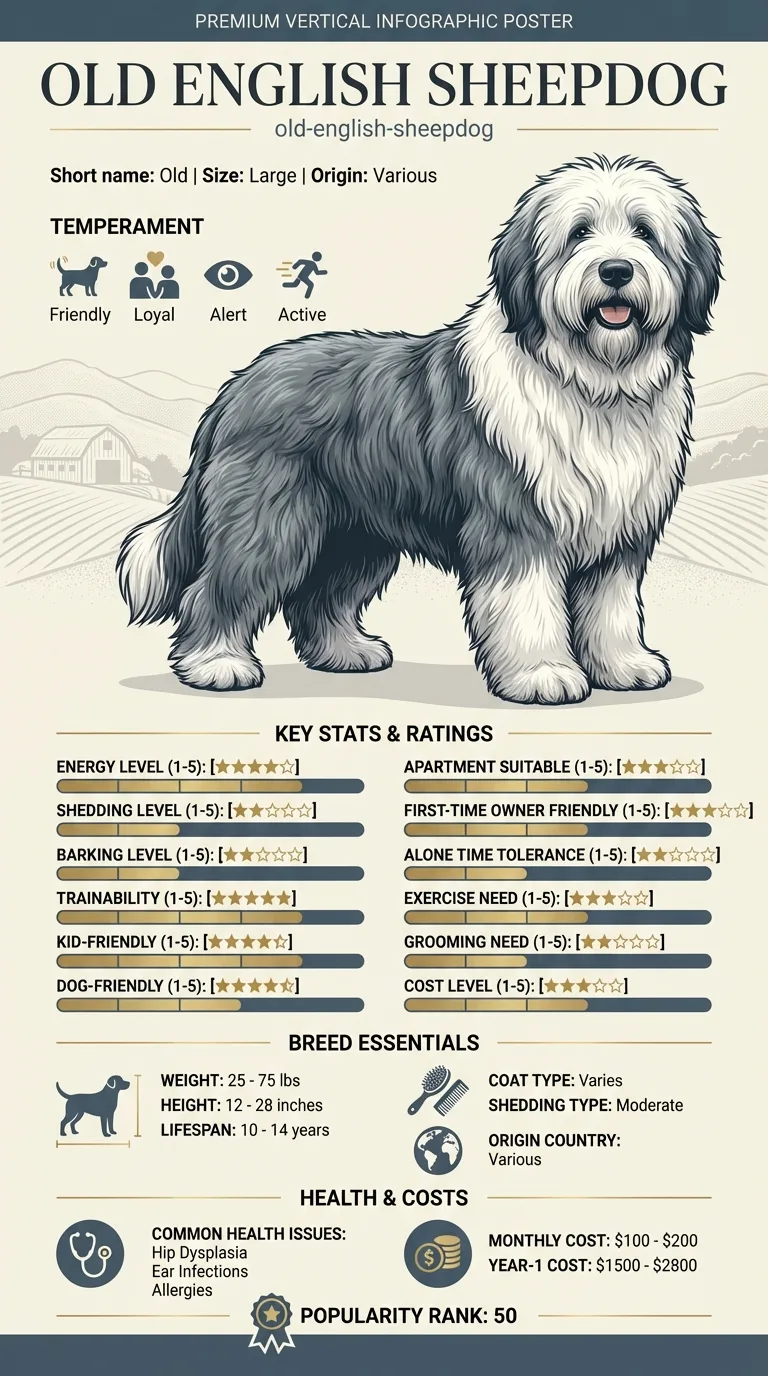
Start with your dog's individual history and any signs you have noticed. The breed information for Old English Sheepdogs lists hip dysplasia among common health issues, but a veterinarian should evaluate any concern in the context of the individual dog rather than assuming a diagnosis.
You cannot change inherited traits in a dog that is already born. You can support overall health with routine veterinary care, appropriate daily care, a healthy body condition, and prompt attention to new signs.
Changes in movement can arise from many causes, including injury, pain, or other medical issues. Because hip dysplasia is listed as a health concern for the breed, it is reasonable to mention the change to your veterinarian, but only an examination can determine what is happening.
No. Family history can be useful context when considering risk, but it does not predict a certain outcome for every dog. Discuss any available records with your veterinarian and use them alongside regular care and observation.
Ask for a straightforward discussion of the parents' health history, any health information the breeder can share, and how they support owners after placement. A breeder should not promise that a puppy will never have a health problem.
Training does not prevent genetic conditions. Gentle cooperative-care skills, such as accepting handling and calmly visiting the clinic, may make routine examinations and home care less stressful.
Get urgent veterinary help for collapse, difficulty breathing, severe pain, sudden inability to use a limb, marked weakness, or rapid worsening. Do not wait for an online answer when your dog appears seriously unwell.
Keep regular veterinary appointments, record new changes in movement or comfort, and bring any family health information you have to the visit.
Hip dysplasia is listed among the breed's common health issues. It does not mean every Old English Sheepdog will be affected; ask a veterinarian about any movement or comfort changes.
No. Good daily care can support overall health, but it cannot cure an inherited condition. A veterinarian can advise on care that fits your dog's diagnosis or current signs.
Bring a brief timeline of signs, videos of changes in movement if safe to take, current food and medication details, and any available family health history.
A one-page prep sheet for this condition: the signs, the questions to ask, what to get priced. Unlocks here.
You get: Vet visit prep sheet
No spam. One-click unsubscribe. See our privacy policy.
Preview page 1 before you decide.