DogBreedCompass
← Back to breed profile

Understanding Jack Russell Terrier Luxating Patellas

Jack Russell Terrier luxating patellas can cause pain and mobility issues for your pet. This condition occurs when the kneecap dislocates from its normal position.

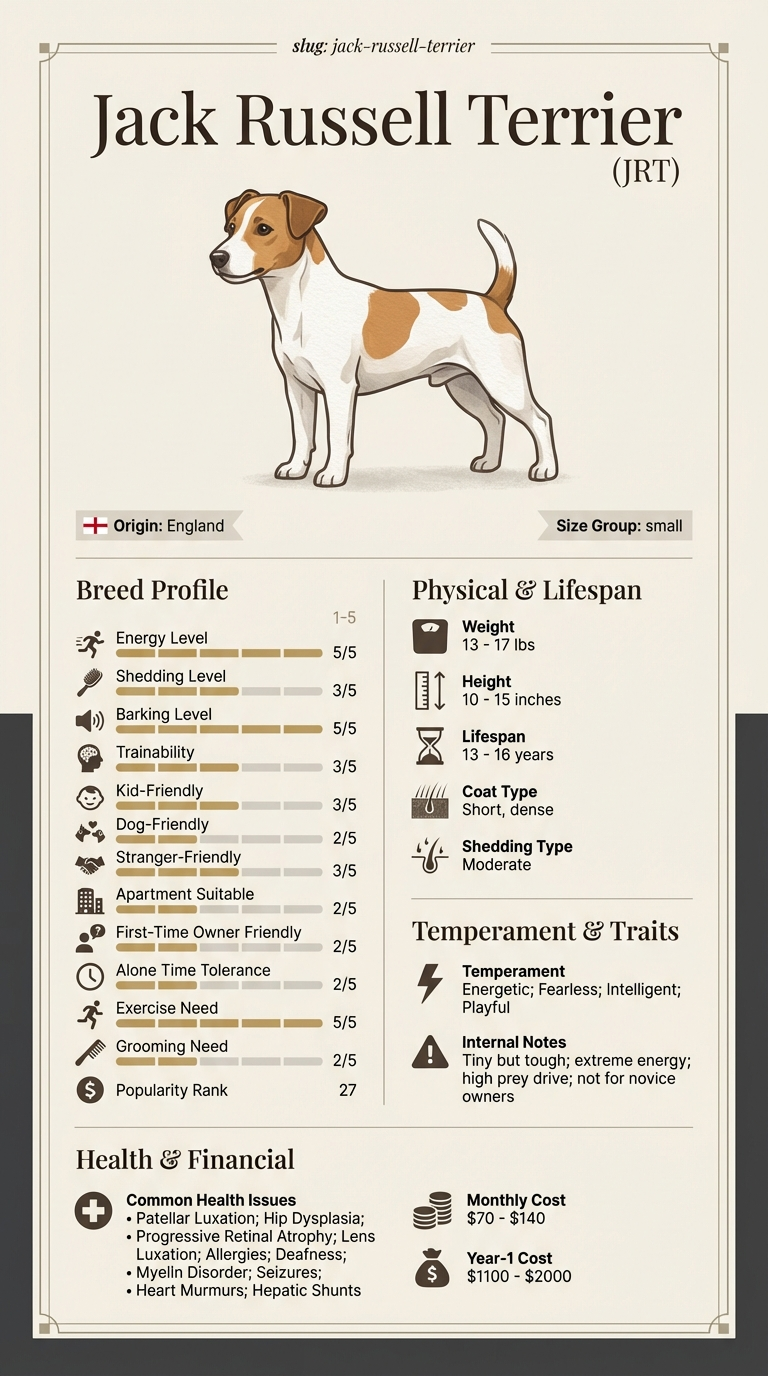
Understanding Jack Russell Terrier Luxating Patellas infographic

Owners of Jack Russell Terriers, especially those with active lifestyles, may face challenges with luxating patellas. This problem can affect playful and energetic dogs, making it essential for owners to be vigilant and proactive.

Important reminder

This guide is not medical advice. If your dog shows pain, sudden behavior change, or worsening symptoms, consult a licensed veterinarian.

Some links may be affiliate links. We may earn a commission at no extra cost to you. We only suggest products we believe are helpful for dog owners.

What this problem looks like

Jack Russell Terrier luxating patellas is a common issue where the kneecap dislocates from its normal position. This can cause pain and difficulty in walking or running. Owners might notice their JRT limping, holding up a leg, or having difficulty jumping, all signs that their pup may be dealing with this condition.

Common triggers

  • Injury or trauma to the knee
  • Genetic predisposition
  • Overexertion during play or exercise

Luxating patellas are relatively frequent in Jack Russell Terriers, with many experiencing this issue at some point in their lives. It can be particularly noticeable in younger JRTs due to their high energy and active lifestyle.

Why this happens

Breed factors

Jack Russell Terriers are small, energetic dogs with a build that can predispose them to luxating patellas. Their active nature and high energy levels can lead to joint stress and instability. Additionally, certain genetic factors within the breed can make them more vulnerable to this condition.

Environment factors

Environmental factors also play a role. Excessive jumping or rough play can increase the risk of dislocating the kneecap. Poorly maintained surfaces or uneven terrain can contribute to the problem, especially in younger dogs still developing.

What you can try

At-home strategies

  • Limit high-impact activities like jumping or running on hard surfaces to reduce stress on your dog's knees.
  • Provide a soft, supportive bed to help alleviate pressure on their joints during rest.
  • Incorporate gentle, controlled exercises like leash walks to strengthen the muscles around the knee without overexertion.

When to consider a trainer

If your Jack Russell Terrier is showing signs of luxating patellas, consider hiring a trainer who specializes in canine behavior and rehabilitation. A trainer can guide you through specific exercises and techniques to support your dog’s recovery.

When to talk to your vet

If your dog frequently shows signs of pain or difficulty walking, it's time to talk to your vet. They can assess the severity of the luxation and discuss potential treatments, including physical therapy or surgery if necessary.

Realistic expectations

Improvement can typically be seen within 4 to 6 weeks of consistent training and management for Jack Russell Terriers with luxating patellas.

Success means your dog shows reduced discomfort, improved mobility, and a more active lifestyle. Regular vet check-ups will help monitor their condition.

Mistakes that make this worse

Avoiding these common mistakes can help improve your Jack Russell Terrier's luxating patellas.

  • Ignoring signs of discomfort: If your Jack Russell Terrier shows signs of pain or limping, it's crucial to address these symptoms quickly. Delaying veterinary care can worsen the issue.
  • Excessive jumping: Allowing your dog to jump on and off furniture can strain their knees. Instead, create a space with ramps or steps to help them move safely.
  • Inconsistent exercise: A lack of regular, controlled exercise can lead to weight gain, which puts more stress on their joints. Establish a routine with low-impact activities like walking or swimming.
  • Overweight dogs: Extra pounds make luxating patellas worse. Monitor your dog's diet and consult your vet for a balanced weight management plan.
  • Neglecting training: Failing to train your dog can lead to jumping or running behaviors that aggravate their condition. Use positive reinforcement to teach calm behaviors.
  • Skipping vet check-ups: Regular vet visits are essential for monitoring joint health. Schedule routine check-ups to catch any issues early.
  • DIY remedies without professional advice: Some owners may try home remedies that can exacerbate the problem. Always consult your vet before starting any treatment.

When Jack Russell Terrier Luxating Patellas is an Emergency

Recognizing when luxating patellas in your Jack Russell Terrier requires immediate veterinary attention is crucial. Here are some red-flag signs that mean you should call your vet right away: persistent limping or inability to put weight on the leg, sudden swelling around the knee, or signs of severe pain like whining or yelping. If your dog seems unable to move or is in distress, don’t wait—seek help immediately.

On the other hand, there are milder cases that can be monitored at home. If your Jack Russell shows occasional limping but resumes normal activity after resting, or if you notice some slight discomfort without severe pain, you may not need to rush to the vet. In these cases, create a watch-and-wait plan. Keep your dog calm, limit their activity, and consider following up with your veterinarian if symptoms persist or worsen.

Always err on the side of caution. It’s better to be proactive about your dog’s health. If you’re unsure whether to act, consult your vet for advice.

Understanding Jack Russell Terrier Luxating Patellas - When Jack Russell Terrier Luxating Patellas is an Emergency

Lisa's Journey with Max: Overcoming Luxating Patellas

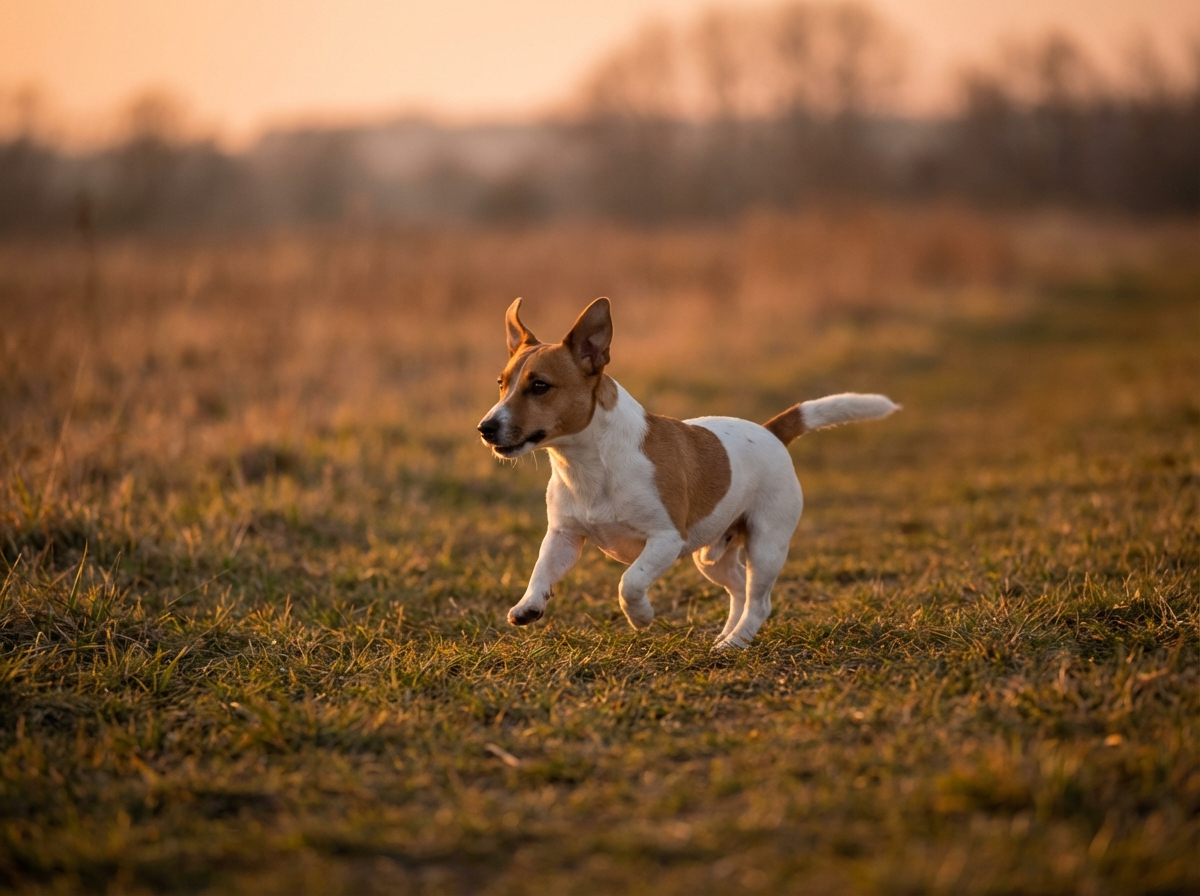
Lisa, a busy nurse living in a small apartment, adopted Max, a spirited Jack Russell Terrier. Shortly after bringing him home, she noticed he often limped after playtime. Concerned, Lisa took him to the vet, who diagnosed him with luxating patellas. Determined to help Max, she learned how to manage his condition through controlled exercise and specific training techniques. Over several weeks, Lisa worked on strengthening exercises and adjusted Max's playtime to avoid too much jumping. Gradually, he became more agile and showed fewer signs of discomfort. Today, Max enjoys his daily walks and playful runs, and Lisa feels relieved to see her dog happy and healthy.

Key takeaway: With patience and the right management strategies, you can help your Jack Russell Terrier thrive despite luxating patellas.
Frequently asked questions

Why does my Jack Russell Terrier have luxating patellas?

Luxating patellas, or dislocated kneecaps, are common in Jack Russell Terriers due to their genetics and structure. This condition can lead to pain and mobility issues. Regular vet check-ups and observing your dog's behavior can help identify this problem early. This answer relates to Jack Russell Terrier luxating patellas.

How can I stop my Jack Russell Terrier from having luxating patellas?

While you can't completely prevent luxating patellas, you can manage the condition through weight control, proper exercise, and joint supplements. Consult your vet for a tailored plan that suits your dog's needs.

What are the signs of luxating patellas in Jack Russell Terriers?

Signs include limping, difficulty jumping, or sudden reluctance to walk. You may also notice your dog’s leg appearing to skip or lock while walking. If you see these symptoms, it’s crucial to consult your veterinarian.

Is surgery necessary for luxating patellas in Jack Russell Terriers?

Surgery may be recommended if your dog's luxating patellas cause significant pain or mobility issues. However, many dogs respond well to non-surgical treatments. Always discuss options with your vet.

What can I do to help my dog with luxating patellas at home?

Keep your Jack Russell at a healthy weight and provide low-impact exercises. Avoid slippery surfaces and consider using joint-support supplements. Regular vet check-ups are important for monitoring the condition.

What is the long-term outlook for a Jack Russell Terrier with luxating patellas?

With proper management, many Jack Russell Terriers live happy, active lives despite luxating patellas. Early intervention and ongoing care are key to maintaining mobility and comfort.

What are the symptoms of luxating patellas in a Jack Russell Terrier?

Common symptoms include limping, skipping on a leg, or difficulty standing. You might also notice your Jack Russell Terrier frequently adjusting their position or seeming reluctant to jump or run.

Can luxating patellas be treated without surgery?

In some cases, mild luxating patellas can be managed with physical therapy, weight management, and specific training exercises. However, severe cases often require surgical intervention for long-term relief.

How do I know if my older Jack Russell Terrier has luxating patellas?

Older Jack Russell Terriers may show signs of discomfort or changes in mobility. If your dog is hesitant to walk, seems to be in pain, or has a noticeable limp, it's best to consult your vet.

Why does my Jack Russell Terrier have luxating patellas?

Luxating patellas can be hereditary and are more common in small breeds like Jack Russell Terriers. Factors like genetics, improper development, or injury can contribute to this condition.

What exercises can help a Jack Russell Terrier with luxating patellas?

Gentle, low-impact exercises like swimming or short walks can help strengthen the muscles around the knee. Always consult your vet before starting any new exercise regimen to ensure it's safe for your dog.

Quick answers

View more answers
Behavior

What are quick tips for managing Jack Russell Terrier luxating patellas?

Monitor your dog's weight and provide joint supplements to support knee health. Consistent, low-impact exercise can also help maintain strength without putting too much strain on the knees.

Costs

How much does it cost to treat luxating patellas in Jack Russell Terriers?

Treatment costs can range from $500 to $3,000 depending on the severity and whether surgery is needed. Regular vet check-ups will also add to the overall cost.

Living

What should I avoid if my Jack Russell Terrier has luxating patellas?

Avoid high-impact activities like jumping or running on slippery surfaces. These can exacerbate the condition and cause further injury.

Training

Is training helpful for a Jack Russell Terrier with luxating patellas?

Yes, training can help by reinforcing calm behavior and reducing the likelihood of sudden movements that could strain the knees. Positive reinforcement works best.

Health

What symptoms should I watch for with luxating patellas?

Look for signs like limping, difficulty climbing stairs, or favoring one leg. Early detection can lead to better management and outcomes.

Related DogBreedCompass guides

  • Jack Russell Terrier behavior problemsLearn more about common behavior issues for Jack Russell Terriers.
  • Jack Russell Terrier luxating patellas trainingDiscover effective training techniques for Jack Russell Terriers.
  • Jack Russell Terrier separation anxiety guideFind out how to manage separation anxiety in Jack Russell Terriers.
  • Jack Russell Terrier cost breakdownUnderstand the costs involved in owning a Jack Russell Terrier.
  • how to stop Jack Russell Terrier luxating patellasExplore how to prevent luxating patellas in Jack Russell Terriers.

Related guides