Behavior
What are quick tips for handling Jack Russell Terrier chondrodystrophy (cddy)?
Keep your Jack Russell Terrier at a healthy weight and provide regular vet check-ups. Opt for low-impact exercise to support their joints.

Quick answer
What are quick tips for handling Jack Russell Terrier chondrodystrophy (cddy)?
Keep your Jack Russell Terrier at a healthy weight and provide regular vet check-ups. Opt for low-impact exercise to support their joints.
Jack Russell Terrier chondrodystrophy (CDDY) is a developmental disorder affecting bone growth, which can lead to significant mobility issues.
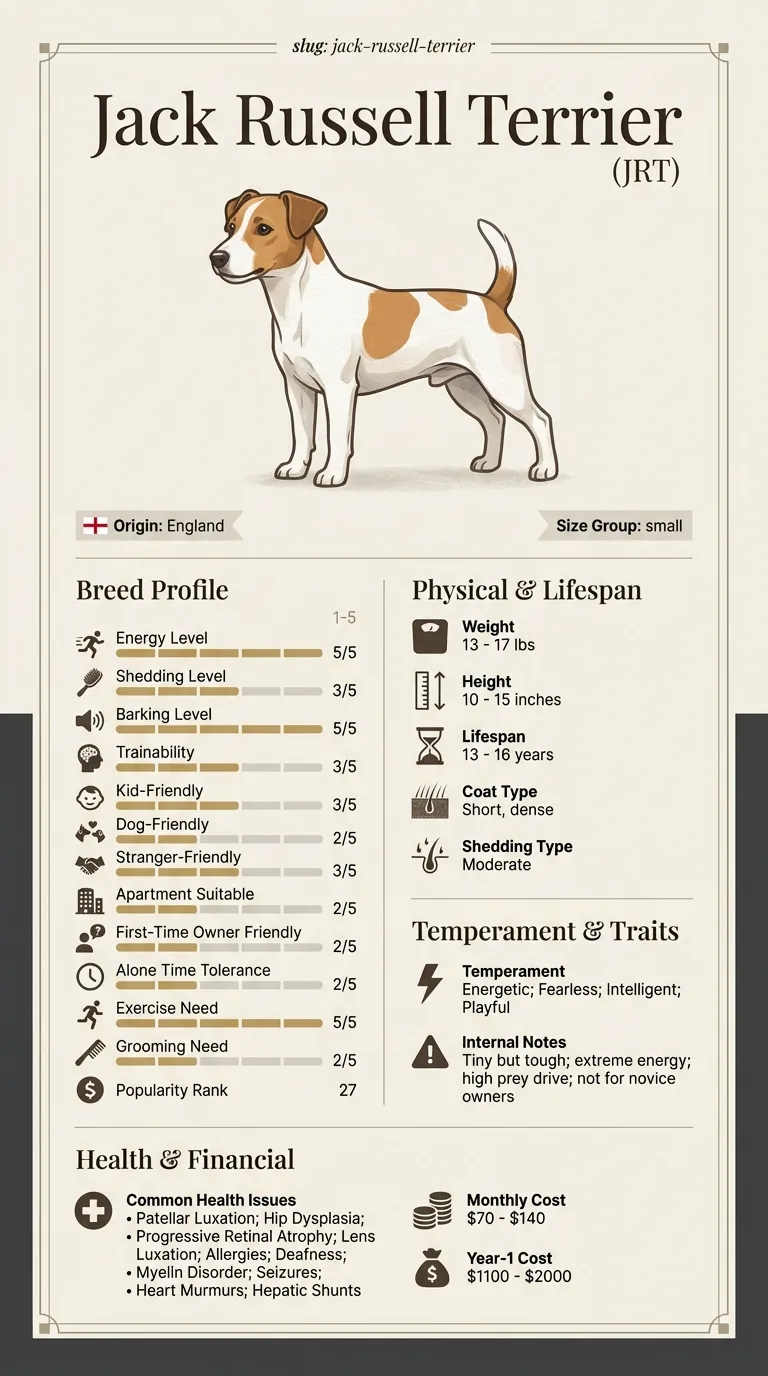
Owners of Jack Russell Terriers, especially first-time pet parents, may struggle with CDDY. It's important for those who want an active lifestyle with their dog to be aware of this condition and its potential impact.
This guide is not medical advice. If your dog shows pain, sudden behavior change, or worsening symptoms, consult a licensed veterinarian.
Some links may be affiliate links. We may earn a commission at no extra cost to you. We only suggest products we believe are helpful for dog owners.
We research and check what we publish, but we do not warrant that any figure, date, price, or statement is accurate, complete, or current, and we accept no liability for any loss, cost, injury, or other harm arising from the use of this site. Use it as one reference among several. You remain responsible for your own decisions and for your dog's care - confirm anything that matters with a licensed veterinarian or another qualified professional before you act on it. Full disclaimer.
Check this first
On the other hand, mild cases of cddy can often be managed with careful observation. If your dog shows slight limping or discomfort after exercise but still engages in play, it may not require an urgent visit to the vet. Keep track of their symptoms and any changes in behavior, and create a monitoring plan with your vet's guidance.
If any of these apply, call your vet or an emergency clinic now. The rest of this page is for the cases that are not an emergency.
Jack Russell Terrier chondrodystrophy (cddy) is a developmental disorder that affects bone growth in these energetic dogs. This condition can lead to physical deformities, particularly in the limbs and spine, which may cause pain and mobility issues. Owners might notice their JRT struggling to keep up with their usual active lifestyle, often showing signs of discomfort or reluctance to play.
Chondrodystrophy (cddy) is relatively common in Jack Russell Terriers, affecting a significant number of individuals within the breed. While not every JRT will experience severe symptoms, awareness of this condition is crucial for owners to ensure proper care and management.
Jack Russell Terriers are prone to chondrodystrophy (CDDY) due to their genetic makeup. This breed has a history of selective breeding for specific traits, which can lead to developmental disorders. It affects their bone structure, particularly in the limbs and spine.
Environmental factors can exacerbate chondrodystrophy symptoms. Lack of proper exercise can lead to obesity, putting additional stress on their joints. Additionally, an unsupportive living environment, such as slippery floors or inadequate space to move, can worsen their condition.
Speak to your vet if you notice any signs of discomfort, such as limping or reluctance to jump. Early intervention can prevent further complications and ensure your dog receives the best care possible.
Here are some common mistakes owners make when dealing with Jack Russell Terrier chondrodystrophy (cddy) that can worsen the situation. Avoiding these can help improve your dog's condition.
Start here: Jack Russell Terrier Most Common Genetic Disorders
See all Jack Russell Terrier health problems, which breeds are prone to chondrodystrophy cddy, or the full Jack Russell Terrier breed guide for temperament, exercise needs and ownership costs.
With consistent care and follow-up with your vet, you may see improvements in your Jack Russell Terrier's chondrodystrophy (cddy) symptoms within 3 to 6 months.
Success looks like your dog showing increased mobility and comfort, along with improved behavior during training sessions.
Emily, a busy nurse in Chicago, adopted Bella, a Jack Russell Terrier. Soon after, Emily noticed Bella struggled with mobility due to chondrodystrophy (cddy). At first, Bella seemed frustrated and anxious, especially during playtime. Emily decided to seek help and enrolled Bella in a specialized training program focusing on gentle exercises and behavioral training. With consistent effort over several months, Bella became more agile and visibly happier. Emily learned to manage Bella's expectations and appreciate small victories during their training sessions.
Key takeaway: Patience and the right training approach can lead to significant improvements in a dog's quality of life, even when dealing with health issues like chondrodystrophy.
Common signs include short stature, unusually shaped bones, and difficulty in movement. You may also notice joint pain or a reluctance to engage in physical activities, which can be concerning for an active breed like the Jack Russell Terrier.
To help your Jack Russell Terrier with cddy, ensure they maintain a healthy weight and provide them with low-impact exercise. Consult your vet for dietary recommendations and consider physical therapy to improve mobility.
Symptoms of chondrodystrophy (cddy) may include a hunched back, short legs, and difficulty in movement. If you notice any of these signs, it's important to consult your veterinarian for a proper diagnosis.
Yes, training can help manage Jack Russell Terrier chondrodystrophy (cddy) by strengthening muscles and improving coordination. Focus on gentle, positive reinforcement techniques to encourage movement without overexertion.
For older dogs, consider low-impact exercises to keep them active without putting too much stress on their joints. A vet may recommend specific supplements or medications to manage pain and improve mobility.
Yes, chondrodystrophy can be inherited in Jack Russell Terriers. If you're considering breeding, it's essential to consult with a veterinarian to understand the risks and genetic health screenings available.
If you observe any signs of discomfort, difficulty walking, or changes in behavior, you should consult your vet. Early intervention can help manage symptoms and improve your dog's quality of life.
Keep your Jack Russell Terrier at a healthy weight and provide regular vet check-ups. Opt for low-impact exercise to support their joints.
Treatment costs can vary widely, typically ranging from $70 to $140 monthly for veterinary care, depending on the severity of the condition.
Yes, chondrodystrophy (cddy) is a genetic condition, and it's important to choose breeders who screen for this issue.
A one-page prep sheet for this condition: the signs, the questions to ask, what to get priced. Unlocks here.
You get: Vet visit prep sheet
No spam. One-click unsubscribe. See our privacy policy.
Preview page 1 before you decide.