Behavior
What are some quick tips for managing Jack Russell Terrier brachycephalic obstructive airway syndrome (boas)?
Ensure a cool environment, avoid vigorous exercise in heat, and monitor your dog closely for breathing issues.
Jack Russell Terriers can suffer from brachycephalic obstructive airway syndrome (BOAS), causing serious breathing issues. (Jack Russell Terrier brachycephalic obstructive airway syndrome (boas))
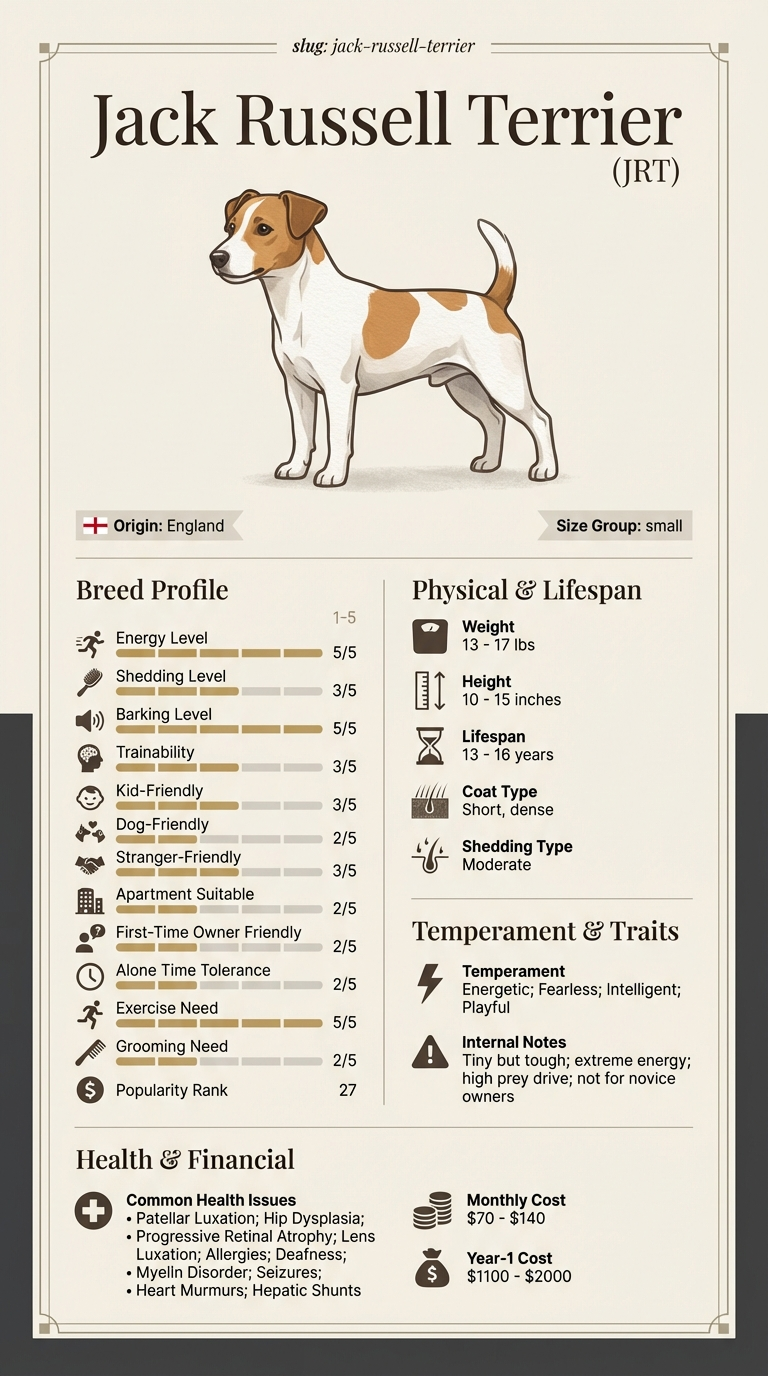
Owners of Jack Russell Terriers, especially those in warmer climates or with active lifestyles, often struggle to manage this health issue. First-time dog owners may find it particularly challenging to identify and address these symptoms.
This guide is not medical advice. If your dog shows pain, sudden behavior change, or worsening symptoms, consult a licensed veterinarian.
Some links may be affiliate links. We may earn a commission at no extra cost to you. We only suggest products we believe are helpful for dog owners.
Jack Russell Terriers can suffer from brachycephalic obstructive airway syndrome (BOAS), which affects their ability to breathe properly. This often looks like heavy panting, snoring, or struggling for air, especially during exercise or in hot weather. Owners may notice their JRT becoming easily fatigued or having episodes of coughing.
Brachycephalic obstructive airway syndrome is relatively common in breeds like the Jack Russell Terrier, particularly as they age. While not all JRTs will experience serious issues, many exhibit mild symptoms that can worsen over time.
Jack Russell Terriers have a brachycephalic structure, which means their short skull shapes can lead to airway constriction. This breed is not traditionally brachycephalic, but some may have inherited traits from mixed breeding. These anatomical features can cause breathing difficulties, especially during exercise or in hot weather.
Environmental factors can exacerbate breathing issues in Jack Russell Terriers. High temperatures or humidity can increase their risk of overheating. Additionally, exposure to allergens or irritants, such as smoke or dust, can trigger respiratory problems.
If your Jack Russell Terrier shows signs of anxiety or aggression related to their breathing issues, consider consulting a professional trainer. They can help implement behavior modification techniques.
If you notice persistent coughing, excessive snoring, or labored breathing, it's time to talk to a vet. They can assess the severity of the condition and recommend treatment options, which may include surgery in severe cases.
Improvement can typically be seen within a few weeks to a few months of consistent training and management.
Success means your Jack Russell Terrier can breathe more easily during exercise and has reduced episodes of heavy panting or snoring.
Many owners unintentionally reinforce issues related to Jack Russell Terrier brachycephalic obstructive airway syndrome (BOAS). Here are common mistakes to avoid, along with safer alternatives.
Understanding when Jack Russell Terrier brachycephalic obstructive airway syndrome (BOAS) becomes an emergency is crucial for your pet’s health. Some signs indicate immediate veterinary attention is needed, while others may allow for monitoring at home. Knowing the difference can save your dog’s life.

Look out for these serious symptoms that signal you should seek veterinary help immediately: - Severe difficulty breathing or gasping. - Blue-tinged gums or tongue. - Extreme lethargy or weakness. - Coughing or gagging that won’t stop. - Signs of heatstroke, like excessive panting or drooling. These signs indicate that your Jack Russell Terrier is in distress and needs urgent care.

If your Jack Russell Terrier shows less severe signs, you might not need an immediate vet visit. Instead, observe the following symptoms: - Occasional snoring or mild wheezing. - Slight lethargy but still responsive. - Occasional coughing without distress. - Heat sensitivity that doesn’t lead to panting or drooling. - Minor changes in appetite or activity level. Make a note of these signs and consult your vet for guidance on how to manage them at home.

When Sarah adopted Daisy, her Jack Russell Terrier, she noticed that Daisy often struggled to breathe, especially after playing. After researching, Sarah learned about Jack Russell Terrier brachycephalic obstructive airway syndrome (BOAS) and began implementing gradual training exercises to strengthen Daisy's breathing. With time and patience, Daisy became more comfortable during play, and her breathing improved significantly, allowing her to enjoy walks without distress.
Key takeaway: Understanding the condition and adjusting activities can greatly enhance your dog's quality of life.
Brachycephalic obstructive airway syndrome (boas) in Jack Russell Terriers is often due to their short snouts and narrow airways. This genetic trait can lead to breathing difficulties, snoring, and heat sensitivity. If you notice these symptoms, it's important to consult a vet for proper diagnosis and management. This answer relates to Jack Russell Terrier brachycephalic obstructive airway syndrome (boas).
To help your Jack Russell Terrier, ensure they maintain a healthy weight to reduce strain on their airways. Avoid strenuous exercise during hot weather, and consider using a harness instead of a collar to minimize neck pressure. Regular vet check-ups are essential for monitoring their condition.
Signs of boas include excessive snoring, difficulty breathing, and a tendency to overheat quickly. You may also notice your dog coughing or gagging. If you see these symptoms, it's crucial to seek veterinary advice.
Yes, surgery can be an option for severe cases of boas. Surgical procedures may involve widening the airways or correcting structural issues. Consult with a veterinary specialist to discuss the best options for your dog.
Implementing lifestyle changes like avoiding hot weather and providing a calm environment can greatly help. Regular, moderate exercise is beneficial, but be mindful of your dog's limits. Keeping their weight in check is also crucial for managing symptoms.
Common signs of BOAS in Jack Russell Terriers include excessive snoring, difficulty breathing, and a tendency to overheat. If your dog shows signs of labored breathing or seems to tire quickly during exercise, it’s important to consult a vet.
Yes, older Jack Russell Terriers can develop BOAS or show worsening symptoms as they age. Regular vet check-ups are crucial to monitor their respiratory health and adjust care as needed.
If your Jack Russell Terrier has a BOAS episode, keep them calm and cool. Encourage them to rest and avoid any strenuous activity. If symptoms persist or worsen, contact your veterinarian immediately.
While training may not directly address BOAS, teaching your Jack Russell Terrier to respond to commands can help you manage situations that might trigger breathing difficulties. Focus on calm, short training sessions to avoid overexertion.
Improving your Jack Russell's quality of life with BOAS involves maintaining a healthy weight, ensuring they have a cool environment, and scheduling regular vet visits. Providing a calm living space can also help reduce anxiety and stress.
Ensure a cool environment, avoid vigorous exercise in heat, and monitor your dog closely for breathing issues.
Signs of overheating include excessive panting, drooling, and lethargy. If you notice these, cool them down immediately.
Treatments can range from weight management to surgical interventions, depending on severity. Always consult your vet for the best plan.