Behavior
What are quick tips for managing Jack Russell Terrier allergies?
Regularly bathe your Jack Russell Terrier with hypoallergenic shampoo, keep their living area clean, and consider a diet change if food allergies are suspected.
Jack Russell Terrier allergies can be a frustrating challenge for dog owners. These allergies often manifest as skin irritations, ear infections, or gastrointestinal issues.
This issue often affects owners who notice their Jack Russell Terrier scratching excessively or suffering from recurring infections. Busy families, first-time dog owners, and those living in allergy-prone areas may find this particularly challenging.
This guide is not medical advice. If your dog shows pain, sudden behavior change, or worsening symptoms, consult a licensed veterinarian.
Some links may be affiliate links. We may earn a commission at no extra cost to you. We only suggest products we believe are helpful for dog owners.
Jack Russell Terrier allergies can manifest in various ways, including itchy skin, ear infections, and gastrointestinal upset. Owners may notice their JRT scratching more than usual, developing rashes, or experiencing digestive issues. These allergies can stem from both food and environmental factors, making daily life a bit challenging.
Allergies are a notable concern for Jack Russell Terriers, affecting a significant number of them over their lifetime. While not every JRT will suffer from allergies, many will face this issue at some point, making it a common health problem for the breed.
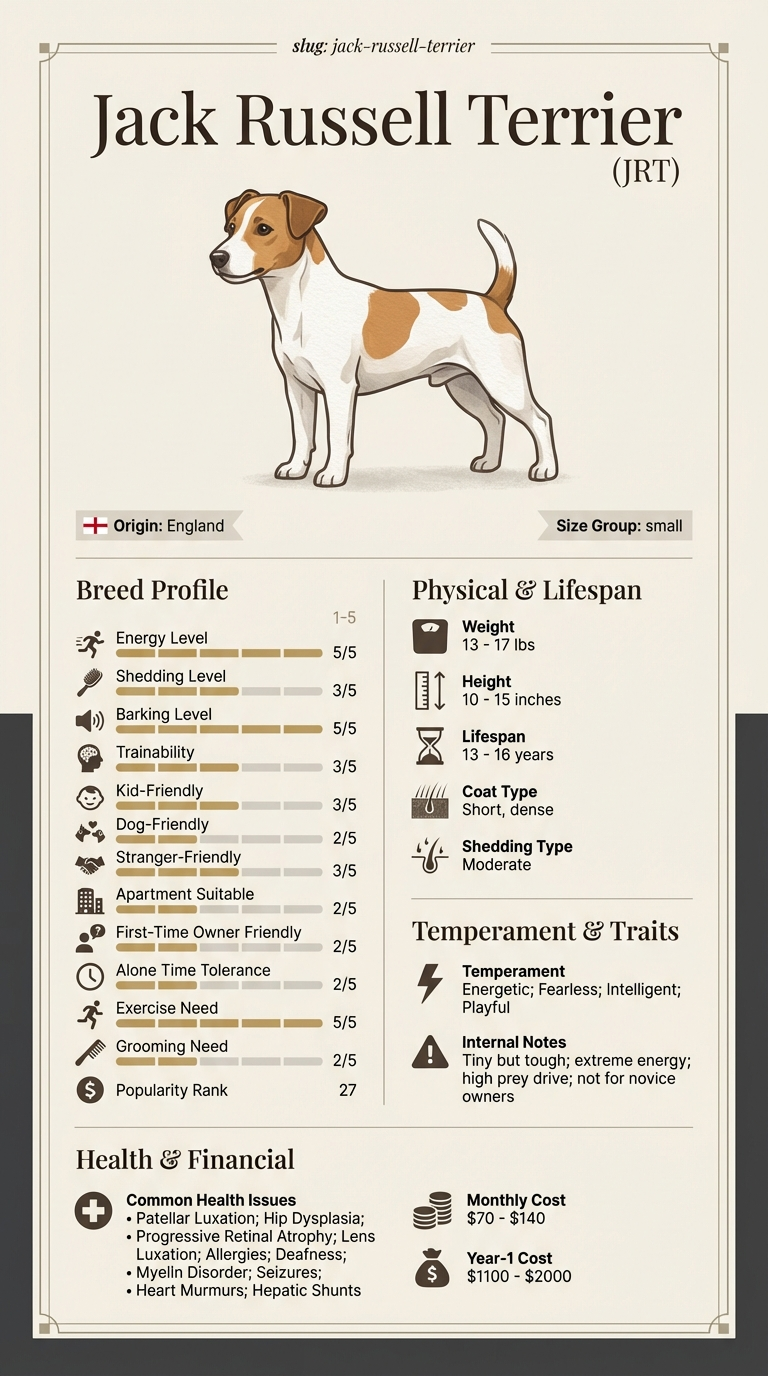
Jack Russell Terriers are known for their energetic and fearless nature. However, their short, dense coat makes them prone to certain allergies. This breed can develop reactions to food ingredients or environmental triggers, leading to discomfort.
Allergies in Jack Russell Terriers can also stem from their living environment. Factors like pollen, dust mites, mold, or certain chemicals in cleaning supplies can trigger allergic reactions. Changes in diet or introducing new products can further complicate their sensitivities.
If your Jack Russell is showing signs of anxiety or excessive scratching, a trainer can help address any behavioral issues related to their allergies. Training can also establish a routine that minimizes stress during allergy flare-ups.
Consult your vet if your Jack Russell Terrier experiences severe symptoms like persistent itching, ear infections, or digestive issues. A vet can recommend allergy testing and appropriate treatment options to improve your dog's quality of life.
It may take 1 to 3 months to identify and manage Jack Russell Terrier allergies effectively. Consistent monitoring and adjustments will be necessary during this period.
Success means reduced allergy symptoms such as itching, ear infections, and skin irritations. Your Jack Russell Terrier should show improvement in comfort and overall health.
Addressing Jack Russell Terrier allergies can be tricky. However, certain common mistakes can inadvertently make the problem worse. Here’s what to avoid.
Recognizing when Jack Russell Terrier allergies become an emergency is crucial. If your JRT shows severe symptoms, immediate vet attention is necessary. Look for signs like swelling, difficulty breathing, or collapse. These are red flags that mean you should call your vet right away.
In less severe cases, where your dog may have mild itchiness, sneezing, or skin irritation, you can monitor the situation at home. Create a plan to help manage these symptoms. Keep an eye on their behavior and note any changes. If symptoms worsen or persist, consult your vet for advice.
Watch for triggers like specific foods or environmental factors. If your Jack Russell Terrier has ongoing allergies, it's essential to work on both prevention and treatment. With the right guidance, you can help your dog feel more comfortable.

Samantha, a busy nurse in Atlanta, noticed her Jack Russell Terrier, Max, scratching excessively and developing red patches on his skin. After consulting her vet, she learned that environmental allergens could be a factor. She began a strict elimination diet and took note of potential allergens in their home. Over the next few months, she worked on a training plan that included regular baths with hypoallergenic shampoo and keeping Max's environment clean. Gradually, Max's symptoms improved, and he was much more comfortable.
Key takeaway: Identifying and managing Jack Russell Terrier allergies takes time and patience, but with a proper plan and commitment, improvement is possible.
Jack Russell Terriers can suffer from allergies due to various factors, such as environmental triggers like pollen, dust mites, or mold. They might also have food allergies caused by certain proteins or fillers in their diet. Identifying the specific allergen is crucial for effective treatment.
Signs of allergies in Jack Russell Terriers include excessive scratching, ear infections, and skin irritations. You may also notice watery eyes or sneezing. If you observe these symptoms, consult your vet for a proper diagnosis.
To manage Jack Russell Terrier allergies, start by identifying the allergens through tests recommended by your vet. Once identified, you can take steps to avoid those triggers, adjust their diet, or consider allergy medications. Regular grooming can also help reduce exposure to allergens.
Treatments for Jack Russell Terrier allergies may include antihistamines, steroids, or allergy shots, depending on the severity. Your vet may also suggest special diets or topical treatments for skin issues. Regular check-ups will help monitor their progress.
Yes, untreated allergies can result in chronic conditions like ear infections or skin infections. Continuous scratching can also lead to secondary infections. It’s important to address allergies early to prevent these complications.
Common signs of allergies in Jack Russell Terriers include excessive itching, redness of the skin, and chronic ear infections. You might also notice digestive issues or unusual paw licking. If you see these symptoms, it's best to consult your vet for a proper diagnosis.
Yes, Jack Russell Terriers can develop allergies at any age, even if they previously showed no signs. Environmental factors, food changes, or new allergens can trigger allergic reactions later in life. Regular vet check-ups can help monitor their health as they age.
To help your Jack Russell Terrier with seasonal allergies, consider wiping their paws and coat after outdoor walks to remove allergens. You can also limit outdoor time during peak pollen seasons and consult your vet about possible antihistamines or allergy medications.
Yes, Jack Russell Terriers can be sensitive to certain proteins like beef, chicken, or dairy. Grain allergies are also common. If you suspect a food allergy, your vet may recommend an elimination diet to identify the specific trigger.
You should take your Jack Russell Terrier to the vet if you notice persistent symptoms like itching, swelling, or gastrointestinal issues that don't improve with home care. Early intervention can help manage their discomfort and prevent complications.
Regularly bathe your Jack Russell Terrier with hypoallergenic shampoo, keep their living area clean, and consider a diet change if food allergies are suspected.
Treating allergies can cost between $70 to $140 per month, depending on medications and vet visits.
Consult your vet to determine if the skin issues are allergy-related and get advice on treatment options.