Behavior
What are quick tips for managing Havanese luxating patellas?
Ensure your Havanese maintains a healthy weight and engage in low-impact activities. Regular vet check-ups are crucial for monitoring their condition.
Havanese luxating patellas can cause pain and mobility issues for your furry friend. This knee cap dislocation can lead to discomfort and a reduced quality of life.
Owners of Havanese dogs, especially those who are first-time pet parents, often find themselves facing this issue. If your Havanese seems to limp, is reluctant to play, or shows signs of pain when moving, luxating patellas might be the culprit.
This guide is not medical advice. If your dog shows pain, sudden behavior change, or worsening symptoms, consult a licensed veterinarian.
Some links may be affiliate links. We may earn a commission at no extra cost to you. We only suggest products we believe are helpful for dog owners.
Havanese luxating patellas, a common issue among this breed, involves the dislocation of the knee cap. This condition can cause pain and discomfort, leading to limping or difficulty walking. Daily activities may be impacted, and your dog might be hesitant to play or exercise as usual.
Luxating patellas are relatively common in Havanese, particularly in smaller breeds. Many owners may notice occasional issues, especially as their dog ages.
Havanese dogs are small and can be prone to luxating patellas due to their genetic makeup. Their lightweight structure means their kneecaps can easily slip out of place, especially when they jump or run. Some Havanese may inherit a weaker ligament structure, increasing their risk of this issue.
Environmental factors can also contribute. For instance, slippery floors or abrupt changes in surface can cause these small dogs to misstep. If a Havanese is overweight, excess weight can stress their joints, further exacerbating the risk of luxating patellas.
If your Havanese exhibits signs of discomfort or reluctance to move, consider enlisting a professional trainer. A trainer can help with specific exercises to strengthen their legs and improve overall stability.
If you notice your Havanese frequently limping or showing signs of pain, it’s time to consult a vet. A vet can assess the severity of the luxation and recommend treatments, which may include physical therapy or surgery.
You can expect to see improvements in your Havanese's luxating patellas within 4 to 6 weeks of consistent training and care.
Success means your Havanese can move comfortably, show reduced signs of pain or limping, and enjoy daily activities without issues.
Avoiding these common mistakes can help manage your Havanese's luxating patellas and promote better health.
Call your vet immediately if you notice any of the following red-flag signs:
- Severe limping or inability to walk - Visible swelling around the knee joint - Signs of extreme pain, such as yelping or aggressive behavior when touched - A sudden inability to bear weight on the affected leg.
If your Havanese shows mild symptoms, such as occasional limping or reluctance to jump, you can monitor the situation. Make a note of any changes in behavior and consider implementing a plan to manage their comfort. However, keep an eye on the situation and consult your vet if symptoms worsen or do not improve. Regular check-ups can help you stay ahead of potential issues and provide peace of mind.
Emily, a first-time dog owner, noticed her Havanese, Benny, limping frequently. Concerned about his comfort, she consulted her vet, who diagnosed him with luxating patellas. After learning how to stop Havanese luxating patellas through a combination of targeted exercises and weight management, Emily dedicated time each day to help Benny strengthen his legs. Within a few weeks, Benny was more active and playful, and his limping decreased significantly. Emily's commitment to training made a big difference in Benny's quality of life.
Key takeaway: With patience and the right approach, you can help your Havanese manage luxating patellas effectively.
Havanese luxating patellas occur due to a genetic predisposition, which means it can be inherited. Other factors include improper bone structure and muscle imbalances. Regular vet check-ups can help catch these issues early.
To manage Havanese luxating patellas, focus on maintaining a healthy weight and provide proper exercise. Physical therapy and specific exercises can help strengthen their legs. Consult your vet for tailored recommendations.
Common signs include limping, difficulty jumping, or holding their leg up intermittently. You might also notice your Havanese seems hesitant to walk or runs with a stiff gait. If you observe these symptoms, a vet visit is essential.
Not all cases of Havanese luxating patellas require surgery. Many dogs can manage with non-surgical treatments like weight management and physical therapy. However, severe cases may need surgical intervention to correct the dislocation.
Training should focus on gentle exercises that don't put too much strain on their knees. Use positive reinforcement techniques to encourage participation without causing discomfort. Work with a vet or trainer familiar with your dog's condition.
Look for signs like limping, difficulty jumping, or unusual sitting positions. If your Havanese frequently holds up a leg or seems to be in pain, it's a good idea to consult your vet.
Yes, luxating patellas can develop in older dogs due to wear and tear on the joints. Regular vet check-ups are essential to monitor their joint health as they age.
Keeping your Havanese at a healthy weight can help reduce stress on their joints. Gentle exercise and joint supplements may also be beneficial, but always check with your vet first.
Surgery may be needed in severe cases where the luxation is recurrent and causing pain. Your vet will help you decide the best course of action based on your dog's condition.
Luxating patellas are often hereditary and can be more common in smaller breeds like the Havanese. Factors like hip and knee conformation can contribute to this condition.
Ensure your Havanese maintains a healthy weight and engage in low-impact activities. Regular vet check-ups are crucial for monitoring their condition.
Gently guide them to a safe, comfortable area and avoid forcing them to walk on the affected leg. Ice and rest can help reduce swelling.
Look for dog foods rich in omega-3 fatty acids, glucosamine, and chondroitin. These nutrients can support joint health and reduce inflammation.
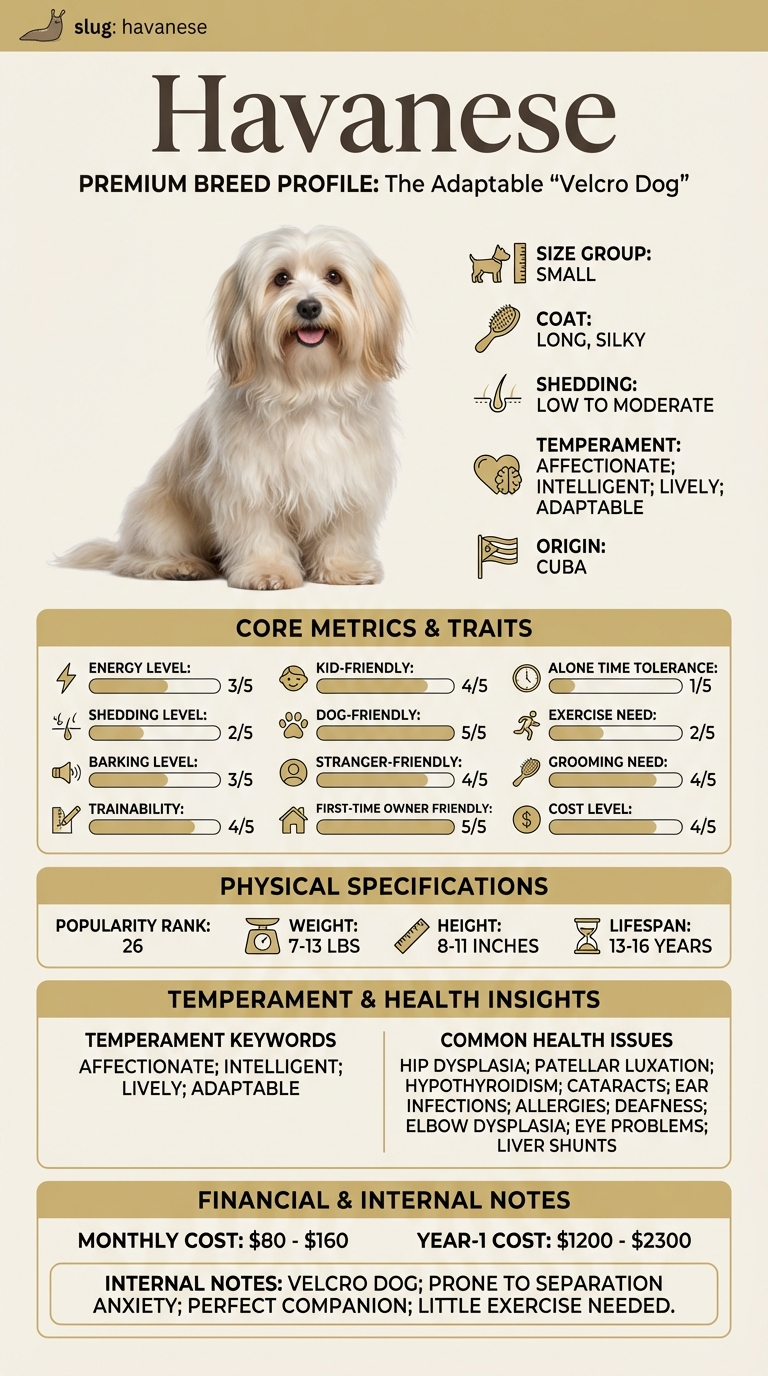
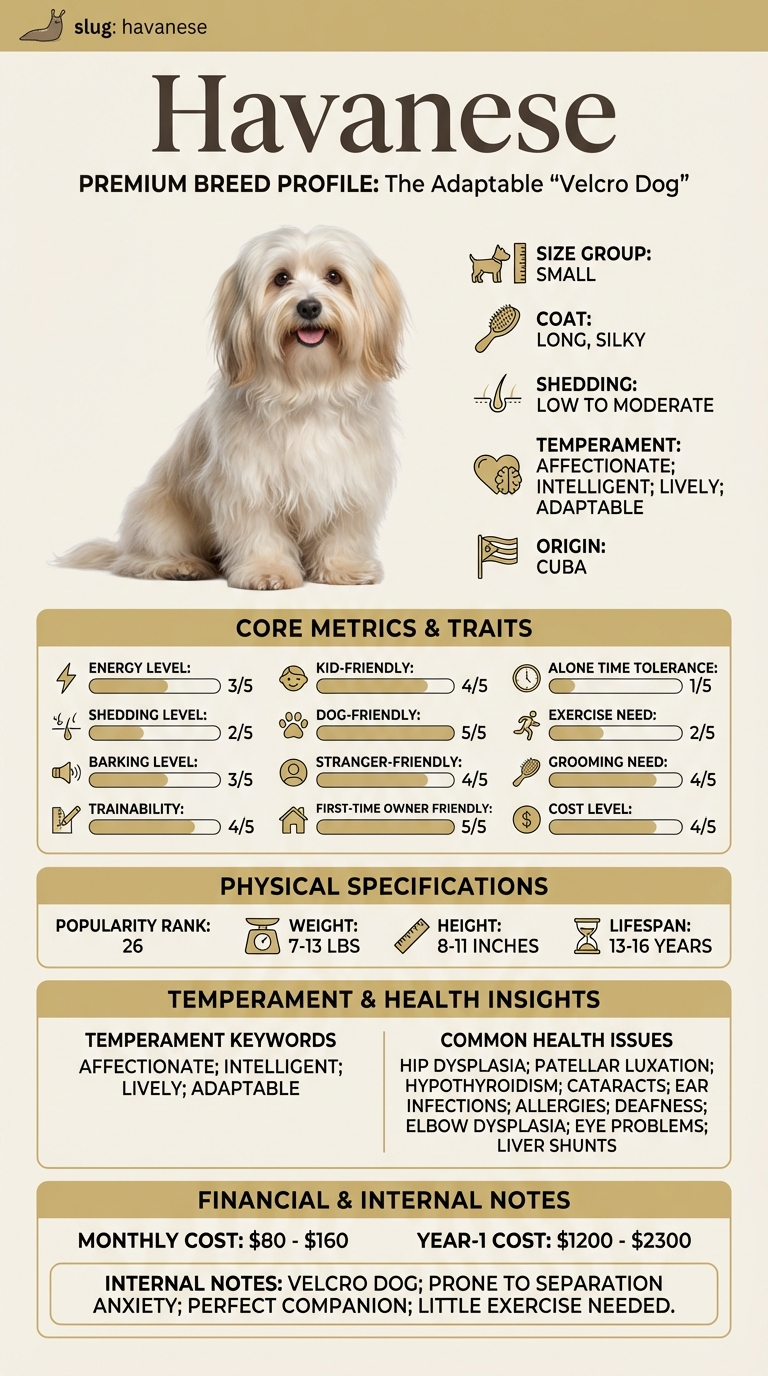
Costs can vary widely based on treatment needs, but expect to spend between $1,200 and $2,300 in the first year, including vet visits and potential surgeries.