Behavior
What are quick tips for Great Dane owners?
Focus on early socialization and training to prevent behavior issues. Regular vet check-ups are essential due to their predisposition to health problems.

Quick answer
What are quick tips for Great Dane owners?
Focus on early socialization and training to prevent behavior issues. Regular vet check-ups are essential due to their predisposition to health problems.
Choosing between a Great Dane purebred and a mixed breed can be tough. This decision impacts health, temperament, and costs.
New dog owners, families with children, and those unfamiliar with dog breeds often struggle with this decision. They want to ensure they select a dog that will fit into their home and lifestyle.
This guide is not medical advice. If your dog shows pain, sudden behavior change, or worsening symptoms, consult a licensed veterinarian.
Some links may be affiliate links. We may earn a commission at no extra cost to you. We only suggest products we believe are helpful for dog owners.
We research and check what we publish, but we do not warrant that any figure, date, price, or statement is accurate, complete, or current, and we accept no liability for any loss, cost, injury, or other harm arising from the use of this site. Use it as one reference among several. You remain responsible for your own decisions and for your dog's care - confirm anything that matters with a licensed veterinarian or another qualified professional before you act on it. Full disclaimer.
Check this first
Understanding when the issues with your Great Dane related to purebred vs. mixed breeds become an emergency is crucial. Certain red flags indicate that you should call your vet immediately. These signs can include sudden lethargy, refusal to eat, difficulty breathing, or excessive vomiting. If your Great Dane shows any of these symptoms, don’t wait—get help right away.
On the other hand, there are milder cases that can be monitored at home. For example, if your dog is showing slight behavioral changes, a lack of interest in play, or mild anxiety, these may not require immediate veterinary care. Instead, develop a plan to observe your Great Dane over a few days. Keeping a close eye on their behavior can help you determine if the situation improves or worsens.
Always remember that your intuition about your dog's health is essential. If you're ever in doubt, it's better to consult a vet. They can provide guidance on whether it's time for a visit or if you can simply observe and wait. Your Great Dane's health should always be your top priority, and knowing the difference between an emergency and a situation to monitor can help you take the right action.
If any of these apply, call your vet or an emergency clinic now. The rest of this page is for the cases that are not an emergency.
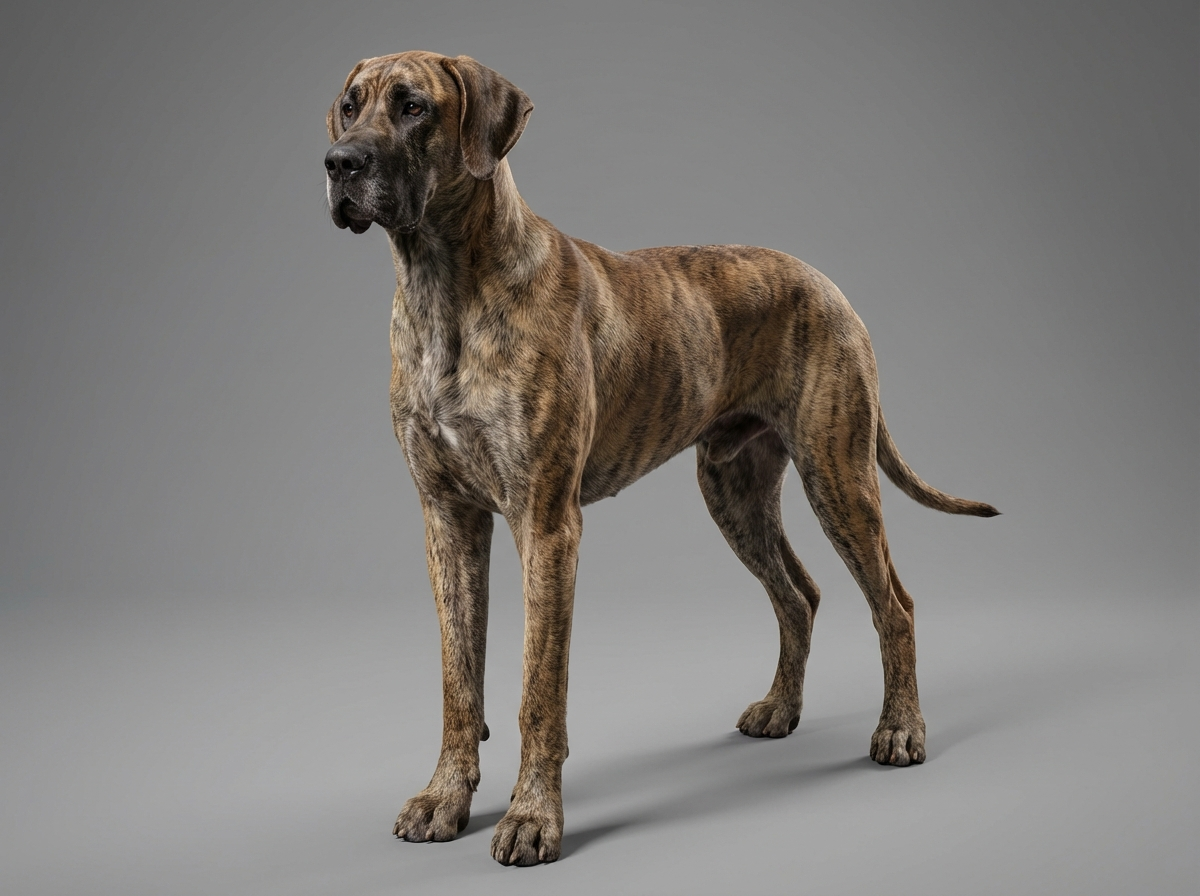
Determining whether to choose a Great Dane purebred or a mixed breed can significantly impact your experience as a dog owner. Great Danes, known as gentle giants, can show different traits based on their breeding. Purebreds often have more predictable temperaments, but they also face higher health risks, such as cancer, compared to mixed breeds.
The conversation around Great Dane purebred vs. mixed breeds is common among dog enthusiasts. Many potential owners are concerned about health issues and training challenges. It's a significant topic, especially since purebreds are known to have a higher likelihood of serious health problems.
Great Danes, whether purebred or mixed, may inherit genetic predispositions that affect their health and behavior. Purebred Great Danes can be more prone to certain health issues like bloat and heart disease. This can lead to anxiety and stress, which might manifest in problematic behaviors.
The living environment also plays a big role in how a Great Dane behaves. Factors such as lack of space, inadequate exercise, and insufficient socialization can exacerbate anxiety or behavioral issues. If a Great Dane feels cramped or doesn't receive enough stimulation, it may lead to destructive or anxious behaviors.
If your Great Dane shows signs of severe anxiety or any sudden changes in behavior, consult a veterinarian. They can rule out health problems and discuss possible treatment options, which may include behavioral therapy or medication.
Avoiding common pitfalls can help you manage the challenges of Great Dane ownership effectively. Here are some mistakes to steer clear of.
Start here: Great Dane Most Common Genetic Disorders: What to Screen For
See all Great Dane health problems, which breeds are prone to purebred vs mixed breeds, or the full Great Dane breed guide for temperament, exercise needs and ownership costs.
You can expect to see improvements in behavior within 4-6 weeks of consistent care and a steady routine efforts.
Success means your Great Dane, whether purebred or mixed, can interact well with other dogs and people, showing reduced anxiety and improved obedience.
Emily, a first-time dog owner in a suburban neighborhood, adopted Max, a mixed-breed Great Dane with anxiety issues. Max was fearful around other dogs and would bark excessively during walks. After seeking advice, Emily enrolled in a training program focused on socialization and positive reinforcement. Over six weeks, she was amazed to see Max become more relaxed, even making friends at the local dog park. Emily learned that consistency and patience were key, and she began to enjoy her walks with Max instead of dreading them.
Key takeaway: With the right training and support, even anxious Great Danes can learn to thrive in social settings.
Great Dane purebred dogs often have predictable traits and behaviors due to their lineage. In contrast, mixed breeds can display a wider range of characteristics, which may include varying health issues. Understanding these differences can help you choose the right dog for your lifestyle. This answer relates to Great Dane purebred vs. mixed breeds.
Behavior problems in Great Danes can stem from genetics, socialization, or training inconsistencies. Purebreds may have specific issues linked to their breed traits, while mixed breeds might have unpredictable behaviors. Early training and socialization are key to addressing these concerns.
Training a Great Dane involves consistent, positive reinforcement methods. Start with basic commands and gradually introduce more complex tasks. Remember, patience is essential, especially if your dog is a mixed breed with unpredictable behaviors.
Yes, Great Dane purebreds are statistically more likely to develop certain health issues, such as cancer and heart disease. Mixed breeds often have a broader genetic diversity, which can lead to fewer inherited health problems. Regular vet visits and a proper diet are crucial for all dogs.
Consider your lifestyle, budget, and what you want in a dog. Purebreds usually have known traits and potential health issues, while mixed breeds can be more unpredictable. Weighing these factors can help you make the best choice for your family.
Mixed breed Great Danes may have fewer genetic health issues than purebreds. However, they can still inherit conditions common to Great Danes, like hip dysplasia or bloat. It's important to monitor their health closely and consult a vet regularly.
While there can be differences, temperament largely depends on individual upbringing and socialization. Purebred Great Danes might display more predictable traits, but mixed breeds can inherit a blend of personalities. Early socialization is key for both types.
If your Great Dane shows sudden behavior changes, such as increased anxiety or aggression, it's wise to consult a vet. Behavioral issues can be linked to health problems that need addressing. Early intervention can prevent further complications.
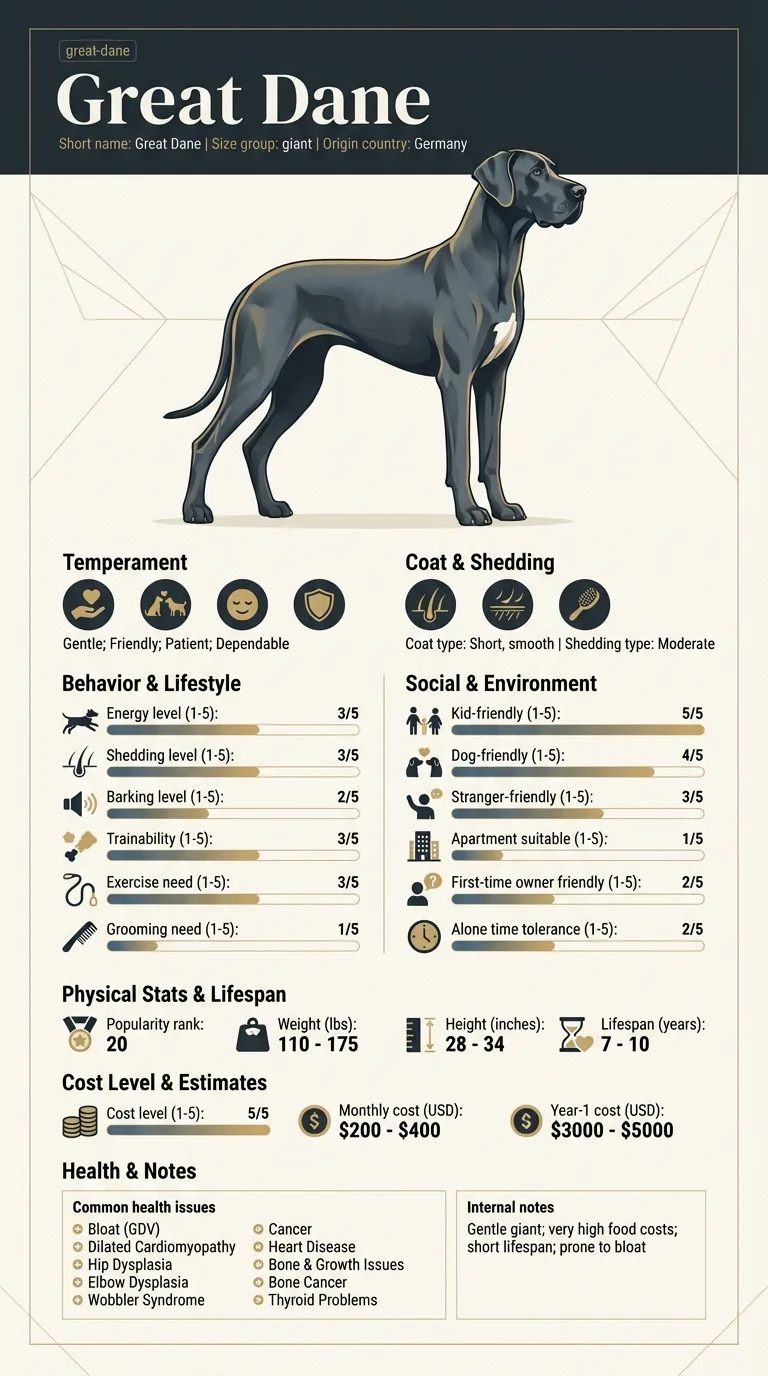
Grooming needs for mixed breed Great Danes can vary based on their coat type. Generally, both purebred and mixed breeds have short, smooth coats that require minimal grooming. However, if your mixed breed has longer hair, you may need to brush more often.
Focus on early socialization and training to prevent behavior issues. Regular vet check-ups are essential due to their predisposition to health problems.
Monthly costs can range from $200 to $400, including food, vet visits, and supplies. First-year costs may reach $3,000 to $5,000.
Implement a consistent routine and provide plenty of exercise. Consider crate training and consult a vet for additional support if anxiety persists.
A one-page prep sheet for this condition: the signs, the questions to ask, what to get priced. Unlocks here.
You get: Vet visit prep sheet
No spam. One-click unsubscribe. See our privacy policy.
Preview page 1 before you decide.