Great Dane myxomatous mitral valve disease (MMVD) is a serious heart condition that can affect your beloved dog’s quality of life.
Typically, owners of Great Danes, especially those who are first-time pet parents or those with older dogs, might struggle with MMVD. This can be particularly stressful as they navigate the complexities of veterinary care and treatment options.
Important reminder
This guide is not medical advice. If your dog shows pain, sudden behavior change, or worsening symptoms, consult a licensed veterinarian.
Some links may be affiliate links. We may earn a commission at no extra cost to you. We only suggest products we believe are helpful for dog owners.
What this problem looks like
Great Dane myxomatous mitral valve disease (MMVD) is a serious heart condition that affects many dogs of this breed. Day-to-day, you might notice signs like a persistent cough, lethargy, or difficulty breathing. This disease is not only common but also progressive, meaning symptoms can worsen over time, requiring regular veterinary care and monitoring.
Common triggers
Genetics and age play a significant role in the development of MMVD.
Obesity can exacerbate heart problems in Great Danes.
Stressful situations, like loud noises or changes in routine, can trigger symptoms.
Myxomatous mitral valve disease (MMVD) is the most prevalent heart condition among Great Danes. It's estimated that around 50% of Great Danes will show signs of this disease by the age of 7. Early detection and management are crucial for maintaining their quality of life.
Why this happens
Breed factors
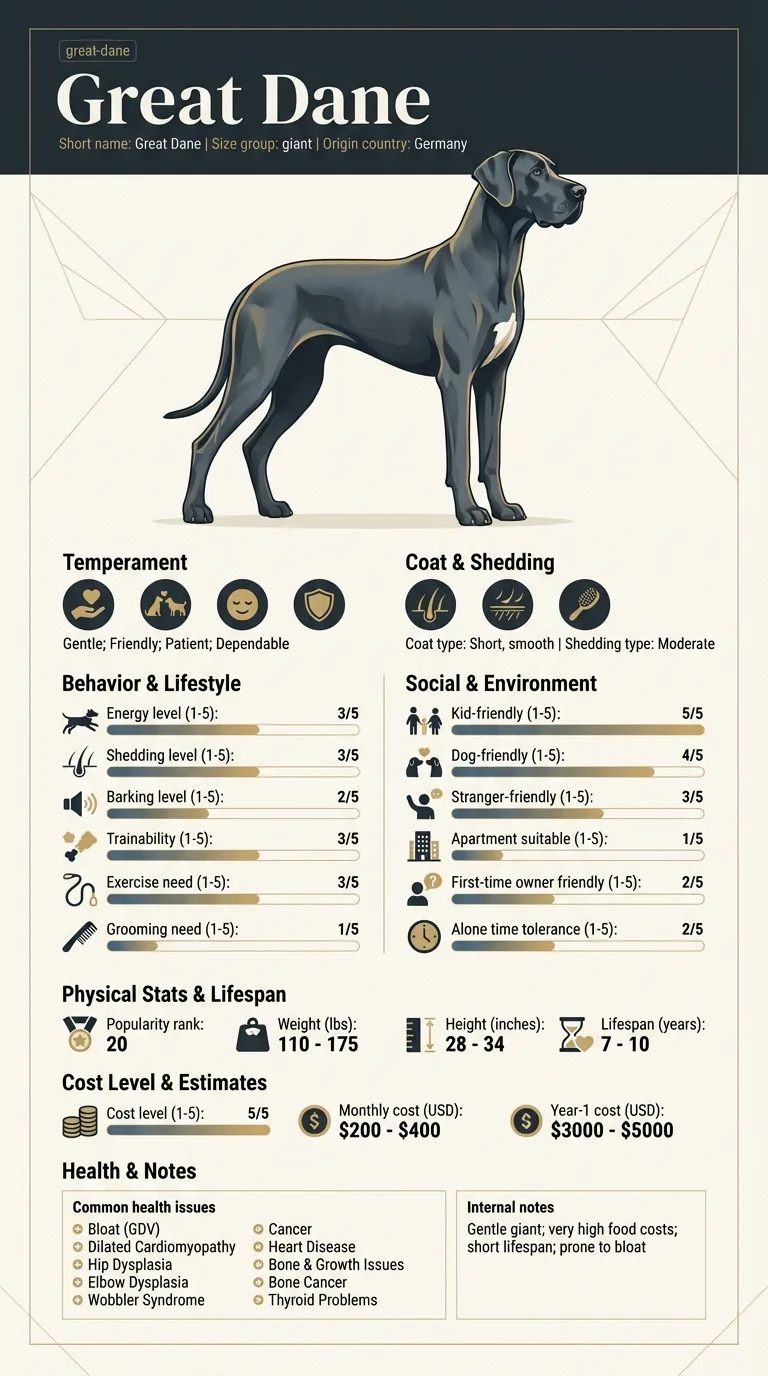
Great Danes are genetically predisposed to certain heart conditions, including myxomatous mitral valve disease (MMVD). Their large size and unique heart structure can contribute to the development of this disease. Additionally, their lifespan tends to be shorter, which may increase the risk of age-related heart issues.
Environment factors
Factors such as diet, exercise, and overall care can influence the onset of MMVD. Overweight Great Danes are more prone to heart problems, so maintaining a healthy weight is essential. Stressful environments, lack of physical activity, and inadequate vet care can also exacerbate heart conditions.
What you can try
At-home strategies
Maintain a balanced diet specifically designed for large breeds. Consult your vet for recommendations on high-quality dog food that meets their nutritional needs.
Ensure regular exercise but avoid overexertion. Short, moderate walks are ideal to keep their weight in check without straining their heart.
Monitor their weight regularly. If you notice significant weight gain, adjust their diet or exercise routine accordingly.
Keep their stress levels low by providing a calm environment. Create a designated space for relaxation and limit exposure to loud noises or chaos.
When to consider a trainer
Consider hiring a trainer if your Great Dane displays anxiety or behavioral issues related to their heart condition. A professional can help with socialization and stress-reduction techniques.
When to talk to your vet
Talk to your vet if you notice signs of lethargy, coughing, or difficulty breathing. These could indicate worsening heart issues and may require immediate attention or medication.
Realistic expectations
Managing Great Dane myxomatous mitral valve disease (mmvd) can take time. Many owners see noticeable improvements in their dog's condition within 4 to 6 months of consistent care and treatment.
Success means your Great Dane is stable, has a good quality of life, and is able to engage in daily activities without excessive fatigue or distress.
Mistakes that make this worse
Avoid these common mistakes that can worsen your Great Dane's myxomatous mitral valve disease (MMVD).
Ignoring symptoms: Many owners overlook early signs like coughing or fatigue, thinking it's just aging. Instead, keep an eye on your dog's behavior and consult your vet if you notice changes.
Poor diet choices: Feeding your Great Dane low-quality food can worsen heart problems. Opt for a balanced diet with quality ingredients, and ask your vet for recommendations.
Skipping vet check-ups: Delaying regular vet visits can let MMVD progress unnoticed. Schedule check-ups at least once a year to monitor your dog's heart health.
Inadequate exercise: Too little exercise can lead to obesity, which puts extra strain on your dog's heart. Provide regular, moderate activity suited to your dog's energy level to maintain a healthy weight.
Overexerting during play: While exercise is important, overdoing it can stress your dog's heart. Opt for shorter, more frequent walks instead of long, intense sessions.
Neglecting dental care: Poor dental hygiene can lead to bacteria entering the bloodstream, affecting the heart. Brush your dog's teeth regularly and consider dental treats to promote oral health.
Ignoring medication: If your vet prescribes medication for MMVD, follow their instructions carefully. Missing doses can lead to worsening symptoms or complications.
When is Great Dane Myxomatous Mitral Valve Disease (MMVD) an Emergency?
Recognizing the signs of Great Dane myxomatous mitral valve disease (MMVD) is crucial for your pet's health. Some symptoms may signal an emergency situation where you should call your vet immediately. These include severe difficulty breathing, persistent coughing that doesn’t improve, sudden lethargy, and collapse. If your Great Dane exhibits any of these red flags, it's time to seek veterinary care right away.
On the other hand, some symptoms can be monitored at home. Mild signs like a slight cough or decreased energy that doesn’t worsen can often be watched with a plan. Keeping track of your dog's daily behavior, appetite, and any changes in breathing can provide valuable information for your vet during check-ups. If the symptoms remain stable and your dog is still eating and drinking normally, it may be okay to wait a little while before calling your vet.
However, it's important to trust your instincts. If you're ever in doubt about your Great Dane's condition, don't hesitate to contact your veterinarian. Early detection and treatment of MMVD can significantly improve your dog's quality of life and longevity.

Great Dane Myxomatous Mitral Valve Disease (MMVD) - When is Great Dane Myxomatous Mitral Valve Disease (MMVD) an Emergency?
A Heartfelt Journey with Daisy
When Sarah adopted Daisy, her Great Dane, she was excited but soon learned about her diagnosis of myxomatous mitral valve disease (mmvd). Initially, Sarah felt overwhelmed by the management of Daisy's medication and dietary needs. After joining a support group and working closely with her vet, Sarah found an effective routine that included regular check-ups, a heart-healthy diet, and gentle exercise. Over time, Daisy became more energetic and playful, and their bond grew stronger as they navigated this journey together.
Key takeaway: Building a strong support network and following a consistent care routine can significantly improve your dog's quality of life when dealing with health issues like mmvd.
Frequently asked questions
What is Great Dane myxomatous mitral valve disease (mmvd)?
Great Dane myxomatous mitral valve disease (mmvd) is a common heart condition that affects this breed. It involves the deterioration of the mitral valve, leading to heart failure if not managed properly. Regular check-ups with a vet can help monitor your dog's heart health.
Why does my Great Dane have myxomatous mitral valve disease (mmvd)?
There is no single cause for Great Dane myxomatous mitral valve disease (mmvd), but genetics play a significant role. Older Great Danes are more susceptible, so age may be a contributing factor. Routine veterinary care can help identify early signs of this condition.
How can I manage my dog’s myxomatous mitral valve disease (mmvd)?
Management of Great Dane myxomatous mitral valve disease (mmvd) often involves medication prescribed by your vet. Keeping your dog at a healthy weight and avoiding strenuous exercise can also help. Regular vet visits are crucial to adjust treatment as needed.
What are the signs of myxomatous mitral valve disease (mmvd) in Great Danes?
Signs of Great Dane myxomatous mitral valve disease (mmvd) may include coughing, difficulty breathing, and lethargy. You might also notice a decreased appetite or unusual fatigue. If you see these symptoms, consult your veterinarian promptly.
Can Great Dane myxomatous mitral valve disease (mmvd) be cured?
Currently, there is no cure for Great Dane myxomatous mitral valve disease (mmvd). However, with proper management and care, many dogs can live comfortably for years. Your veterinarian can provide guidance on the best treatment options.
What are the early signs of myxomatous mitral valve disease (mmvd) in Great Danes?
Early signs of Great Dane myxomatous mitral valve disease (mmvd) can include a persistent cough, fatigue during exercise, and difficulty breathing. If you notice any of these symptoms, it's essential to consult your vet for a thorough evaluation.
Can myxomatous mitral valve disease (mmvd) be managed with diet and exercise?
While a balanced diet and regular, moderate exercise can help manage Great Dane myxomatous mitral valve disease (mmvd), they are not a cure. Always discuss any changes in diet or exercise with your veterinarian, as they can provide tailored recommendations.
How does age affect myxomatous mitral valve disease (mmvd) in Great Danes?
Great Danes are more prone to myxomatous mitral valve disease (mmvd) as they age, typically starting around middle age. Older dogs may show more severe symptoms, so regular veterinary check-ups are crucial for early detection and management.
Why does my Great Dane have myxomatous mitral valve disease (mmvd)?
Great Dane myxomatous mitral valve disease (mmvd) is often linked to genetic predispositions and age. Factors like diet, lifestyle, and overall health can also play a role, so it's important to maintain regular vet visits.
What should I do if my Great Dane shows signs of distress related to mmvd?
If your Great Dane shows signs of distress, such as difficulty breathing or extreme lethargy, seek veterinary care immediately. Early intervention can significantly improve their quality of life and management of myxomatous mitral valve disease (mmvd).
What are quick tips for managing myxomatous mitral valve disease (mmvd)?
Regular vet check-ups and medication are key to managing Great Dane myxomatous mitral valve disease (mmvd). Keep your dog calm and avoid demanding exercise to reduce stress on their heart.
Health
How often should I take my Great Dane to the vet for mmvd?
It's best to have your Great Dane checked at least every six months if they have mmvd. Your vet may recommend more frequent visits as the condition progresses.
Living
Will my Great Dane's diet affect mmvd?
Yes, a balanced diet can help maintain a healthy weight, which is crucial for dogs with Great Dane myxomatous mitral valve disease (mmvd). Consult your vet for specific dietary recommendations.